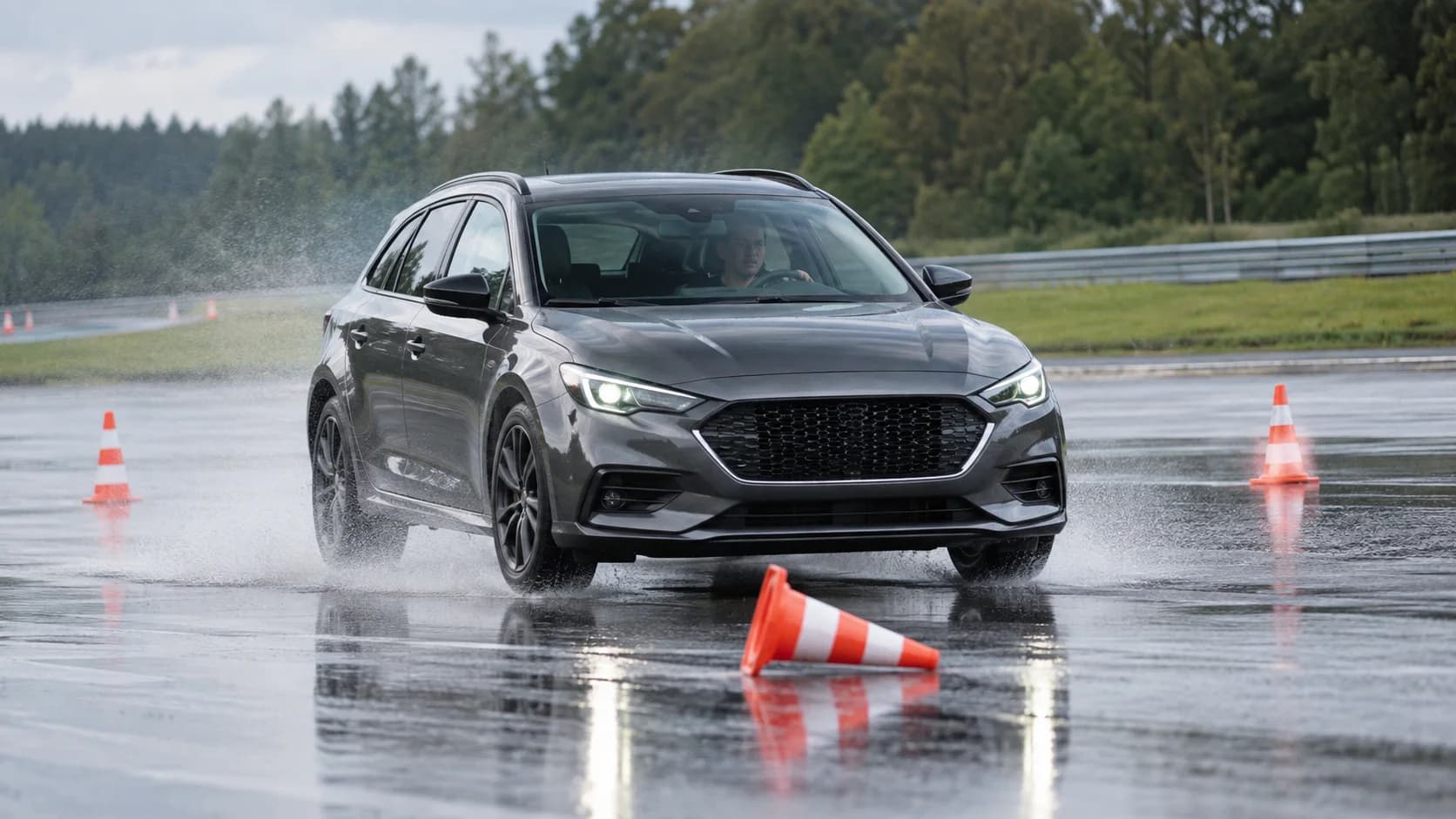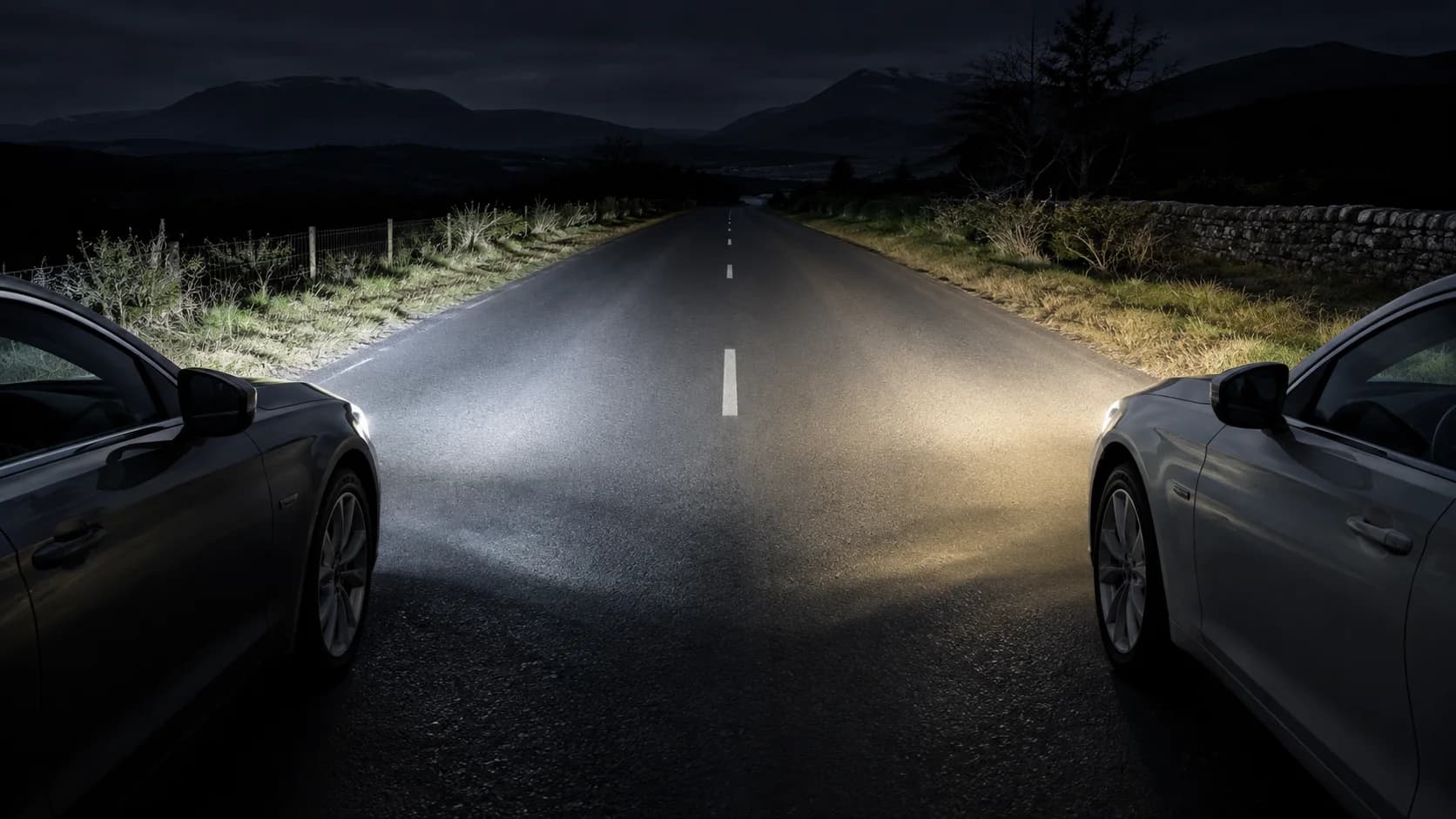
Matrix LED headlights offer dynamic beam shaping and selective illumination, whereas standard LED headlights provide a fixed, broad light pattern. The choice between them depends on driving conditions, budget, and the specific features implemented by the vehicle manufacturer.
How standard LED headlights function
Standard LED headlights utilise light-emitting diodes to generate illumination. Unlike older halogen or xenon systems, LEDs offer high luminous efficacy and a long operational lifespan. A typical standard LED headlight unit comprises multiple individual LED elements, often arranged in a cluster, behind a lens assembly. This design projects a consistent, wide beam pattern, illuminating the road ahead and the immediate verges.
The beam pattern of standard LED headlights is static. When the driver selects high beam, the entire high beam array activates, providing maximum forward illumination. Conversely, low beam provides a dipped, asymmetrical pattern designed to illuminate the road without dazzling oncoming drivers. This switching between high and low beam is a manual or automatic process, depending on the vehicle's specification. Automatic high beam assist systems, which detect oncoming or preceding vehicles and switch to low beam, are an enhancement to standard LED headlights. These systems typically rely on a forward-facing camera to identify light sources.
How matrix LED headlights function
Matrix LED headlights represent an evolution of LED technology, offering adaptive and dynamic light distribution. Instead of a single high beam array, matrix systems employ numerous individually controllable LED segments, often dozens or even hundreds, within each headlight unit. Each segment can be switched on, off, or dimmed independently.
A control unit, linked to a forward-facing camera and other sensors (such as those for speed and steering angle), continuously analyses the driving environment. This allows the system to create a high beam pattern that selectively masks out areas occupied by other road users. For example, if an oncoming vehicle is detected, the matrix system can create a 'tunnel' of darkness around that vehicle while maintaining high beam illumination for the rest of the road and verges. This dynamic adaptation occurs in real-time, adjusting the light pattern as vehicles move.
Beyond simply masking, matrix systems can also adapt the beam width and intensity based on speed, steering input, and weather conditions. For instance, at lower speeds, the beam might widen to illuminate junctions or pedestrians more effectively. On motorways, the beam can lengthen and narrow to provide greater forward visibility. Some systems also incorporate specific light patterns for adverse weather, reducing glare from rain or fog.
Practical implications for drivers
The primary practical benefit of matrix LED headlights is enhanced visibility without compromising the safety of other road users. Drivers can often leave the high beam active for extended periods, even in traffic, as the system automatically manages glare. This reduces driver fatigue and potentially improves reaction times by providing continuous optimal illumination. For a hypothetical cross-border journey, such as driving from Brussels to Berlin, matrix headlights could offer significant advantages on unlit rural roads or motorways with varying traffic density, as the system continuously optimises the light pattern without manual intervention.
Standard LED headlights, while effective, require manual or automatic switching between high and low beam. This means that in situations with frequent oncoming traffic, drivers might spend more time on low beam, reducing overall forward visibility compared to a matrix system.
However, the performance of matrix LED systems can be influenced by external factors. Heavy rain, snow, or fog can sometimes reduce the effectiveness of the camera sensor, potentially leading to delayed or inaccurate beam adjustments. Similarly, very bright street lighting can occasionally interfere with the system's ability to detect other vehicles accurately.
Regulatory context and verification
The General Safety Regulation (EU) 2019/2144 mandates certain advanced safety features for new vehicle types. While it does not specifically mandate matrix LED headlights, it does address lighting performance and driver assistance systems. Euro NCAP's Safety Assist protocols also evaluate the performance of advanced driver assistance systems, including those related to lighting. Systems that automatically adapt the beam pattern, such as matrix LEDs, can contribute to a vehicle's overall safety rating by demonstrating effective illumination without dazzling.
To verify the specific capabilities of a vehicle's lighting system, drivers should consult the owner's manual. This document will detail whether the vehicle is equipped with standard LED headlights, automatic high beam assist, or a full matrix LED system. It will also explain the operational parameters, any limitations, and how to activate or deactivate specific lighting functions. Official type-approval documentation, often available through the manufacturer's website or a dealership, can also provide technical specifications regarding the lighting system's compliance with EU regulations.
Scenarios for choosing each technology
Matrix LED headlights are generally preferable for drivers who frequently drive at night on unlit roads, particularly in rural or semi-rural areas, or on motorways with variable traffic. The continuous, adaptive high beam maximises visibility and reduces the need for manual intervention, thereby enhancing comfort and safety. Drivers who prioritise the latest technology and are willing to invest in advanced features will find matrix LEDs beneficial.
Standard LED headlights, especially those with automatic high beam assist, remain a highly effective and more economical choice for many drivers. They provide significantly better illumination than older halogen systems and offer a clear, white light. For drivers who primarily drive in well-lit urban environments, or whose night driving is limited, standard LEDs offer ample performance. They are also a suitable option for those with a tighter budget, as the cost difference between standard and matrix systems can be substantial. The simplicity of a standard LED system can also be appealing, with fewer complex components to potentially malfunction.
Ultimately, the decision balances enhanced functionality and cost. Both technologies offer improvements over conventional lighting, but matrix LEDs provide a more sophisticated and adaptive solution for challenging night driving conditions.