A plug-in hybrid electric vehicle (PHEV) offers external charging and a larger battery for extended electric-only range, while a full hybrid electric vehicle (FHEV) relies solely on regenerative braking and the internal combustion engine to recharge its smaller battery. The choice between them depends on driving patterns, access to charging infrastructure, and the intended use of electric propulsion.
How each hybrid system operates
A full hybrid, sometimes termed a self-charging hybrid, integrates an electric motor, a small battery, and an internal combustion engine (ICE). The system prioritises electric propulsion at low speeds and during light acceleration, with the ICE engaging to provide additional power or to recharge the battery. Regenerative braking captures kinetic energy, converting it back into electricity to replenish the battery. This design means the FHEV never requires external charging. Its electric-only range is typically limited to a few kilometres at moderate speeds, making it most effective in stop-and-go urban traffic where it can frequently switch between power sources and recover energy.
A plug-in hybrid combines similar components but with a significantly larger battery and an onboard charger, enabling it to be recharged from an external power source. This larger battery allows for a substantially longer electric-only driving range, often sufficient for daily commutes without engaging the ICE. The PHEV functions as an electric vehicle (EV) until its battery charge is depleted, at which point it operates as an FHEV, using the ICE and regenerative braking. This dual nature means a PHEV can offer the benefits of zero-tailpipe-emission driving for routine journeys while retaining the flexibility of an ICE for longer trips without range anxiety.
Driving scenarios and practical implications
For drivers undertaking frequent short journeys, particularly in urban or suburban environments, a PHEV can be highly effective if regularly charged. A hypothetical 40 km daily commute across a city, for example, could be completed predominantly on electric power, provided the vehicle is charged overnight or during the day. This maximises the environmental and potential economic benefits of electric driving. However, if a PHEV is not regularly charged, its larger battery and associated components add weight and complexity, which can result in higher fuel consumption than an FHEV once operating in hybrid mode.
An FHEV, by contrast, offers consistent efficiency gains over a conventional ICE vehicle without any requirement for driver intervention regarding charging. For a driver whose typical journey involves mixed driving conditions, such as a cross-border trip from Brussels to Amsterdam, an FHEV will seamlessly manage its power sources to optimise fuel use. It will leverage electric power in congested areas and during deceleration, while the ICE provides sustained propulsion on motorways. The FHEV's smaller battery means it cannot offer extended electric-only range, but it continuously assists the ICE, reducing overall fuel consumption and emissions compared to a non-hybrid equivalent.
Charging infrastructure and compatibility
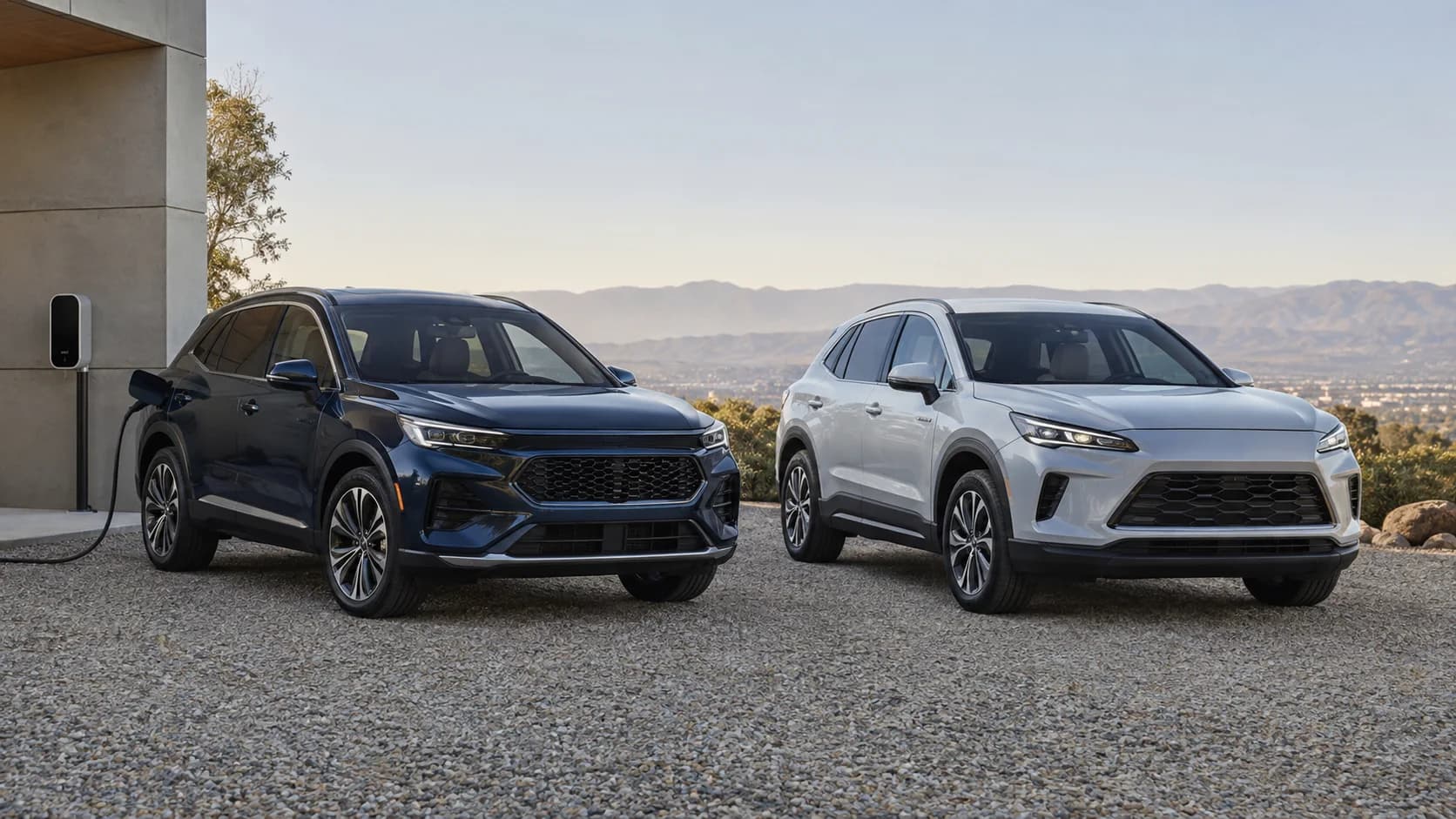
The utility of a PHEV is directly linked to access to charging infrastructure. The EU's Alternative Fuels Infrastructure Regulation (AFIR) mandates the deployment of publicly accessible recharging points along the TEN-T network and in urban nodes. PHEVs typically use AC charging, compatible with standard household sockets (Mode 2) or dedicated wallboxes and public AC chargers (Mode 3). Some PHEVs also support DC fast charging (Mode 4), though this is less common than for battery electric vehicles (BEVs).
Drivers must verify the charging port type (e.g., Type 2 for AC, CCS for DC) and maximum charging power supported by their specific PHEV model. This information is detailed in the vehicle's owner's manual and official technical specifications. Compatibility with public charging points can be confirmed by checking the connector type and power rating displayed at the charging station against the vehicle's requirements. Using an incompatible charger or exceeding the vehicle's maximum charging power can prevent charging or, in extreme cases, damage the vehicle's charging system.
FHEVs do not require external charging, simplifying their operation and removing any dependency on charging infrastructure. This makes them a suitable choice for drivers who lack convenient home charging access or frequently travel to areas with limited public charging options.
Regulatory context and safety considerations
Both PHEVs and FHEVs are subject to the EU's General Safety Regulation (GSR), which mandates a range of advanced driver-assistance systems (ADAS) to improve road safety. These include intelligent speed assistance, alcohol interlock installation provisions, driver drowsiness and attention warning, and advanced emergency braking systems. Euro NCAP's Safety Assist protocols further evaluate the performance of these systems, providing consumers with independent safety ratings.
The WLTP (Worldwide Harmonised Light Vehicles Test Procedure) is the official method for determining vehicle emissions and fuel consumption in the EU. For PHEVs, WLTP provides a combined fuel consumption figure and an electric-only range. It is crucial to understand that the WLTP figures are laboratory-derived and represent a best-case scenario. Real-world fuel consumption and electric range can vary significantly based on driving style, ambient temperature, terrain, and the frequency of external charging. A PHEV's real-world fuel consumption will be considerably higher than its WLTP combined figure if it is rarely charged and primarily operates in hybrid mode.
For FHEVs, WLTP provides a single combined fuel consumption figure. While also a laboratory test, the FHEV's operation is less dependent on driver behaviour regarding charging, meaning its real-world consumption is often closer to the WLTP figure than for an uncharged PHEV.
Verifying vehicle specifications
When considering either a PHEV or an FHEV, prospective buyers should consult the official Certificate of Conformity (CoC) or the vehicle's owner's manual. These documents provide precise technical specifications, including:
- For PHEVs: Battery capacity (kWh), official electric-only range (WLTP), charging power (kW) for AC and DC (if applicable), and compatible charging connector types.
- For FHEVs: Battery capacity (kWh), though typically much smaller and not externally chargeable, and official fuel consumption (WLTP).
Understanding these specifications is essential for making an informed decision that aligns with individual driving needs and access to infrastructure. For instance, a PHEV with a smaller battery and limited electric range might offer fewer benefits over an FHEV if daily driving exceeds its electric capability and charging is infrequent. Conversely, an FHEV will not provide the zero-tailpipe-emission capability of a regularly charged PHEV, even for short distances.