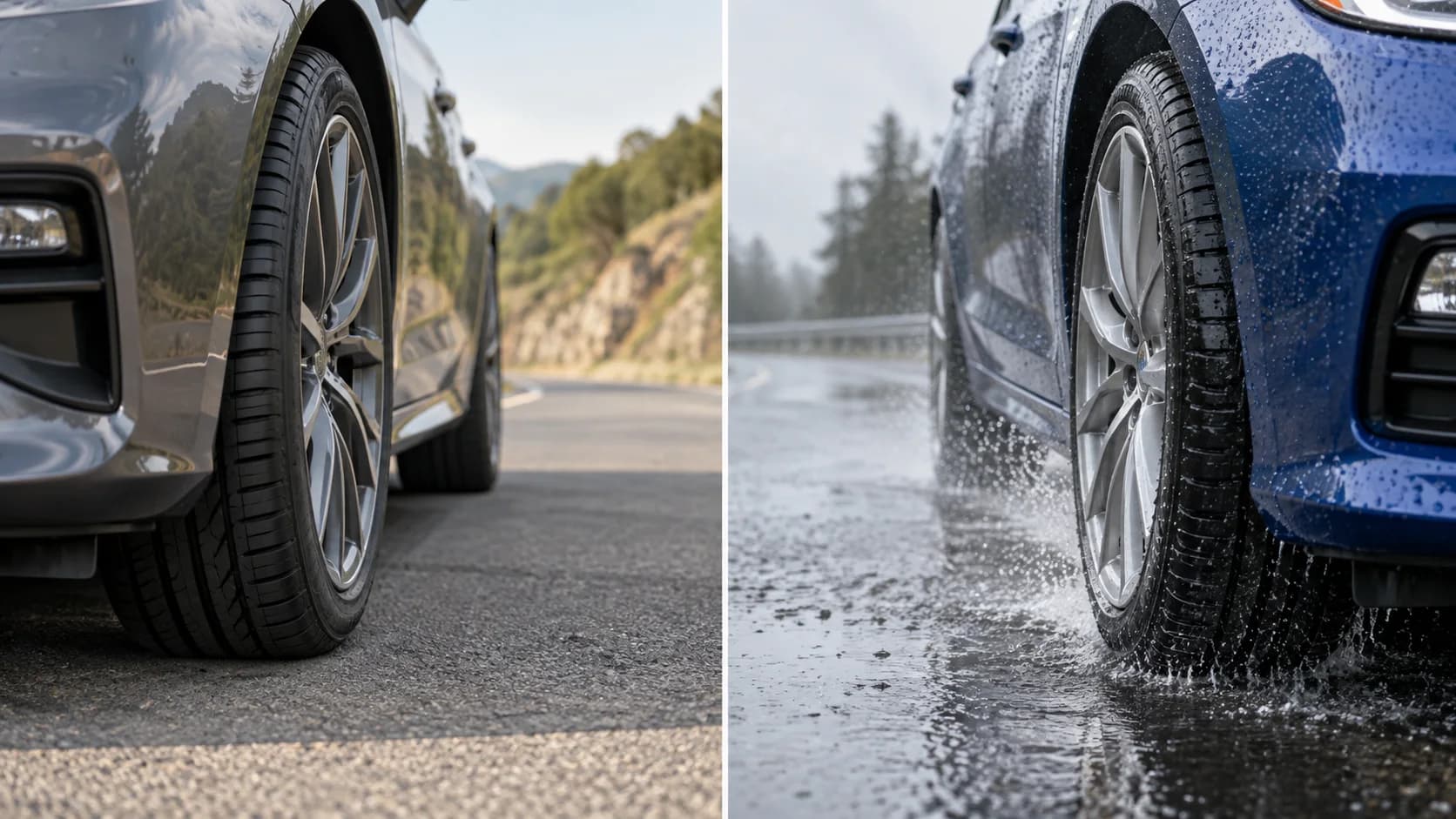
Summer tyres generally offer superior grip and braking performance in warm, dry, and wet conditions above 7 °C. All-season tyres provide a compromise, offering acceptable performance across a wider temperature range and in light snow, but without excelling in any specific condition.
Compound and tread design differences
The fundamental distinction between summer and all-season tyres lies in their rubber compound and tread pattern. Summer tyres utilise a harder rubber compound designed to maintain rigidity and optimal grip at higher ambient temperatures. This compound resists softening, which would otherwise reduce handling precision and increase wear. Their tread patterns typically feature larger, solid blocks and fewer sipes (small, thin slits) to maximise contact patch with the road surface. This design promotes stability and effective water dispersal through wide circumferential grooves, reducing the risk of aquaplaning in heavy rain.
All-season tyres, by contrast, employ a softer, more flexible rubber compound that remains pliable in colder temperatures, including light snow and ice. This flexibility is crucial for generating grip when the mercury drops below 7 °C, a point at which summer tyre compounds begin to harden and lose effectiveness. Their tread patterns are a hybrid, incorporating elements from both summer and winter tyres. They feature a higher density of sipes and more intricate block patterns to provide biting edges for traction on snow and ice. However, this increased siping and softer compound can lead to reduced stability and increased tread wear in warmer conditions compared to dedicated summer tyres.
Performance in varying conditions
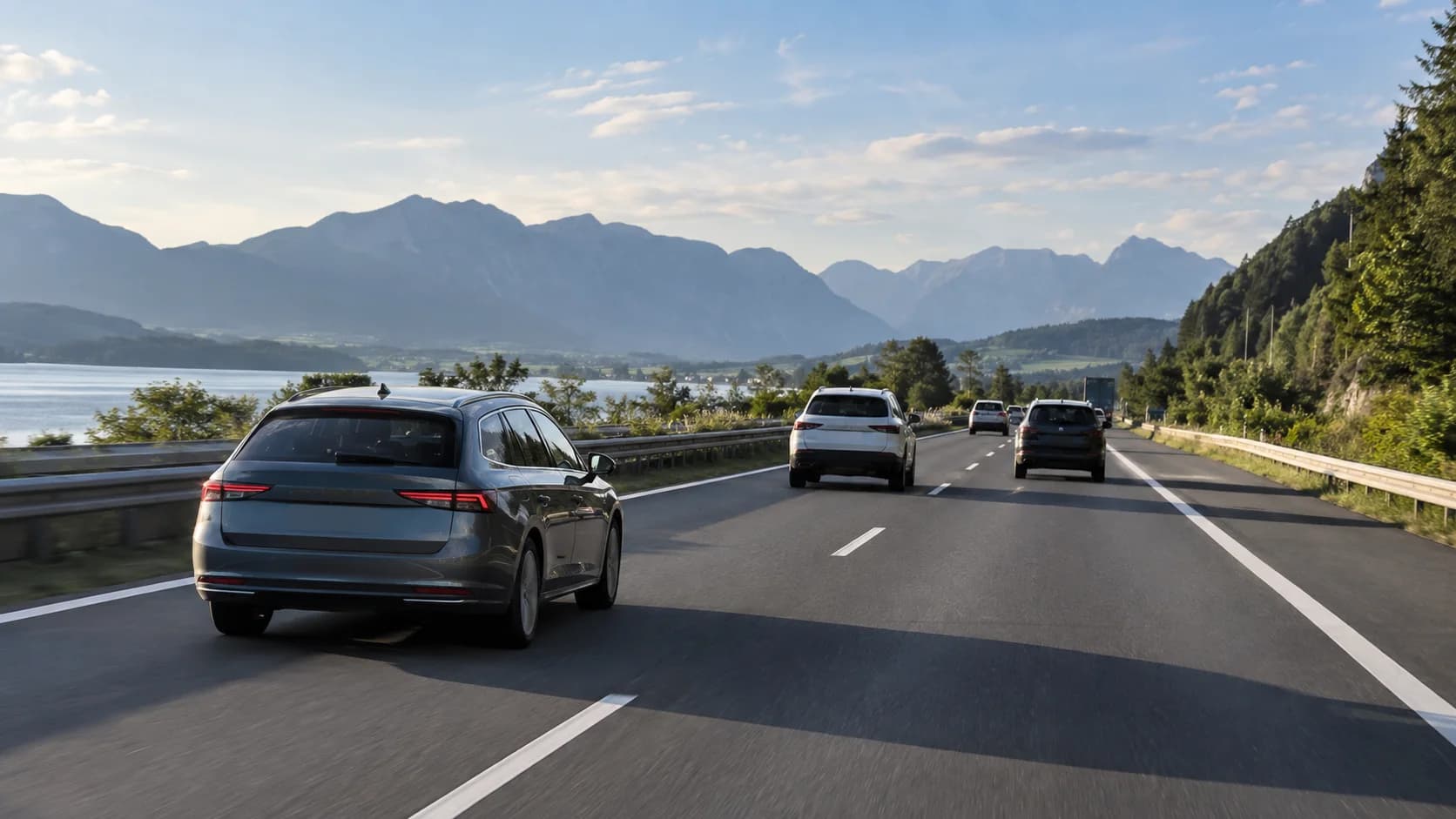
In warm, dry conditions, summer tyres consistently outperform all-season tyres in terms of braking distance and cornering grip. The stiffer compound and optimised tread design allow for more precise steering response and greater resistance to deformation under load, translating to shorter stopping distances and higher limits of adhesion. For example, on a hypothetical journey from Milan to Lyon in August, with ambient temperatures potentially exceeding 30 °C, summer tyres would offer a tangible safety advantage, particularly during emergency braking manoeuvres on motorways or winding alpine roads.
When temperatures drop below 7 °C, or when encountering light snow, all-season tyres demonstrate their utility. Their softer compound and siped tread provide significantly better traction than summer tyres, reducing braking distances and improving acceleration on slippery surfaces. This makes them a viable option for drivers in regions experiencing mild winters with infrequent, light snowfall. However, it is crucial to understand that all-season tyres are not a substitute for dedicated winter tyres in severe winter conditions, such as heavy snow, ice, or sustained sub-zero temperatures. Their performance limits are reached much sooner than those of specialised winter tyres.
In wet conditions, the performance gap can vary. Both summer and all-season tyres are designed to evacuate water, but their effectiveness depends on the specific design and condition of the tyre. Summer tyres with their wider grooves are generally very effective at resisting aquaplaning at speed. All-season tyres, with their more complex tread patterns, can also perform well in rain, but their softer compound might lead to slightly less precise handling at higher speeds compared to summer tyres.
Impact on fuel efficiency and wear
The differences in compound and tread design also influence fuel efficiency and tyre wear. Summer tyres, with their harder compound and less aggressive tread pattern, typically exhibit lower rolling resistance in warm conditions. Lower rolling resistance means less energy is required to keep the vehicle moving, potentially leading to marginally better fuel economy. This effect, while often small, can accumulate over the lifespan of the tyres.
All-season tyres, due to their softer compound and more intricate tread, generally have higher rolling resistance, especially in warmer temperatures. This can result in a slight increase in fuel consumption compared to summer tyres. Furthermore, the softer compound of all-season tyres can lead to faster wear rates when consistently driven in warm conditions, as the material is not optimised for such environments. Conversely, summer tyres driven in cold conditions will wear faster and offer reduced grip, potentially offsetting any perceived durability advantage.
Legal and safety considerations
In Europe, the General Safety Regulation (EU) 2019/2144 mandates certain safety features for vehicles, but specific tyre regulations vary by country. While many European countries do not legally mandate winter tyres, some do, or they impose requirements for tyres suitable for winter conditions during specific periods. All-season tyres that carry the "Three-Peak Mountain Snowflake" (3PMSF) symbol are generally recognised as suitable for winter conditions where such regulations exist, though this does not equate to the performance of a dedicated winter tyre. The 3PMSF symbol indicates that the tyre has met specific performance criteria in snow tests.
Drivers should always consult their vehicle's manual or official documentation to verify the recommended tyre specifications, including size, speed rating, and load index. Using tyres that do not meet these specifications can compromise vehicle safety, affect insurance validity, and potentially lead to fines. Modern vehicles equipped with advanced driver-assistance systems (ADAS), such as Electronic Stability Control (ESC) and Autonomous Emergency Braking (AEB), rely on optimal tyre grip for their effective operation. Euro NCAP Safety Assist protocols, for example, assume a certain level of tyre performance. Suboptimal tyres, whether summer tyres in winter or worn tyres, can degrade the performance of these safety systems, increasing braking distances and reducing control.
For electric vehicles (EVs), the choice of tyre can have a more pronounced impact on range due to the absence of engine noise masking tyre noise and the direct correlation between rolling resistance and energy consumption. The Alternative Fuels Infrastructure Regulation (EU) 2023/1804 aims to expand charging infrastructure, but maximising range through efficient tyres remains a practical consideration for EV drivers.
Practical decision-making
The choice between summer and all-season tyres ultimately depends on local climate, driving habits, and practical considerations. For drivers in regions with distinct seasons, experiencing consistently warm summers and cold winters with significant snowfall, the optimal solution remains a seasonal tyre change: summer tyres for the warmer months and dedicated winter tyres for the colder period. This approach provides the best possible safety and performance in all conditions.
However, for drivers in regions with milder climates, where temperatures rarely drop significantly below freezing and heavy snowfall is uncommon, all-season tyres can be a practical and cost-effective compromise. They eliminate the need for seasonal tyre changes and storage, offering convenience. For a hypothetical driver undertaking a cross-border European journey, for example, from Lisbon to Berlin, all-season tyres might offer sufficient versatility to handle varying conditions encountered along the route, from the warmer south to potentially colder central European sections, without the logistical challenge of changing tyres mid-journey.
It is crucial for drivers to regularly inspect their tyres for wear, damage, and correct inflation pressure, regardless of type. The legal minimum tread depth in many European countries is 1.6 mm, but performance, especially in wet conditions, significantly degrades below 3 mm for summer tyres and 4 mm for winter-rated tyres.