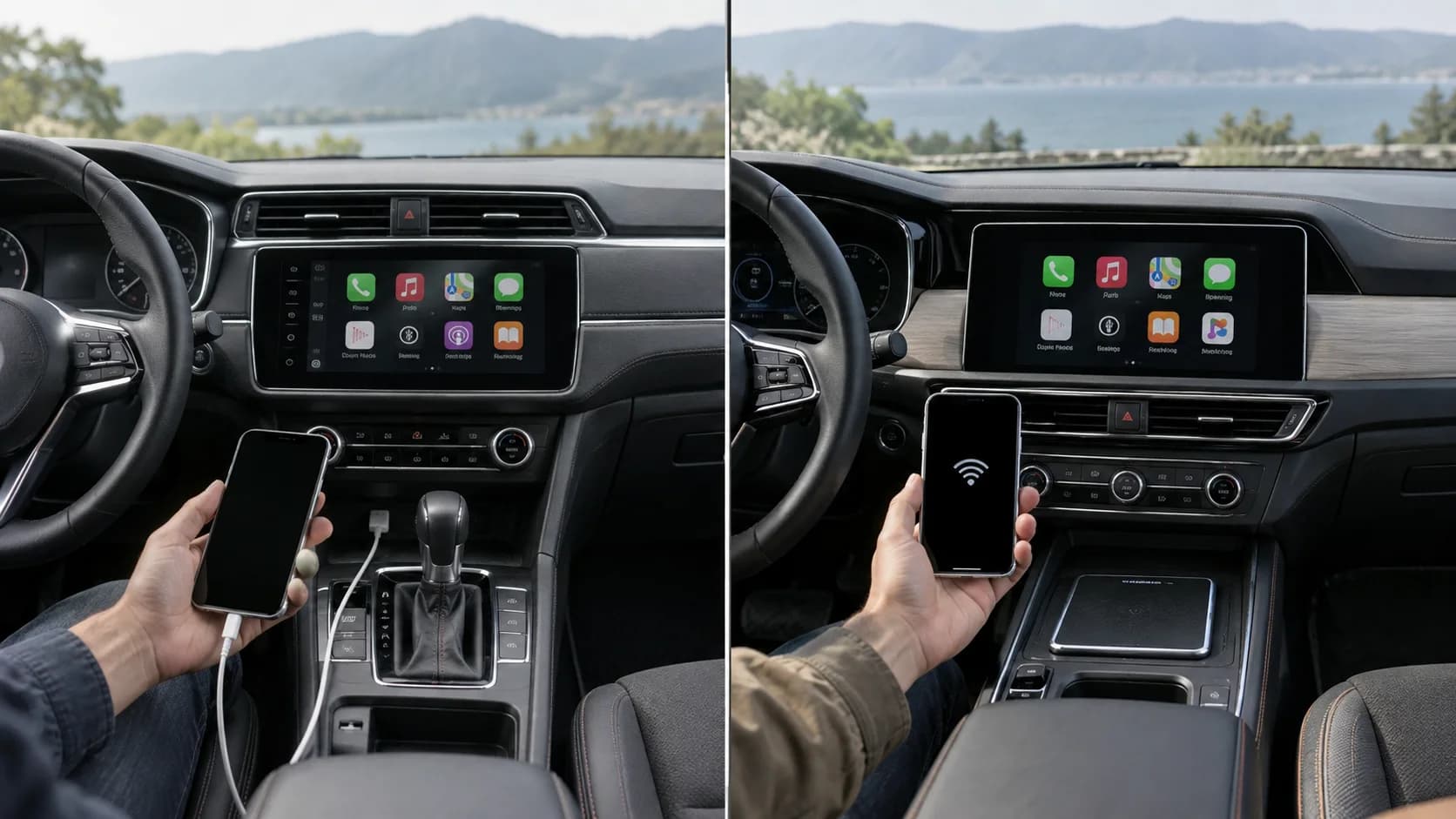
Wireless phone integration offers convenience through reduced cable clutter, while wired connections typically provide more stable data transfer and simultaneous charging. The optimal choice depends on individual priorities for connectivity reliability, charging speed, and in-cabin aesthetics.
Understanding Wireless and Wired Integration
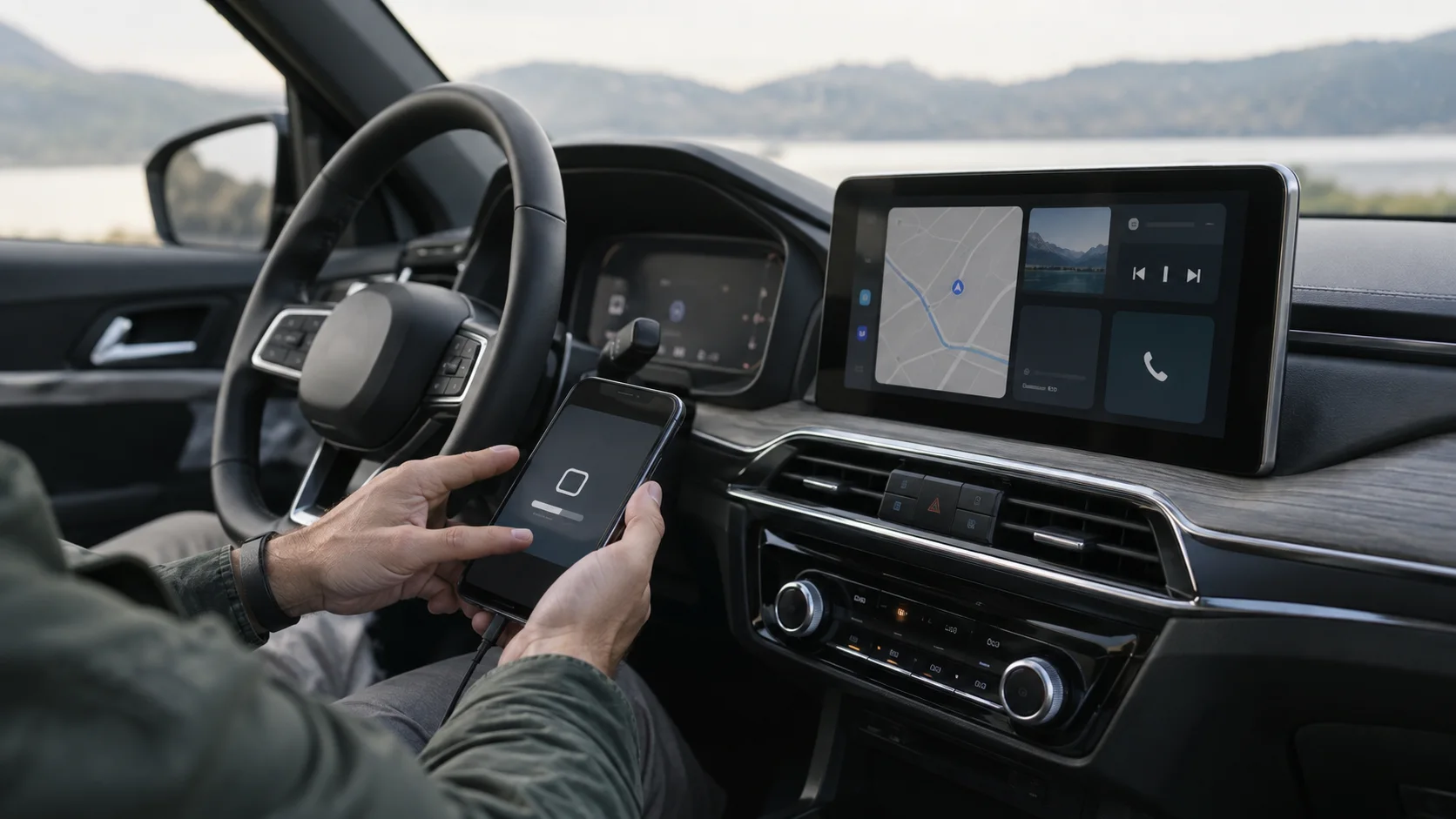
Modern vehicles increasingly offer smartphone integration systems such as Apple CarPlay and Android Auto. These platforms mirror selected phone applications onto the vehicle's infotainment display, allowing access to navigation, communication, and media functions via the car's controls. The connection between the phone and the vehicle can be established either wirelessly or through a physical USB cable.
Wireless integration relies on a combination of Wi-Fi and Bluetooth. Bluetooth handles the initial pairing and basic audio, while Wi-Fi carries the higher bandwidth data required for the full display mirroring and application functionality. Wired integration, conversely, uses a USB cable to establish both the data connection and, typically, to supply power to the phone.
Data Stability and Latency
A wired connection generally provides a more robust and consistent data link. This is particularly noticeable in areas with high radio frequency interference or when the vehicle is moving through diverse environments, such as urban centres or mountainous regions. The physical cable creates a direct digital pathway, minimising potential signal drop-outs or degradation. This can result in smoother map rendering, uninterrupted audio streaming, and more responsive input from the vehicle's controls.
Wireless connections, being radio-based, are susceptible to interference from other electronic devices, Wi-Fi networks, and even the vehicle's own systems. While modern wireless protocols are designed to mitigate these issues, occasional momentary disconnections or increased latency can occur. For navigation, this might manifest as a slight delay in map updates or voice instructions. For audio, it could be a brief interruption in playback. These occurrences are often infrequent but can be more pronounced in specific conditions.
Charging Performance and Battery Management
One of the most significant differentiators is charging capability. When a phone is connected via a USB cable, it typically charges simultaneously. The charging speed depends on the vehicle's USB port specification (e.g., USB 2.0, USB 3.0, USB-C Power Delivery) and the phone's charging capabilities. Many modern vehicles offer USB ports capable of delivering sufficient power for effective charging, even while the phone is actively running demanding applications like navigation.
Wireless integration, by default, does not charge the phone unless the vehicle is also equipped with a separate wireless charging pad. If no such pad is present, the phone's battery will deplete more quickly due to the continuous use of Wi-Fi and Bluetooth for data transfer and display mirroring. Even with a wireless charging pad, the charging rate can be slower than a high-power wired connection, and the phone may still experience a net discharge if running very intensive applications while simultaneously charging wirelessly. This is a critical consideration for longer journeys, such as a hypothetical drive from Berlin to Rome, where sustained phone usage for navigation and entertainment is common. Drivers without a wireless charging pad would need to use a separate USB cable for power, negating some of the cable-free convenience of wireless integration.
Convenience and Cabin Aesthetics
The primary advantage of wireless integration is the absence of physical cables. This contributes to a cleaner, less cluttered cabin environment. Drivers can simply enter the vehicle, and their phone connects automatically without needing to retrieve a cable. This convenience is particularly appealing for short trips or for drivers who frequently enter and exit the vehicle.
Wired connections, while reliable, introduce a cable into the cabin. This cable can be perceived as untidy and may need to be routed carefully to avoid interfering with controls or passenger space. However, for drivers who prefer to keep their phone securely stored in a specific compartment or cradle, a wired connection can be a natural fit, as the cable can be permanently routed.
Compatibility and Verification
To verify compatibility, drivers should consult the vehicle's owner's manual or the manufacturer's official documentation. These sources will explicitly state whether the vehicle supports wireless or wired integration for specific platforms (e.g., Apple CarPlay, Android Auto) and list any requirements, such as minimum phone operating system versions. The manual will also detail the location and type of USB ports available and their power delivery capabilities.
For example, a vehicle manual might specify "Wireless Apple CarPlay requires iPhone 6 or later running iOS 10.0 or higher" and "Wired Android Auto requires Android 6.0 or higher and a USB-C to USB-A cable." It is also advisable to check the phone manufacturer's specifications to ensure the phone itself supports the desired integration method. Not all phones, especially older models, support wireless versions of these platforms.
Impact on Vehicle Systems and Safety
Both wired and wireless integration systems are designed to operate within the vehicle's electronic architecture. However, the General Safety Regulation (EU) 2019/2144 mandates specific safety features, including driver distraction mitigation systems. Euro NCAP's Safety Assist protocols also evaluate the effectiveness of human-machine interfaces (HMIs) in minimising distraction. Integrated phone systems are designed to present information in a way that is less distracting than using a handheld phone.
Wireless systems, due to their reliance on radio frequencies, contribute to the vehicle's overall electromagnetic environment. While these systems are designed to comply with relevant electromagnetic compatibility (EMC) standards, a wired connection inherently avoids adding to the wireless spectrum within the vehicle. From a functional safety perspective, both methods are subject to rigorous testing by vehicle manufacturers to ensure they do not interfere with critical vehicle systems.
Energy Consumption and Environmental Considerations
The energy consumption of phone integration systems, whether wired or wireless, is part of the vehicle's overall electrical load. This load contributes to the vehicle's fuel or electricity consumption, which is measured under the Worldwide Harmonised Light Vehicle Test Procedure (WLTP) as per EU Regulation 2025/1706. While the direct energy draw of the integration system itself is relatively small compared to propulsion, it is a continuous load.
Wireless systems, by continuously transmitting and receiving data via Wi-Fi and Bluetooth, consume more power from the phone's battery. If the phone is not simultaneously charging, this leads to more frequent phone charging cycles, which, over the phone's lifespan, contributes to its overall energy footprint. Wired systems, by charging the phone, shift this energy demand to the vehicle's electrical system, which is then replenished by the engine or battery. The Alternative Fuels Infrastructure Regulation (EU) 2023/1804 focuses on charging infrastructure, but the efficiency of in-car charging systems contributes to the overall energy ecosystem.
Scenarios for Preference
A driver prioritising a clutter-free cabin and short-trip convenience might prefer wireless integration, especially if their vehicle includes a wireless charging pad. This setup allows for seamless connection without physical interaction.
Conversely, a driver undertaking frequent long journeys, relying heavily on navigation, or requiring consistent, fast phone charging, may find a wired connection more reliable and practical. The guaranteed power delivery and stable data link can be crucial for extended use. Similarly, drivers with older phones that do not support wireless integration will find a wired connection to be the only option. For professional drivers or those using their phone for critical work functions while driving, the stability of a wired connection might be a deciding factor.