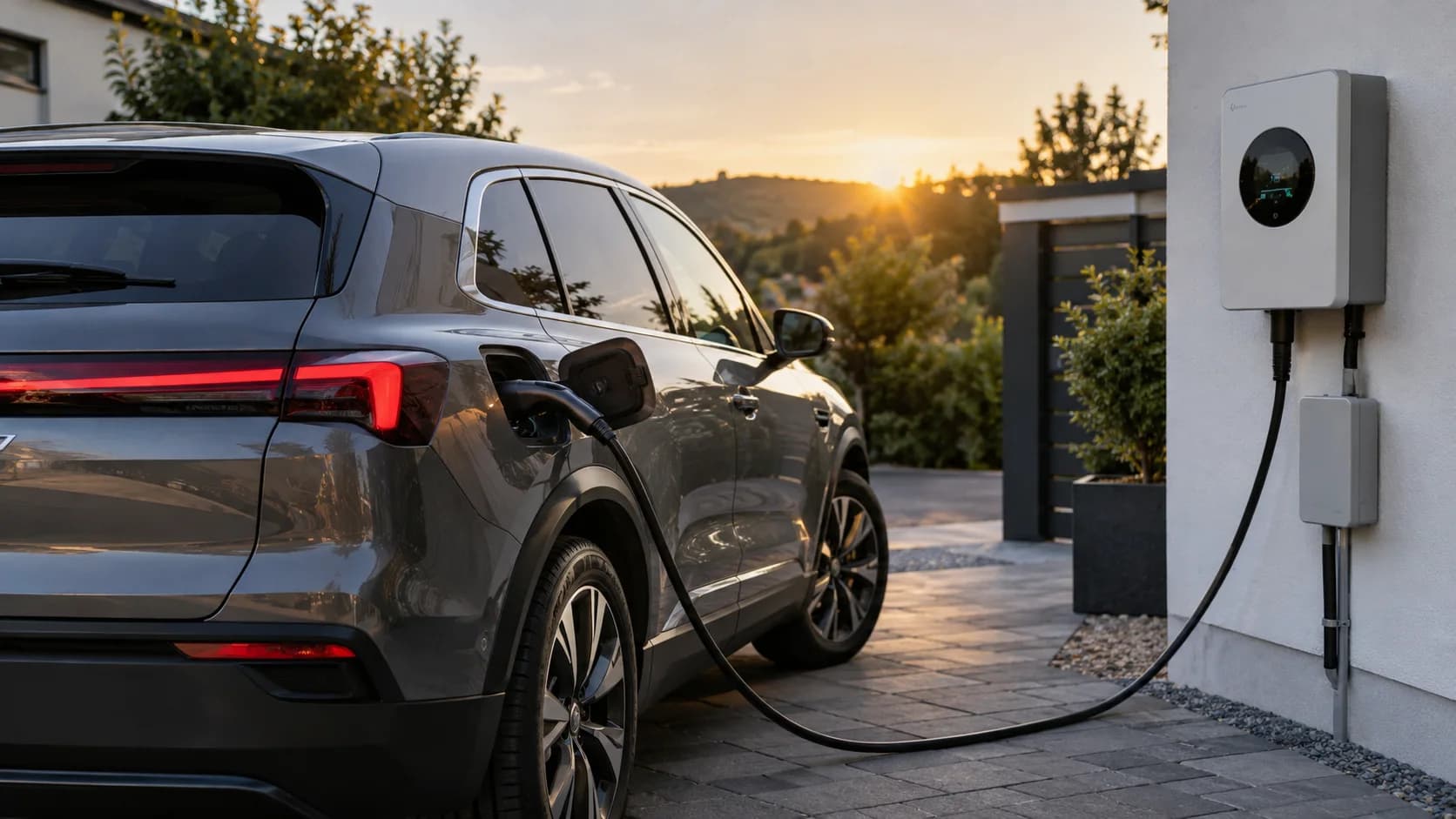
Energy is lost during EV charging primarily through heat dissipation in the charging equipment, cables, and the vehicle's battery and power electronics. These losses occur throughout the charging process, from the grid connection to the energy stored in the battery.
Understanding Charging Efficiency
The efficiency of an electric vehicle (EV) charging process is not 100%, meaning some electrical energy drawn from the grid does not reach the battery as stored chemical energy. These losses manifest predominantly as heat. The primary components contributing to these energy losses include the charging station itself, the charging cable, and the vehicle's internal systems, such as the on-board charger (for AC charging), the battery management system (BMS), and the battery pack.
Official laboratory figures for EV energy consumption, such as those derived from the WLTP type-approval procedure, account for energy drawn from the grid. This includes charging losses. The WLTP procedure, as outlined in EU regulation 2025/1706, specifies a test cycle that measures electricity consumption, providing a standardized basis for comparison. However, these figures represent a controlled environment and may differ from real-world outcomes due to variations in ambient temperature, charging power, and battery state of charge.
AC Charging Losses
When an EV charges using alternating current (AC), the electricity from the grid must be converted to direct current (DC) to be stored in the battery. This conversion is performed by the vehicle's on-board charger. This component is a significant source of energy loss during AC charging. The efficiency of on-board chargers varies between vehicle models and power levels, but conversion losses typically range from 5% to 15%.
Factors influencing AC charging efficiency include the power output of the charging point and the design of the vehicle's on-board charger. Lower power AC charging, such as from a standard domestic socket, can sometimes exhibit slightly higher relative losses due to a longer charging duration where auxiliary systems remain active. Conversely, higher power AC charging, while faster, can also generate more heat in the on-board charger, potentially leading to increased absolute energy losses.
The charging cable itself also contributes to losses through resistive heating, though this is generally a smaller proportion compared to the on-board charger. The length and gauge of the cable, along with the current flowing through it, determine the extent of these losses.
DC Charging Losses
Direct current (DC) fast charging bypasses the vehicle's on-board charger. The AC-to-DC conversion occurs within the charging station itself, external to the vehicle. While this eliminates losses from the vehicle's on-board charger, the DC charging station introduces its own conversion losses. These external converters are often more efficient than on-board chargers due to their larger size and dedicated cooling systems, but they are not lossless.
Within the vehicle, during DC charging, energy still flows through the battery management system (BMS) and into the battery pack. The BMS monitors and controls the charging process, balancing cells and managing temperature. These operations consume a small amount of energy. The battery pack itself also generates heat during charging due to internal resistance, especially at high charging rates. This internal resistance is a fundamental property of electrochemical cells. The battery's thermal management system works to dissipate this heat, which requires energy.
The efficiency of DC charging is influenced by the charging power, the battery's state of charge, and its temperature. Charging a cold battery or a battery that is near full capacity can lead to reduced efficiency as the BMS may limit power to protect the battery, extending the charging time and increasing relative auxiliary losses.
Battery-Related Losses
The battery pack is a critical component where energy losses occur during charging. Beyond the internal resistance mentioned earlier, the battery's thermal management system plays a significant role. To maintain optimal operating temperatures for the battery cells, especially during fast charging or in extreme ambient conditions, the thermal management system actively heats or cools the battery. This process consumes energy, which is drawn from the grid during charging.
The EU Batteries Regulation (2023/1542) emphasizes battery durability and performance, which are intrinsically linked to thermal management. An effectively managed battery temperature can help mitigate degradation and maintain charging efficiency over the battery's lifespan. However, the energy cost of this management is part of the overall charging losses.
Battery degradation over time, as addressed by UNECE Global Technical Regulation No. 22 on battery durability, can also subtly affect charging efficiency. A degraded battery might exhibit higher internal resistance, leading to increased heat generation and slightly lower charging efficiency compared to a new battery.
Auxiliary System Consumption
During any charging session, various auxiliary systems within the EV consume energy. These include the vehicle's infotainment system, climate control (if active), cooling pumps for the battery and power electronics, and the BMS. While the primary purpose of charging is to replenish the traction battery, these auxiliary loads draw power from the grid throughout the charging duration.
The impact of auxiliary consumption on overall charging efficiency is more pronounced during longer charging sessions or at lower charging power levels. For instance, if a vehicle is charging slowly overnight, the cumulative energy consumed by auxiliary systems over many hours can represent a larger proportion of the total energy drawn from the grid compared to a rapid DC charge where the main energy transfer occurs quickly.
Drivers can verify the energy consumption of their vehicle's auxiliary systems during charging through the vehicle's on-board display or associated mobile applications, which often provide real-time power draw information.
Practical Implications for Drivers
For a driver undertaking a cross-border European journey, understanding charging losses can inform charging decisions. If maximizing efficiency is paramount, choosing charging stations that align with the vehicle's optimal charging curve can be beneficial. Many vehicle manuals or manufacturer websites provide charging power curves, illustrating how charging speed varies with the battery's state of charge.
For example, a vehicle might charge most efficiently between 20% and 80% state of charge, with efficiency decreasing outside this window due to thermal management or voltage limitations. Planning stops to charge within this optimal range can reduce overall energy waste and charging time.
The Alternative Fuels Infrastructure Regulation (2023/1804) aims to improve the user experience at public charging stations, including transparency on pricing. While this regulation does not directly address charging efficiency, understanding where energy is lost can help drivers interpret charging costs, as they are typically billed for the energy drawn from the grid, not just the energy stored in the battery.
To verify compatibility and optimal charging parameters, drivers should consult their vehicle's owner's manual. This document typically specifies the maximum AC and DC charging power supported, recommended charging practices, and information regarding the battery's thermal management system. Manufacturer-specific apps or online portals can also offer insights into charging status and efficiency.