BMW is developing a second-generation X7 that is reported to combine six-cylinder petrol and diesel engines, a twin-turbo V8 and a fully electric derivative for the first time. Autocar says the new large SUV is due to appear in 2027, with the electric version widely referred to as iX7 during development.
BMW has not released a launch statement for the new X7. The iX7 name, battery capacity, range, output, prices and market schedule therefore remain unconfirmed. What BMW has established publicly is the industrial foundation: Plant Spartanburg builds the X family, while the nearby Woodruff facility has started series production of sixth-generation high-voltage batteries.
One body concept for combustion and electric versions
The report describes a substantially revised form of BMW's Cluster Architecture, or CLAR. It is intended to accommodate combustion and battery-electric drivetrains while keeping the seating position, exterior design and cabin package closely aligned. That would make the electric model part of the regular X7 family rather than a visually separate product.
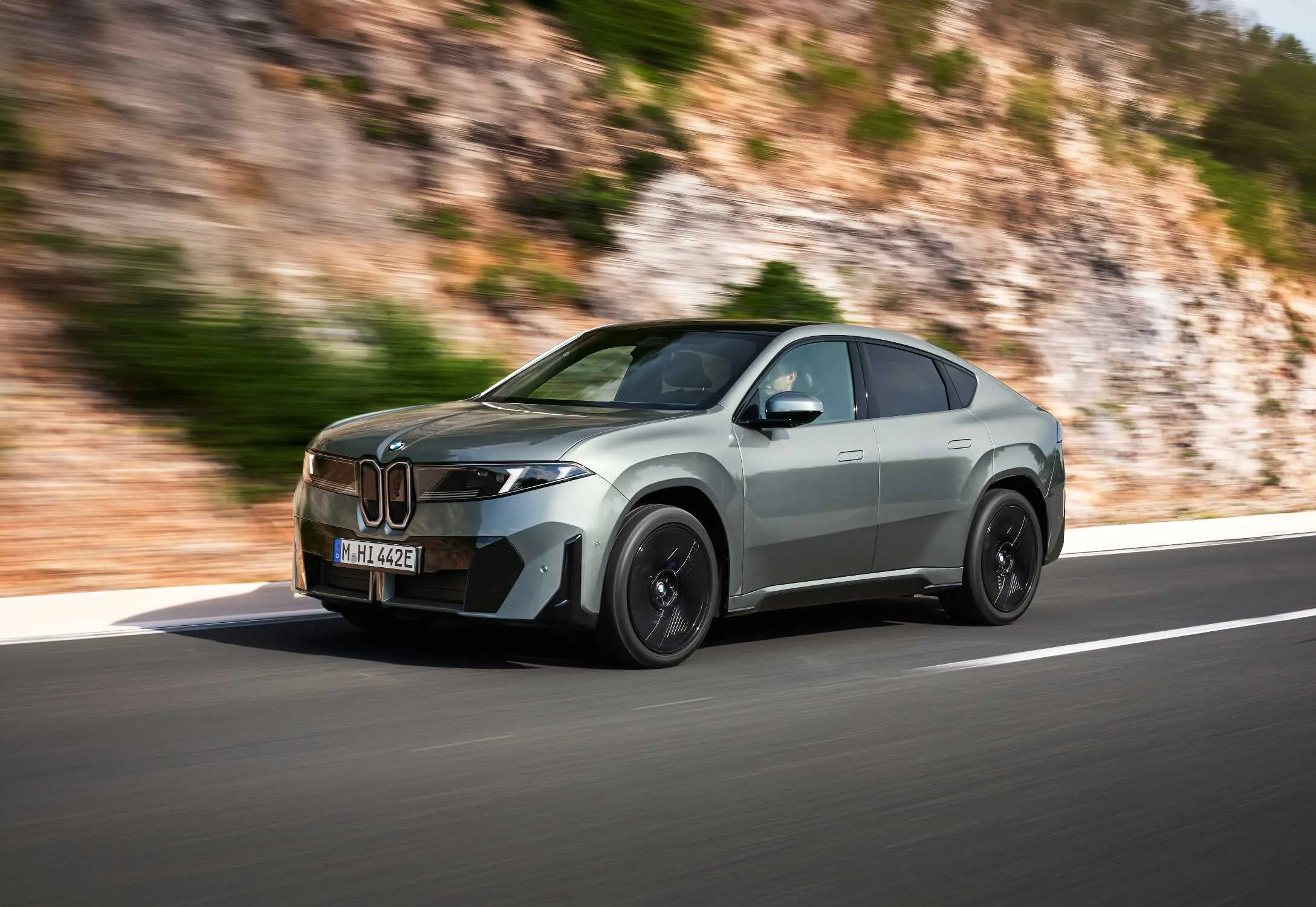
Camouflaged prototypes retain a three-row, full-size SUV outline. Length is reported to exceed 5,200 mm, although BMW has not published final dimensions. Split headlights, a taller kidney grille, winglet-style door handles and wheels ranging from 19 to 23 inches are also anticipated. Development cars can carry temporary lights and trim, so those observations do not establish the final specification.
A conventional single-piece tailgate is expected to replace the current model's split arrangement. That could simplify loading and production, but it is another reported detail rather than a BMW-confirmed feature.
Six-cylinder engines and a V8 remain in the plan
The entry petrol version is expected to use a 3.0-litre inline-six with 48V mild-hybrid assistance. Autocar points to about 394 hp, matching the official output of the latest X5 40 xDrive. BMW gives that X5 engine approximately 580 Nm, but it has not assigned either figure to a future X7 specification.
A mild-hybrid six-cylinder diesel is also reported for Europe. Its availability will depend on regional product planning and homologation. BMW has not said which EU markets would receive it, nor whether every combustion version would launch at the same time.
Above those models, an X7 M60 xDrive is expected to retain a twin-turbocharged 4.4-litre V8 with more power than the outgoing version. No verified output is available. The reported programme does not include a plug-in hybrid, even though the new X5 offers one; absence from an unofficial model outline is not the same as a formal cancellation.
A 150 kWh iX7 battery is not yet a BMW figure
The most eye-catching claim is that the iX7 battery could reach 150 kWh and support more than 800 km on the WLTP combined cycle. BMW has not confirmed either number. Such a pack would provide substantial energy for a large, heavy vehicle, but it would also affect mass, cost, charging demand and material use.
The official benchmark is the new iX5 60 xDrive. BMW specifies 144 kWh of net usable energy, two motors producing a combined 570 hp, an 800V architecture and DC charging at up to 460 kW. Its preliminary range estimate is about 700 km under the US EPA procedure, not WLTP, and BMW claims a 10–80% charge in 22 minutes under suitable conditions.
Those numbers cannot simply be transferred to an iX7. A longer and potentially heavier vehicle can have different aerodynamics, wheel choices, calibration and usable capacity. They show what Gen6 hardware BMW has already industrialised for an electric SUV at Spartanburg, not what the X7 will necessarily receive.
Woodruff supplies the next electric X models
BMW officially opened Plant Woodruff in South Carolina on 13 November 2026. The site is roughly 24 km from Spartanburg and supplies Gen6 batteries for the iX5 and future electric BMW X models. The release does not name the iX7, although the company says at least six battery-electric vehicles will be assembled at Spartanburg by 2030.
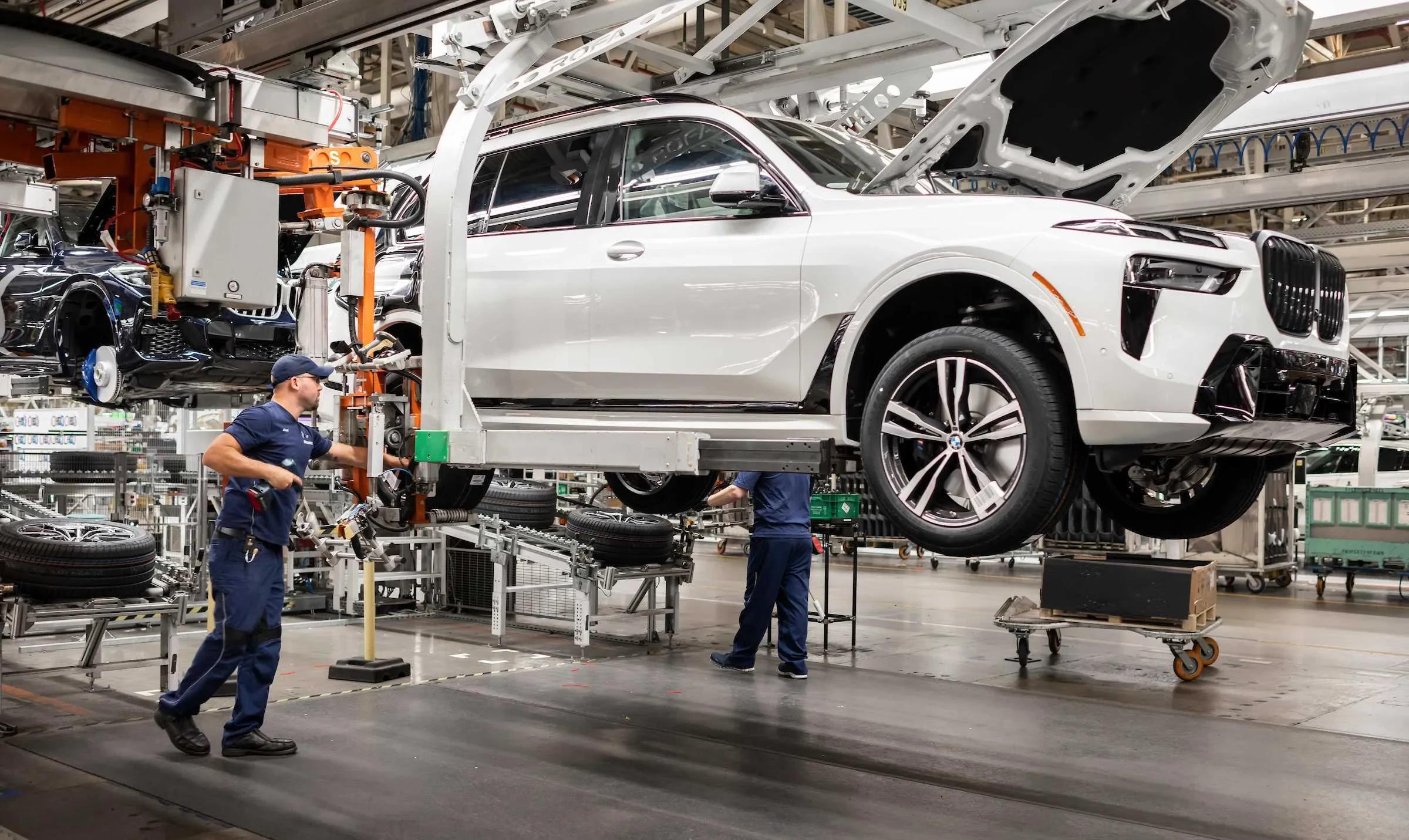
Plant Spartanburg employs more than 11,000 people and builds over 1,500 vehicles per day. About half of its output is exported to nearly 120 markets. Its current production portfolio includes X3, X5, X6, X7 and XM variants.
BMW says Gen6 uses cylindrical cells integrated directly into the pack through a cell-to-pack design. Woodruff has more than 300 employees and 250 robots, and its packs travel the short distance to the vehicle plant. This is confirmed production infrastructure; the exact allocation beyond iX5 has not yet been disclosed.
An Alpina X7 is reported for 2028
Autocar also reports an Alpina derivative, internally known as G69, for production in 2028. It is expected to use a specially calibrated version of the 4.4-litre V8 with model-specific transmission and suspension settings. A fully electric Alpina X7 is said to be under consideration, with no decision made.
BMW's official position is narrower. BMW Alpina was relaunched as a standalone marque within the group on 1 January 2026. The first production model of the new era is due in 2027 and will be based on the 7 Series. BMW has not announced a next-generation Alpina X7 or an electric Alpina SUV.
That distinction matters because the current Alpina XB7 does not automatically prove the specification or timing of its successor. A model programme can change before production approval, particularly where two drivetrains are being evaluated.
What buyers can treat as established
BMW has Gen6 batteries in production, a vehicle plant equipped for large electric SUVs and a stated plan for more than 40 new or updated models by the end of 2027. It also says Neue Klasse technologies will spread across the range regardless of drivetrain type.
The exact X7 package remains open. The 150 kWh battery, 800 km-plus WLTP range, engine outputs, 31.3-inch rear screen, regional line-ups and prices need a BMW launch release before they can be treated as specifications. For now, the defensible conclusion is that BMW is preparing its flagship three-row SUV for a mixed combustion and electric future at its American X-model manufacturing base.