Dacia recorded about 446,000 passenger-car registrations across 30 European markets from January to October 2026, 10.4% fewer than in the same period of 2025, according to Dataforce figures. Sandero remained the brand’s largest nameplate at 181,080 units, although its volume fell 10.7%. Bigster was the only Dacia model to grow, reaching 68,356 registrations and gaining 41.7%.
These figures are not ACEA’s October registration release, which is scheduled for 24 November 2026. Dataforce operates its own 30-country European perimeter and aggregates registrations by brand, model and sales channel. Its total should therefore not be treated as an EU-only figure or directly substituted for Renault Group’s worldwide sales report.
Dacia’s model-by-model results
The six reported models add up to 445,570 registrations, rounded in market reporting to about 446,000. Their trajectories differ sharply:
| Model | January–October 2026 | Year-on-year change |
|---|---|---|
| Dacia Sandero | 181,080 | −10.7% |
| Dacia Duster | 117,072 | −21.7% |
| Dacia Bigster | 68,356 | +41.7% |
| Dacia Jogger | 44,604 | −22.4% |
| Dacia Spring | 26,909 | −1.3% |
| Dacia Logan | 7,549 | −38.6% |
Sandero supplied roughly 40.6% of the combined model volume. Its leadership inside the Dacia range does not mean demand increased: the model finished 10.7% below the comparable 2025 period. Duster remained second, but its 21.7% decline was more than twice as steep as the brand’s overall fall.
Bigster moved in the opposite direction. The 41.7% rise has to be read against a launch-year comparison: during the opening months of 2025 the SUV did not yet have the availability of a model in a full sales year. Its comparison base is consequently less mature than Sandero’s or Duster’s. Even with that qualification, 68,356 registrations put Bigster ahead of Jogger, Spring and Logan and made it Dacia’s third-largest European model.
Why Renault Group reports a different total
Renault Group reported 471,007 Dacia vehicles sold worldwide in the first nine months of 2026, down 9.7% from 521,340 in January–September 2025. Dacia’s third-quarter worldwide volume was 144,175 vehicles, 12.8% lower year on year.
The direction is consistent with Dataforce’s 10.4% European decline after ten months, but the two datasets do not describe the same perimeter. Renault Group’s figure combines passenger cars and light commercial vehicles across its global markets. Dataforce covers registrations in 30 European countries and provides a model breakdown. The periods differ by one month as well.
The distinction also prevents misleading comparisons with Dacia’s official 2025 model totals. Dacia reported 289,295 Sandero and 193,974 Duster sales worldwide for the full year. Those global, twelve-month numbers cannot be compared directly with ten-month European registrations as though their geography and time span were identical.
Duster and Jogger lose more than one fifth
Duster reached 117,072 registrations, down 21.7%. The result has an industrial dimension for Romania because Duster is assembled at Mioveni alongside Bigster. European registrations alone do not show how many vehicles the plant manufactured or exported, but the weaker demand helps explain pressure on production planning.
Jogger fell 22.4% to 44,604 units. Logan posted the largest percentage decline, 38.6%, from a much smaller European base of 7,549 registrations. Logan is not sold in every market where Dacia offers Sandero or Duster, so its result is not a proxy for the whole brand.
Spring came closest to matching its 2025 pace, recording 26,909 units and a 1.3% decline. The ten-month number precedes the complete market effect of the updated car and the changes announced for the end of 2026. A small year-to-date fall does not guarantee a full-year recovery, because November and December deliveries still matter.
Electrification is changing Dacia’s mix
Renault Group attributes Dacia’s weaker performance to a product and powertrain transition during a rapid acceleration in European demand for electrified cars. In the third quarter, electrified vehicles accounted for 53.3% of the European market measure cited by the group, an increase of 10.3 percentage points.
Dacia is participating in that shift, although it remains strongly exposed to combustion and LPG products. Renault Group says full hybrids made up 24.6% of Dacia sales and placed the brand fourth in Europe’s hybrid market under the company’s stated scope. Hybrid 4x4 versions represented 15% of combined Duster and Bigster sales, while LPG accounted for 39.2% of Dacia volume.
Those shares show why the overall decline cannot be assigned to one powertrain alone. The brand is changing its mix while Sandero, Duster and Jogger lose volume and Bigster grows from an early commercial base. Renault Group expects fourth-quarter support from the first European deliveries of Sandero Hybrid, the new Spring and Striker, as well as an order book strengthened in September.
A strong retail position does not remove the decline
Dacia still directs most of its business toward private customers. Renault Group reported a 74.9% retail mix in the third quarter and placed Dacia third in Europe’s retail passenger-car ranking. Sandero remained Europe’s best-selling passenger car among retail customers.
That ranking and the Dataforce result can both be true. A model may lead a segment or buyer channel while selling fewer units than a year earlier, especially if rivals also decline or if the market mix changes. In 2025, Dacia said Sandero was Europe’s best-selling passenger car across all channels and that the brand held a 7.9% share among European retail customers. The current ten-month decline shows that last year’s position did not guarantee growth in 2026.
The channel distinction also matters. Private registrations, company fleets, rental companies and manufacturer or dealer registrations respond differently to price, supply and product changes. The publicly available summary does not provide a full channel breakdown for each Dacia model, so it cannot establish whether one customer group caused most of the fall.
What the numbers mean for buyers
Lower registrations do not automatically produce discounts, and they do not establish a reliability problem. Dataforce counts vehicles entering the monitored markets; it does not explain every purchasing decision. Price, availability, national incentives, product-cycle timing and competition may all affect the result, but this table does not quantify each factor.
For buyers, the figures are most useful as a map of Dacia’s current model weight. Sandero still delivers the largest volume, Duster remains second and Bigster has established itself in third. Spring is close to its 2025 level, while Jogger and Logan show deeper declines.
The final 2026 result may change after November and December deliveries. For now, the precise conclusion is limited to the measured period: Dataforce registrations for Dacia across 30 European markets fell 10.4% in the first ten months of 2026, and Bigster was the brand’s only model with year-on-year growth.
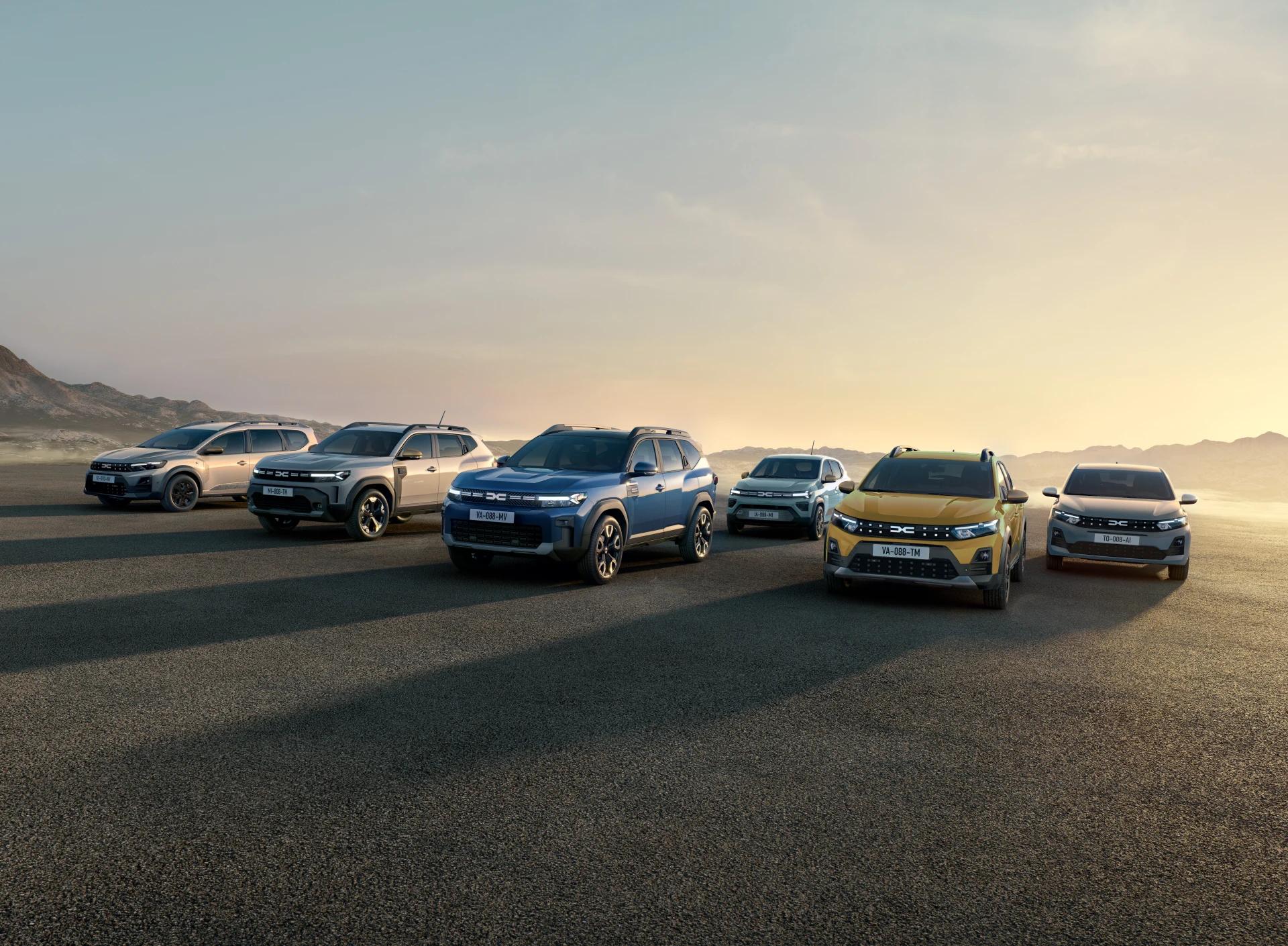
Photo: 2026 Dacia range, official Dacia / Renault Group press image by Publicis Conseil and ADDITIVE. Resized and converted to WebP for editorial publication.