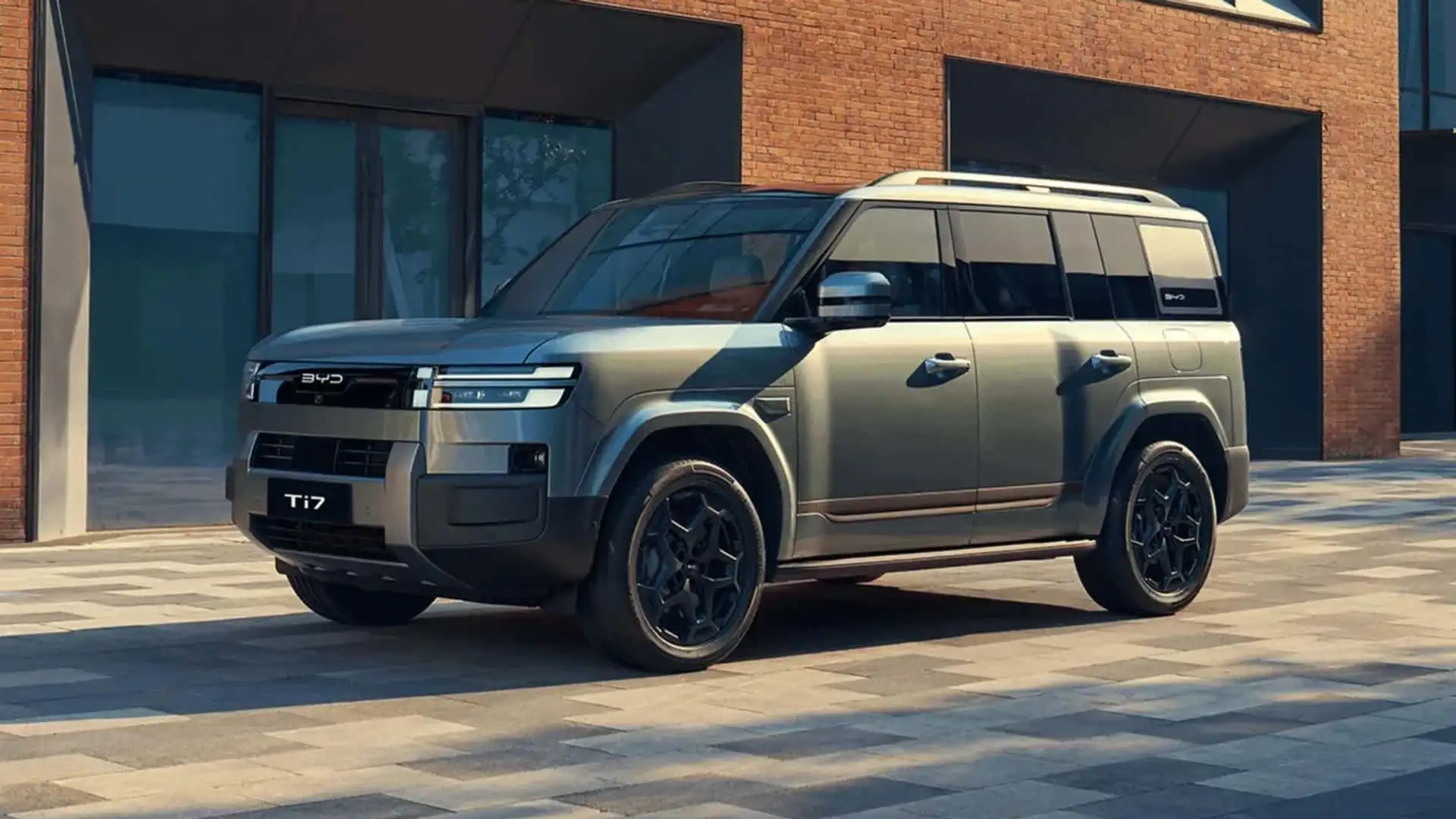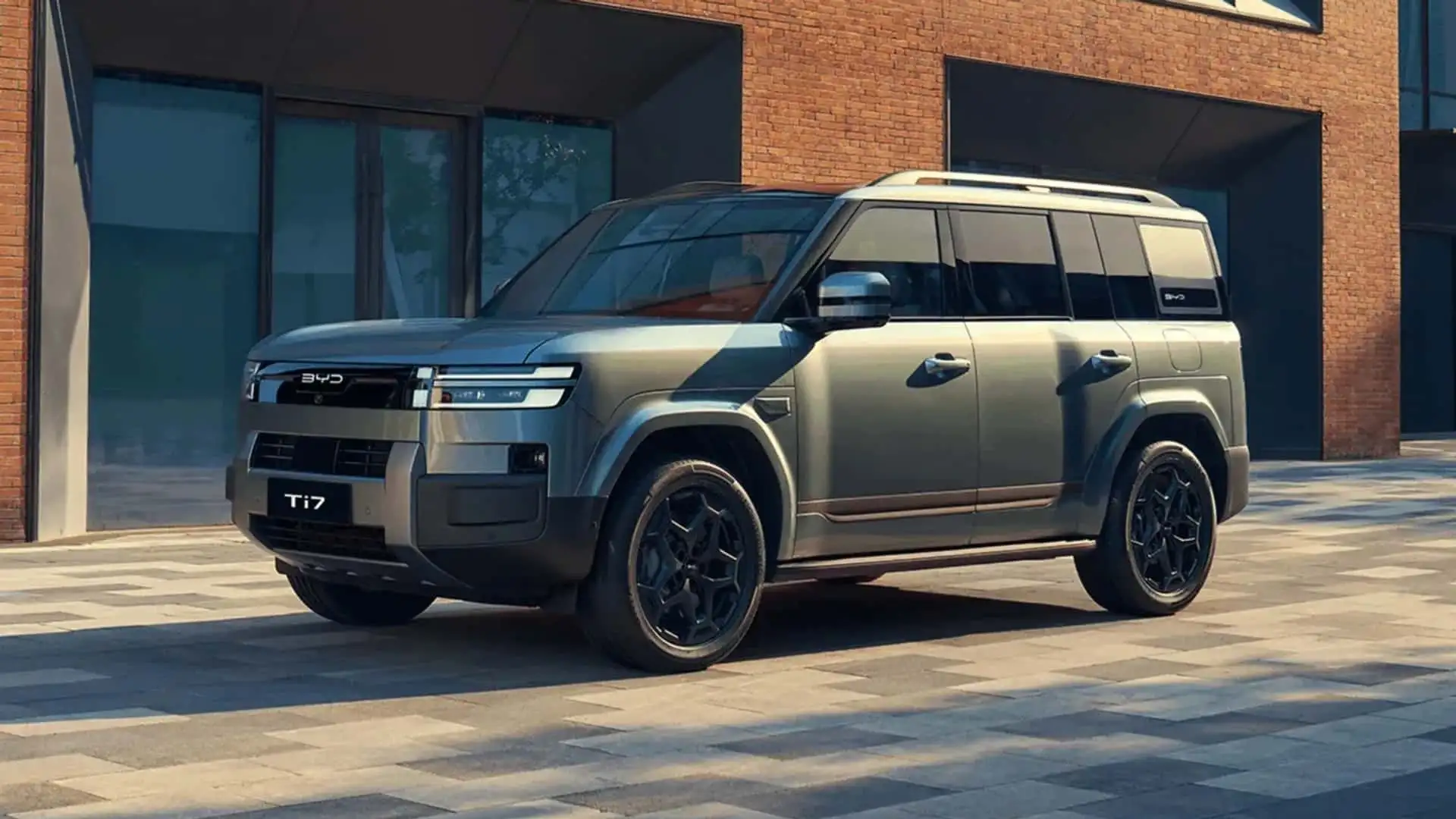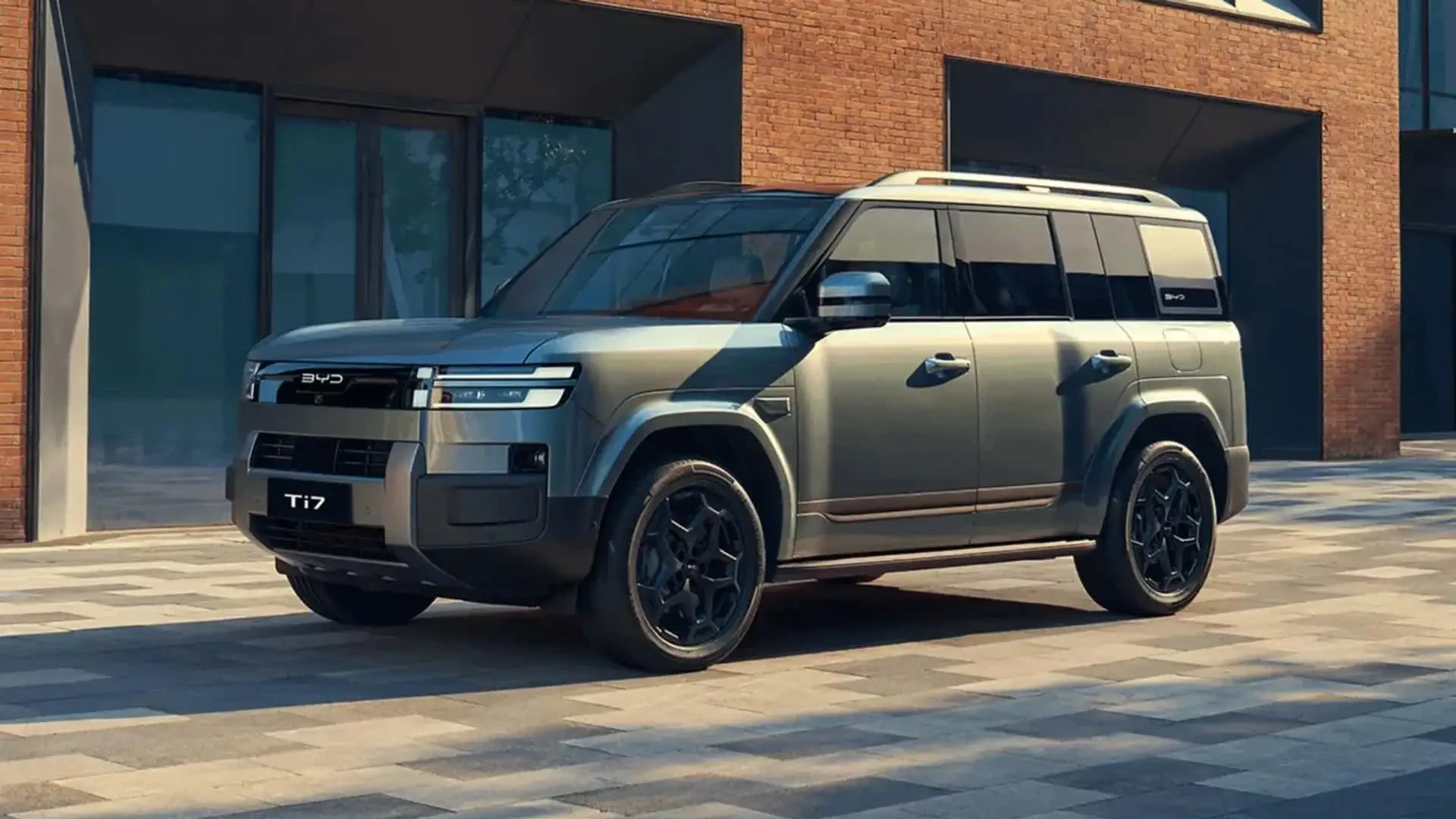
The District Court of The Hague has issued a provisional EU-wide injunction preventing the BYD companies named in the case from importing, producing, offering, selling, storing, delivering or otherwise trading the Ti7. The preliminary relief judge found that the SUV does not create a different overall impression from one registered EU design held by Jaguar Land Rover for the current Defender L663.
The 20 November 2026 judgment is immediately enforceable but is not a final merits decision. Its operative ban starts one week after formal service. The court gave JLR six months to bring the main action required to preserve the interim measure. The published court notice does not confirm what appeal step, if any, BYD will take.
What the order covers
The injunction applies to BYD Europe and named BYD entities in the Netherlands, France, Sweden, Denmark, Germany, Hungary, Poland and Italy, as well as BYD Mobility. It requires each defendant other than BYD UK to stop infringement of the identified EU design throughout the European Union.
A breach can attract €100,000 for every day or part of a day that a defendant fails to comply. At JLR’s choice, the penalty can instead be €25,000 for each infringement, subject to an aggregate ceiling of €10 million. The defendants other than BYD UK were also ordered jointly to pay €2,685.12 in procedural costs, with additional service costs possible if payment is late.
The Ti7 was not on sale in the EU when the case was heard. BYD argued that it had no concrete current plan to introduce the model there, and the court accepted that customers could not place an EU order. The judge nevertheless found a sufficiently imminent threat because BYD had described the vehicle as developed for Britain and Europe, promoted it through European channels and declined to promise that it would remain outside the EU.
This makes the ruling preventive rather than a withdrawal of cars already sold to European Union customers. It stops a launch in the current form while the order remains effective.
Britain is outside this Dutch injunction
JLR also sought relief connected with UK registered designs and BYD UK, where the Ti7 is officially promoted. The Dutch court declared that it lacked jurisdiction over the claims against BYD UK. It also found that JLR had not sufficiently shown that the EU entities were responsible for the UK offer.
The result should therefore be described as an EU ban, not a ban across all of Europe. It does not determine Ti7 activity in the United Kingdom, China, Argentina or other non-EU markets. A design right has a territorial scope, and the Dutch judgment does not automatically extend beyond the European Union.
BYD’s UK website continues to present the Ti7, while the model is already commercially available in Argentina. Any restriction in Britain would need to come from a competent UK court, a settlement or a separate action.
Why the overall impression was decisive
The judgment does not grant JLR ownership of every upright, box-shaped SUV. The court acknowledged that blocky contours, vertical glazing, a straight roof and a high shoulder line appear in older design material. Ford Flex, Jeep Wrangler and Mercedes G-Class examples were considered when assessing the room available to the designer.
The protected combination was narrower. The judge identified rounded prominent shoulders, rounded corners, the signature panel forming the C-pillar area, wheel-arch cut-outs with rounded corners, continuous glazing, proportions and the overall silhouette. Taken together, these features distinguished the registered Defender design from the earlier vehicles placed before the court.
BYD pointed to many individual differences. Its list included the lamps, grille, bumpers, bonnet treatment, darker A-pillar, roof line, lack of alpine windows, shoulder interruption, wheel-arch cladding, wheels and rear-mounted spare-wheel treatment. The court found that these details, separately and together, were not prominent enough to change the overall impression on an informed user.
That legal test is different from asking whether every panel is identical. EU design law examines whether the later product gives an informed user a different overall impression, while accounting for prior designs and the freedom available to the designer. The judge held that the dominant and distinctive features were almost identical in the Ti7.
A separate data-seizure decision did not settle the design issue
The injunction follows a procedural result that had favoured BYD nine days earlier. On 11 November, a separate urgent judgment lifted an evidence attachment and required JLR to arrange destruction of data collected from BYD’s Dutch offices in Schiedam and Hoofddorp. That case concerned the scope and enforcement of evidence preservation. It did not rule that the Ti7 was legally distinct from the Defender.
The 20 November case addressed the exterior design directly. JLR obtained the preventive injunction but did not receive everything it requested. The court rejected access to the seized documents, disclosure of distribution channels and a public corrective statement. Because the Ti7 had not been marketed in the EU, the judge considered the ban sufficient to protect JLR at this stage.
A Rotterdam proceeding is also scheduled around copyright and alleged slavish imitation. Its hearing was listed for 25 November. Those claims use different legal tests. In The Hague, the judge relied on one EU design and found no need to give a preliminary decision on the five other registered designs invoked by JLR.
What the ruling means for buyers
BYD did not list the Ti7 in its Romanian range before the judgment, and no Romanian euro price or delivery date had been announced. The order therefore does not cancel an established local retail programme. It prevents the named BYD entities from bringing the present vehicle into EU commerce while the injunction remains in force.
The Argentine Ti7 provides an official technical reference. It measures 5,016 mm long, 1,995 mm wide and 1,865 mm high, with a 2,920 mm wheelbase. BYD rates its all-wheel-drive DM-p plug-in hybrid system at 354 hp and 630 Nm. The manufacturer claims 115 km of electric range and 1,015 km combined under NEDC, figures that are not directly comparable with European WLTP values.
Land Rover lists the Defender 110 at 5,018 mm including the rear spare wheel, making the published overall lengths only 2 mm apart. Measurements help explain why the vehicles are compared, but they did not decide the design case on their own. The court examined the registered images and complete visual impression.
BYD could pursue an appeal, revise the body, seek an agreement with JLR or contest the claim in the main proceedings. No official source reviewed for this article confirms which route it has selected. Until the order changes, the practical position is clear: the current Ti7 cannot be put into EU commerce by the defendants covered by the judgment.