The District Court of The Hague has lifted Jaguar Land Rover’s evidence seizure against BYD and ordered JLR to arrange the destruction of data collected from the Chinese carmaker’s Dutch offices. The 11 November 2026 interim judgment deals with possession and enforcement of the files. It does not decide whether the BYD Ti7 infringes any right connected with the Defender.
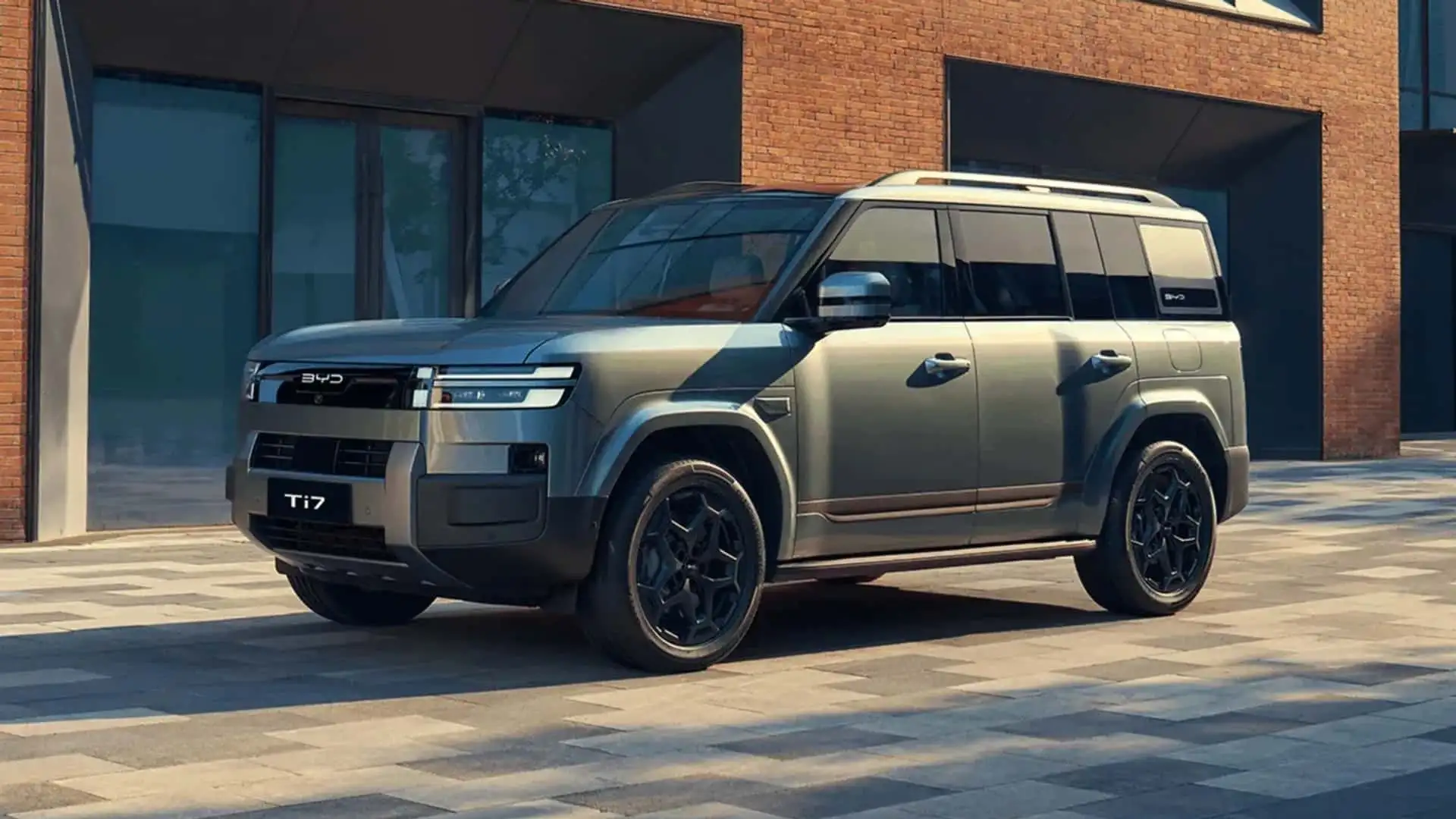
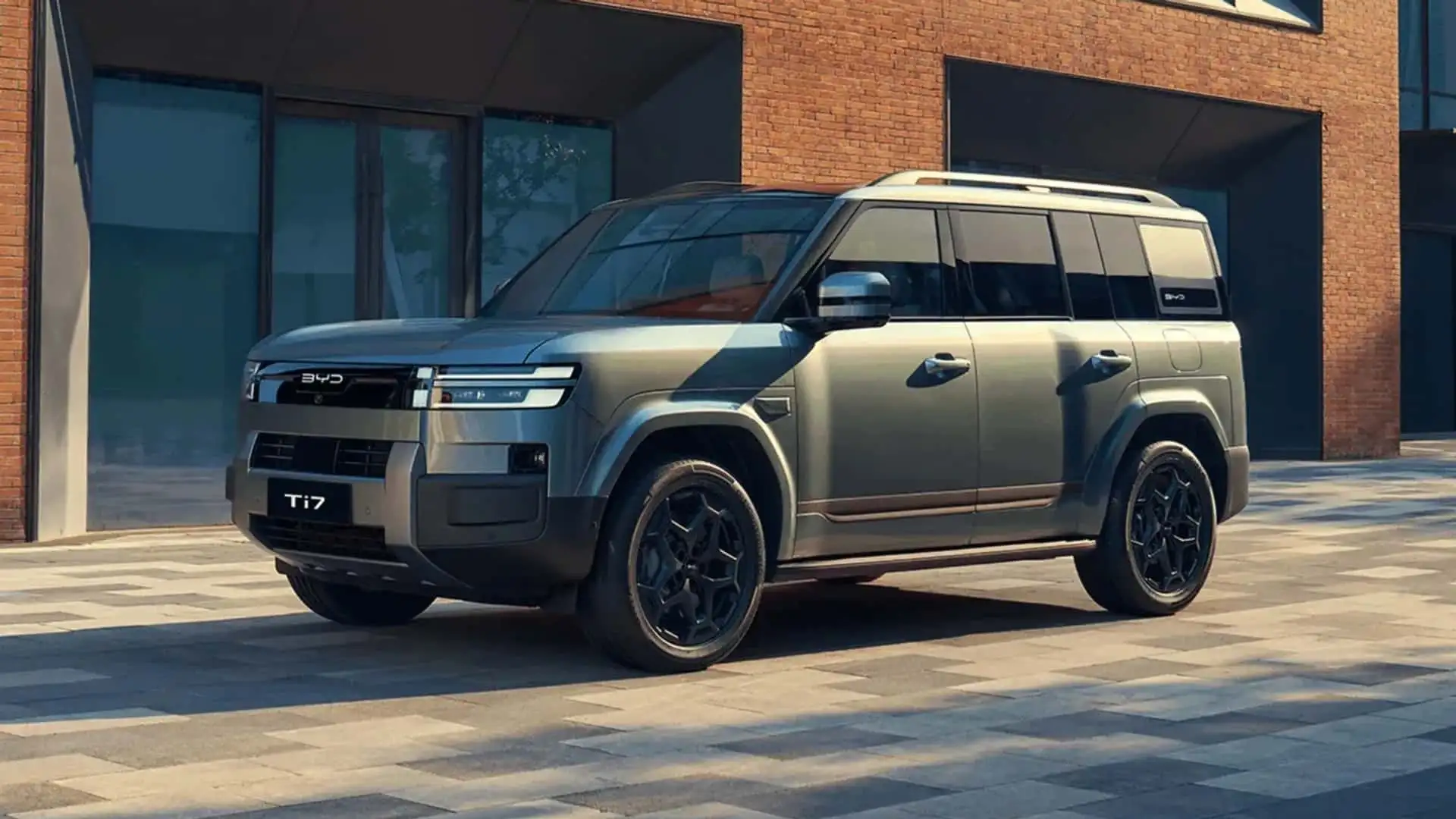
The lead image is an official BYD press photograph of the Ti7, supplied for the model’s launch material.
JLR has 24 hours to instruct destruction
The judgment, published as ECLI:NL:RBDHA:2026:33114, ends the judicial custody of all seized material. Within 24 hours of formal service, JLR must tell the bailiff or judicial custodian to destroy the data no longer covered by the attachment. The information must cease to be available to JLR or anyone other than BYD.
Once destruction has taken place, JLR has a further 24 hours to give BYD written confirmation prepared by the bailiff or custodian. Failure to comply carries a penalty of €50,000 for every hour of breach, capped at €500,000. The court also ordered JLR to stop enforcement measures based on the original seizure permission. A new enforcement act could trigger a separate €500,000 penalty.
One detail in the official order differs from several early reports. The court ordered BYD, not JLR, to pay €25,376.57 in procedural costs within 14 days of a demand. At the same time, the judge found on a preliminary basis that BYD had complied with its duty to cooperate and had not incurred the €500,000 penalties that JLR had attempted to enforce. The mixed cost order is another reason to read the operative judgment rather than reduce the result to a simple win-or-loss headline.
Why JLR obtained the files in August
Court-authorised bailiffs copied digital and paper records from BYD premises in Schiedam and Hoofddorp in August 2026. JLR sought the measure to preserve potential evidence for its dispute over the Ti7, a large, upright SUV whose proportions invite comparison with the Defender 110. JLR’s position was that development records could help establish whether protected Defender-related material had been used.
BYD challenged the scope of that exercise. The judgment indicates that the seizure reached material about Ti7 development and launch plans, technical and sensitive financial information, and records containing references to Defender. BYD argued that this was an excessively broad search rather than a focused evidence-preservation measure.
Judge H.F.R. van Heemstra accepted, for the purposes of the urgent application, that JLR did not need the captured material to argue that the two vehicle designs were too close. The court also examined the damages basis. Because the Ti7 had not been sold in the European Union, the claimed EU loss was considered insufficiently supported at this provisional stage. That finding does not address Ti7 sales elsewhere and does not prevent the facts from changing if the model later enters an EU market.
The design and copyright actions are still separate
The destruction order is not a judgment that the Ti7 is legally original. It removes JLR’s access to a specific set of evidence and stops enforcement under the August attachment. The underlying claims remain for separate proceedings. The court record describes an action in The Hague concerning Defender design rights and another in Rotterdam concerning copyright and alleged slavish imitation.
That procedural boundary matters for both companies. BYD can say that the broad seizure has been lifted. It cannot claim that every infringement allegation has been dismissed. JLR can continue to argue its identified intellectual-property rights in the appropriate proceedings, but it cannot present the existence of the attachment as proof that copying occurred.
The photographs offer an obvious starting point: the Ti7 and Defender 110 both use a long, nearly level roof, upright sides and squared-off volumes. Visual proximity is not enough to identify copied software, suspension controls, electronics or manufacturing know-how. A court considering those issues would need a defined right, evidence of access and a technical comparison, not just two exterior images.
Official measurements put the SUVs two millimetres apart
BYD’s Argentine subsidiary provides one detailed official specification for the Ti7. That market’s plug-in hybrid is 5,016 mm long, 1,995 mm wide and 1,865 mm tall, with a 2,920 mm wheelbase. Its all-wheel-drive DM-p powertrain is rated by BYD at 354 hp and 630 Nm. The manufacturer claims 115 km of electric range and 1,015 km combined range under the NEDC cycle, which should not be treated as directly comparable with WLTP figures.
Land Rover’s UK technical information gives the Defender 110 a length of 5,018 mm including the rear spare wheel, a width of 2,008 mm with mirrors folded and a wheelbase of 3,022 mm. The published overall lengths are therefore separated by only 2 mm, while the Defender’s wheelbase is 102 mm longer. These figures explain the recurring commercial comparison. They reveal nothing about the source of a component or control program.
Market context also limits what can be inferred. BYD does not currently list the Ti7 in its Romanian range and has announced neither a Romanian euro price nor a delivery date. The Dutch order contains no general ban on Ti7 sales. Any restriction would require a separate injunction, a decision on the merits, regulatory action or an agreement between the manufacturers.
What happens next
The immediate step is compliance with the data-destruction order and proof of that compliance to BYD. The design-right and copyright claims then proceed on their own evidence and legal tests. Unless a later court publishes a substantive finding, the accurate position is narrow but important: JLR has lost the seized data as evidence, while the allegation that the Ti7 infringes Defender-related rights remains undecided.