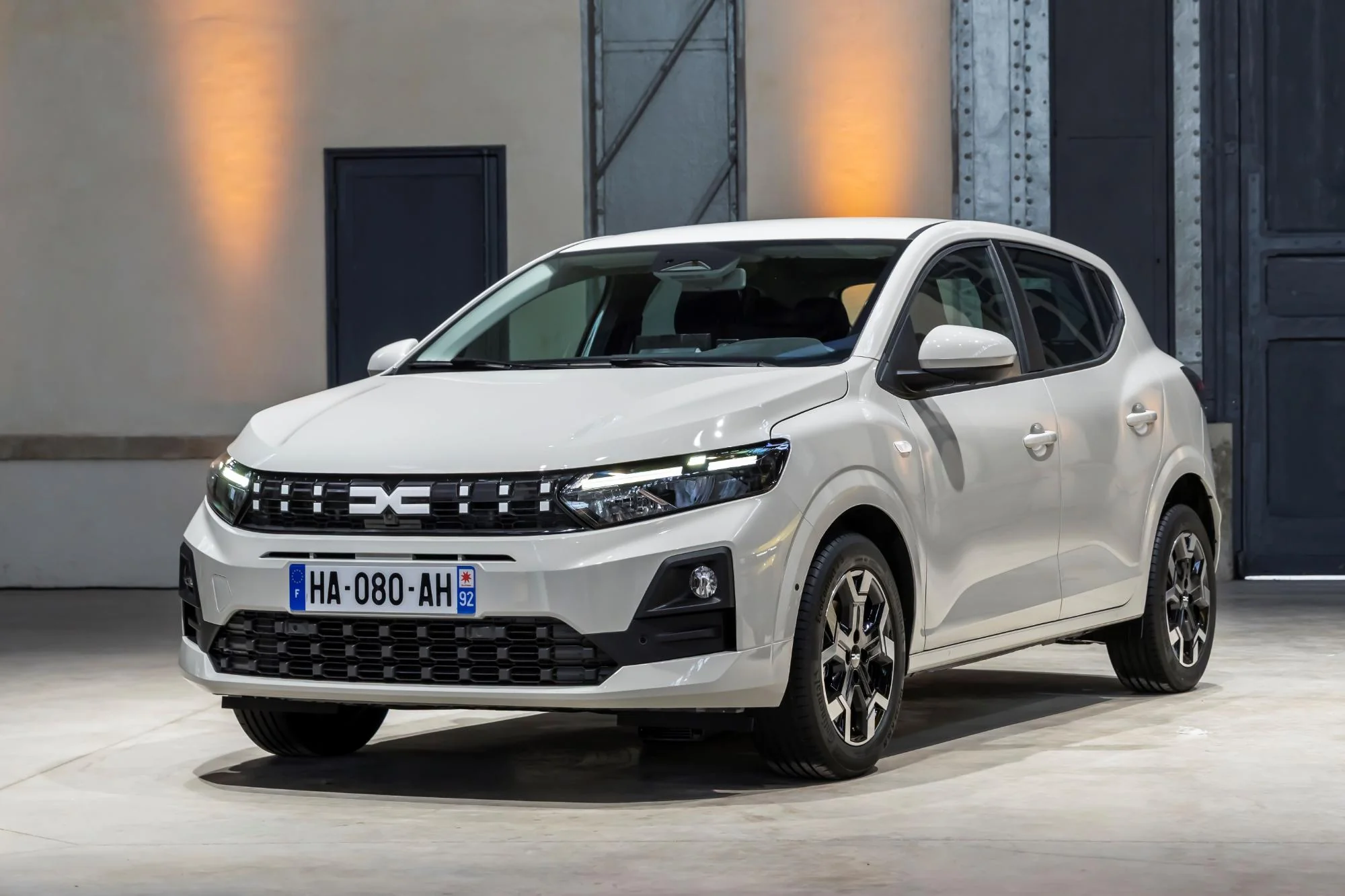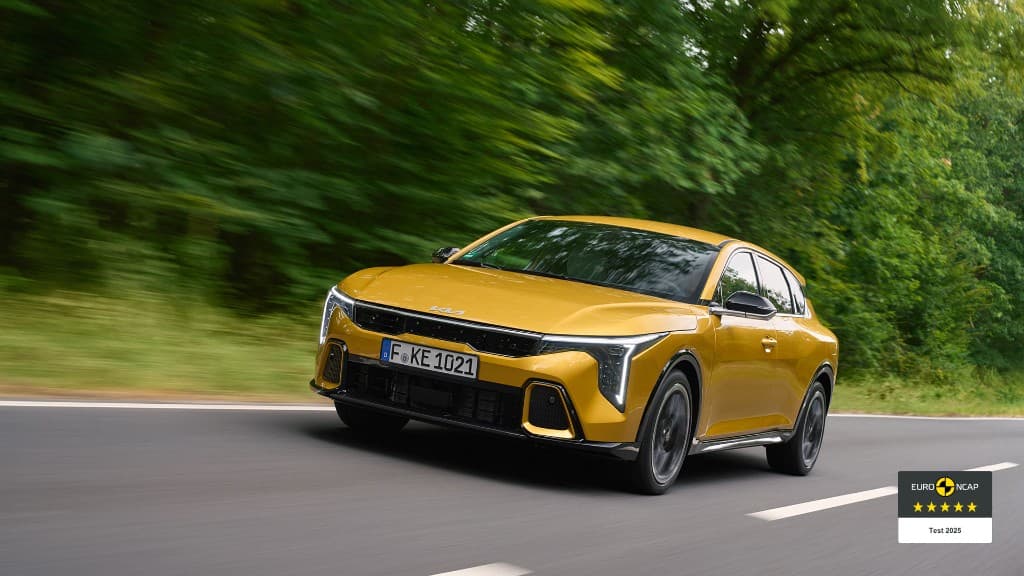
Market electrification is not only fully electric cars: hybrids without plug-in charging remain the largest category in the EU. Illustrative image.
Electrics and hybrids gain ground in Europe. Romania follows the same direction, but at a different pace
The European new-car market is moving away from conventional engines more quickly. In the first half of 2026, hybrids without external charging accounted for 37.3% of European Union registrations, and fully electric models reached 20.7%. Together, petrol and diesel fell to 29.7%.
Data published by the European Automobile Manufacturers’ Association (ACEA) describe a structural change, not just a good month for electrics. In the same period of 2025, petrol and diesel cars together held 37.8% of the market, and electrics 15.6%.
Romania is following the same direction, but with a different mix of powertrains. Hybrids have a much larger share than pure electrics, and the monthly trend remains sensitive to incentive programmes, fleet deliveries and importer campaigns.
How EU registrations were split in the first half of 2026
ACEA counted 5,896,683 new passenger cars registered in the European Union between January and June 2026, 5.7% more than in the same interval of 2025.
| Powertrain type | Units, January–June 2026 | EU share |
|---|---|---|
| Hybrid without external charging | 2,198,148 | 37.3% |
| Battery-electric | 1,220,890 | 20.7% |
| Plug-in hybrid | 577,735 | 9.8% |
| Petrol and diesel, combined | — | 29.7% |
Classic hybrids, a category in which ACEA includes full-hybrid and mild-hybrid cars according to national reporting, remain the dominant choice. They do not need a plug and give manufacturers a way to cut average emissions without changing the driver’s refuelling routine.
Fully electric cars had the most visible pace, however. Their volume rose to 1.22 million units, supported by gains of 62.9% in France and 48% in Germany. France, Germany, Denmark and Belgium together accounted for almost two thirds of all electrics registered in the EU in this period.
Plug-in hybrids also grew: the 577,735 units meant 9.8% of the market, compared with 8.5% a year earlier. Italy reported an 84.3% increase for PHEVs, Spain 39%, and Germany 17.9%.
Preliminary July data indicate an acceleration of electrics
The European Alternative Fuels Observatory (EAFO), administered with support from the European Commission, published a preliminary picture for July. In the 12 EU states that had already reported complete data for the month, 202,597 electric cars were registered, 41.8% above July 2025. Their share reached 26.3% in the group of markets analysed.
This figure should not be presented as the share for the entire European Union. At the time of publication, the other 15 states, including Romania, had data in the EAFO database updated only to June. The figure is still relevant because all 12 reported markets recorded increases, and Germany reached 78,609 electric cars in a single month.
Public charging infrastructure in the EU reached, according to the same database, 1,157,551 points, 15.2% more than in July 2025. The network is growing, but more slowly than electric registrations in the markets already reported for July.
Romania: hybrids dominate, and electrics grow from a small base
In Romania, ACAROM reported 64,850 new passenger cars in the first six months of 2026. Of these, 37,563 were hybrids and 5,522 fully electric. Hybrids rose 17.5% compared with the first half of 2025, and electrics 72.5%.
APIA, which uses its own analysis of DGPCI data and a more detailed classification of powertrains, calculated for pure electrics a 76.6% increase and an 8.5% share in the first half. The percentage difference versus ACAROM shows why the definition of each statistical series must be consulted, rather than mixing figures taken from different reports.
In July, the Romanian market fell sharply overall. ACAROM announced 11,740 new passenger cars, 28.25% fewer than in July 2025. Cumulatively, after seven months, the association reported:
- 43,757 hybrid cars, 8.8% more than in the same period of 2025;
- 6,347 fully electric cars, 70.3% more;
- an 11% drop in the total new-car market, to 76,590 units.
Romania is therefore not a market where electric growth yet offsets the overall decline. BEV volume is advancing quickly, but it represents little more than 8% of new registrations in the first seven months. Hybrids, by contrast, have exceeded half of the market in ACAROM’s classification.
Why petrol and diesel are losing ground
The decline of conventional engines has several explanations acting at once. Manufacturers must meet stricter European targets for fleet-average emissions, and almost every important new model receives at least some form of electrification. In parallel, the diesel offer is shrinking in the small and compact segments, where the cost of emissions-control systems is hard to justify.
For the buyer, the “hybrid” label covers very different systems:
- a mild-hybrid assists the combustion engine, but cannot usually cover useful distances on electric power alone;
- a full-hybrid can run electrically over short stretches and does not charge from a plug;
- a plug-in hybrid has a larger battery and must be charged regularly to deliver the promised low consumption;
- a BEV uses only energy from the battery and depends on access to charging.
Growth in the hybrid category does not, therefore, mean that all cars included offer the same savings or the same user experience.
What the shift means for a buyer in Romania
Market statistics do not automatically determine which powertrain is suitable. They do show, however, where the offer, dealer investment and, over time, the used-car market are moving.
For someone who cannot install a socket, a full-hybrid remains a simple option for urban traffic. A PHEV can be efficient if the battery is charged almost daily; used mainly with a depleted battery, it carries extra mass without the benefit of electric running. A fully electric car makes sense when routes, charging access and budget fit, not merely because the segment is growing.
Diesel remains relevant for high motorway mileage, towing or long trips without stops, but the range of new models is becoming smaller. Petrol stays accessible at purchase in many segments, but its European share is falling as mild-hybrid versions take its place in catalogues.
The 2026 data do not indicate the immediate disappearance of the combustion engine. They show that a new car without any form of electrification is gradually becoming the exception, and that Romania is following this change mainly through hybrids, not through a direct switch to a fully electric car.