Electric vehicles lose usable range in cold weather for several reasons at the same time. The battery’s electrochemical reactions slow down, the cabin needs energy for heating, cold air increases aerodynamic drag and winter tyres or wet roads can add rolling resistance. There is no single winter-range percentage that applies to every EV. Temperature, battery design, heat-pump equipment, speed, tyre pressure and trip length all matter.
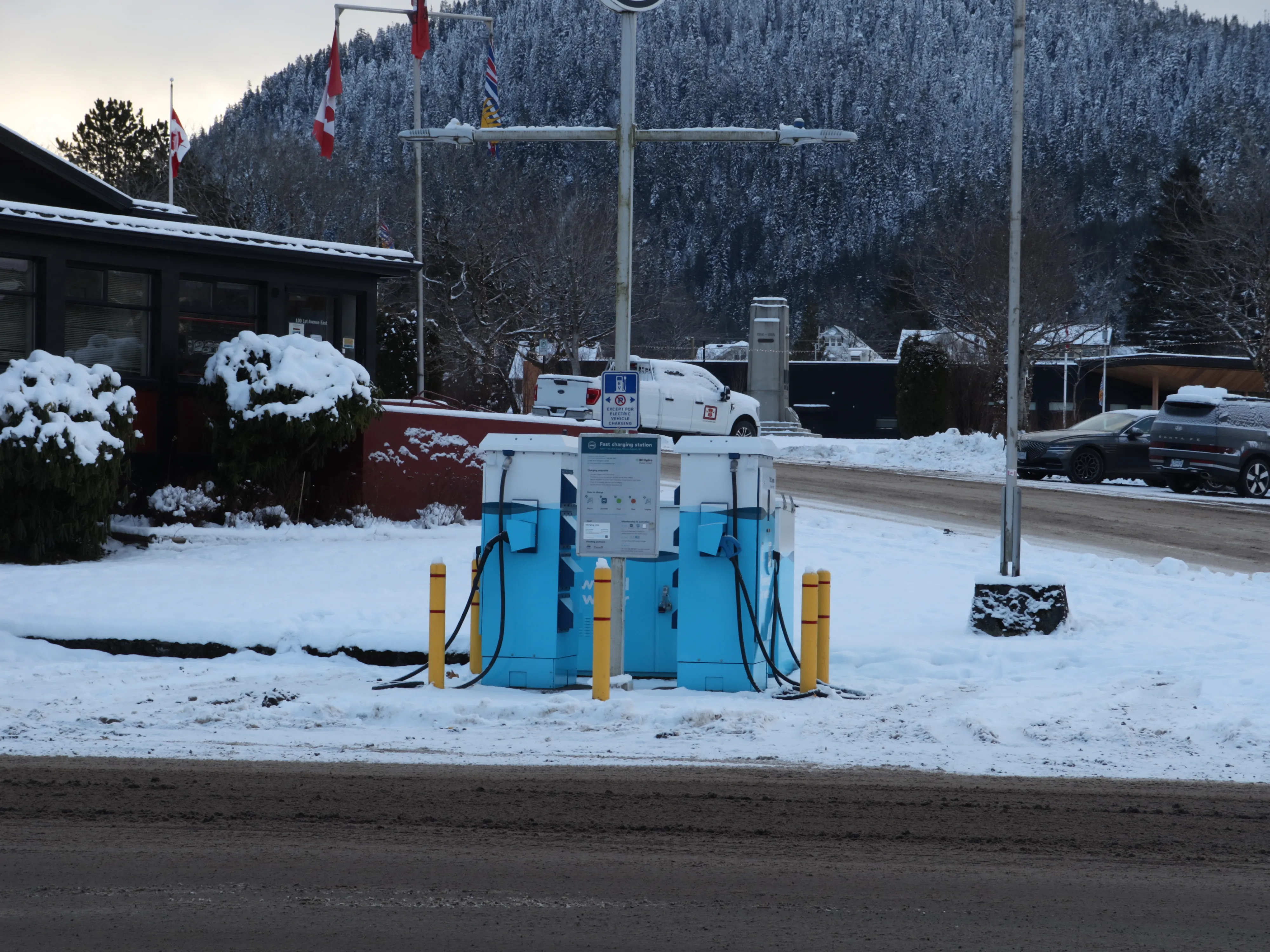
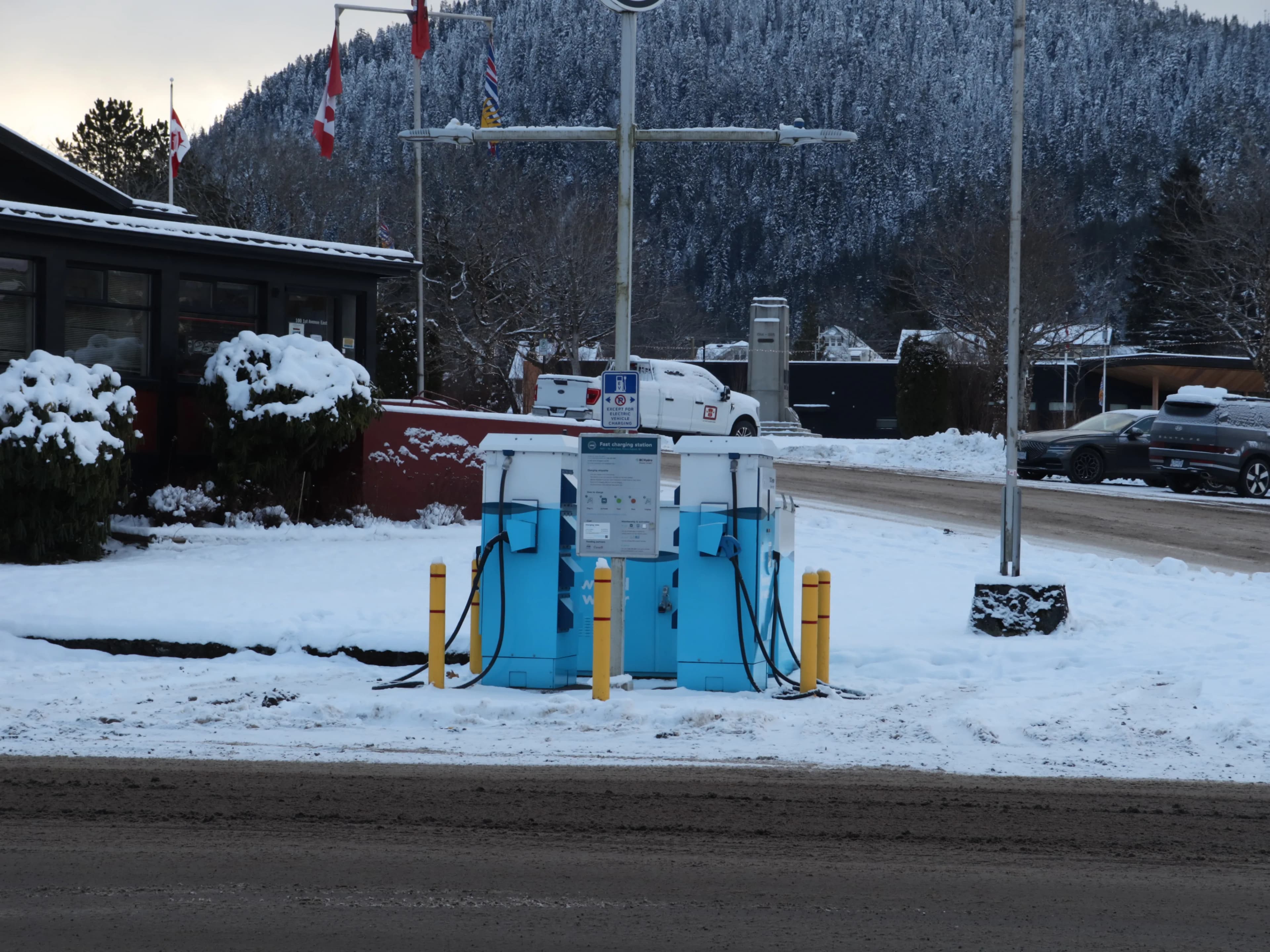
Fast charging station in Prince Rupert, British Columbia. Photo: WindBorneListener/Wikimedia Commons, CC0.
What happens inside a cold battery
Most electric cars use lithium-ion cells. Ions move between electrodes during charging and discharging, but the reactions slow as temperature falls and internal resistance increases. The vehicle can respond by limiting output power, regenerative braking or charging speed until the battery pack warms up.
The US Department of Energy says low ambient temperatures reduce output voltage and usable battery energy. The effect becomes more pronounced in extreme cold, around -18°C and below. Modern battery packs generally include heating and cooling elements, but the electricity used to warm the cells is not available for propulsion.
This is why a battery percentage on the display does not always provide the same distance as it would on a mild day. The battery-management system may keep a buffer and temporarily restrict regeneration or acceleration. Part of the apparent loss is reversible: once the cells reach a suitable operating temperature, the car can recover some of its performance.
Cabin heating is an electrical load
A combustion engine creates waste heat while it runs. A conventional car can use that heat to warm the cabin. A battery-electric vehicle does not have the same continuous source, so it needs an electric resistance heater, a heat pump or both.
Resistance heating can warm the cabin quickly, but it draws power directly from the battery. On a short journey, the energy used to warm the cabin, windows and battery is spread over fewer kilometres. A short trip in freezing weather can therefore show much higher consumption than a long trip started after preconditioning.
A heat pump can draw heat from outside air and from warm electrical components. The Department of Energy says it can be more efficient than resistance heating in many conditions, but systems differ between models. A heat pump reduces the penalty; it does not remove cold-weather energy use.
The heating load also depends on what the driver asks of the car. Demisting the windscreen is a safety requirement, while heated seats and a heated steering wheel can provide local comfort using less energy than heating the entire cabin. The exact balance varies with the vehicle and should never compromise visibility.
Air, tyres and road surface add consumption
Cold air is denser. At the same speed, the car must push through more air, increasing aerodynamic drag. The effect is more visible at motorway speeds, where aerodynamic resistance already represents a large part of the energy needed to move the vehicle.
Temperature and speed interact. In urban driving, heating the cabin and battery can dominate because the vehicle covers relatively few kilometres while warming up. At higher speeds, dense air and aerodynamic drag become more important. The same temperature can therefore produce different results on two journeys.
Winter tyres use compounds and tread patterns designed for lower temperatures, but their rolling resistance may differ from the tyres fitted during an official range test. Snow, slush and standing water require additional energy as the tyre deforms and clears the contact patch. Incorrect pressure adds another avoidable loss and should be checked when the tyres are cold.
How large is the loss?
The Department of Energy’s 2024 technical programme record shows that cold-weather consumption varies between vehicles. In its test comparison, normalised BEV energy consumption was about 83% higher at 20°F, around -7°C, and about 114% higher at 0°F, around -18°C, than at a 72°F reference temperature. Those results belong to the study’s test cycles, not to every production EV.
Another DOE summary says all-electric vehicles can experience a cold-weather fuel-economy decrease of nearly 40% in controlled laboratory tests. Geotab analysed 5.2 million trips from 4,200 battery-electric vehicles representing 102 make, model and model-year combinations. Its dataset showed that at -15°C, average range fell to around 54% of the rated figure in the vehicles analysed.
These numbers should not be merged into one rule. The tests use different methods, vehicles and reference points. Official WLTP figures are useful for comparing cars under the same procedure, but they are not a promise for a winter journey with wind, snow, maximum heating and motorway speeds. Drivers should use observed consumption on similar routes and keep a larger reserve in cold weather.
Preconditioning helps most
Preconditioning warms the cabin and, depending on the model, the battery before departure. If the vehicle is still connected to a home charger or wallbox, some of that energy can come from the grid rather than from the battery used on the road. The US Department of Energy recommends warming an EV while it is charging.
Preconditioning does not eliminate every winter loss. The battery may continue to use energy to maintain its temperature, while cold air, winter tyres and wet roads remain. It does reduce the large initial demand that otherwise occurs during the first kilometres.
On a long trip, fast-charging stops should be planned with more reserve than in summer. A cold battery may initially accept less power until its thermal system raises the cell temperature. Some EVs begin battery preconditioning when a fast charger is set as a navigation destination, but the feature and its operating conditions vary by manufacturer.
Practical advice for drivers
Warm the car while it is plugged in, check tyre pressure, drive smoothly and allow extra energy for delays or detours. Use heated seats and the steering wheel when appropriate, but do not reduce demisting if that affects visibility. Lowering motorway speed moderately can often save more energy than repeatedly adjusting comfort settings.
Leave additional reserve for a public charger that is occupied or delivering less power than expected. Charging can be slower while the battery is cold. If the car is parked outdoors, follow the manufacturer’s instructions for the charge port and connector in snow or freezing rain.
Cold-weather range loss is normally a combination of higher consumption and temporary temperature effects, not automatic evidence of a damaged battery. For an EV buyer, the useful questions are whether the car has battery preconditioning, how it heats the cabin, which tyres were used in testing and how much energy it consumes on real winter routes.