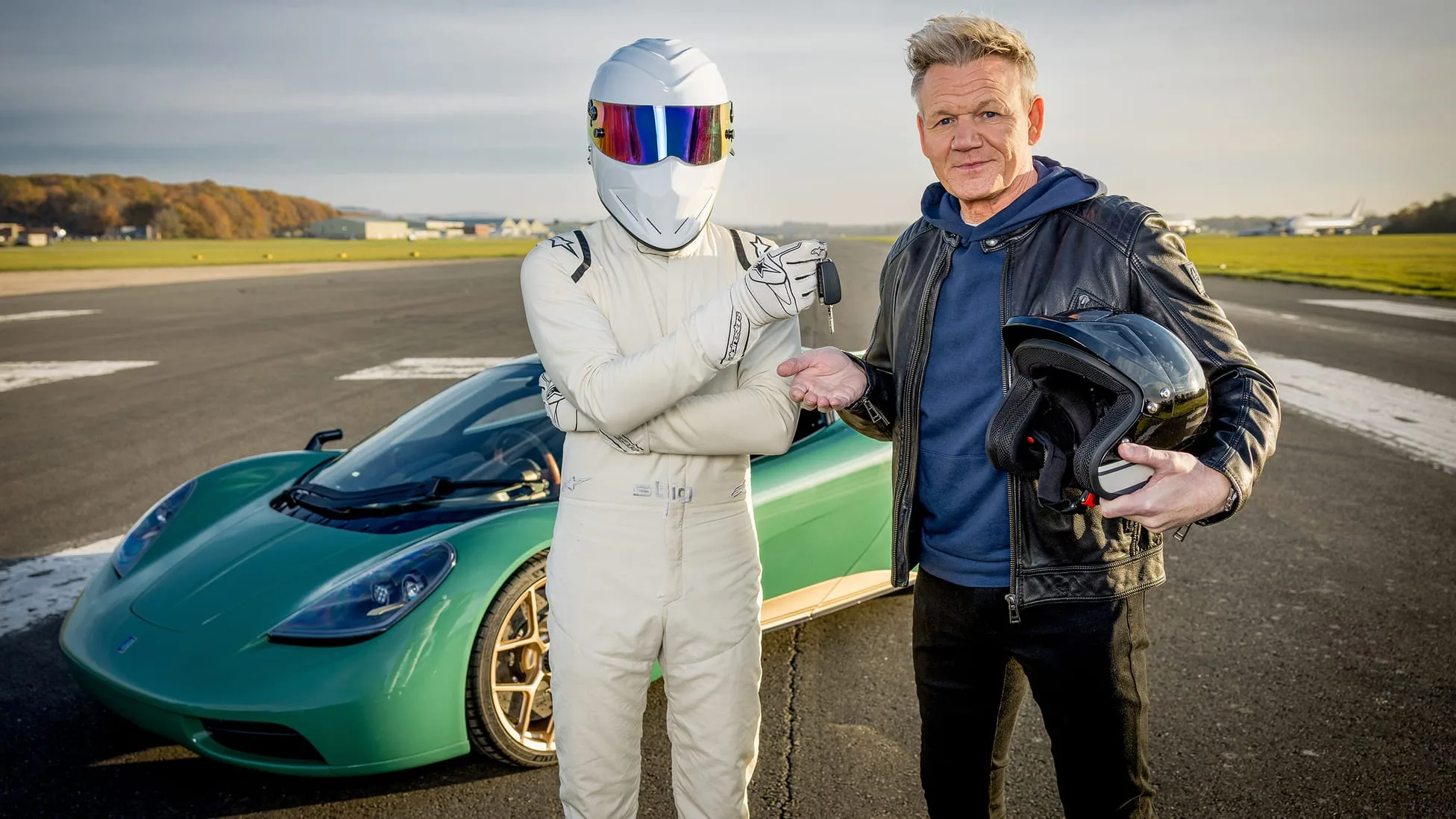
Gordon Ramsay will be the lead presenter of Top Gear when the BBC motoring programme returns in 2028. BBC Studios confirmed the appointment on 25 November 2026, ending the uncertainty around who would front the new production. Filming is scheduled for 2027 across the United Kingdom and overseas, with Dunsfold Aerodrome in Surrey once again serving as the programme's base. The Stig is also confirmed to return.
Ramsay will lead an entirely new group of co-presenters. Their identities have not been announced, and neither have the episode count, the filming destinations or the precise transmission date. The confirmed UK outlets are BBC One and BBC iPlayer. BBC Studios has not yet disclosed international broadcasters or streaming arrangements, so availability outside Britain should not be assumed.
A familiar guest in a much larger role
Ramsay is better known globally for programmes including Hell's Kitchen and Kitchen Nightmares, but he has an established link with Top Gear. According to BBC Studios, he appeared as a guest in the first series of the 2002 format, series eight in 2006 and series 23 in 2016. He recorded a 1 minute 46.3 second lap in a Chevrolet Lacetti during one of those visits. The production also notes that he holds a racing licence and has competed on track.
His own account places the beginning of that interest near Silverstone. Ramsay said he grew up a field away from the circuit and would sneak in to watch racing. That is a personal recollection rather than evidence of presenting ability, but it helps explain why the BBC is positioning him as a genuine car and motorsport enthusiast rather than a celebrity with no connection to the subject.
Leading Top Gear is nevertheless different from appearing in a studio segment. The main host must carry location films, establish a relationship with the other presenters and make technical material understandable without turning every car into a prop. The BBC says Ramsay will set the agenda and take the new team through adventures, tests and stunts. Until that team and the editorial structure are revealed, it is not possible to know how the programme will divide its time between factual motoring coverage and entertainment.
What the BBC has retained
The announcement deliberately preserves several recognisable parts of the modern Top Gear format. Dunsfold remains the home track, international filming returns and The Stig keeps a place in the programme. BBC Studios describes the intended mix as adventures, daring tests, spectacular stunts, machines and mayhem. That language points towards the entertainment-led version launched in 2002, not the more conventional consumer magazine that first used the Top Gear name in 1977.
There are also important gaps. The presence of The Stig does not confirm that the familiar power-lap board will return. The BBC has not said whether there will be a permanent celebrity feature, how road tests will be conducted or which presenters will supply the deepest technical analysis. No cars or destinations have been identified. Claims that a particular segment or former host is returning would therefore go beyond the announcement.
Ed Havard, the BBC's director of entertainment, presented Ramsay's appointment as the combination of a globally recognised motoring show and a car-obsessed television personality. Suzy Lamb, managing director of BBC Studios Entertainment, said the series would not be a nostalgic reboot. Those comments establish the producer's ambition, but they are not independent assessments of the finished programme. Viewers will be able to judge the result only once footage and episodes are available.
The context of the long pause
Top Gear has not produced a regular UK television series since Andrew “Freddie” Flintoff was seriously injured while filming at Dunsfold in December 2022. BBC Sport reported that he received treatment at the scene before being taken to hospital. Production of series 34 was suspended while the incident and the programme's health and safety procedures were reviewed.
In November 2023, the BBC said the UK show would be rested for the foreseeable future. The previous presenting trio had consisted of Flintoff, Paddy McGuinness and Chris Harris. The 2026 announcement is therefore a restart with a new lead presenter and a new team, not a routine cast change between consecutive series.
Safety is an unavoidable part of the return because the programme is again promising stunts and ambitious vehicle tests. The Ramsay announcement does not describe the new production's risk controls, and it would be wrong to infer either that procedures remain unchanged or that every issue has been eliminated. What can be said is that Dunsfold will again be used and that filming will resume four years after the accident, in 2027.
The BBC has not announced roles for Flintoff, McGuinness or Harris in the new run. Nor has it confirmed the involvement of Jeremy Clarkson, Richard Hammond or James May. Hammond said in a BBC Radio 4 interview that he had declined an invitation to return. The official wording is clear that Ramsay will lead an all-new line-up, with names to follow.
Another reinvention for a durable format
Top Gear began in 1977, but its international reputation was largely built by the version relaunched in 2002 with Clarkson and Hammond, later joined by May. Their combination of films, studio conversation, challenges and deliberately excessive adventures became a template exported around the world. After the original trio left in 2015, the BBC tried different line-ups involving Chris Evans, Matt LeBlanc, Rory Reid, Sabine Schmitz, Eddie Jordan, Chris Harris, McGuinness and Flintoff.
That history shows why the co-presenters matter. Top Gear has never depended only on the name at the top of the billing. Chemistry, contrasting knowledge and the ability to make a long location film work have been central to its strongest periods. Ramsay brings extensive live-to-tape television experience, a competitive screen persona and a documented interest in cars. Whether those qualities translate into a credible motoring team depends on the people around him and the editorial decisions behind them.
The subject matter has also changed during the hiatus. By 2028, a mainstream motoring programme will have to cover electric cars, charging, software subscriptions, driver-assistance systems and new manufacturers alongside combustion engines and performance cars. Entertainment can make those topics accessible, but the factual boundary remains important: official range, power or acceleration figures should not be presented as programme test results unless the production measures them under an explained method.
What remains unknown before 2028
The confirmed list is concise: Ramsay is the lead host; filming begins in 2027; work will take place in Britain and internationally; Dunsfold remains the base; The Stig returns; and BBC One and BBC iPlayer will carry the programme in 2028. Almost everything else — co-hosts, episode length, series size, cars, countries, regular features and the exact launch date — remains open.
International viewers also need a separate distribution announcement. BBC iPlayer is a UK service, and a BBC One premiere does not automatically make the programme available in every market. BBC Studios may license the series elsewhere, as it has done with Top Gear in the past, but no Romanian, Italian, Spanish, French or German partner was named in the launch statement.
Ramsay's appointment gives the revival a recognisable lead and a clear production timetable. It does not by itself answer the harder question: what a large, entertainment-first motoring programme should test and explain in 2028. The new co-presenters and the first detailed trailer will offer the earliest meaningful evidence.