Koenigsegg Automotive has signed an agreement that will make 65 Equity Partners a minority shareholder in the Swedish hypercar manufacturer. Existing investor Chieftain Capital Management will invest alongside the new partner and increase its holding. Founder Christian von Koenigsegg will remain the majority owner and continue as chief executive.
The announcement made on 19 November does not disclose the investment amount, the percentage acquired or the valuation used in the transaction. Those omissions matter because reported valuations cannot be treated as company-confirmed terms. Koenigsegg says only that the deal combines a primary investment of new capital with a secondary purchase of existing shares.
Two parts to the transaction
The primary component puts new money into Koenigsegg. The company says it will use the additional resources to support expansion, technology development and stronger business systems. A secondary transaction is different: money goes to shareholders selling existing stock rather than directly funding the company. Koenigsegg has not published the division between the two components or identified the selling shareholders.
65 Equity Partners describes its role as providing minority capital to entrepreneur-led and family-owned businesses. The firm says it has deployed more than $2 billion across 19 investments since it was established five years ago. Koenigsegg is its fourth European investment in 24 months, following deals involving property consultancy, industrial safety and pharmaceutical manufacturing businesses.
For Koenigsegg, the agreed ownership structure preserves founder control. The release does not announce a management replacement, production transfer or change to the company’s model programme. Vehicle manufacturing remains in Ängelholm, Sweden, and Koenigsegg says it employs approximately 800 people worldwide.
A listing is being evaluated, not announced
The parties identify a potential public listing as one of several future strategic options. This is not an initial public offering announcement. There is no prospectus, chosen exchange, timetable, price range or offer size. The investment may help Koenigsegg prepare its reporting and organisation for such a step, but the company has not committed to taking it.
Koenigsegg already changed its Swedish corporate status in early 2025. Its 2024 annual report says an extraordinary general meeting decided on 13 February 2025 to turn Koenigsegg Automotive AB into a public limited company. The stated reason was an employee incentive programme approved in April. Being a Swedish public limited company does not by itself mean its shares trade on a stock exchange.
The distinction also limits the immediate relevance for car buyers. Koenigsegg has announced no price changes, warranty revisions, new dealer arrangements or altered delivery dates as part of this transaction. It is a financing and ownership story, not a product launch.
Chieftain follows its 2024 investment
New York family office Chieftain Capital Management became Koenigsegg’s first institutional investor in 2024. The manufacturer’s annual report records a new share issue that allocated stock worth €50.01 million to Ghost Holdings LLC, which Chieftain controls. Koenigsegg said that capital supported its next stage of growth and accounted for a substantial part of financing cash flow that year.
The latest agreement does not displace Chieftain. It invests again beside 65 Equity Partners and increases its holding. Neither the current percentage nor the post-closing percentage has been disclosed.
The financial context shows why capacity and systems are receiving attention. Koenigsegg reports revenue of €155 million for 2025 and says annual revenue growth averaged 80% from 2022. It also says every car is sold before production and that its order backlog extends several years. 65 Equity Partners describes that backlog as longer than three years, although neither party gives a vehicle count.
Koenigsegg’s latest published annual report provides a more detailed earlier benchmark. For 2024, the group reported net sales of SEK 1.42 billion, up from SEK 636.7 million in 2023. Operating profit was SEK 35.2 million, compared with a SEK 301.8 million loss the previous year. Car sales accounted for SEK 1.34 billion of revenue. The €155 million figure for 2025 appears in the investment announcement and is not accompanied there by a full set of accounts.
What the new capital could support
Koenigsegg names expansion, continued technology development and stronger business systems as the intended uses. It has not attached budgets to individual projects or set a new annual production target. The investment therefore cannot be translated into a confirmed number of additional Gemera, Jesko, CC850 or CCGT1 vehicles.
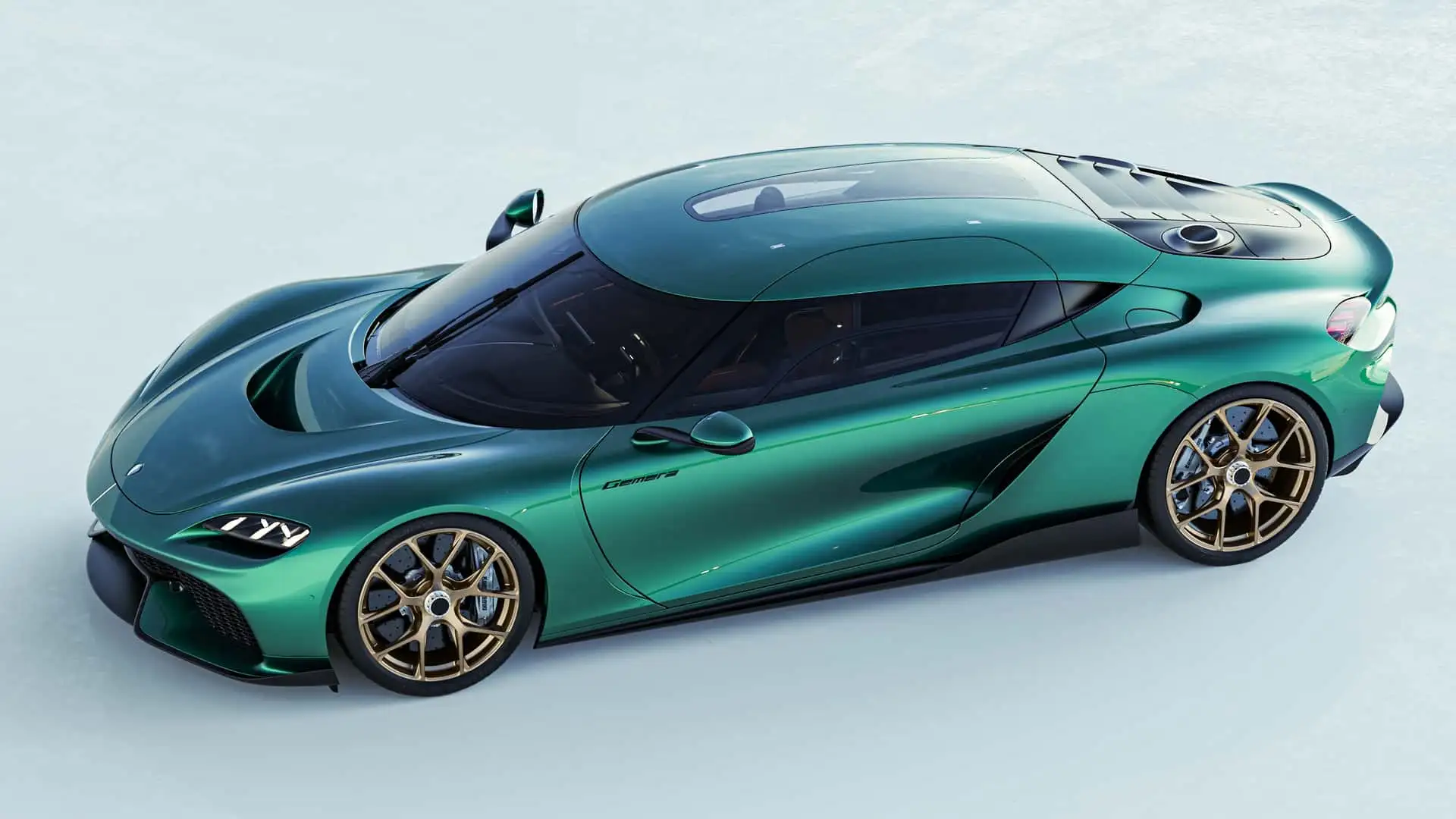
The model portfolio does explain the operational demands. Gemera adds a four-seat car and a complex electrified powertrain to a company built around very low-volume machinery. Jesko and CC850 remain limited programmes, while the CCGT1 presented in August 2026 extends the track-focused side of the range. The financing release mentions Koenigsegg’s cars as evidence of its engineering record, but does not assign capital to a particular model.
Business systems are less visible than carbon-fibre components or powertrains, yet they become important when production, staffing and supplier volumes rise. Planning, purchasing, quality control, customer configuration and financial reporting all have to scale without turning limited-production cars into mass-market products. The investor says its international network will help management, but it has not announced operational targets or board appointments.
Terms still missing from the public record
The transaction is described as signed rather than completed. The wording “upon completion” indicates that 65 Equity Partners has not yet been presented as a final registered shareholder in the release. Closing conditions and any regulatory approvals have not been made public.
The official information supports four clear conclusions: a new minority investor is entering; Chieftain is adding capital; Christian von Koenigsegg retains majority control and the CEO role; and a listing remains only a possible future option. The price paid, precise ownership, company valuation and listing calendar remain undisclosed.
That boundary is especially important for a private manufacturer whose cars and financing rounds attract large numbers in headlines. Until the parties publish transaction documents or audited ownership information, a reported valuation is a media figure rather than a term confirmed by Koenigsegg.