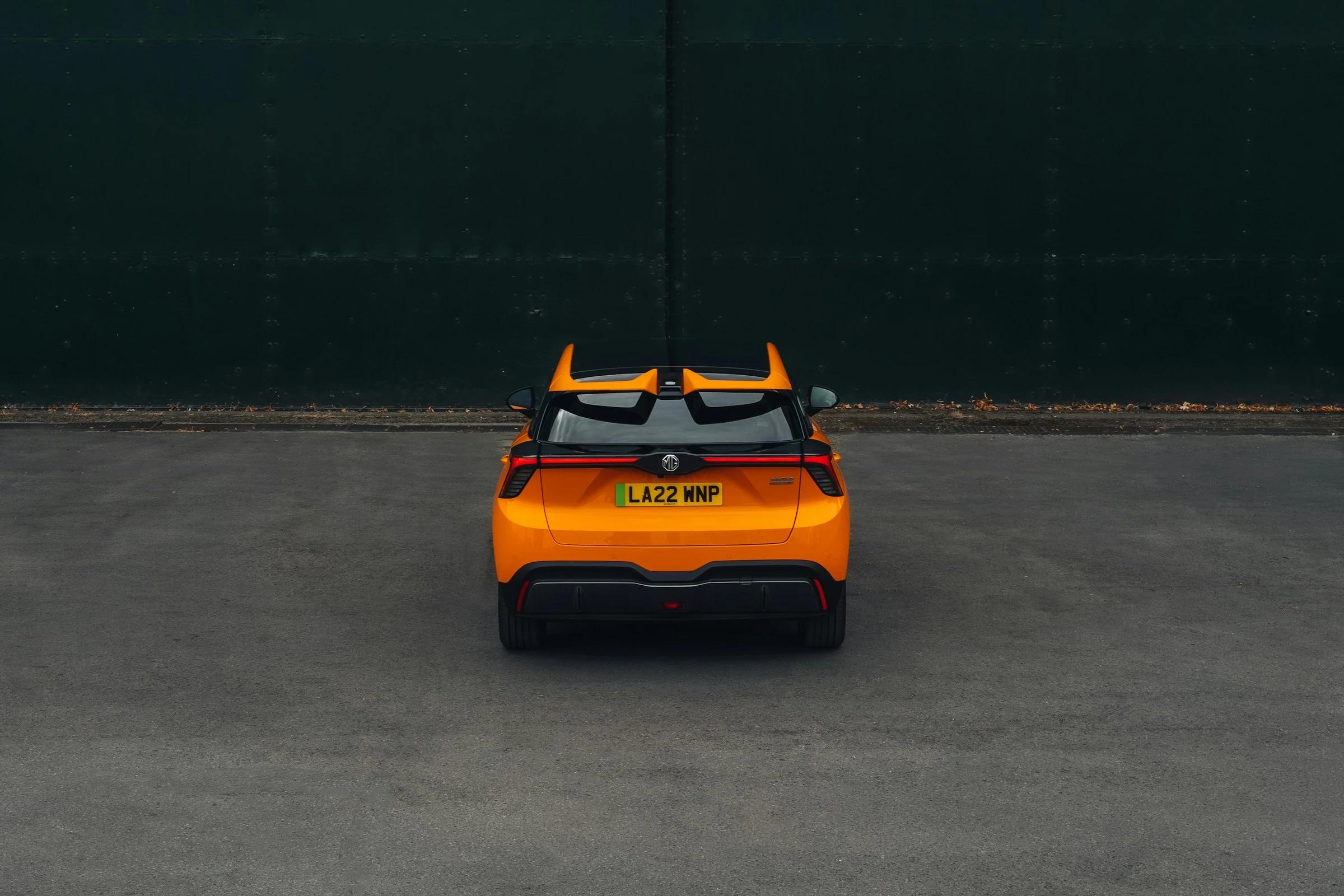
The MG4 has entered Germany's TÜV Report for the first time and finished 108th out of 109 models in the two-to-three-year age group. Inspectors found major or dangerous defects on 16 per cent of the cars examined, at an average recorded distance of 37,000 km. Only the Tesla Model Y ranked lower, with an 18.5 per cent rate.
This is the first passenger car from a Chinese manufacturer to appear in the TÜV statistics. It is also a result that can easily be overstated. The 16 per cent figure does not say that every sixth MG4 on the road breaks down, and it does not measure traction-battery degradation. It records the share of inspected German cars that arrived at their statutory roadworthiness test with a major or dangerous fault.
Brake discs are the most specific MG4 concern
The report's component data gives the headline a practical meaning. Brake-disc faults were recorded on 10.3 per cent of the MG4s, compared with 1 per cent across comparable cars in the age group. Axle-suspension defects affected 2.7 per cent, versus a 0.5 per cent comparison rate.
Those gaps are more useful to a prospective buyer than the overall rank. An inspection of a used MG4 should check both faces of every brake disc, not just the easily visible outer surface. Corrosion, uneven contact, a pronounced wear lip and sticking calipers deserve attention. A road test should establish whether braking remains straight and progressive, while a lift inspection should cover bushes, joints, springs, dampers and mounting points.
Regenerative braking is part of the context. Electric cars can complete much of their deceleration through the motor, so the friction brakes may work less often. Lightly used discs can corrode rather than wear cleanly. That mechanism can contribute to the fault rate, but it is not an excuse that removes the defect: the mechanical brakes must still provide full performance when requested and must satisfy the inspection standard.
Battery weight can also increase loads on suspension components. TÜV SÜD notes that urban use, kerb strikes and long parked periods can affect brakes and axles. The database cannot reconstruct the maintenance and driving history of each individual MG4, so it cannot allocate one cause to every failed car.
What the 9.7 million inspections actually cover
TÜV Report 2027 draws on about 9.7 million periodic inspections carried out in Germany between 1 July 2025 and 30 June 2026. It covers 200 vehicle types across six age groups. Twenty-six of the 109 models in the youngest group are fully electric.
The ranking uses the proportion of cars with major or dangerous defects. A car in those categories does not receive its inspection approval until the problems are repaired and it is presented again. Minor observations are counted separately, while cars without recorded defects form another group.
The youngest category contains four electric cars in the overall top ten as well as three EVs in the bottom three positions. Mazda MX-30 leads the electric group with a 3.0 per cent major-defect rate, followed by Audi Q8 e-tron at 3.2 per cent, Mini Cooper SE at 3.3 per cent and Mercedes EQA at 3.5 per cent. At the other end are Tesla Model 3 at 12.5 per cent, MG4 at 16.0 per cent and Model Y at 18.5 per cent.
That spread matters. It argues against treating electric power as the explanation for a good or bad result. Component design, durability, use, mileage and maintenance all influence what inspectors find.
The data describes the original MG4, not MG4 Urban
The age window points to the first European MG4 launched in 2022. MG's new front-wheel-drive MG4 EV Urban arrived in 2026 and is a different product; cars that new have not reached the two-to-three-year inspection group. Buyers should not transfer the TÜV figure directly to MG4 Urban.
The original rear-wheel-drive MG4 remains part of MG's European story and received updates for the 2026 model year, but the inspected cars were registered years earlier. Production changes, service actions and revised parts can also separate an early car from a later example. The report does not publish a VIN breakdown or a build-month table that would allow those versions to be split.
This distinction is especially important in markets where both names appear in current MG material. A used-car advertisement should be checked for registration date, battery, drive layout and exact variant before the inspection statistic is applied.
The report says nothing about battery state of health
Germany's periodic inspection checks roadworthiness items such as brakes, steering, suspension, lights, tyres and structural safety. The published TÜV tables do not provide usable battery capacity, cell imbalance, charging speed or state of health.
A two-to-three-year-old MG4 could therefore pass the roadworthiness test while having a weakened battery, or fail because of a brake disc while retaining excellent range. A proper purchase assessment needs two separate processes: a mechanical and safety inspection, plus a battery report supported by diagnostic data and, where possible, a charging test.
The result is also German, not a forecast for inspection failure in every European country. Climate, road treatment, annual distance, service habits and inspection rules differ. It is evidence about the German sample, useful for directing attention, rather than a universal failure probability.
How a used-MG4 buyer should use the result
The first step is to request the latest inspection paperwork and repair invoices. A fresh certificate proves that the car met the standard on that date, not that it will remain fault-free. Check whether brake work was completed, whether axle components have been replaced and whether outstanding service campaigns were carried out.
Next, inspect the actual car rather than buying the model's average. Tyre wear can reveal alignment or suspension issues. A workshop can measure disc thickness and runout, examine inner surfaces and test caliper movement. Diagnostic checks should be separated into chassis fault codes and battery data.
The MG4's first TÜV appearance is poor and the brake-disc figure is too large to dismiss. It is not, however, proof that the model's battery is unreliable or that every example will fail. The responsible conclusion is narrower: early MG4s in the German inspection sample showed an unusually high frequency of serious roadworthiness faults, so brakes and axle suspension deserve documented checks before purchase.