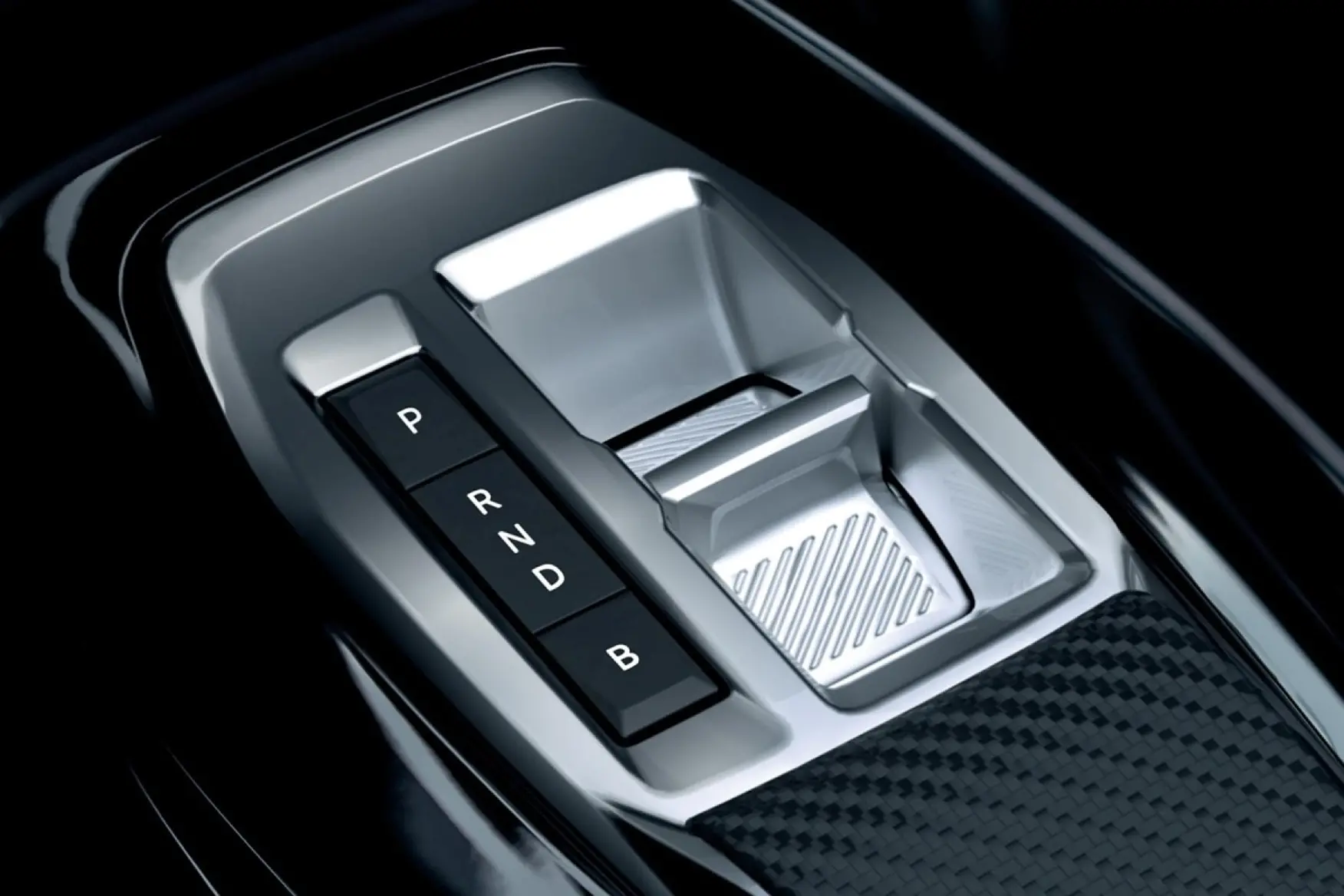
Verdict: a myth, for short stops in traffic. On new cars with an automatic gearbox, manufacturers design standing still in D, with the brake pedal applied or with Auto Hold active. Repeatedly moving to N at every light is not a requirement in the manual and, on some models, can block Start-Stop.
Where the idea of N at the lights comes from
The habit comes from the era of the first automatic gearboxes and from confusion with a manual. On a manual transmission, neutral releases the clutch and the left foot. On a modern automatic, coupling and hydraulic pressure are managed by the computer: holding the car on the brake in D is part of the regime for which the gearbox was homologated.
Another reason is fear of “tension” on the torque converter. The gearbox stays coupled, but manufacturers do not ask for a move to N at every short stop. What they do ask for, instead, is the service brake on a slope and P when you leave the vehicle.
What the manuals say for new cars
The 2026 Honda Civic Hatchback manual describes Auto Idle Stop as follows: the function activates when the car is stationary, the gearbox is in D and the brake pedal is applied. Among the conditions in which Start-Stop does not start, the gearbox position “other than D” appears explicitly. If you move to N at every light, on these Hondas you can cancel precisely the automatic engine stop designed to cut idle consumption.
On the 2025 Hyundai Tucson, Idle Stop and Go stops the engine when speed reaches 0 km/h, the brake is applied and the gear is D or N. Here N does not block the system, but it is not presented as an obligation at every stop either. The practical recommendation remains: stay in D if you are about to move off immediately.
The Kia automatic gearbox manual defines D as the normal position for driving forward. For standing on a slope, Kia requires the service brake or the parking brake, not “holding” the car with the accelerator. Before getting out, the procedure is P, parking brake and switching off the ignition.
Volkswagen manuals for automatic and DSG gearboxes warn not to leave the vehicle in N: it can move on a slope whether the engine is running or not. If you stop on a ramp with a gear engaged, you must not “hold” the car on the accelerator; the brake is used. N appears as a neutral position, not as a routine at every light.
Toyota, in quick guides for automatic or hybrid transmissions, notes that D is the position for normal driving, including for efficiency. The Brake Hold function can keep the brakes applied in both D and N, but a smooth take-off is done from D.
What happens technically if you stay in D
With the engine at idle and the selector in D, the torque converter (or the clutches of a dual-clutch / CVT gearbox) transmits a small torque. The brake pedal cancels it. A modern gearbox is calibrated for these short urban stops.
Frequent D → N → D switching accumulates coupling cycles on the clutches, the solenoids and the selector mechanism. There is, in the manuals cited, no measured fuel saving as an argument for this gesture. Economy at the lights comes, on equipped cars, from Start-Stop or from stopping the hybrid engine, not from moving the selector to N.
On slopes, using the accelerator to “hold” the car in place, with the brake released, is discouraged by Kia and Volkswagen: it heats the transmission without reason. The service brake or Auto Hold exist precisely for that.
When N or P makes sense
N remains useful in the situations provided by the manufacturer: a conveyor car wash, short-distance towing when the manual allows it, rocking the car in snow between D and R, or other procedures in the handbook. It is not the default position for a 30–60 second light.
P is for a stop in which you get out of the car or wait a long time on the spot, with the parking brake applied. On many models, a quick move to P after Start-Stop has already stopped the engine keeps the stop; details differ and are read on the exact model.
If you have Auto Hold or an electronic parking brake with hold at the lights, use them as described in the car’s menu. They do not replace attention to traffic, but they reduce the need to move the selector.
Torque-converter, DSG/DCT, CVT, hybrid
Construction differences do not change the conclusion for short stops:
- Torque converter: standing in D with the brake is the usual regime.
- DSG / DCT: the clutches can generate heat in prolonged “creeping”; if temperature messages appear, stop in a safe place and let the gearbox cool, according to the instructions on the dashboard. Moving to N at every short light is not, in itself, the solution in the general manuals.
- CVT: the same principle: D + brake for short stops.
- Full hybrid / mild hybrid: the computer decouples or stops the combustion engine when conditions allow; the selector generally stays in D.
The common rule: you read the chapter on the transmission and Start-Stop in your model’s manual. If there is an exception (a very long stop, a steep slope, a temperature warning), you apply it to that exception, not at every junction.
What you actually do at the lights
- You stop fully, you stay in D.
- You keep the brake applied or you activate Auto Hold, if the car has it.
- You do not switch to N just from reflex, especially if Start-Stop requires D.
- On a slope, you do not “hold” the car on the accelerator.
- If you get out or wait a long time, P + parking brake.
- If a message appears about gearbox temperature or Start-Stop, you follow the text on the dashboard and the chapter in the manual.
Conclusion
The claim that “on new cars with an automatic gearbox you must select N when you stop” is a myth for ordinary traffic. Honda, Hyundai, Kia and Volkswagen manuals and Toyota guides describe D as the normal driving position and, on many models, link Start-Stop to keeping the forward gear. N and P have precise roles; they do not replace the brake at a short light and should not be turned into a routine that adds shift cycles without a benefit documented by the manufacturer.