
Europe is entering a busy period for new-car launches, but a future-model list does not give every car the same level of certainty. Some vehicles already have official technical information, production dates and open orders. Others have been announced as programmes without a final price or delivery schedule, while some entries are based on industry reporting and early previews. That distinction matters to buyers: a car mentioned in a launch calendar is not automatically available to order at a local dealer.
BMW i3 starts the Neue Klasse rollout
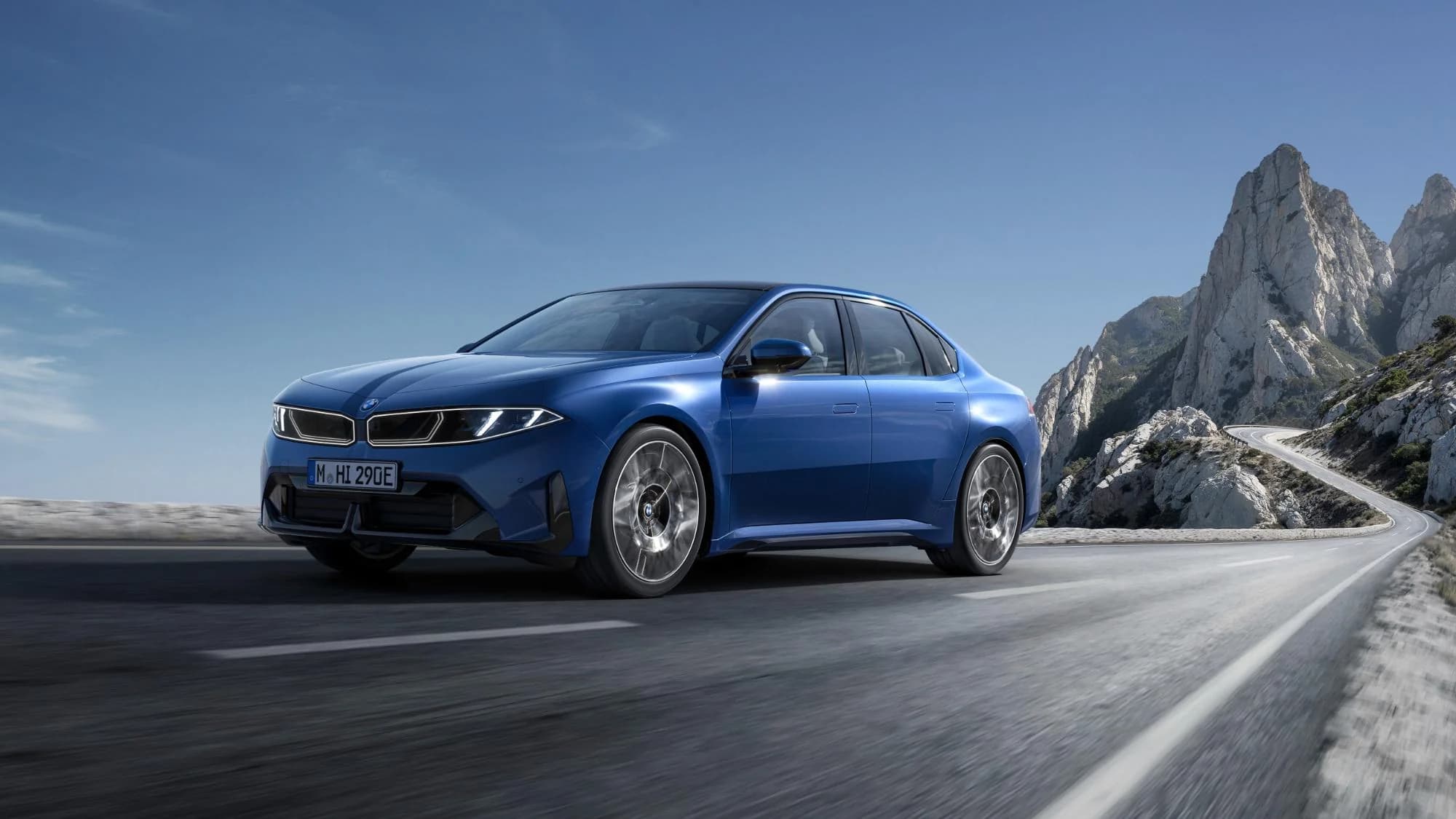
The clearest near-term launches include the new BMW i3, the electric saloon that brings the Neue Klasse architecture to the 3 Series segment. BMW says series production began in August 2026 at its Munich plant, with first deliveries scheduled for autumn 2026. This is the first fully electric 3 Series rather than a continuation of the original i3 city car.
For the i3 50 xDrive First Edition, BMW quotes up to 906 kilometres of WLTP range in the relevant configuration and an 800-volt system capable of up to 400 kW DC charging. Those are manufacturer figures tied to a test cycle and equipment specification, not a guarantee for every journey. BMW's Austrian press material lists a starting price of €65,900 for the base i3 50 xDrive at launch, although equipment and market pricing can differ.
Dacia moves the Spring into a second generation
Dacia revealed a second-generation Spring in September 2026. The company calls it an all-new model and says it is built in Europe at the Novo Mesto plant in Slovenia. It forms part of Dacia's plan to launch four fully electric vehicles by 2030. The Spring remains an A-segment EV aimed at urban use, with the brand emphasising accessible electric mobility rather than long-distance performance.
Romanian buyers will need to check the local importer for pricing, battery options, equipment and delivery dates. A global Dacia announcement is not a substitute for the Romanian price list. The same applies to range and charging: figures carried over from an earlier generation or from another market should not be treated as final local specifications until Dacia publishes them.
Renault Twingo E-Tech electric
Renault has included the new Twingo E-Tech electric in its European 2026 offer. The company describes a five-door city car with four seats, Google-integrated OpenR Link and up to 263 kilometres of WLTP range. Renault quotes official consumption of 12.2 kWh/100 km for the stated configuration. French price documents list versions close to the €20,000 level, but the final price in another country can change with taxes and equipment.
The Twingo should be understood as a city-focused EV rather than a family SUV. Compact dimensions, low energy use and easy parking may matter more to its intended customer than maximum motorway range. Renault also lists charging and driver-assistance equipment that can vary by trim. Before ordering, buyers should check whether the selected car includes DC rapid charging or only the standard AC hardware.
Volkswagen ID. Polo and the small-EV race
Volkswagen's ID. Polo is aimed at the European small-car market. The official Volkswagen Newsroom presents it as an electric car for urban driving, family life and leisure, with a quoted 155 kW output for the version described and combined consumption of 14.7–13.4 kWh/100 km. Volkswagen has also discussed a GTI version, but its exact equipment, pricing and market timing must be followed separately from the standard model.
The same entry-level segment will include a future Volkswagen model linked to the ID. Every1 concept, referred to in industry coverage as the ID. up!. Volkswagen points to a target price around €20,000, but a target is not a retail price. The production name, battery, equipment and Romanian launch conditions require a later confirmation. Buyers should compare usable battery capacity, charging speed and warranty rather than relying on a headline starting price.
Toyota keeps several powertrains in play
Toyota has presented the new RAV4 for Europe with hybrid and plug-in hybrid technology, updated design and revised cabin functions. The model is part of a broader multi-path strategy rather than a move to a single propulsion type. Toyota's new Hilux follows the same logic: the European announcement includes a 2.8-litre 48-volt diesel hybrid, a battery-electric Hilux with permanent all-wheel drive and a hydrogen fuel-cell version planned for 2028. Toyota also states that some petrol and diesel options will be offered in Eastern European markets.
That market distinction is important for Romania. A model can be announced for Europe while individual engines, bodies or trim levels are allocated only to selected countries. For an SUV or pick-up, the useful comparison includes payload, towing, four-wheel-drive hardware and battery layout, not only peak power or range.
Projects that remain provisional
Future-car lists also include projects with a lower level of public certainty, such as the next Alfa Romeo Giulia and Stelvio, the electric Alpine A110, Jaguar's Type 01, Kia's EV1, the Land Rover Defender Sport, Range Rover GT, Toyota GR GT and several high-performance cars. Some have concepts, test photographs or statements from company executives. Those signals show direction, but they do not always establish a price, homologation, battery capacity or customer-delivery date.
The same caution applies to provisional names. A prototype may change before production, and an internal target can move. For expensive cars, market allocation and production capacity can matter as much as the public reveal. A European premiere is not the same thing as a Romanian order book.
How to read a launch calendar
A useful calendar separates at least four stages: project confirmation, vehicle reveal, order opening and first deliveries. BMW's i3 and Renault's Twingo have official material covering timing and specifications. Dacia's Spring and Volkswagen's ID. Polo have official product information, but local details still need checking. A concept-stage car should be treated as a preview, not as a final commercial specification.
For buyers in Romania, the practical checks are the importer website, the price list, delivery estimate and warranty conditions. Electric-car buyers should also include home-charging installation, available household power and the difference between AC and DC charging. A car can appear at a motor show months before it reaches a dealer, and a European starting price may exclude the equipment most customers need.
The wider picture
The 2026–2027 cycle mixes small EVs, electric executive saloons, hybrid SUVs, plug-in hybrids and sports cars that still use combustion engines or hybrid assistance. The most clearly documented launches include the BMW i3, Renault Twingo E-Tech electric, Dacia Spring and Volkswagen ID. Polo, while Toyota's RAV4 and Hilux show that manufacturers are keeping several technologies available at once. Other names on the list remain forecasts until prices, homologation and local order dates are published.
That is the most useful way to approach the supplied Auto Express overview: it is a map of products to watch, not a single official delivery schedule. Buyers should move from the broad list to the manufacturer's local information before treating a model as available, affordable or technically final.


