Range Rover is turning to detailed battery monitoring as it addresses reliability concerns around its electric future. Managing director Martin Limpert acknowledges a remaining gap in an Auto Express interview. The concrete engineering response is set out in JLR’s Range Rover Electric launch documentation: a digital battery model, checks during manufacture and extensive development testing.
The distinction for a buyer is between equipment intended to detect problems and evidence that a vehicle stays dependable over several years. Range Rover Electric has the former. The American studies discussed in the reliability debate examine different ownership periods and vehicle populations; neither provides a three-year record for an electric SUV introduced in September 2026.
What the digital twin actually establishes
JLR’s announcement dated 2 September confirms that each Range Rover Electric comes with a Battery Digital Twin providing more than 900 diagnostic data points. It links that capability to Software Over The Air updates and describes the combination as supporting proactive maintenance. This gives engineers information with which to assess the battery rather than relying solely on a workshop inspection.
The announcement does not quantify how many customer failures the system has prevented. Nor does it publish a percentage reduction in battery replacement costs or unscheduled dealer visits. Those would be outcomes measured in service. A count of diagnostic data points describes the monitoring system and should not be presented as an equivalent reliability score.
Remote intervention also has practical requirements. JLR specifies an active InControl account, a good signal and network connectivity for software updates. An update is subject to owner or driver consent. Battery monitoring therefore should not be understood as a promise that any fault can be repaired remotely, or that workshop access ceases to matter for this vehicle.
Quality checks start before the battery reaches Solihull
The electric Range Rover uses a lithium-ion battery with 118.5 kWh of usable capacity, made up of 344 prismatic cells. Its electrical architecture operates at 800 volts. Describing the capacity as usable is important when comparing it with another vehicle whose advertised figure may refer to the entire pack rather than the energy available in normal operation.
According to JLR, every cell is tested for performance before being installed in a pack. The completed assembly is then assessed for integrity and performance before fitment to a vehicle at Solihull. The company also uses AI-enabled scanning cameras during electric drive unit production to inspect how critical components fit together. These are manufacturing controls rather than customer survey results.
The battery testing laboratory adds a separate physical check. JLR describes vibration and shock testing across multiple axes at temperatures from −40°C to +90°C, alongside a high-strength aluminium enclosure. That temperature span belongs to the laboratory programme. It is not a statement that owners should operate the complete vehicle continuously at either extreme.
Development mileage has a different purpose
JLR says the Range Rover Electric programme covered more than 1.5 million kilometres and more than 250,000 hours of testing across physical and virtual environments. Named locations include Arjeplog in Sweden, the Dubai desert and Eastnor Castle in the UK. Cold-weather work included temperatures of −40°C.
That programme can expose issues under controlled or deliberately severe conditions before customers receive cars. It cannot by itself establish the frequency of faults in an ageing customer fleet. A development fleet and a set of simulations do not reproduce the distribution of charging habits, journeys and service histories that will build up across privately owned vehicles.
The UK launch release also states an eight-year propulsion warranty with a distance limit equivalent to approximately 161,000 km. That is a converted UK limit, not a verified warranty offer for every European country. It should not be stretched into a claim that the whole vehicle, every connected service or every wear component has the same coverage.
Ninety days and three years answer different questions
J.D. Power’s 2026 U.S. Initial Quality Study examines problems during the first 90 days. It includes responses from 78,514 purchasers and lessees of 2026 model-year vehicles and incorporates dealer repair visit data. Its remit covers the early ownership experience, including systems whose operation customers find troublesome as well as defects.
The 2026 U.S. Vehicle Dependability Study instead draws on 33,268 original owners of 2023 model-year vehicles after three years. Fieldwork ran from December 2024 to November 2025. The age of those cars immediately rules out treating that dataset as a verdict on the long-term performance of Range Rover Electric.
Both studies express results as problems per 100 vehicles, or PP100, with a lower number indicating a better result. A problem is not necessarily a breakdown. Phone integration and other usability issues feature in this research. Brand-wide Land Rover findings also encompass a different population from one newly introduced Range Rover model, and the geography remains the United States.
An improvement in early ownership can consequently coexist with a weaker result for older cars without either study being invalid. Buyers need to ask which vehicles, ownership period and problem categories a headline covers before using it to judge an electric powertrain that those older owners never had.
Charging claims are not durability measurements
For Range Rover Electric, JLR quotes a 10–80% DC charging time of around 22 minutes using a suitable 350 kW charger under the required conditions. The pack’s size and 800-volt system explain the charging specification, but a short charging session does not measure how much capacity the battery will retain after years of use.
The Range Rover app lets users check charge status and predicted range, and schedule charging when parked and plugged in. Those are practical ownership functions, separate from evidence of lasting dependability. Before ordering, buyers should obtain the applicable local battery and propulsion warranty, the connected-service requirements and the dealer’s procedure for a battery warning. Those documents establish what support accompanies the monitoring hardware.
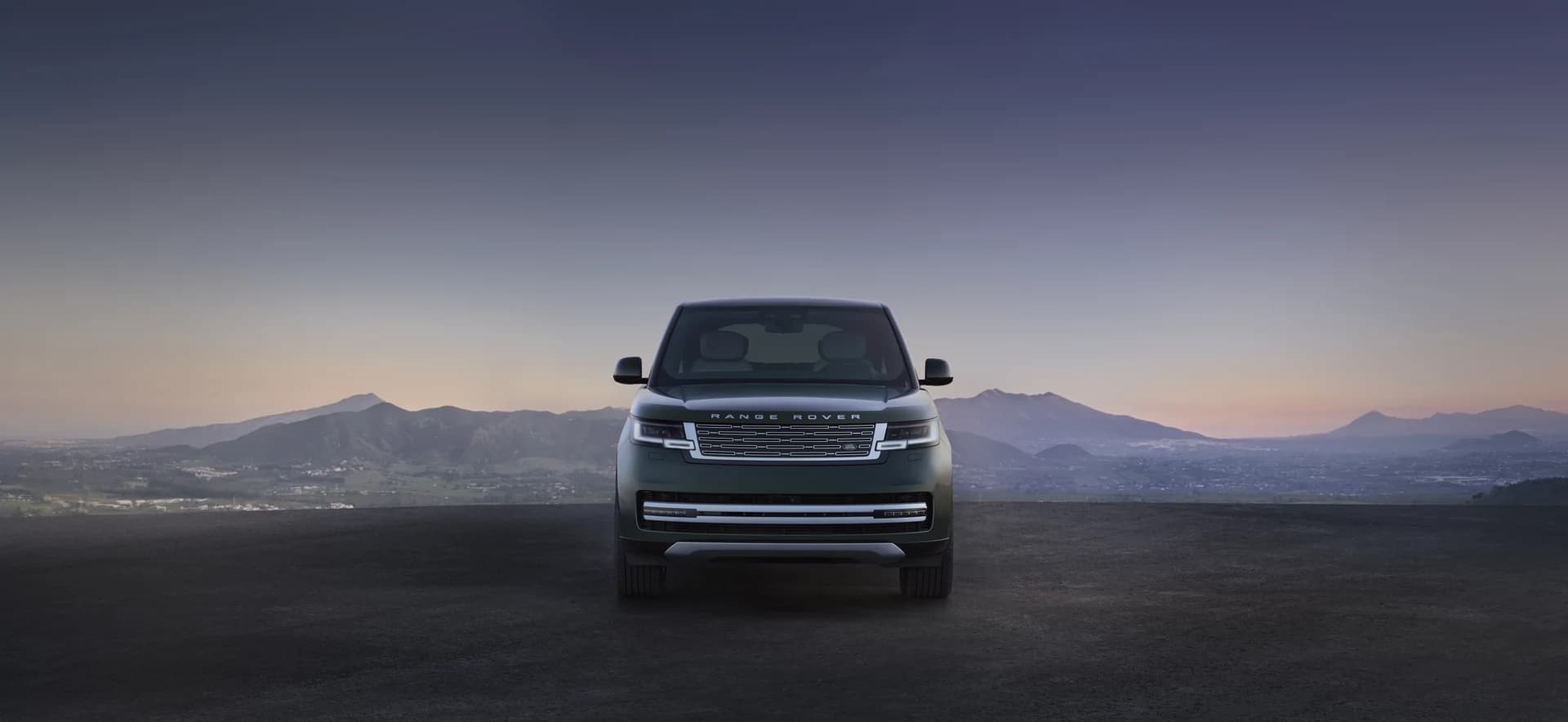
Photo: © JLR / Range Rover, “Range Rover Electric”. Resized and converted to WebP for editorial use under the JLR User Licence.