
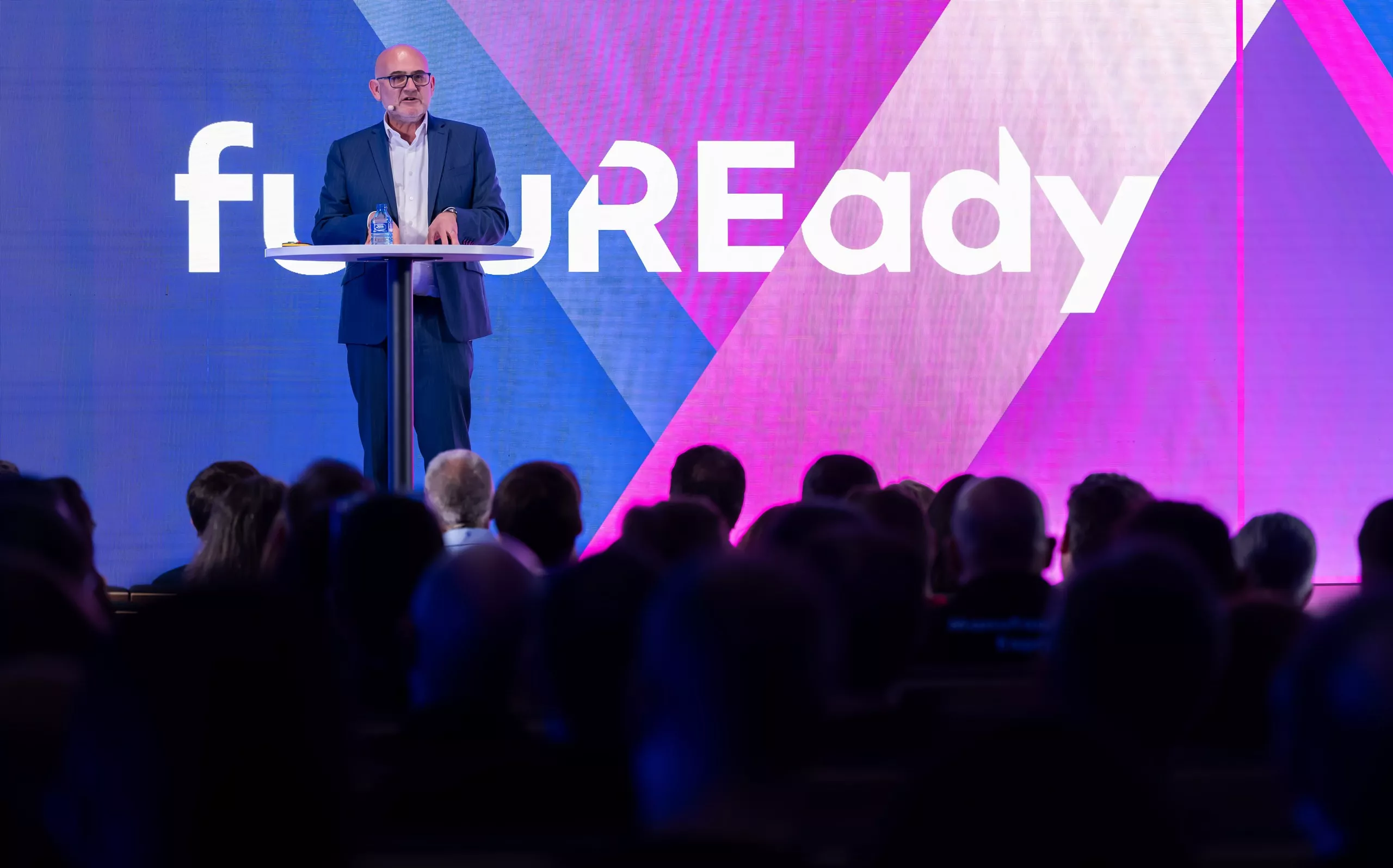
Image: Renault Group España. Official press-gallery image supplied with the 24 September 2026 announcement.
Renault Group says it will invest €600 million in Spain between 2026 and 2030 to prepare its Valladolid and Palencia operations for five new models. The plan includes two C-segment electric vehicles, a new battery assembly line at Valladolid and the installation of the RGEV Medium 2.0 electric platform at Palencia.
The announcement was issued by Renault Group España on 24 September 2026. The company says the total combines Renault Group resources with national and regional public support for industrial transformation and sustainable mobility. It does not separate those sources of funding, and it has not named the five future models or published their individual production schedules.
Five vehicles, two of them electric
The industrial allocation covers five new models for Renault facilities in Valladolid and Palencia. Renault has confirmed that two will be battery-electric vehicles in the C segment. That description identifies the broad market class, but it does not say whether the cars will be hatchbacks, SUVs or another body style.
No final battery capacity, motor output, charging curve, price or delivery date has been announced for either EV. The €600 million figure is a 2026–2030 industrial programme, not a launch announcement for a named showroom product. Renault has also not published expected annual volumes for the Spanish plants.
That distinction matters because a platform allocation is an industrial decision, while a retail launch requires a completed vehicle programme, homologation, pricing and market planning. None of those later details appears in the Spanish press release.
Palencia gets Renault's RGEV Medium 2.0 platform
The Palencia plant will receive Renault Group's RGEV Medium 2.0 native electric platform. Renault describes it as the architecture for its next generation of electric vehicles. The company quotes up to 750 km of WLTP electric range and up to 1,400 km in range-extender versions.
Those are platform capabilities, not confirmed specifications for a particular Spanish-built model. WLTP is a homologation cycle rather than a fixed real-world distance. Weather, speed, payload, tyres, terrain and climate-control use can all change the distance an owner achieves between charges. Renault has not said which battery and motor combinations will be used by the two C-segment EVs.
The platform uses an 800-volt electrical architecture. Renault also quotes rapid charging times of up to 10 minutes, but the announcement does not state the starting and ending battery percentages, charging power, energy added or the conditions behind that figure. It should therefore be read as a manufacturer description of the platform, not as a result that every compatible public charger will deliver.
Valladolid will assemble batteries
Renault says its Valladolid body-and-assembly operation will receive a new battery assembly line. The company has not published the line's annual capacity, equipment suppliers, staffing level or commissioning date.
Renault's plant information lists Captur and Symbioz among the models assembled in Valladolid. Palencia currently builds the Austral E-Tech, Espace E-Tech and Rafale E-Tech. These are electrified vehicles, but the new programme is different: Renault says Spanish factories will produce fully electric vehicles for the first time in the Group's 75-year Spanish history.
The press release does not say that every Valladolid activity will become electric, nor does it give a full model-to-plant breakdown for the five new vehicles. It confirms the battery line at Valladolid and the RGEV Medium 2.0 allocation at Palencia; further industrial details remain pending.
The labour agreement behind the allocation
Renault Group España links the investment decision to the agreement with employee representatives and the 2026–2028 collective agreement. The company cites factory competitiveness, process quality, operational performance and the adoption of new industrial technologies as factors in the allocation.
Renault says the plan helps secure the future of more than 6,000 direct jobs in Spain. That wording describes employment covered by the industrial plan; it is not a promise to create 6,000 new positions. The release does not provide a forecast for additional hiring, shift patterns or how jobs will be divided between Valladolid and Palencia.
Christian Stein, CEO of Renault Group España, said Spain is strategic for production and sales as well as for the suppliers connected with components, energy and mobility services. This is the company's statement; the release does not include an independent economic-impact assessment.
What is confirmed, and what is not
Confirmed facts are the €600 million total, the 2026–2030 period, five new models, two C-segment EVs, the RGEV Medium 2.0 allocation to Palencia and the battery assembly line at Valladolid. Renault also gives the platform-level figures of up to 750 km WLTP, up to 1,400 km with a range extender, 800 volts and rapid charging of up to 10 minutes.
The model names, retail prices, battery sizes, power outputs, individual range figures, production volumes and customer-delivery dates are not confirmed. The announcement also does not establish whether any of the future vehicles will be sold in every European market. Their market positioning and commercial timing will need separate Renault announcements.


