Keeping car production running in Italy is a “daily challenge”, Stellantis Europe chief Emanuele Cappellano told an ANCI gathering in Verona on 26 November. He pointed to manufacturing costs, competition from imports, international conflicts and the shift in vehicle technology. The statement was a warning about industrial conditions, not an announcement that Stellantis would close an Italian plant.
At the same event, the company outlined more than €5 billion of research and development spending in Italy over the next five years. Cappellano said Stellantis currently builds 14 models in the country and plans to add nine by 2030. Those figures set out an intended programme. They do not tell us how many vehicles each future model will produce, how work will be allocated between plants or whether every target will be met.
A request for cheaper energy and simpler rules
ANSA's report from Verona records Cappellano describing Italy as strategic for Stellantis while arguing that the cost of energy must fall. He also called for less administrative complexity and discussed European rules on local content and carbon dioxide emissions. These are the manufacturer's policy preferences. No change to EU legislation or Italian energy prices was announced at the meeting.
The company put its annual purchases from Italian suppliers at more than €7 billion. That amount describes recurring procurement across the supply chain; it is not the same as the separate five-year research budget. Treating the two figures as a single new investment would exaggerate what was announced. Supplier purchases matter to the industrial footprint, but future spending depends on orders and production decisions not specified in the speech.
Cappellano's language is also narrower than some headlines might suggest. He did not publish a list of factories scheduled for closure, or say that the 14 current models would stop. The practical test of the pledge is whether new models actually enter production at the named sites, and whether they bring sufficient volume to support regular shifts.
Output is recovering, but the starting point matters
The FIM-CISL union's October production report counted 340,745 Stellantis vehicles made in Italy during the first nine months of 2026. That includes light commercial vehicles. Output was 265,490 in the same period of 2025, so the union calculated a 28.3% increase. Passenger cars accounted for 206,945 units, up 36.7%; commercial vehicles reached 133,800, up 17.3%.
These are production figures rather than registrations or deliveries. They show a rebound from the preceding year, not an answer to whether every factory is competitive at present cost levels. FIM forecast around 450,000 vehicles for the full year. That remains the union's estimate, not a completed annual result, and it should not be confused with an official Stellantis sales target.
Atessa, the commercial vehicle plant, accounted for all 133,800 vans in the union tally, about 39% of the Italian total. Pomigliano made 103,500 passenger cars, including roughly 92,000 Fiat Panda and 11,500 Alfa Romeo Tonale. These concentrations explain why a change at a single large facility can materially alter the national number, while a struggling smaller plant can disappear within the aggregate.
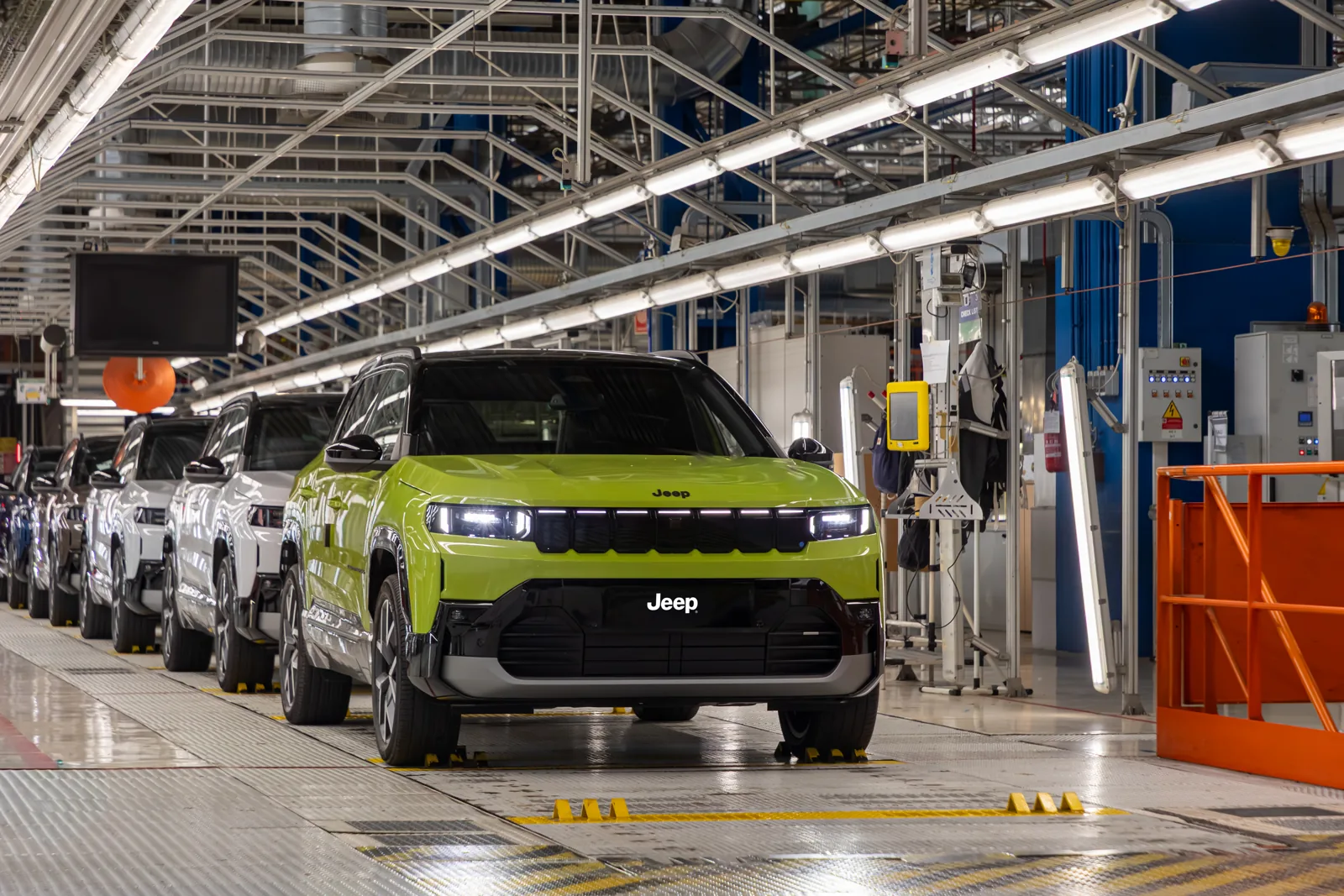
Melfi produced 47,580 vehicles in the nine-month period, a 77.2% increase on the comparable 2025 period. Jeep says the new Compass entered production there in October 2025. Yet FIM notes that current output remains far below the plant's 2019 level, and records 87 days of collective stoppage during the reporting period. A strong year-on-year percentage therefore should not be read as evidence that the plant has returned to its previous utilisation.
Mirafiori recorded 46,323 vehicles, 151.1% more than in the first nine months of 2025. Its Fiat 500 electric and hybrid programmes help explain the rise, while FIM also describes a slowdown in the third quarter. The figures support a plant-by-plant reading of the Italian network rather than a single verdict of recovery or decline.
Cassino moves in the opposite direction
Cassino was the conspicuous exception in the union report. It produced 8,897 cars between January and September, down 37.1% year on year. FIM identified 5,227 Alfa Romeo Giulia and Stelvio vehicles and 3,670 Maserati Grecale vehicles within that total. The union counted 56 working days across the nine months. For the plant and its workforce, the national increase is a poor guide to the immediate production schedule.
That variation raises a question the Verona announcement did not resolve: which sites will receive the nine additional models, when will they start and at what volumes? Without a plant-level schedule, the research commitment cannot be converted into a credible employment or output forecast for Cassino, Melfi or any other site. The announced number of models alone is not a measure of factory utilisation.
A separate supply problem also affects Fiat output
Stellantis identified a more immediate disruption in an early-November statement. A missing component for the N3 GSE engine control unit had affected some Fiat production, particularly Pandina, and the group said the problem could persist through November and December at Pomigliano and Mirafiori. This is a specific supplier issue. It should not be folded into Cappellano's wider argument about energy costs, imports and industrial policy.
For buyers outside Italy, none of these statements establishes a new price, a universal delivery delay or the withdrawal of a particular vehicle. Availability depends on the model, specification and market. The verified picture is more precise: Italian vehicle production rose overall in the first three quarters of 2026, several plants remain unevenly utilised, and Stellantis says maintaining future production under current costs is difficult.