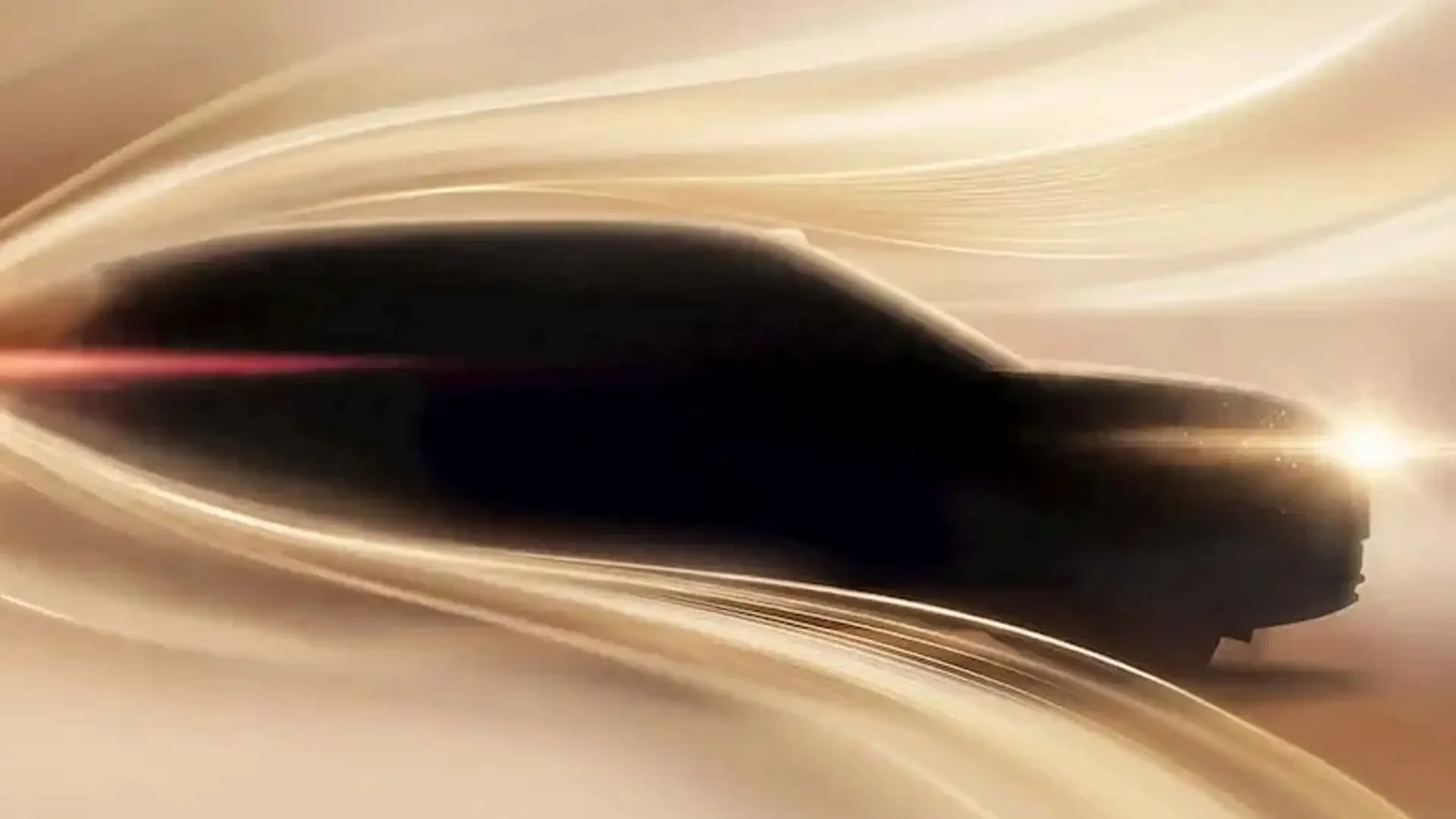
GAC Toyota will unveil its first range-extended electric SUV at the Guangzhou Auto Show on November 27, 2026. The official teaser shows a long, large-bodied vehicle that appears consistent with a future Highlander, and earlier China product plans point in the same direction. Toyota has not confirmed the model name, platform, battery, range, price or production date.
That distinction sets the factual boundary. A Toyota EREV reveal is confirmed. The silhouette is real. Calling it the next Highlander remains an informed interpretation until GAC Toyota identifies the car at its presentation.
What a range-extender changes
An EREV, or extended-range electric vehicle, normally uses electric motors to drive the wheels while a combustion engine generates electricity when the battery charge falls. The car can be plugged in and used as an EV for shorter trips, then continue beyond its battery range by consuming petrol.
This differs from the conventional hybrid currently sold as a Highlander in China. In Toyota's familiar hybrid system, the combustion engine and electric machines work through the hybrid transmission and can both contribute to propulsion. The battery is smaller and is not normally plugged in. An EREV needs a larger traction battery and is intended to preserve electric drive characteristics even when its generator is running.
GAC Toyota's message describes range extension as another part of its electrification portfolio, joining battery EVs, plug-in hybrids, conventional hybrids and fuel-cell vehicles. The teaser does not establish whether the petrol engine will be mechanically isolated from the wheels in every condition, so that detail should wait for the technical reveal.
Why the Highlander identification is plausible
The vehicle has a nearly horizontal roof, a tall tail and the proportions of a three-row family SUV. A thin light graphic appears to extend across the rear. Its size looks closer to a Highlander-class vehicle than to one of GAC Toyota's urban crossovers.
Reports from China have also linked Toyota's locally led next-generation Highlander and Sienna programmes with range-extender technology. GAC Toyota's official post refers to a global flagship and says the company is not rushing its EREV development. It still stops short of writing “Highlander” in the teaser.
The existing Chinese-market Highlander remains on sale with a 2.0-litre turbo petrol engine or a 2.5-litre conventional hybrid. GAC Toyota's official model page does not list an EREV today. It is therefore unknown whether the new vehicle will replace the current range, sit beside it, or use a different Chinese-market name.
Leaked figures need a clear warning label
Pre-launch reports have mentioned a 1.5-litre turbo generator, a wheelbase around 3,050 mm, about 150 km of electric range and close to 1,000 km of combined range. GAC Toyota has not published those specifications. The reports also do not provide a confirmed test cycle for every figure.
China commonly uses the CLTC cycle for official range claims, while Europe uses WLTP. The two are not interchangeable. Without a confirmed battery capacity, usable energy, motor output and test procedure, repeating the numbers as settled specifications would give a false sense of precision.
Price and production timing are also absent from Toyota's teaser. Business reporting has pointed to spring 2027 for Toyota's first China-built EREVs and substantial volume targets for the wider programme. Those reports do not constitute an official Highlander production schedule.
It is separate from America's electric Highlander
Toyota has already revealed an all-electric Highlander for North America. That vehicle is a BEV with no petrol engine, built in Georgetown, Kentucky. Toyota lists 77.0-kWh and 95.8-kWh batteries, front- and all-wheel-drive versions, and a manufacturer-estimated range of up to about 515 km under the EPA procedure.
The teased Chinese vehicle follows a different technical strategy. A range-extender can refuel its onboard generator, whereas the North American Highlander relies entirely on external electricity. Shared styling or a shared badge would not make their powertrains, certification figures or production sources equivalent.
The North American BEV has three rows and seating for up to seven. Nothing in the China teaser confirms the cabin layout, even if the exterior proportions suggest a large family SUV. The US model's battery and range figures must not be transferred to the EREV.
Why EREVs matter in China
China has become the largest and most competitive market for range-extended SUVs. Li Auto, Aito, Leapmotor and Deepal are among the brands using the format to offer electric driving for daily use without making long journeys depend entirely on public charging.
For a large SUV, a range-extender can allow a smaller battery than an equivalent long-range BEV. That may reduce battery cost, though the vehicle must also carry an engine, fuel tank, exhaust, generator and associated cooling systems. The result is not automatically lighter or more efficient in every condition.
An EREV is most convincing when it is charged regularly and completes much of its routine mileage on electricity. If it is driven mainly with a depleted battery, energy passes through an extra conversion step: petrol becomes mechanical energy, then electricity, then motion. Toyota's control strategy and generator efficiency will therefore matter as much as the headline combined range.
The November 27 presentation should answer the questions the teaser deliberately leaves open: name, seating, battery, motor output, generator operation, range, charging speed, production timing and price. Until then, the accurate description is an unnamed GAC Toyota range-extended SUV that strongly resembles the expected Highlander programme.
There is no announcement for Europe. The project is aimed at China, while the separate battery-electric Highlander is a North American product. Any prospect of a Romanian or wider European launch remains unconfirmed.