Volkswagen has opened German orders for the first ID. Cross R-Line, pairing a 99 kW (135 hp) front motor with a 37 kWh usable battery. It costs from €37,225 and has a maximum WLTP range of 314 km. A substantially different 166 kW (226 hp) flagship will enter presales in the second half of March 2027, adding a 52 kWh battery, 290 Nm and up to 428 km of WLTP range.
Both the price and immediate availability apply to Germany. Volkswagen has not published a price for the 226 hp car, a first-delivery date or a market-by-market launch schedule. Buyers elsewhere in Europe should therefore not treat the German figure as a local quote.
The 135 hp R-Line is the starting point
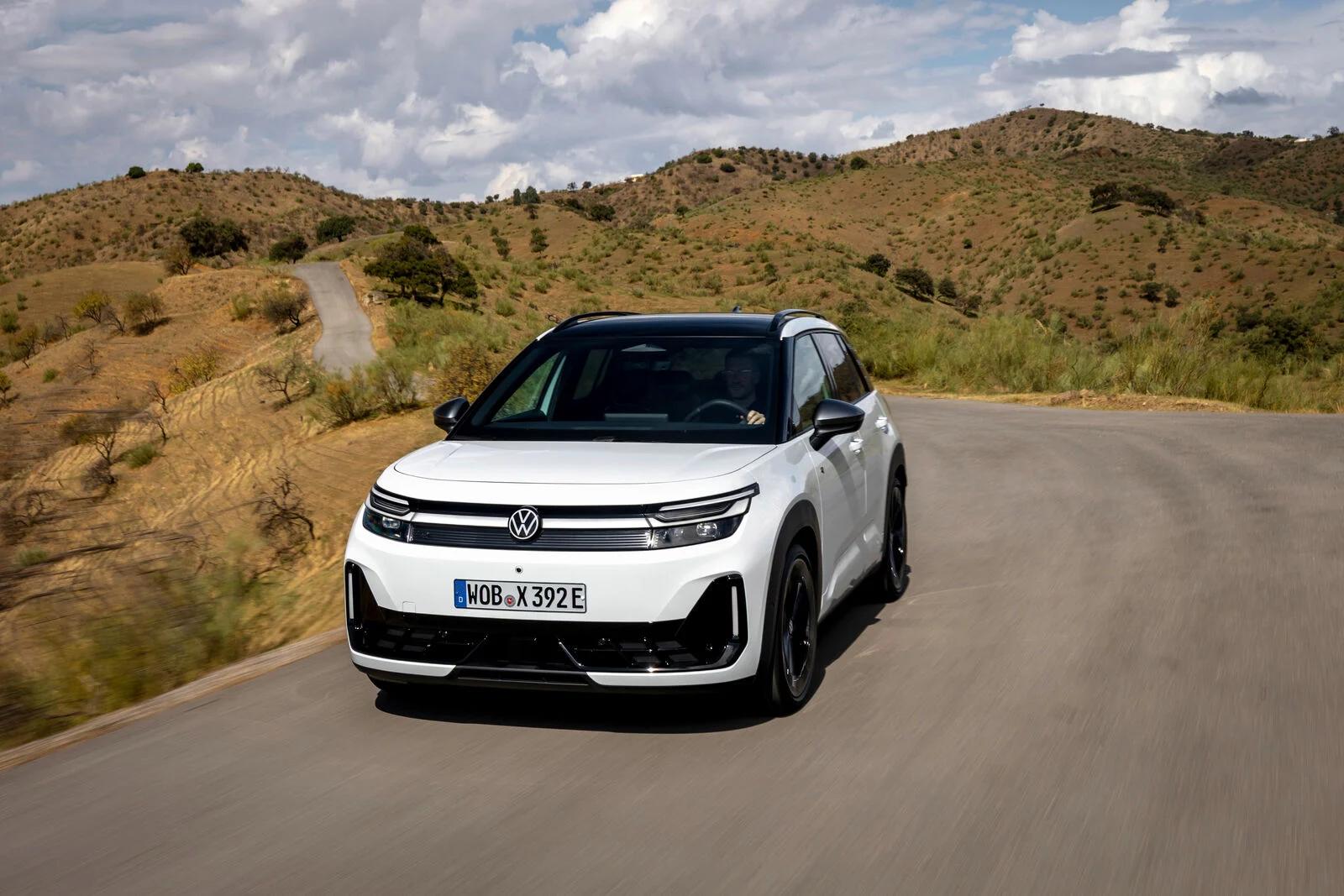
The launch version uses the smaller battery and carries an official combined consumption range of 14.5–16.6 kWh/100 km, depending on specification. Its R-Line treatment includes model-specific bumpers, vertical daytime running lights, 19-inch alloy wheels, anthracite mirror caps and a side badge. Sports comfort seats with dedicated upholstery distinguish the cabin.
German standard equipment also includes IQ.LIGHT LED matrix headlights, Keyless Access, ambient lighting, a reversing camera and adaptive cruise control. Progressive steering is fitted as standard. That equipment explains why the €37,225 R-Line cannot be compared directly with the least expensive ID. Cross Trend.
The visual changes are conventional for an R-Line package. The more powerful model goes further because its output is accompanied by hardware and software changes to the chassis rather than badges alone.
The 226 hp model changes the chassis
With the 52 kWh usable battery, output rises to 166 kW and maximum torque to 290 Nm. Volkswagen quotes 0–100 km/h in 6.9 seconds and a 175 km/h top speed. These are manufacturer figures, not Carboratory test results, and the press release does not state the kerb weight of this version.
An electronically controlled front differential lock, adaptive DCC dampers and progressive steering are standard on the flagship. The suspension is lowered by 15 mm, while a vehicle dynamics manager coordinates the main chassis systems. That specification should make the difference more tangible than the exterior trim, although an independent road test will be needed to judge ride quality and steering behaviour.
The exclusive Traction mode adjusts the power delivery and front differential for wet roads, snow and surfaces with uneven grip. It joins Eco, Comfort, Sport and Individual. The car remains front-wheel drive: the controlled differential does not add a rear motor or turn the ID. Cross into an all-wheel-drive SUV.
What the 428 km range figure means
Volkswagen gives the 226 hp R-Line a maximum WLTP range of 428 km. That is an official laboratory-cycle value for a favourable configuration. Temperature, speed, traffic, topography, wheel choice, cabin heating and payload will affect the distance available in ordinary use.
The wider ID. Cross range charges at up to 11 kW on AC. Volkswagen says the 37 kWh battery can accept up to 90 kW DC and move from 10 to 80 percent in around 23 minutes. The 52 kWh pack peaks at 105 kW and requires about 24 minutes for the same interval. The R-Line announcement does not claim a different charging curve for the 226 hp car, so these remain the relevant official figures for its battery.
The peak charging rates are modest beside 800-volt electric cars. Battery capacity is also modest, however, which is why the quoted 10–80 percent time stays below 25 minutes. On a long journey, consistency of the charging curve and consumption will matter more than the headline peak alone.
Compact outside, 500 litres across two storage areas
The ID. Cross is 4,153 mm long, 1,794 mm wide and 1,581 mm tall, with a 2,601 mm wheelbase. Its main boot holds 475 litres and the front storage compartment adds 25 litres, giving a combined 500 litres before the rear seats are folded.
Models with the 52 kWh battery can be ordered with a tow bar and are rated to pull up to 1,200 kg. A 75 kg nose-weight allowance is intended to support a carrier with two electric bicycles. Those values belong to the regular 52 kWh range as well as the R-Line; they are not created by the sports package.
The 15 mm suspension drop on the flagship introduces a practical question that the announcement does not answer: its final ground clearance. Drivers who regularly use steep ramps, rough tracks or high kerbs should check that measurement once the full technical sheet is released.
A position between styling package and performance derivative
R-Line has traditionally been an equipment designation rather than Volkswagen's full performance badge. That distinction remains useful here. The 135 hp version concentrates on appearance and equipment, while the 226 hp version gains meaningful chassis technology and a higher-output motor.
Volkswagen does not call the car an R model or a GTI, and it has not claimed track-focused tyres, larger brakes or a dedicated thermal package. The specification points instead to a quicker road car with more control over front-axle traction and damping.
The 175 km/h maximum speed also sets the intended boundary. It is higher than that of the regular 135 hp model, but still conservative by combustion performance-car standards. The most useful gain for many drivers may be the combination of the larger battery and adaptive chassis rather than outright acceleration.
Availability and the unanswered price question
The 135 hp ID. Cross R-Line is available to order in Germany now. Presales for the 226 hp version are scheduled for the second half of March 2027. Volkswagen has not said when customer deliveries will begin.
No price has been announced for the flagship. The €37,225 entry point belongs specifically to the 99 kW, 37 kWh model in Germany. Adding the larger battery, stronger motor, differential lock and standard DCC will move the 166 kW version above it, but there is no official basis for calculating the amount.
Market specifications may also differ. Volkswagen explicitly states that the announced equipment and prices refer to Germany. Until national configurators list the R-Line, buyers outside Germany have confirmed technical specifications but no confirmed local offer.