Volvo Cars has begun training Hexagon Robotics' AEON humanoid robots at its plant in Ghent, Belgium. The initial task is deliberately narrow: place components accurately into two fixtures. The robots are being tested alongside workers and existing automation, with a broader factory pilot planned for the first half of 2027. Volvo aims to use them in regular production from mid-2027, subject to the development programme succeeding.
Ghent is the first Volvo Cars plant to try humanoid robots. The 26 November announcement gives no count of units currently at the site, no purchase price and no measured productivity result. Volvo describes the purpose as assisting people with repetitive and ergonomically demanding work. It has not announced a specific reduction in staffing.
What the robots are learning
Volvo's own manufacturing team is training AEON with Hexagon's robotics division. The companies use imitation learning: the system learns a task by observing how it is performed. For now, that means positioning parts in two fixtures, a controlled operation that can be checked for accuracy before the workload expands.
Volvo says later steps will involve multiple components, movement around the production area and interaction with other automated equipment. Each step is contingent on the previous one being proven. Success at a fixed workstation would not, by itself, establish that a robot can safely navigate a busy assembly area or manage every production variation.
The company has not published a defect rate, cycle time, uptime figure or independent comparison with either a worker or a conventional robot arm. Consequently, there is no evidence in this announcement that AEON already improves production speed. Magnus Nilsson, Volvo's chief manufacturing officer, says the aim is to take on some physically demanding tasks and improve ergonomics for employees. That is a goal rather than a reported workplace outcome.
Why a humanoid shape, but wheels underneath?
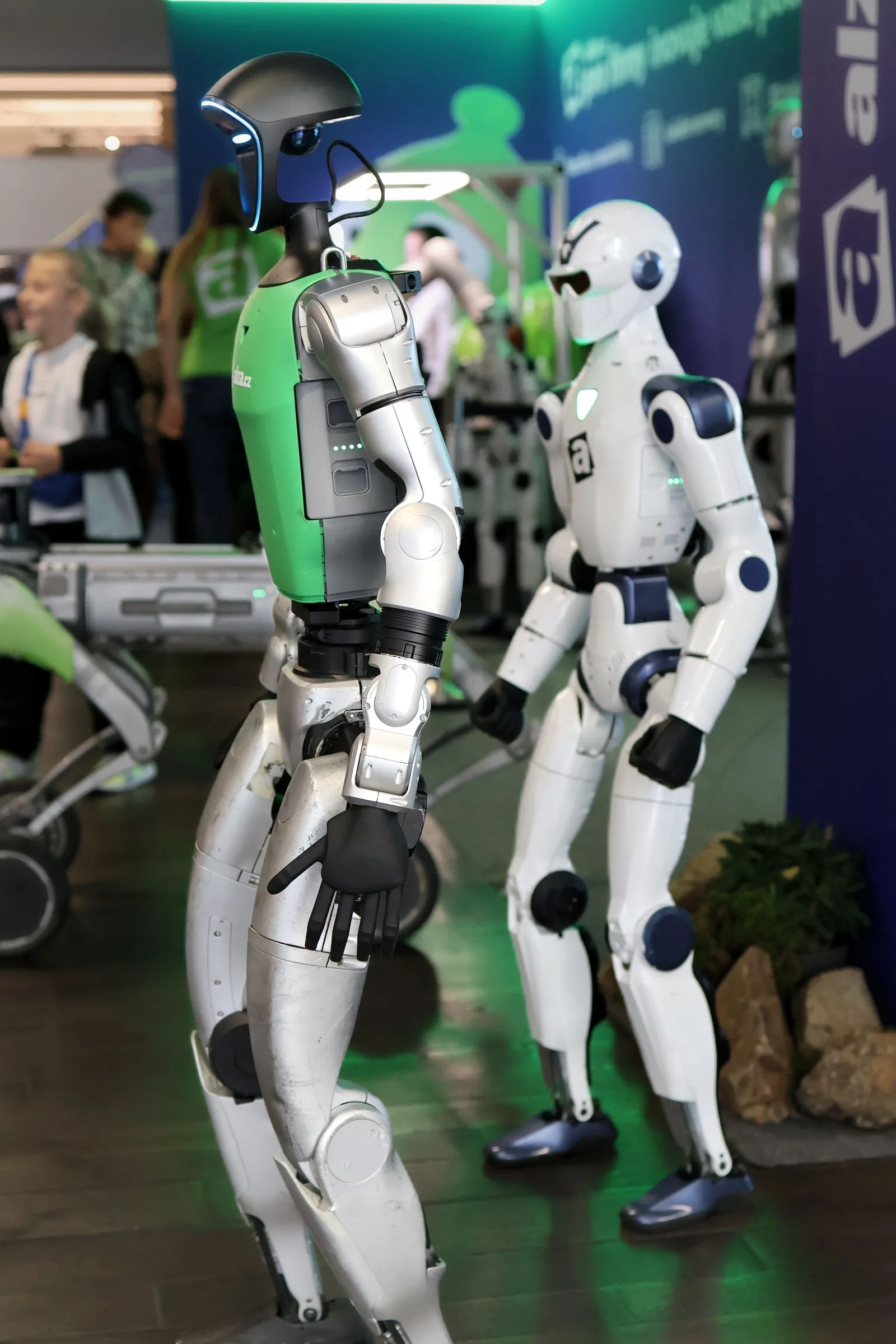
Fixed robot arms have long handled repetitive work in vehicle factories. Volvo argues that a mobile machine with human-like proportions can fit into work areas built for people without rebuilding every station. AEON retains arms for handling parts, but its base rolls on wheels instead of walking on feet. That design is a more specific proposition than the image of a general-purpose android moving freely through any environment.
According to Volvo, the robot is 1.65 metres tall and weighs 60 kg. Cameras and other sensors help it observe its surroundings and position parts. Its stated top speed is 2.4 m/s and Volvo says it can carry 10 kg. These are product specifications, not proof that a robot at Ghent will carry that load at maximum speed during an entire shift.
Hexagon's product page lists a battery designed for automatic swapping, with up to four hours per charge, and 34 degrees of freedom. It distinguishes an 8 kg constant carrying load from a short-term payload of up to 15 kg. Those limits use different definitions from Volvo's simpler 10 kg figure. They should not be combined into a claim that AEON can continuously handle 15 kg in production.
Questions remain about the plant-specific implementation. Neither company has provided a route map, a documented safety validation, actual battery life at the two-fixture task or the time needed for a swap in Ghent's workflow. These measurements would matter more to a factory manager than a headline speed specification.
The two stages of the 2027 plan
Volvo intends to bring more AEON units to Ghent for a pilot in the first six months of 2027. The robots would then take on a wider selection of jobs. Regular production use is an objective for the middle of that year. The distinction matters: training underway today is not the same as a deployed fleet working across the assembly line.
The number of additional units, their tasks and the decision criteria for scaling up have not been disclosed. Nor has Volvo presented a return-on-investment calculation. Hexagon Robotics president Arnaud Robert says close collaboration with the automaker is meant to ensure that AEON performs useful real-world work. The pilot must test that proposition against safety, quality, availability and cost.
No public announcement links the trial to a specific car model's price or delivery schedule. It also does not establish how many workers might change roles. Any employment consequence would need to be supported by a staffing plan or subsequent plant data, rather than inferred from the presence of a new machine.
Why the Ghent setting matters
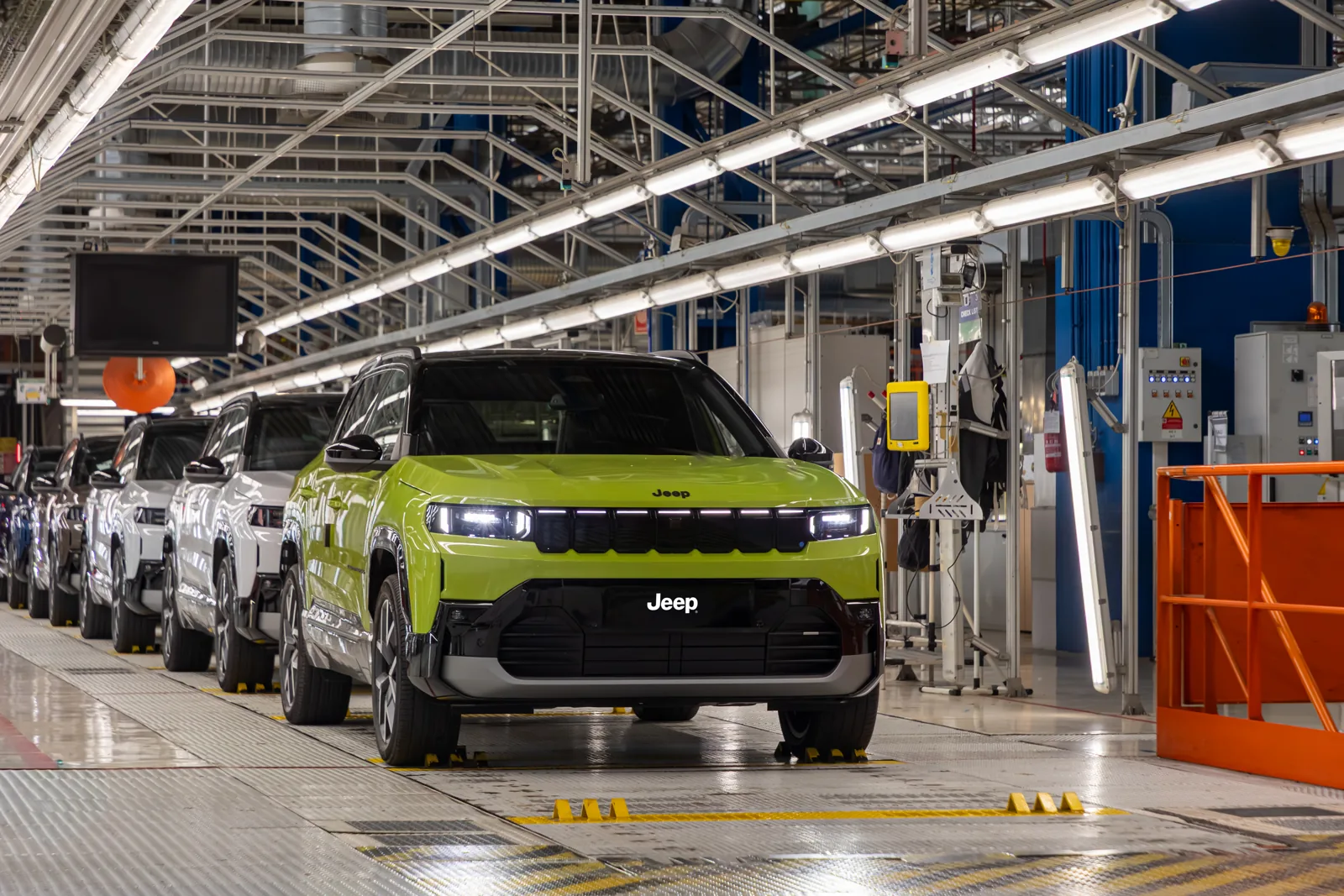
This is an established car plant, not a demonstration laboratory. Volvo began building the electric EX30 there in April 2025. At that launch, it said the addition would create about 350 jobs and bring employment close to 6,600; those are figures from 2025, not a current workforce count. The company said the plant opened in 1965 and built a little over 186,000 vehicles in 2024.
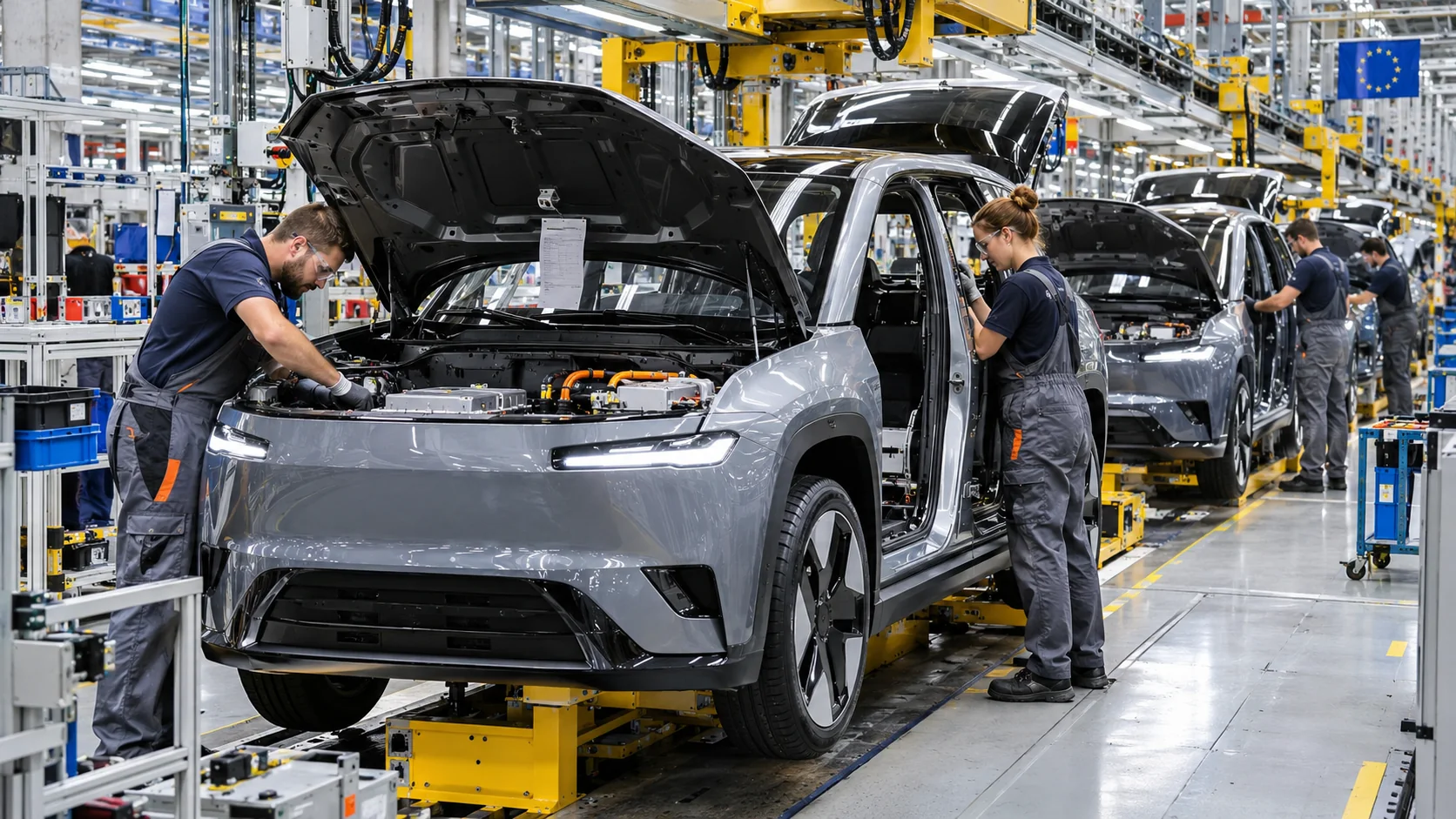
Its 2025 release also named the EX40, EC40, XC40 and V60 among Ghent's other electrified programmes. The presence of multiple vehicle lines and existing fixed automation explains the technical interest in a flexible mobile robot. It must demonstrate value within that real mix of equipment and people, rather than in an isolated exhibition setting.
The immediate news is therefore a validated training programme with a dated pilot target. The broader claim that humanoids will make car assembly safer or more efficient has not yet been quantified at Ghent. Results from the 2027 pilot, including actual task performance and worker safety, will determine whether AEON moves beyond a promising trial.