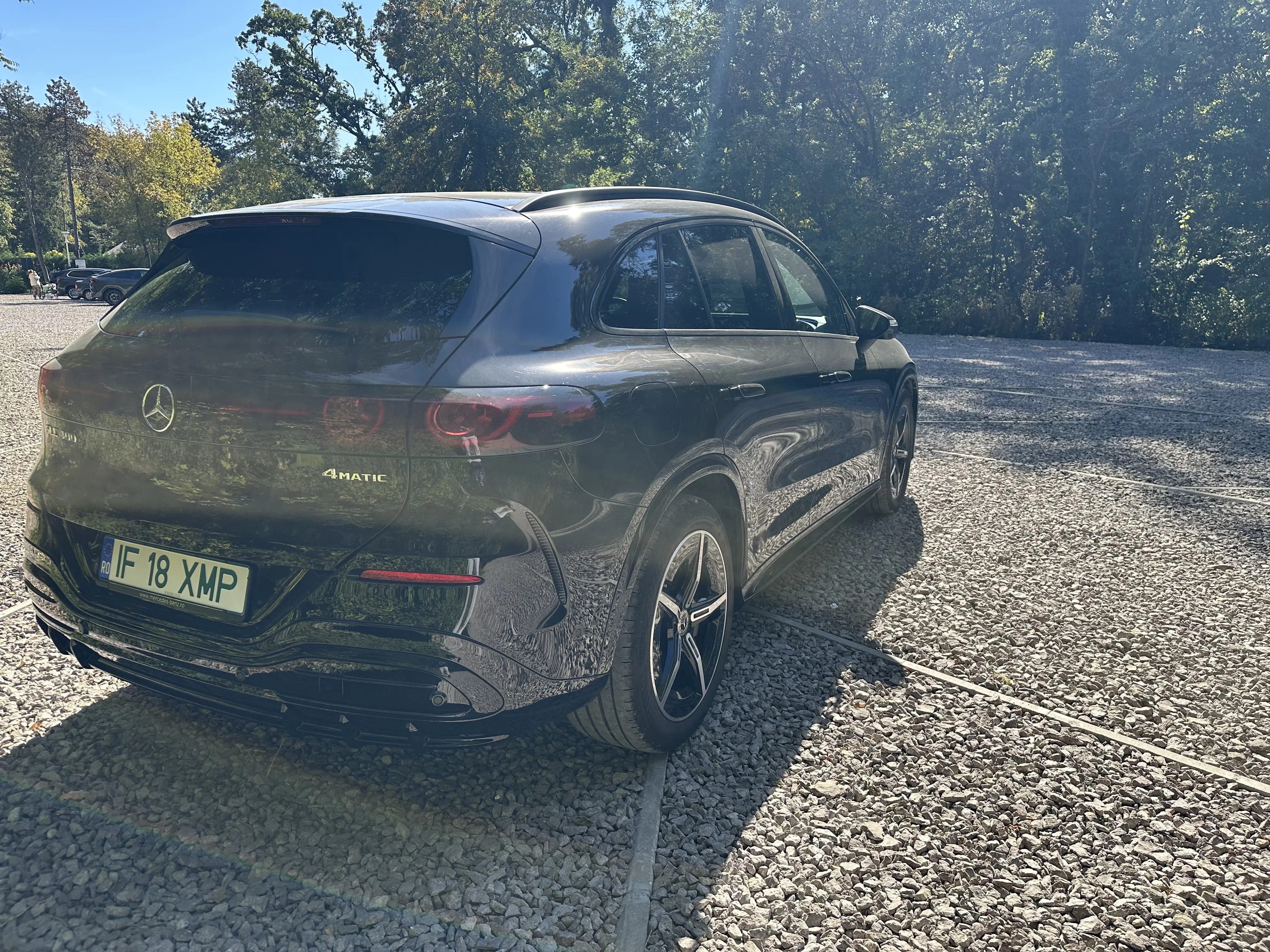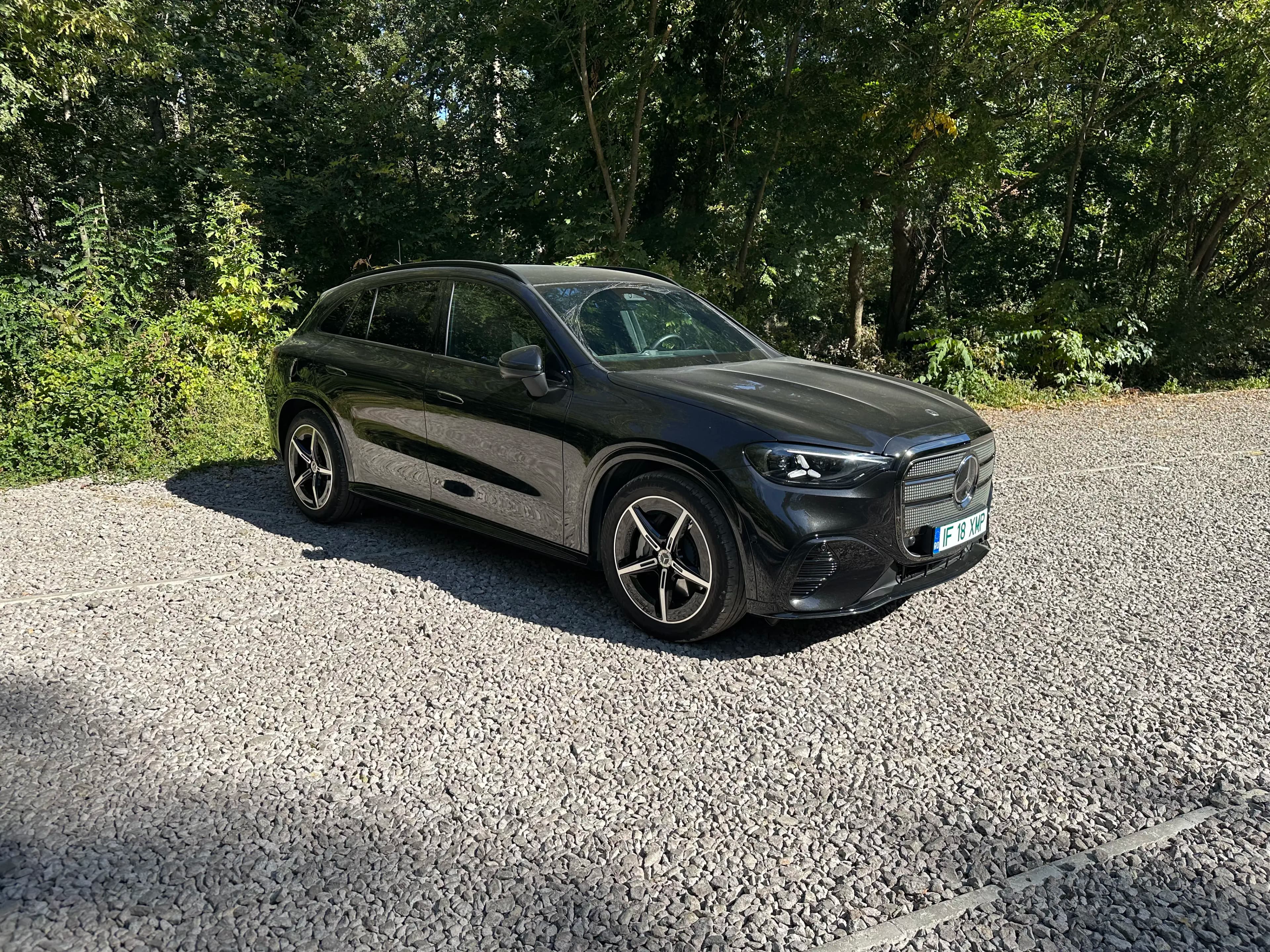
The Mercedes-Benz GLC 400 4MATIC electric is one of the most complete premium EVs I have driven, but it is also a useful reminder that a high specification does not automatically make a high price feel reasonable. The car combines 360 kW, 800 Nm, all-wheel drive, a 94 kWh usable battery and 800-volt charging. Mercedes quotes up to 715 km of WLTP range and a 10–80% DC charging time of about 22 minutes in suitable conditions. The test car, however, was close to €90,000 once equipped.
That gap between capability and perceived value is the central point of this review. The GLC is quiet, comfortable and fast enough for any normal road. It also has the range and charging performance needed for serious motorway travel. Yet some cabin details, including the missing head-up display and rear climate controls on the tested car, are difficult to overlook at this price.
What the official specification says
The GLC 400 4MATIC uses two electric motors and produces 360 kW, or approximately 489 hp, with 800 Nm of peak torque. The official 0–100 km/h time is 4.3 seconds and top speed is 210 km/h. Usable battery capacity is approximately 94 kWh. DC charging is rated at up to 330 kW, while AC charging is 11 kW as standard and can reach 22 kW with the relevant option.
Mercedes lists a WLTP range of up to 715 km, but that is configuration-dependent. Wheels, equipment, temperature and the test configuration all affect the final number. Mercedes-Benz Romania currently lists the GLC 400 4MATIC at 673 km and 15.8 kWh/100 km on its local model page, while the German launch material quotes the higher maximum figure. Those numbers are not contradictory; they describe different market and specification combinations.
The German list price announced for the GLC 400 4MATIC with EQ Technology started at €71,281. Mercedes-Benz quoted €71,900 for the French launch and €72,588 for the Italian GLC 400 4MATIC Advanced. In the United Kingdom, the Mercedes tax-history page lists the Sport version at £60,350, roughly €71,300 using the ECB reference rate of 7 October 2026; prices, taxes and equipment should be checked locally. Spain’s official finance page advertises a GLC 400 4MATIC electric example at €595 per month with a €22,786 initial contribution, rather than publishing the cash list price in the page text. These are market references, not the price of the particular test car.
A convincing electric SUV on the road
The most important impression is how little the GLC feels like a conventional SUV converted to electric power. The body, cabin and storage areas work together as if the car had been planned around the battery from the beginning. There is useful space for passengers, a boot of about 570 litres and a 128-litre front storage compartment. The latter is large enough for charging cables and smaller bags, rather than being a token compartment.
The 489 hp is available immediately, but the car does not use it to define its personality. Throttle response is smooth and progressive. Overtaking and motorway joining are effortless, yet the GLC does not constantly deliver the exaggerated launch sensation found in some performance EVs. It feels like a refined Mercedes that happens to have a substantial reserve of electric torque.
The optional air suspension is more important than the headline acceleration. It controls the body without becoming harsh and absorbs broken surfaces better than many heavy electric SUVs. The GLC remains calm over patched tarmac, expansion joints and uneven urban roads. It is not a sports SUV in the Porsche Macan Electric sense, and it does not need to be. Its strengths are long-distance comfort, isolation and predictable responses.
Range and charging are genuinely useful
The range figure matters less than the overall balance. A usable battery near 94 kWh, good efficiency and up to 330 kW DC charging make the GLC easier to use as a primary family car. A motorway break can often serve both the driver and the battery. Mercedes quotes up to 303 km of WLTP range recovered in ten minutes under the relevant conditions, while the 10–80% session is around 22 minutes.
That does not mean every public charger will deliver 330 kW. The charger, battery temperature, state of charge and power-sharing arrangements determine the actual result. It also does not mean 715 km is a realistic winter motorway distance. The value is that the car begins to fit normal travel patterns: drive for several hours, stop for food or coffee, and continue with a useful amount of range.
The cabin is more complicated
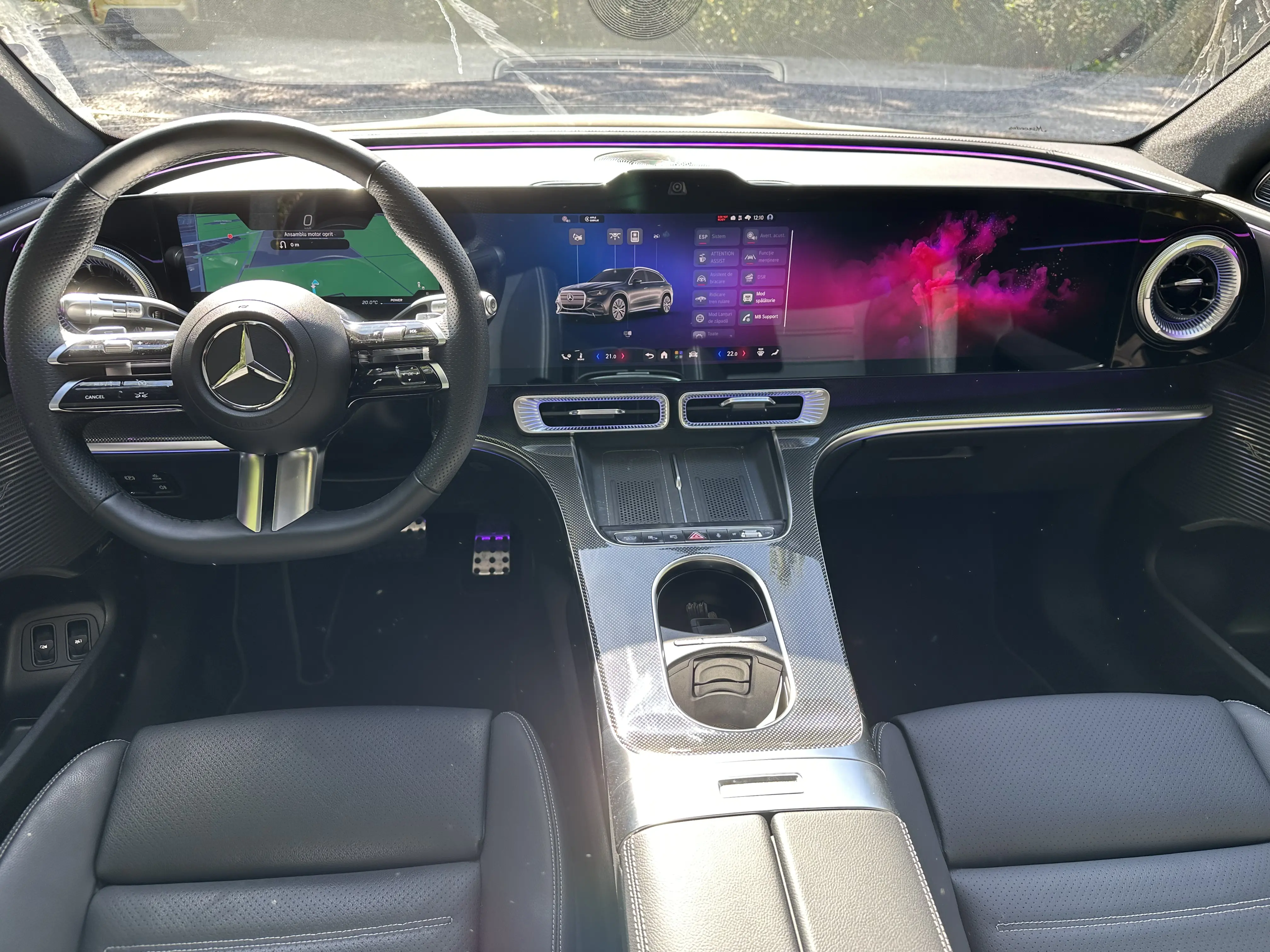
The interior makes an immediate impression. The large display, polished graphics and ambient lighting create a strong first look, and the latest MBUX interface is fast and visually coherent. Mercedes has integrated the screen far better than the tablet-like installations found in some rivals.
The problem is not execution; it is expectation. At close to €90,000, every surface and control is judged against the price. Some materials and trim details feel merely good rather than exceptional. The technology sometimes appears to carry more of the luxury message than the physical materials do.
The enormous passenger-side display is attractive, but I would not call it essential. A good driver display, central screen and head-up display would cover the functions I use most. That makes the missing head-up display on the test car particularly odd. It is a feature that puts navigation and speed information in the driver’s line of sight, while the large passenger screen is mostly a presentation feature.
The absence of dedicated rear climate controls is another small but visible omission. The GLC is clearly intended to work as a premium family SUV, so rear passengers should not feel secondary in a car at this price. Neither omission ruins the car, but both become relevant when the final invoice approaches €90,000.
Rivals and the buying decision
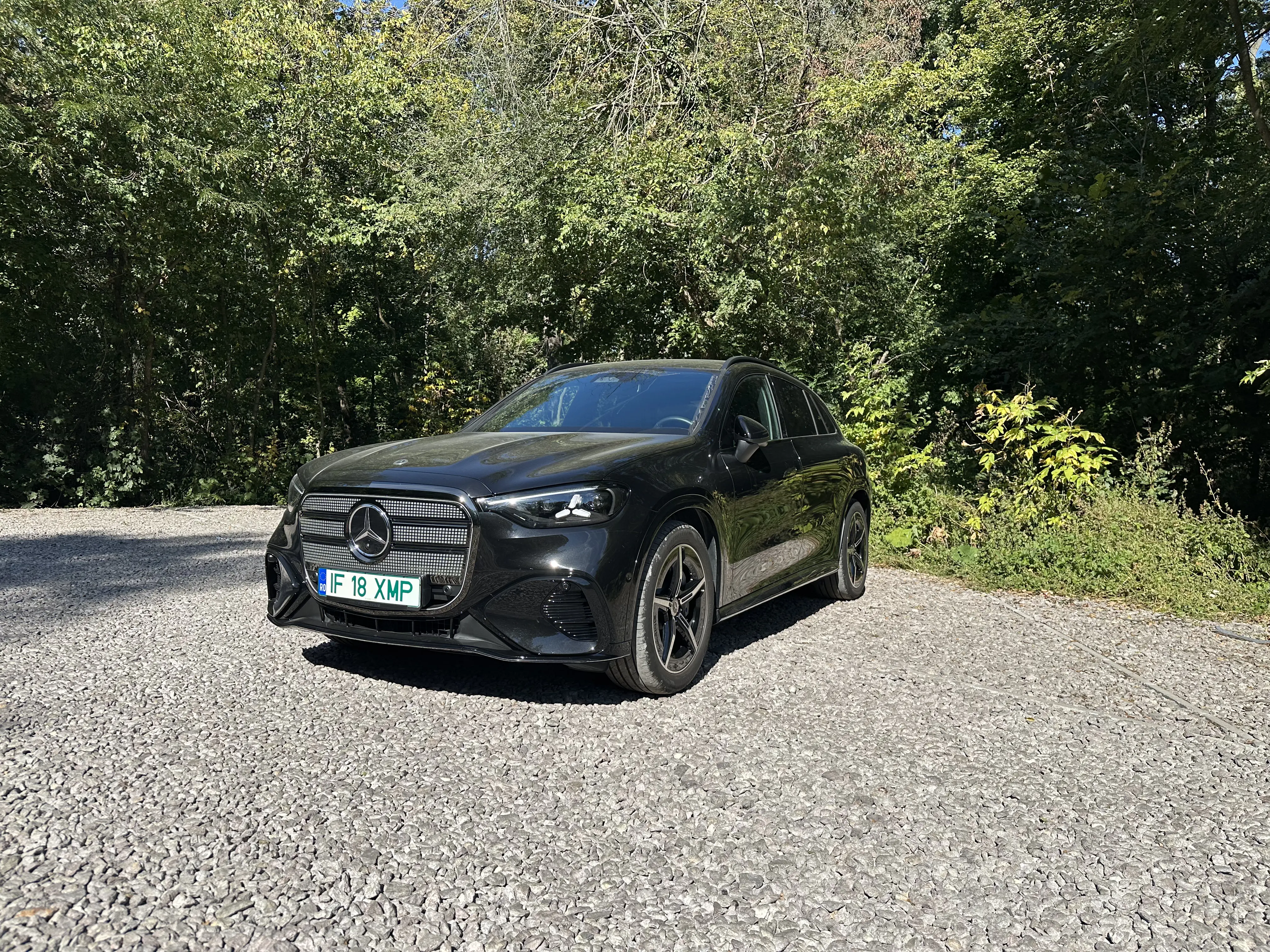
The BMW iX3 is the closest conceptual rival. BMW places more emphasis on efficiency, range and driver involvement, while the Mercedes prioritises comfort and digital presentation. The Audi Q6 e-tron offers a calmer, more conventional cabin and similar long-distance credentials. The Porsche Macan Electric is sharper and more communicative, but less focused on relaxed family travel. Tesla’s Model Y is not a direct price rival, yet its efficiency and lower cost make the Mercedes harder to defend on rational value alone.
The GLC answers those alternatives with ride quality, refinement and a familiar luxury-car experience. Those qualities are real, especially with air suspension. The question is whether they are worth the premium over a less expensive EV or a better-equipped rival. The answer depends heavily on how much time the buyer spends travelling and how much they value isolation over sportiness or maximum value.
Verdict
The Mercedes-Benz GLC 400 4MATIC electric is an excellent long-distance SUV. Its range is sufficient, charging is fast, performance is effortless and the air suspension gives it a clear comfort advantage. It feels mature rather than experimental, which is exactly what many buyers want from a premium EV.
The difficulty is the price of a well-equipped example. When the car approaches €90,000, the missing head-up display, absent rear climate controls and ordinary-feeling materials carry more weight than they would in a cheaper version. The GLC is easy to recommend for its driving experience. It is harder to recommend without qualification as a value proposition.