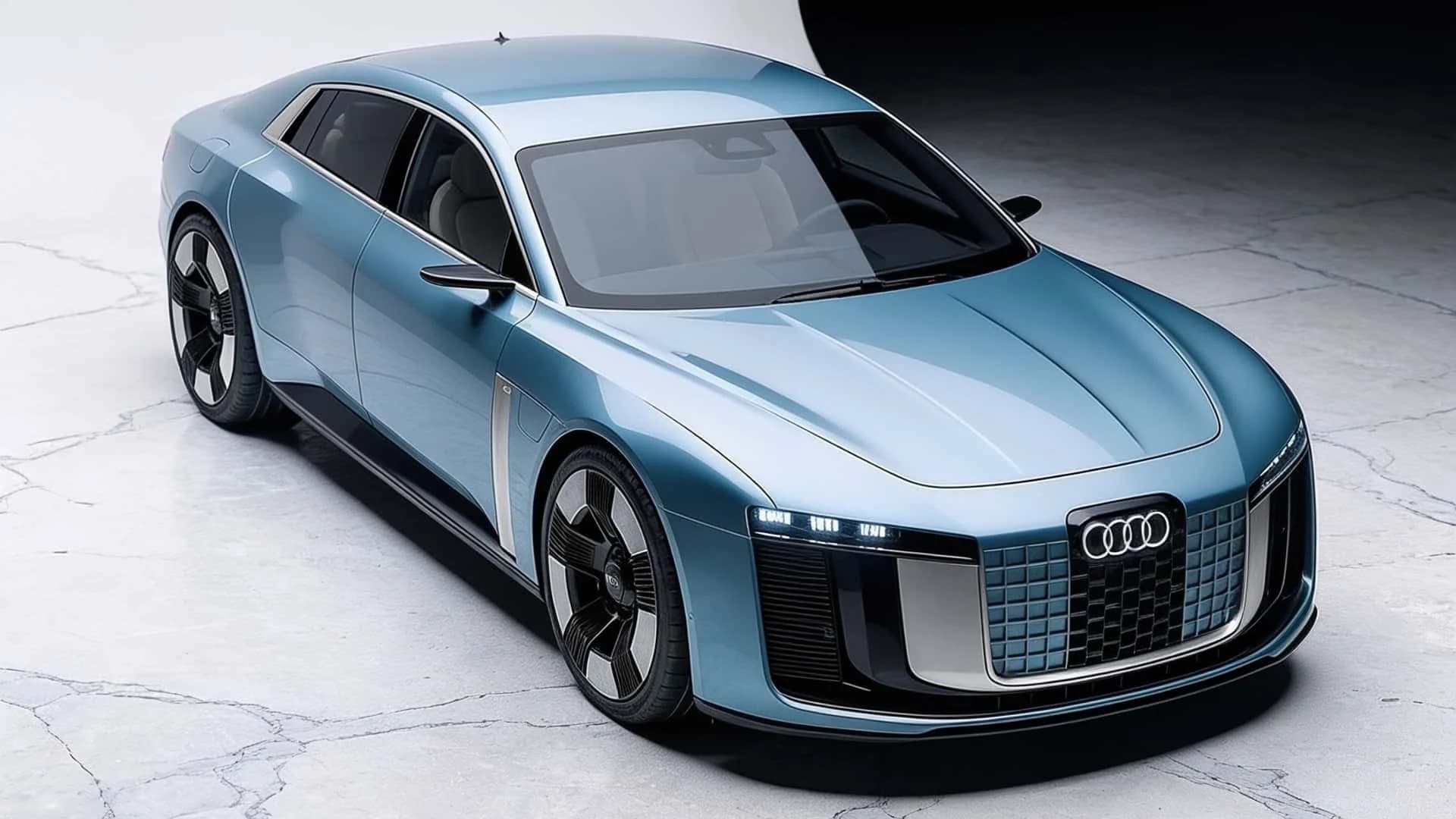
An independent rendering imagines the Audi A8 with the visual language introduced by the Concept C. It is an attractive design exercise, but it is not an Audi teaser, a prototype photograph or a confirmation of the next A8. The image was created by designer Luca Serafini and presented by Motor1.
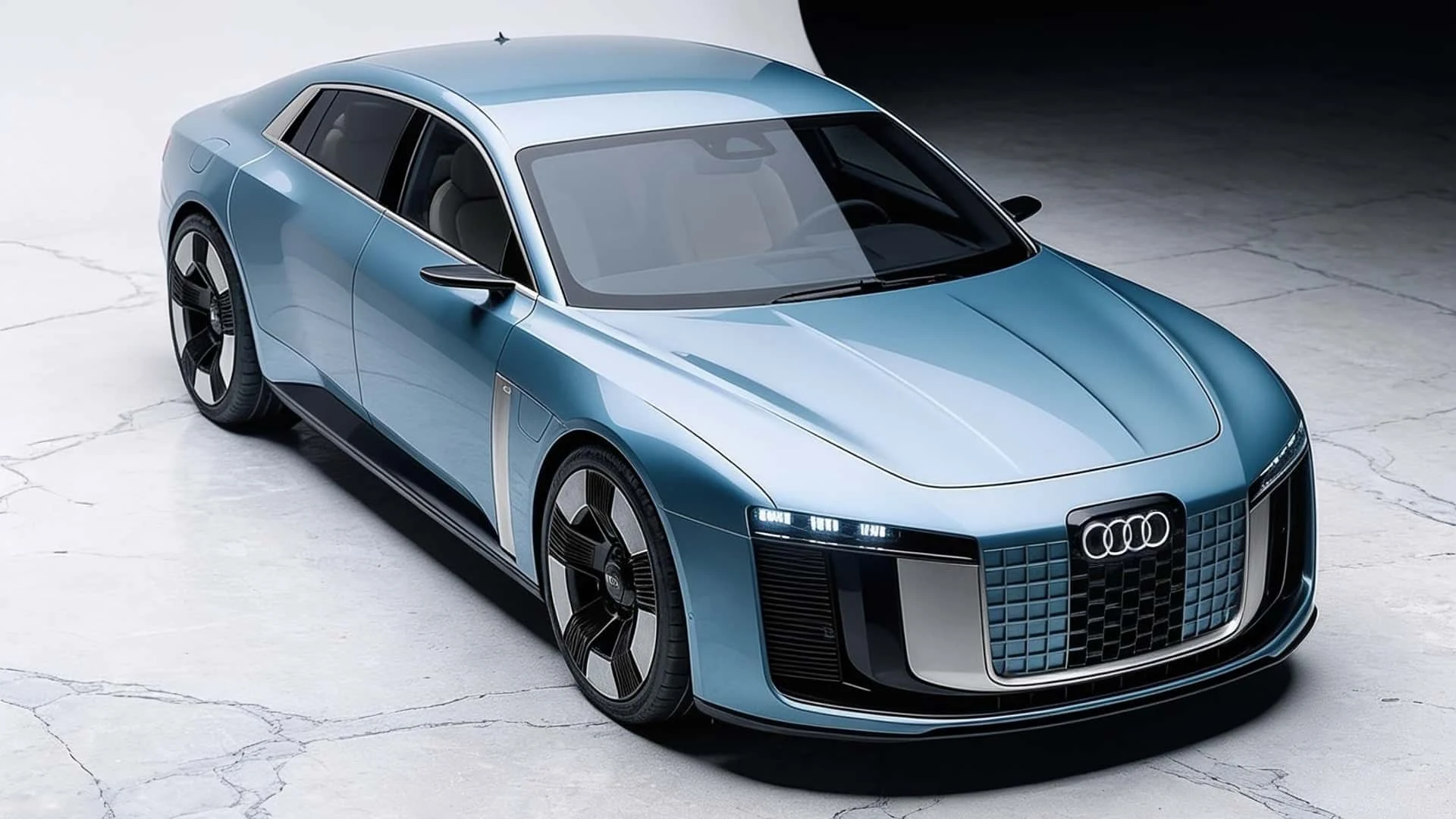
Independent rendering by Luca Serafini, published by Motor1. Image credit: Luca Serafini/Instagram; reuse rights were not independently verified.
A design exercise, not a product announcement
The proposal starts with a clear design question: what would happen if Audi’s latest sports-car concept language were applied to its flagship sedan? The answer keeps the long bonnet, low roof and formal stance associated with the A8, while replacing some of the familiar Audi visual cues with a taller, more architectural front end.
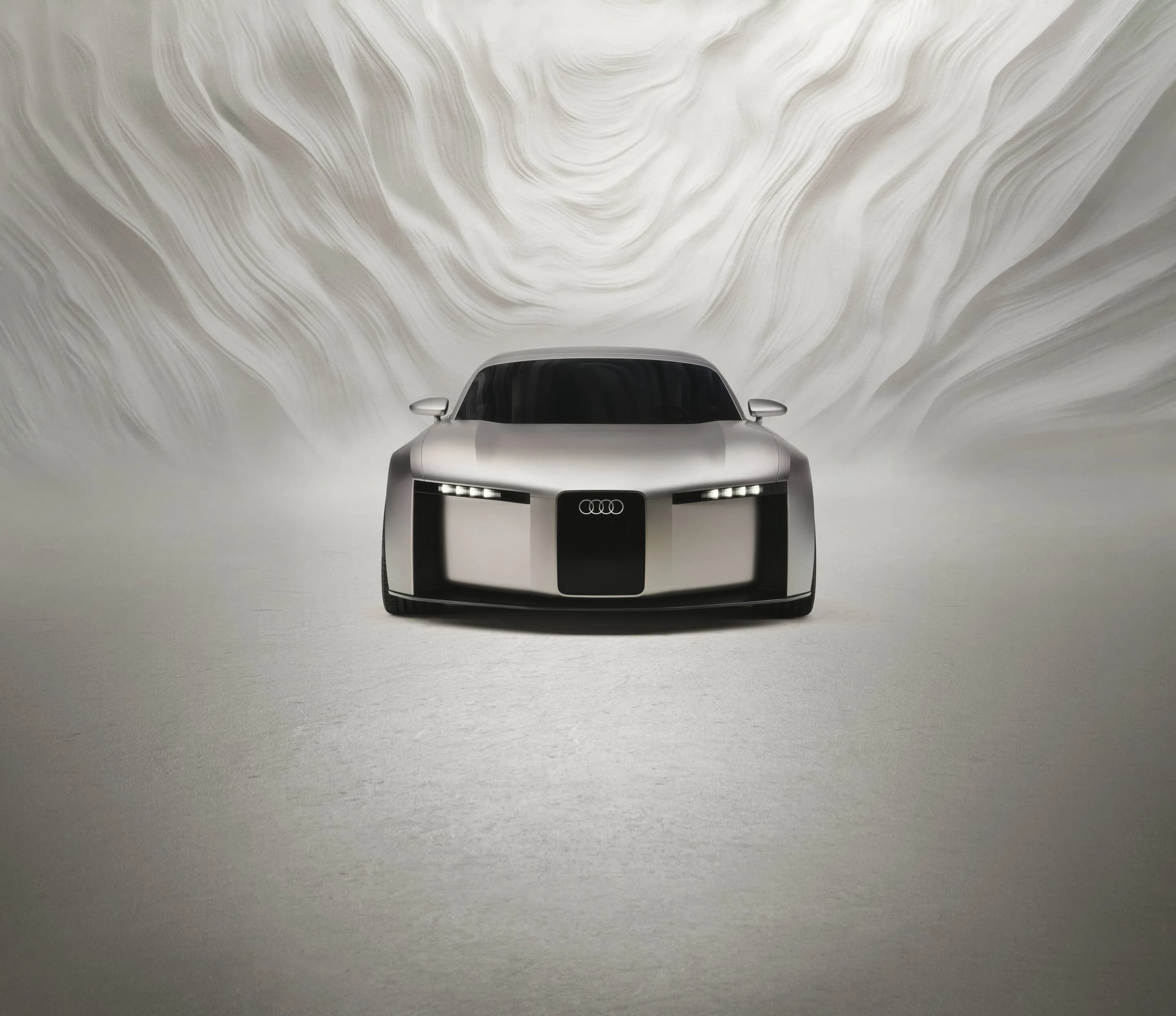
That distinction matters. Audi’s official Concept C is a two-seat electric sports-car concept unveiled in Milan in September 2025. Audi calls it the first expression of a new design philosophy, “The Radical Next”. The official concept uses a vertical frame, a four-element lighting signature and a retractable hardtop. Those are confirmed details of Concept C. They are not specifications for the rendered A8.
The A8 shown here is an independent interpretation. Audi has not announced a production car based on this image, and the company has not confirmed that the next A8 will copy these proportions, lights, wheels or grille treatment.
What the rendering changes
The most obvious change is the nose. Instead of a broad, familiar single-frame grille, the rendering uses a dark vertical structure filled with metallic details. The Audi rings sit in the centre, while the slim lights use a repeated geometric pattern. The result looks closer to a piece of architecture than to a conventional radiator opening.
The side profile is deliberately restrained. A vertical strake behind the front wheel links the nose to the front door, creating a strong visual break in the otherwise smooth bodywork. The roofline stays formal enough for a large sedan, but the glasshouse is pulled backwards and the shoulders are clean. Brushed-metal wheels and a soft blue finish reinforce the studio-concept feel.
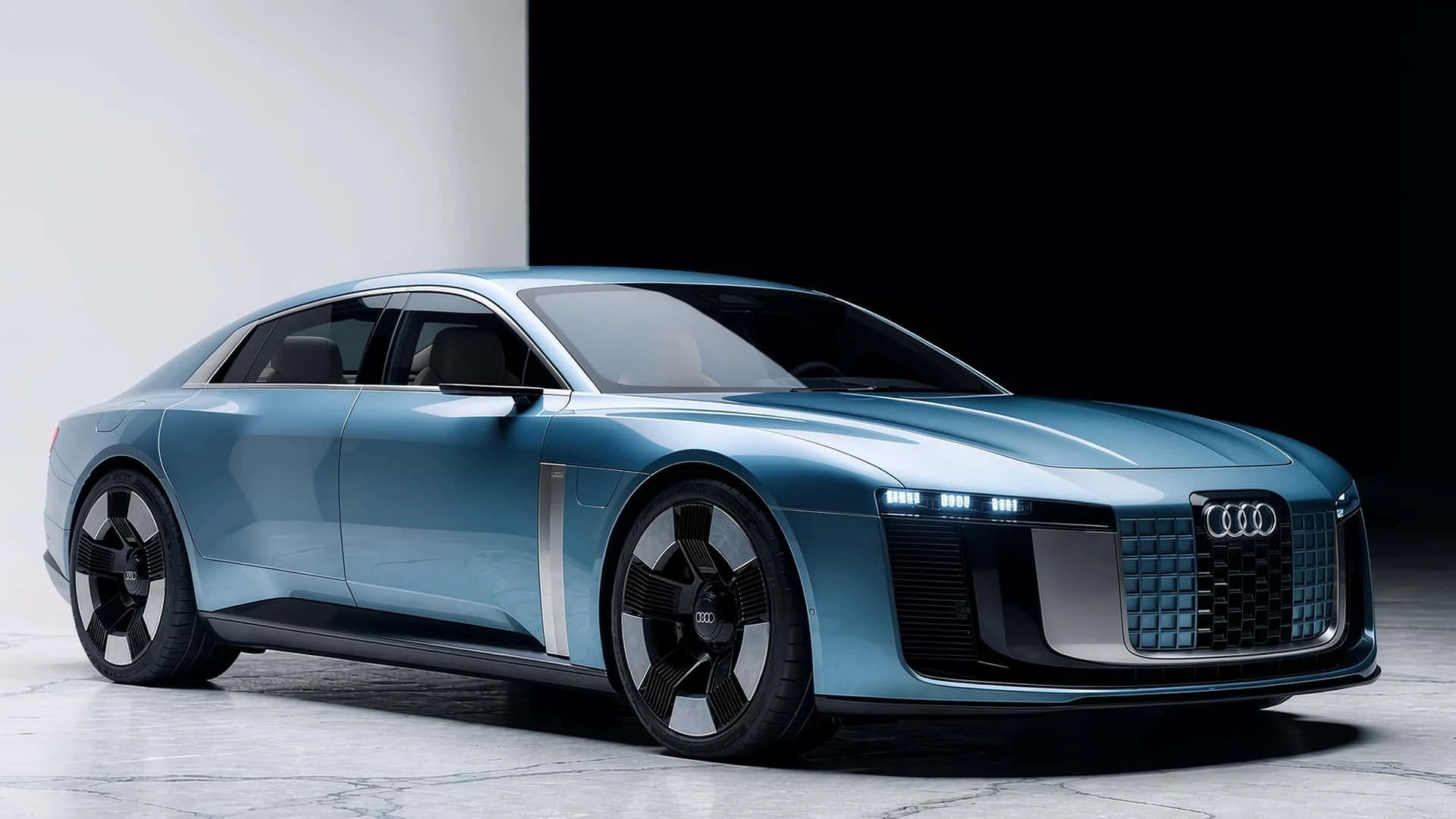
Side view from the same Motor1 gallery. This is a computer-generated rendering, not a photograph of an Audi prototype.
Motor1 connects the look with Bauhaus, Brutalism and Mid-Century Modern references. Those labels describe the visual vocabulary rather than any engineering programme. The surfaces are broad, the detailing is reduced and the contrast between blue paint, black glass and brushed metal does much of the work.
What cannot be read from the images
The rendering cannot establish whether a future A8 will be battery-electric, plug-in hybrid or offered with another powertrain. It cannot confirm a platform, battery capacity, range, output, wheelbase, price or launch date. Audi’s official Concept C release describes a two-seat electric sports car, not a new executive sedan.
Reports have discussed possible conversations between Audi and Porsche about the future of the A8, including scenarios involving technology used elsewhere in the Volkswagen Group. Until Audi publishes a programme or technical announcement, those reports remain unconfirmed. There is no official specification sheet for the vehicle shown in the rendering.
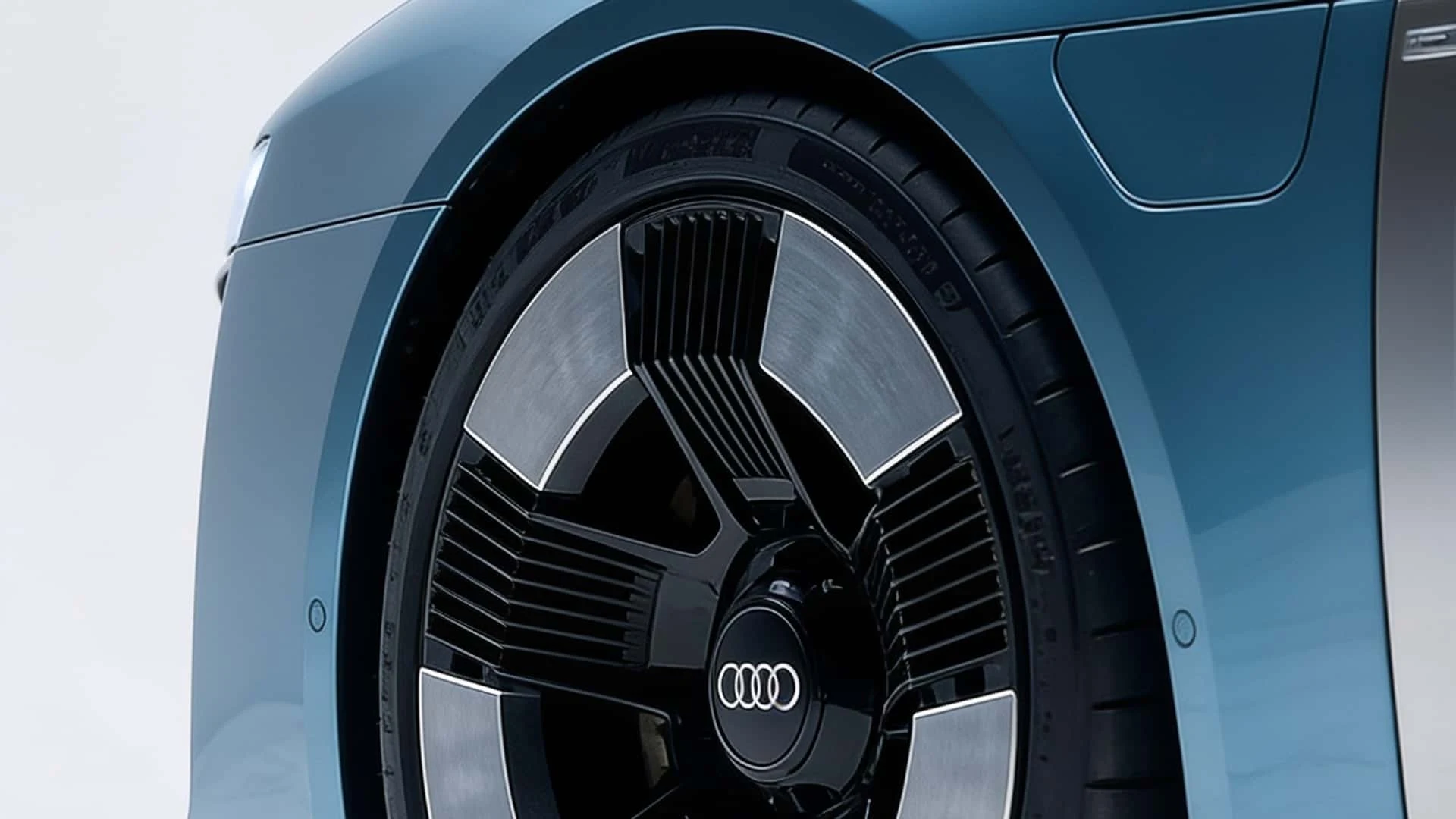
The accessible article gallery also includes this wheel detail. It does not contain a complete rear view of the rendered car, so this image is not presented as one.
Why the idea is interesting
The A8 occupies a difficult position. It is one of the remaining full-size executive sedans in a market that increasingly rewards SUVs and high-riding electric vehicles. A cleaner, more sculptural design could help Audi keep the model distinctive without turning it into another tall crossover.
That is the strongest value of the rendering: it makes a strategic question visible. Audi could use the Concept C as a design reference while adapting it to a practical four-door body. Whether that happens is unknown. A concept language can influence production cars without being copied literally, and a rendering can anticipate a conversation without predicting the final product.
For buyers in Europe, the practical conclusion is straightforward. This image should not be used to estimate the price, equipment or resale value of an A8, and it should not be treated as evidence that a replacement is already approved. Future information should come from Audi and its official retailers.
The official Concept C establishes a real design direction. Luca Serafini’s image shows one plausible way that direction might look on a flagship sedan. The connection is visually convincing, but it remains a connection between an official concept and an unofficial rendering, not a confirmed Audi model.
Sources: Audi MediaCenter – Audi Concept C; Motor1 – Audi A8 Gets a Concept C Makeover.