The short answer
A used Peugeot 3008 can be a good choice in 2026 if you want a comfortable compact SUV, with a pleasant interior and a large offer on the used market. Do not buy it for design alone. You must check the exact engine, service history, timing, AdBlue on diesel, the EAT8 automatic gearbox, the battery on a plug-in hybrid, dashboard electronics, ADAS and wear traces of a family car.
Short checklist:
- identify generation and engine from the VIN, not from the advert description;
- on 1.2 PureTech, check oil and timing history;
- on BlueHDi, check DPF, EGR, AdBlue, NOx sensors and regenerations;
- on EAT8, test take-offs, downshifts and cold changes;
- on PHEV, ask for battery, charging and cable checks;
- test i-Cockpit, screens, climate control, cameras and sensors;
- check tyres, wheels, suspension and brakes;
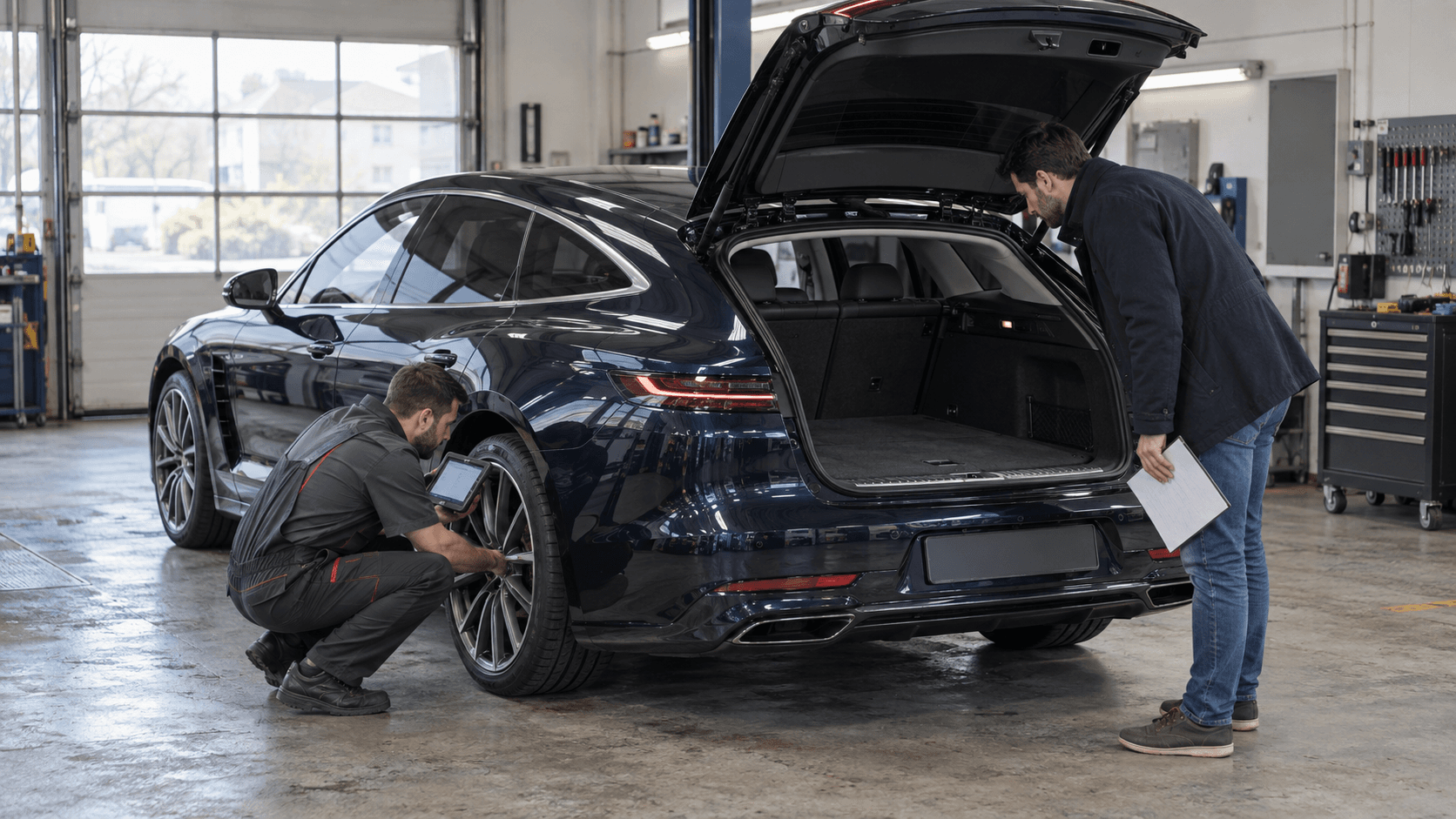
- ask for invoices, full diagnostics and a lift inspection;
- compare several listings, not the first 3008 that looks good.
Practical rule: a Peugeot 3008 is worth it mainly as a well-maintained example. A cheap 3008 without invoices and with errors cleared before viewing can cost more than it seems.
Why it is a useful subject for Carboratory
In the CautiMasina index, the search for Peugeot 3008 displays more than 6,000 results, with diesel, petrol, hybrid and plug-in hybrid examples. That makes it present enough in Romania for a dedicated guide, not only a mention in a round-up.
The Carboratory archive already had articles on used SUVs, French models under €15,000, plug-in hybrids under €25,000 and general technical issues. What was missing was a guide focused on the Peugeot 3008, where the buyer must compare different engines, different generations and equipment levels with rich electronics.
Official sources help separate the generations. Euro NCAP published the test for the 3008/5008 of 2016, and for the new 3008 there is a Euro NCAP 2025 result of 4 stars. Peugeot Romania published the update of commercial names for plug-in hybrid models, including 3008 Plug-in Hybrid 225 Auto. Stellantis also detailed Hybrid 136 e-DCS6 technology for 3008/5008. This information matters because adverts use many short names, and they can hide very different cars.
Which 3008 are you actually looking for?
On the used market you will mostly see the generation launched in 2016, the 2020-2021 facelift and, more rarely, examples of the new generation. Adverts may say only “automatic 3008”, “hybrid 3008” or “3008 GT”, but those labels are not enough.
Before you go to a viewing, note:
- year of manufacture;
- the exact engine;
- the gearbox;
- fuel;
- emissions standard;
- equipment level;
- country of origin;
- mileage;
- service history;
- the VIN.
A manual 3008 1.2 PureTech, a 3008 BlueHDi EAT8 and a 225 hp plug-in hybrid 3008 can look similar in photos, but they have different risks and costs.
The 1.2 PureTech engine: the check that must not be missing
Many petrol 3008 examples use the 1.2 PureTech engine. For the buyer, the question is not whether the engine “runs well on a test”, but whether it was maintained correctly and whether the timing was checked or replaced according to the recommendations that apply to the concrete car.
At the viewing, ask for:
- service invoices, not only stamps;
- the oil used and the real intervals;
- timing history;
- a workshop check of belt condition, if the model uses that solution;
- diagnostics for oil pressure, errors and misfire, where relevant;
- a cold test, not only an already warm engine.
Signs that call for caution:
- an engine warning light on or “recently cleared”;
- noises at start-up;
- unstable idle;
- abnormal smoke;
- unexplained oil consumption;
- infrequent services;
- a seller who avoids the timing discussion.
If you have doubts, take the car to a workshop that knows Stellantis engines. A cheap check before purchase can avoid a large repair afterwards.
BlueHDi: good on long journeys, sensitive to the wrong use
BlueHDi diesel can make sense for a long commute, motorway, extra-urban roads and high mileage. It makes less sense if the car was used almost exclusively in town, with short trips, interrupted regenerations and postponed maintenance.
Check:
- DPF and regeneration history;
- EGR;
- the AdBlue system;
- NOx sensors;
- injectors;
- turbo;
- leaks;
- oil intervals;
- any campaigns or interventions.
On the test-drive, the engine must pull linearly, without limp mode, without excessive smoke and without emissions messages. If an AdBlue or antipollution message appears, do not treat it as a minor detail. Ask for diagnosis and a quote before any deposit.
For a buyer who drives a lot in town, compare diesel with petrol or a hybrid. A good pump price does not automatically compensate for the risk of a tired emissions system.
The EAT8 gearbox: pleasant, but it must be tested properly
Many 3008 examples are sought with an automatic. The EAT8 gearbox is valued for comfort, but the purchase check remains mandatory. Do not limit yourself to a short loop around a car park.
Test:
- take-off from rest, from cold;
- shifting from R to D;
- slow manoeuvres;
- progressive acceleration;
- kickdown;
- braking almost to a stop;
- a gentle climb;
- constant running;
- downshifts;
- changes in manual mode, if it exists.
Strong jerks, long hesitations, knocks on shifts, clear vibrations or error messages are not normal. Ask for a maintenance history and diagnostics that also read the transmission modules, not only the engine.
Plug-in hybrid: battery and charging decide the purchase
3008 plug-in hybrid versions are attractive for anyone who can charge at home or at work. Peugeot Romania mentions 3008 Plug-in Hybrid 225 Auto in commercial-name updates, and used listings include both cars declared “hybrid” and “plug-in”.
Before you choose a PHEV, clarify:
- is it a plug-in hybrid or only a hybrid/mild hybrid?
- what battery capacity does that generation have?
- what real electric range does it offer now?
- does it charge normally from a socket and wallbox?
- are the cables present?
- are there hybrid-system errors?
- has the battery been checked?
- does the cooling system work correctly?
A PHEV used without charging can be only a heavy petrol SUV. A PHEV charged often, with a good history and suitable routes, can cut urban consumption. The difference is not in the spec sheet, but in real use.
The new 3008 Hybrid 136 and e-DCS6: watch the generation
On newer examples the Hybrid 136 e-DCS6 system may appear. Stellantis describes this technology as a 1.2 turbo engine associated with a 48 V system and an electrified dual-clutch gearbox. It is different from older 1.2 PureTech versions with a conventional transmission and different from a plug-in hybrid.
If you see “mild hybrid”, “MHEV”, “Hybrid 136” or “e-DCS6” in the advert, do not assume it is the same as a PHEV. Ask exactly:
- which generation it is;
- which gearbox it has;
- which battery it has;
- what warranty remains;
- what software has been updated;
- whether there are service invoices in the right network.
On very new cars, the issue is not only wear, but also the clarity of the documents and remaining warranty.
The i-Cockpit interior: attractive, but test it as a technical feature
The Peugeot 3008 attracts many buyers through the interior. The small steering wheel, digital instruments, central screen, toggle-type controls and seats can make the car seem more special than direct rivals. That is why they must be tested calmly.
Check:
- the central screen;
- the digital instruments;
- phone connection;
- navigation, if fitted;
- the reversing camera;
- parking sensors;
- climate control;
- seat heating;
- the powered tailgate;
- steering-wheel controls;
- all windows and mirrors;
- ADAS systems.
A slow screen or a camera that starts at random can seem a small annoyance on a test, but it becomes tiring every day. Include these things in the negotiation.
ADAS and safety: not every example has the same systems
Euro NCAP scored good impact protection for the 3008/5008 of 2016, but the assistance area depends on equipment. For the new generation, Euro NCAP published the 2025 result of 4 stars. In practice, the Romanian buyer must check the concrete equipment, not the model’s reputation.
Test:
- automatic braking, where it can be checked in a workshop or through diagnostics;
- lane warning;
- sign recognition;
- adaptive cruise control;
- blind spot;
- front/rear sensors;
- cameras;
- radar;
- steering-wheel alignment after any repairs.
If the car had a frontal accident, a replaced windscreen or a resprayed bumper, ask for camera and radar calibration checks where the equipment exists.
Suspension, brakes and tyres
The 3008 is a compact family SUV, so many examples have run with children, luggage, long journeys and large wheels. Check the rolling gear as carefully as the engine.
On a lift watch:
- dampers;
- bushes;
- drop links;
- bearings;
- discs and pads;
- calipers;
- undertrays;
- leaks;
- impacts under the car;
- uneven tyre wear.
On the test-drive, watch for knocks over bumps, vibration under braking, a car that pulls to one side and bearing noises. For detailed checks, you can also use the CautiMasina guides on suspension and steering and brakes on a used car.
What to ask the seller before viewing
To avoid wasting time, send the questions in advance:
- What is the VIN?
- What exact engine and gearbox does it have?
- Are there service invoices?
- When was the timing changed or checked?
- Are there dashboard errors?
- Has it had damage?
- When were tyres and brakes changed?
- On diesel, were there AdBlue, DPF or EGR interventions?
- On PHEV, can charging be tested?
- Does the seller accept an inspection at a workshop chosen by the buyer?
If the answers are evasive, do not rush. A large offer means you can compare.
Is a used Peugeot 3008 worth it?
It is worth it if:
- you find an example with a verifiable history;
- the exact engine matches your routes;
- you do not buy diesel for short town trips;
- you do not buy a PHEV without a way to charge;
- the electronics work correctly;
- the price leaves room for an initial service;
- the workshop confirms the technical condition.
It is not worth it if:
- the seller does not provide a VIN;
- the timing is unclear;
- engine, emissions or transmission errors appear;
- the PHEV cannot be charged on the test;
- the gearbox jerks;
- the dashboard has intermittent problems;
- the car is cheap only because repairs have been postponed.
The Peugeot 3008 is the kind of car that can offer a lot of comfort for reasonable money. Precisely because it looks good and has many features, it must be bought technically, not emotionally.
Frequently asked questions
What is the best engine for a used Peugeot 3008?
There is no single choice. For town and low mileage, petrol or a hybrid can be more logical. For long journeys, BlueHDi diesel can make sense if it has a good history. For a commute with home charging, the PHEV can be efficient.
Should the 1.2 PureTech engine be avoided?
Not automatically, but it must be checked more carefully. Oil history, timing, invoices and diagnostics are decisive. A correctly maintained example is a different discussion from one with rare services and an incomplete history.
Is a diesel Peugeot 3008 good for town?
It is usually not the first choice for short, frequent trips. DPF, EGR and AdBlue need suitable use. If you drive almost exclusively in town, compare with petrol, hybrid or PHEV.
Is a used 3008 plug-in hybrid worth it?
It is worth it if you can charge regularly and if the battery, cables, charger and hybrid system are checked. If you do not charge it, the advantage drops a lot.
What do I check first in an advert?
The VIN, the exact engine, the gearbox, mileage, country of origin, service history and agreement to a check at an independent workshop. Good photos do not replace these things.