
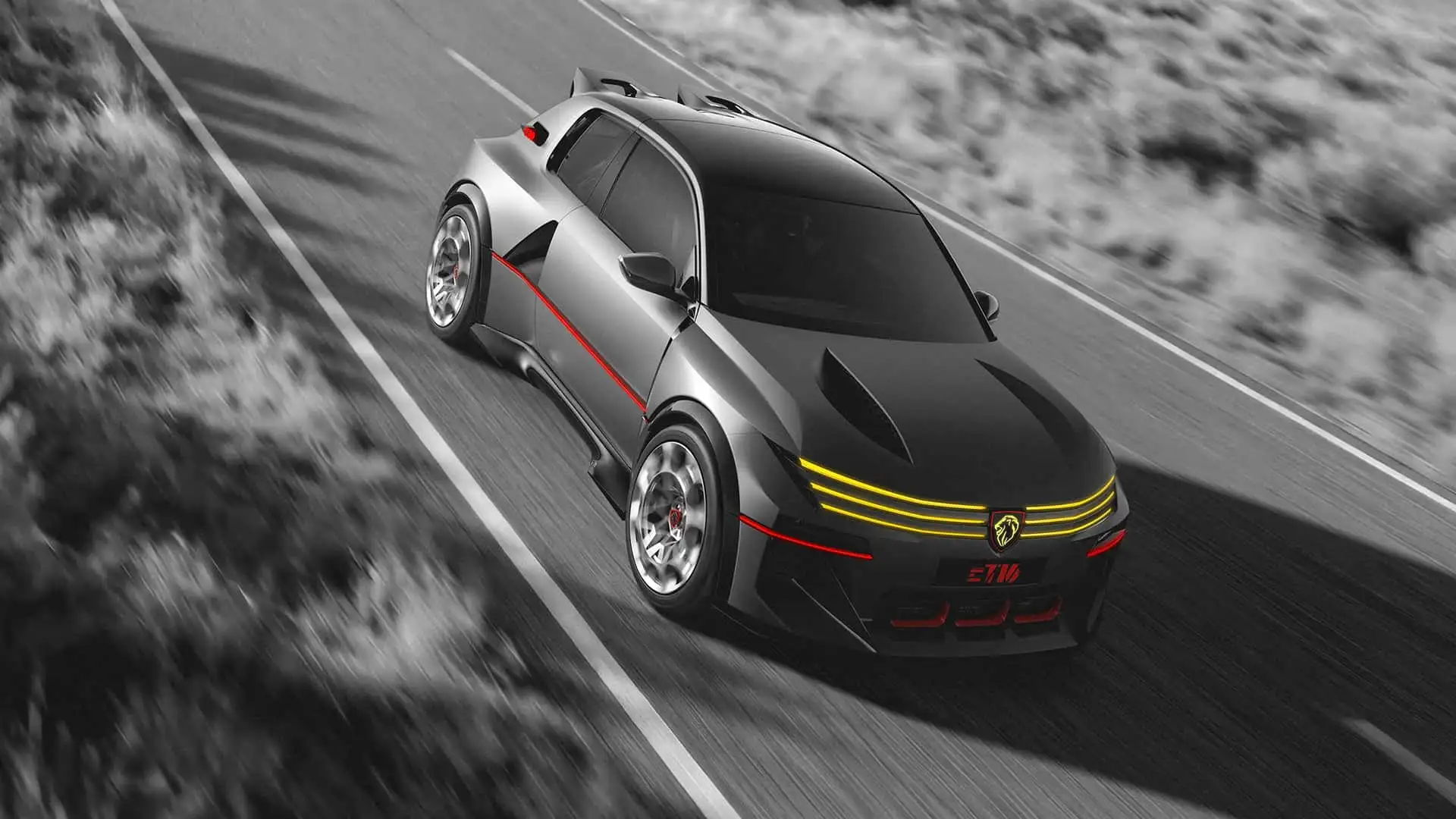
The Peugeot E-T16 Concept is an 816-hp electric hyperhatch that reworks the 205 T16 rally icon for the electric era. Peugeot says it can accelerate from 0 to 100 km/h in 2.5 seconds and reach 300 km/h in 16 seconds, but the concept is not a confirmed production model.
A 205 T16 anniversary tribute
Peugeot revealed the E-T16 Concept ahead of the 2026 Paris Motor Show, 40 years after the 205 T16 won back-to-back World Rally Championship titles in 1985 and 1986. The new car does not attempt to reproduce the original rally machine literally. Instead, it borrows several visual and functional ideas and rebuilds them around a high-output electric drivetrain.
The body is low and wide, with heavily extended wheel arches and a rear section that tilts open to expose the electric motors and suspension hardware. That opening recalls the service-friendly bodywork of the rally car, although Peugeot presents the E-T16 as a design and technology concept rather than a competition car.
Peugeot Sport worked with the design and engineering teams. The exterior is finished in Winchester Matte Grey, a modern interpretation of the 205 T16’s grey paint. Silver wheels use body-colour inserts, while a thin illuminated red line runs around the car as a reference to the red stripe on the original.
Another carefully placed reference sits ahead of the rear wheel. The 205 T16 used that opening to feed its combustion engine. The electric concept uses the same area for its charging port and the mechanism that opens the charging flap. The floating C-pillar has also been retained, now shaped to help guide airflow toward the rear.
Three motors and 816 horsepower
The E-T16 uses three electric motors: one at the front and two at the rear. Combined output is quoted at 816 hp, while Peugeot says the power-to-weight ratio is below 2 kilograms per horsepower. The company has not published the concept’s total mass or maximum torque, so the headline figures should not be treated as a complete production specification.
The claimed acceleration figures are 2.5 seconds from 0 to 100 km/h and 16 seconds from 0 to 300 km/h. Peugeot has not announced a top speed. Torque vectoring continuously adjusts power between the axles and across the rear wheels according to available grip.
The driver can choose modes that change power delivery, torque distribution and suspension settings. A Track mode is intended to release the concept’s circuit-focused performance, while another mode allows the driver to configure the settings. Peugeot has not said which of these controls, if any, could appear on a road-going E-208.
Battery cooling for repeated hard driving
The concept combines an 800-volt electrical architecture with an 85-kWh battery. Peugeot claims up to 400 km of WLTP range and says the battery can charge from 10 to 80 percent in less than 15 minutes under its stated conditions. There is no published WLTP consumption figure, and the company has not explained how much range remains during repeated high-performance use.
For a powerful EV, maintaining output after several hard laps matters as much as the first acceleration run. The E-T16 uses a motorsport-derived system called “Side Cooling”, which cools the battery cells through their side walls rather than through their bases. Peugeot says this provides enough thermal headroom for three laps of the Nürburgring Nordschleife, covering more than 60 kilometres, in Performance mode without reducing power.
That is a manufacturer claim, not an independent Carboratory test. Peugeot has not published the ambient temperature, tyre specification, starting state of charge, lap times or other conditions behind the statement. Those details would be needed to compare the result with road-going performance EVs.
Feline Future and the next E-208
The E-T16 introduces Peugeot’s “Feline Future” design language, which the brand says will influence the next-generation E-208. The familiar three-claw light signature is reinterpreted horizontally. Three narrow illuminated bars frame a lit Peugeot emblem at both the front and rear.
The aerodynamic treatment is deliberately visible. Air extractors sit behind the front wheels, the rear underbody uses a double diffuser, and two adjustable aero blades are designed to create additional downforce. A large rear wing has a cat-ear shape, while the floating C-pillar leaves a cleaner path for air to move toward the tail.
Inside, the concept previews another stage of Peugeot’s i-Cockpit. The rectangular Hypersquare replaces a conventional steering wheel and works with steer-by-wire technology. A curved 21-inch panoramic HD display combines the head-up instrument display and central touchscreen directly in front of the driver.
The cabin includes carbon fibre, anodised aluminium, technical mesh, sculpted bucket seats, four-point harnesses and a red tubular roll cage. Peugeot also says that the seats use a leather material made from untanned offcuts from the leather-goods industry. That material choice belongs to the concept and has not been confirmed for a future production model.
What Peugeot has not announced
The E-T16 is described as the ultimate vision of the next E-208. That wording does not confirm an 816-hp E-208 for sale. Peugeot has not announced a price, production schedule, volume, final battery specification or a production version of the three-motor system.
For European buyers, the confirmed information currently concerns the design direction, the Hypersquare interface and the company’s stated electric performance targets. The concept shows how Peugeot wants to connect its rally history with electric performance, while leaving the commercial question open.
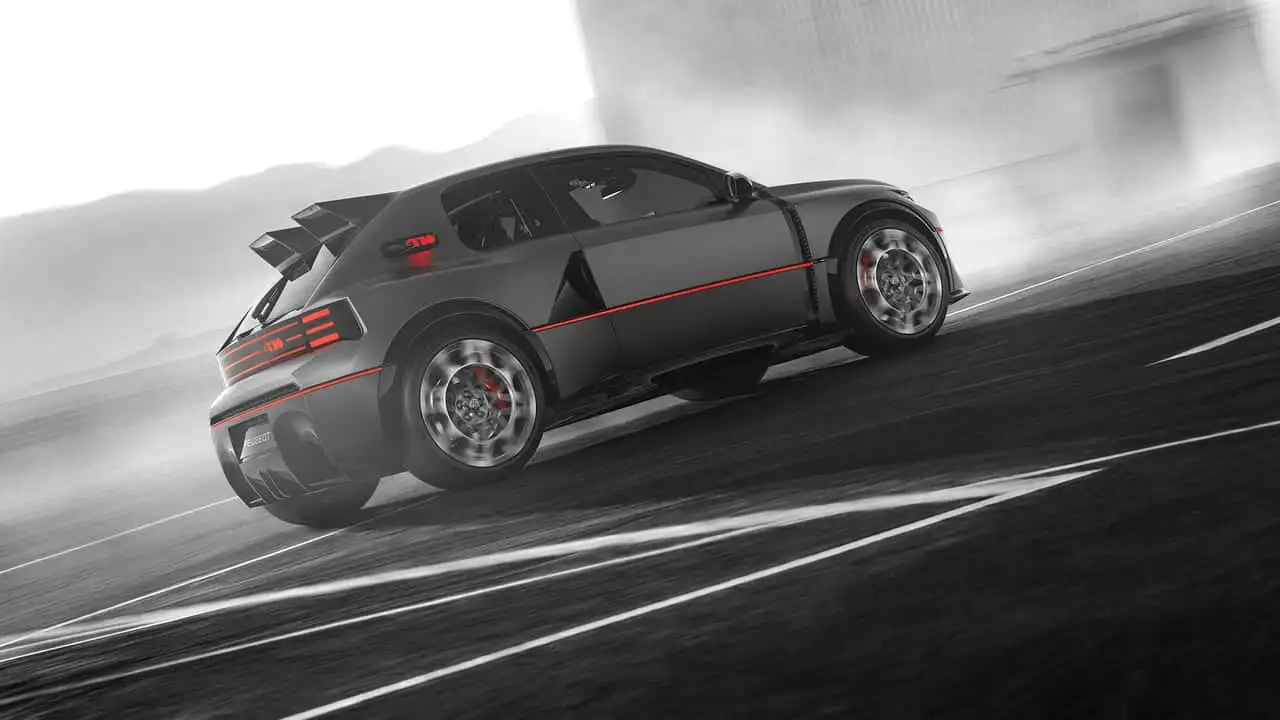
A second frame of the concept, published by Motor1.com and credited to the manufacturer.
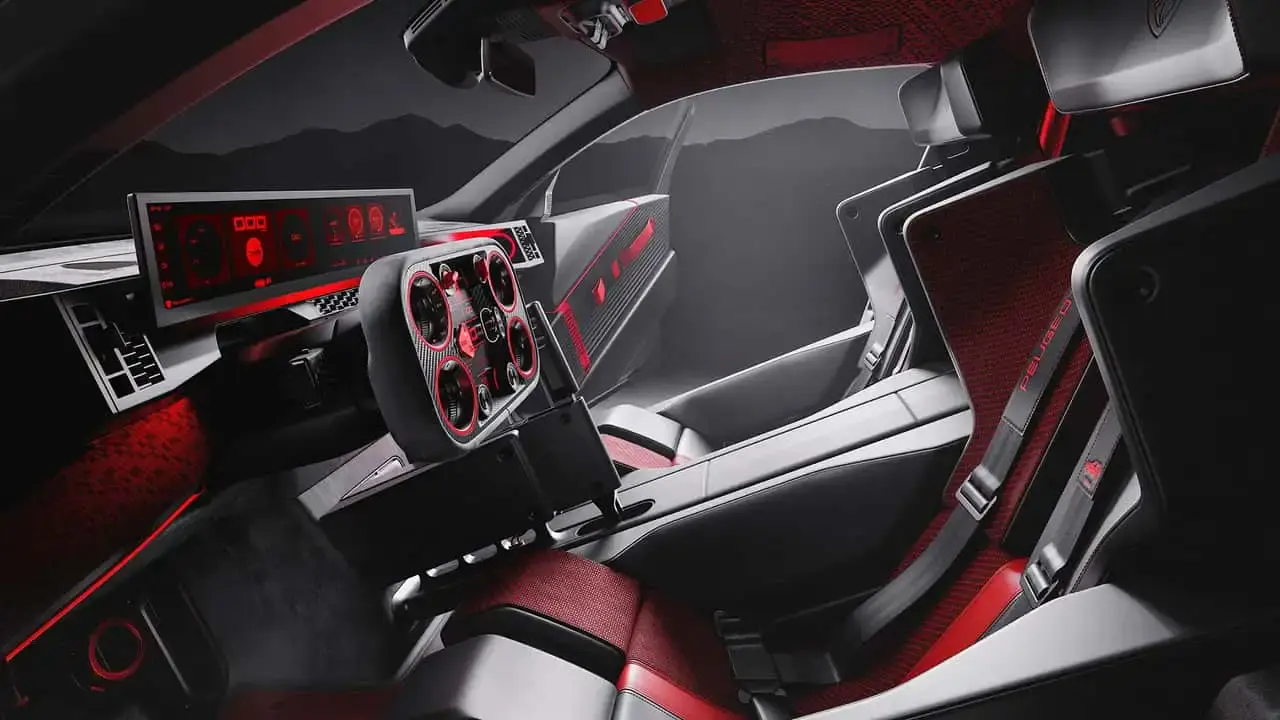
Interior frame published by Motor1.com and credited to the manufacturer.
Sources
- Peugeot E-T16 Concept – official Stellantis Media release
- Peugeot E-T16 Concept – official German release
- Peugeot at the 2026 Paris Motor Show – official release
Image: Peugeot, published by Motor1.com. The source page does not state a commercial reuse licence; the photograph is used at the user’s request with the original attribution.


