Illustrative image; the car does not represent a specific model or brand.
Used Toyota Corolla in 2026: what to check on Hybrid, e-CVT, Valvematic, Touring Sports and history
The short answer
A used Toyota Corolla can be a suitable car for commuting, family use or the city, but the model name covers very different bodies, engines and transmissions. The European saloon launched in 2013 could have petrol engines, diesel, a manual gearbox, MultiMode or Multidrive S, depending on the market. The 2019 European range brought Hatchback, Touring Sports and Saloon on the GA-C platform, with 1.8- or 2.0-litre full hybrid systems and conventional versions that differed by body style.
Before paying a deposit, identify the car by VIN, not by the listing description. On a Hybrid example, ask for the Toyota Hybrid Health Check report and a full diagnosis, then check battery cooling, the petrol engine, the e-CVT transaxle, the 12 V battery and the brakes. On a petrol car with Multidrive S or on a diesel, the transmission and engine checks are different. Measure the body, inspect the floor on a lift and cross-check invoices, ITP certificates, RAR Auto-Pass and history from the country of origin.
Corolla Saloon, Hatchback or Touring Sports: which car is in the advert
Corolla is not configured the same way in every country. In Europe in 2013 Toyota presented a Saloon range with 1.33-litre, 1.6-litre, 1.8-litre and 1.4 D-4D diesel engines, alongside manual, MultiMode and Multidrive S transmissions. Actual availability varied between markets, and imports can have combinations that were not sold officially in Romania.
The 12th generation arrived in Europe in 2019 in three distinct forms. The Hatchback is the shortest and emphasises handling, Touring Sports is the estate for luggage, and the Saloon has its own wheelbase and engine range. At the European launch, the 1.8-litre, 122 hp Hybrid system existed on all three bodies, while the 2.0-litre, 180 hp Hybrid system was intended for Hatchback and Touring Sports. The update introduced in 2023 brought the fifth generation of the hybrid system, with 140 hp for 1.8 litres and 196 hp for 2.0 litres.
| Marker | European configurations encountered | What to confirm before viewing |
|---|---|---|
| Corolla Saloon, from 2013 | 1.33 petrol, 1.6 Valvematic, 1.4 D-4D and other combinations by market | engine code, gearbox, emissions standard, country of first delivery |
| Corolla Hatchback, from 2019 | 1.2 Turbo, 1.8 Hybrid, 2.0 Hybrid | system power, model year, battery, e-CVT and equipment |
| Corolla Touring Sports, from 2019 | 1.2 Turbo, 1.8 Hybrid, 2.0 Hybrid | boot, fleet history, rear suspension and hybrid system |
| Corolla Saloon, from 2019 | 1.6 petrol or 1.8 Hybrid at the European launch | exact engine, transmission, battery chemistry and equipment by VIN |
| Corolla facelift, from 2023 | 1.8 Hybrid with 140 hp and 2.0 Hybrid with 196 hp, depending on body and market | do not confuse the new power figures with the 122/180 hp systems |
The year of first registration does not prove the model year. A car built before the update can be registered later. Ask for the 17-character serial number, the build date, the equipment sheet and the first-delivery documents before you compare the price with other listings.
1. Identify generation, body, engine and gearbox by VIN
Start with four written questions: which body it is, what engine code it has, which transmission it uses and for which market it was produced. The word “automatic” in the advert is not enough. A Corolla Hybrid has a hybrid e-CVT transaxle, a 1.6 petrol can have Multidrive S, and some older examples can use MultiMode, a robotised manual gearbox. They are different systems, with different behaviour and inspection points.
Compare the VIN on the body with the CIV, the registration document, invoices, the diagnostic report and external history. Check power in kW, displacement, fuel and the emissions standard. If the data in the advert, the documents and the car do not match, stop negotiating until the seller clarifies the difference with paperwork.
On an import, ask for registration documents from the country of origin and proof of deregistration where applicable. Do not automatically transfer the specifications of an American, Asian or British Corolla onto a European car. Headlights, units of measure, multimedia systems, warranty and even the powertrain configuration can differ.
2. Choose the engine by the journeys you make, not by general reputation
For city use and mixed commuting, 1.8 Hybrid is the easiest configuration to understand: a petrol engine, an electric motor-generator, a traction battery and e-CVT, with no plug-in charging. It does not, however, promise the same consumption to everyone. Temperature, short trips, speed, cabin heating, tyres and driving style change the result.
The 2.0 Hybrid system offers more power and was initially available on Hatchback and Touring Sports. On the used market you must separate the 180 hp system from 2019 from the version updated to 196 hp in 2023. Do not deduce power from the Hybrid badge or the body shape; check the VIN sheet and the papers.
Conventional engines can make sense if the price, history and route are suitable. On the 2013 Saloon, 1.33 and 1.6 petrol are different designs, and the 1.4 D-4D diesel needs an analysis of previous use. In the 2019 range, the 1.2 Turbo was offered on Hatchback and Touring Sports, and the Saloon had 1.6 petrol at the European launch. Do not buy on the formula “petrol is simple” or “diesel uses little”; ask for diagnosis and measurements for the actual engine.
3. On a Hybrid, ask for the battery report and check cooling
The electric range shown on the dashboard does not, by itself, measure battery condition. A full hybrid charges and discharges the battery in a controlled window, and the petrol engine can start depending on temperature, climate control, state of charge and power demand. A few minutes of electric running in a car park do not replace a test.
Toyota Romania explains the Hybrid Health Check programme: the check tests the hybrid system and produces a written report. Ask for the full report, with VIN, date and mileage. If it is old, repeat the check before purchase. Independent diagnosis should read all modules and look at active, stored or recently cleared faults, temperatures and cooling-circuit operation.
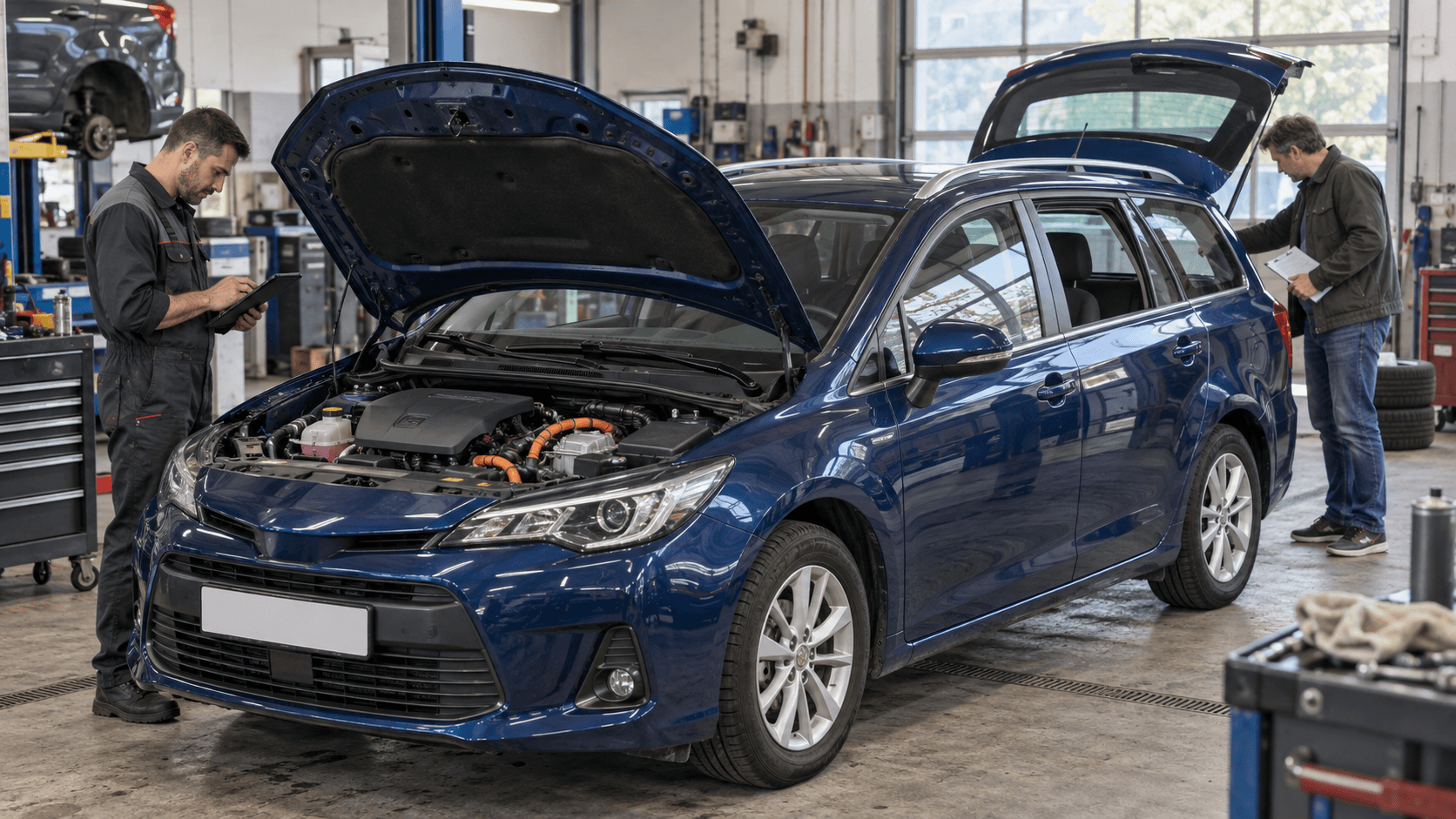
Inspect the battery air intake, grilles, carpet and the area under the rear seat or in the boot, depending on the version. Dust, pet hair, fluids or a careless interior repair can affect cooling. Do not disconnect orange cables and do not open the battery in a car park. High-voltage components are checked in a qualified workshop.
In 2019, Toyota described a lithium-ion battery for the 1.8 Hybrid system on Hatchback and Touring Sports, but nickel-metal hydride for the Saloon; the 2.0 system had its own configuration. That detail shows why body style and model year matter. Do not order a battery, a fan or a part by the generic name “Corolla Hybrid”. Use the exact car code.
For the full method, see the guide on checking a used full hybrid.
4. e-CVT, Multidrive S and MultiMode are not the same gearbox
The Hybrid system’s e-CVT transaxle must not be confused with a conventional belt CVT. Toyota’s technical documentation for the 2019 Corolla describes a compact assembly with a motor-generator and a gear train. Multidrive S is the continuously variable gearbox used by certain conventional engines, and MultiMode is a robotised manual found on some older versions.
On a Hybrid, start the car cold, select D and R and watch warning lights, delays, knocks, rumble and vibration. Do an urban test, a progressive acceleration and a complete deceleration. Engine speed can stay high under acceleration without classic gear changes; that is specific behaviour, not a diagnosis. Bearing noise, leaks, faults or persistent vibration do, however, need investigation.
On Multidrive S, ask for the fluid history and the procedures used, then test a slow pull-away, constant speed, acceleration and manoeuvres after warm-up. On MultiMode watch clutch wear, actuators, hesitation and behaviour on a slope. Do not apply a maintenance interval found for another engine, another gearbox or another market. The correct manual is looked up by VIN, and any work must be backed by an invoice.
5. The petrol or diesel engine is checked cold, hot and under load
Ask for the car not to be warmed up before viewing. At first start, watch noises, smoke, vibration, warning lights and running stability. Check levels only in safe conditions and look for traces of oil, coolant, fuel or a recent engine-bay wash.
On petrol engines check ignition, fuel trims, cooling, documented oil consumption and any misfires. Valvematic is a valve-lift control system, not a label that guarantees engine condition. Any uneven running, noise, fault or declared consumption must be measured and diagnosed.
On 1.2 Turbo check the intake, turbocharger, hoses, cooling and oil-change history. On 1.4 D-4D, short urban journeys can put pressure on the particulate filter and emissions-control systems. Read the load and regeneration history available in diagnosis, check the EGR, injection, turbocharger and clutch, then do a sufficiently long test drive. A warning light switched off before sale does not prove the problem was repaired.
6. The 12 V battery, brakes and city wear
A Corolla Hybrid also has a conventional 12 V battery. If it is weak, the car can display faults or refuse the normal start sequence even if the traction battery is fine. Measure voltage and capacity, check the date, terminals and charging. Do not accept the conclusion that all messages are “just the battery” without scanning the modules after replacement.
Regenerative braking can reduce use of the mechanical brakes, especially in town. That is why both faces of the discs, pads, slider pins, calipers and the parking brake are checked. A disc rusted after a few days of standing is not the same as a seized caliper or a deeply corroded surface.
Look at the steering wheel, driver’s seat, pedals, buttons and the boot area. Wear alone does not prove mileage, but it can show more intensive use than the advert suggests. A ride-sharing, driving-school or fleet car is not automatically a reject; it needs documents, inspection and a price that reflects the use.
7. Hatchback, Saloon or Touring Sports: check space on the actual car
At the 2019 launch Toyota quoted different VDA volumes: 361 litres for the Hatchback with 1.8 Hybrid and 313 litres for the one with 2.0 Hybrid, 598 litres for Touring Sports 1.8 and 581 litres for Touring Sports 2.0, and 471 litres for the Saloon. Battery and floor configuration explain part of the differences. The figures should not be transferred automatically to a version from another year or with a different spare-tyre kit.
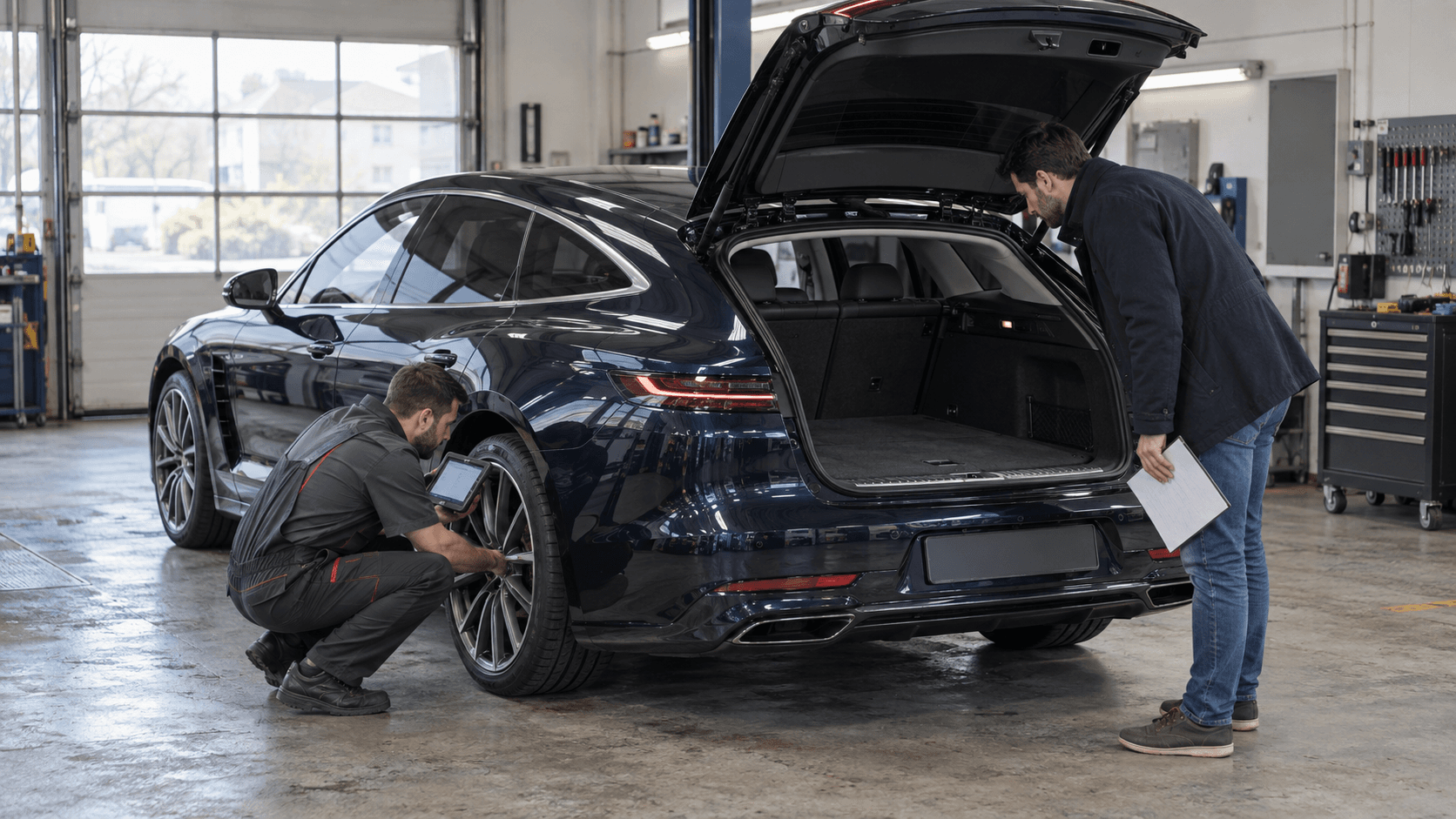
Test the real need with the pram, suitcases or boxes you use. On Touring Sports check the load cover, dual floor, seat folding and the powered tailgate if fitted. On the Saloon, the boot opening can limit bulky objects even if the stated volume is good. On the Hatchback, floor position and the battery can matter more than a few litres in the brochure.
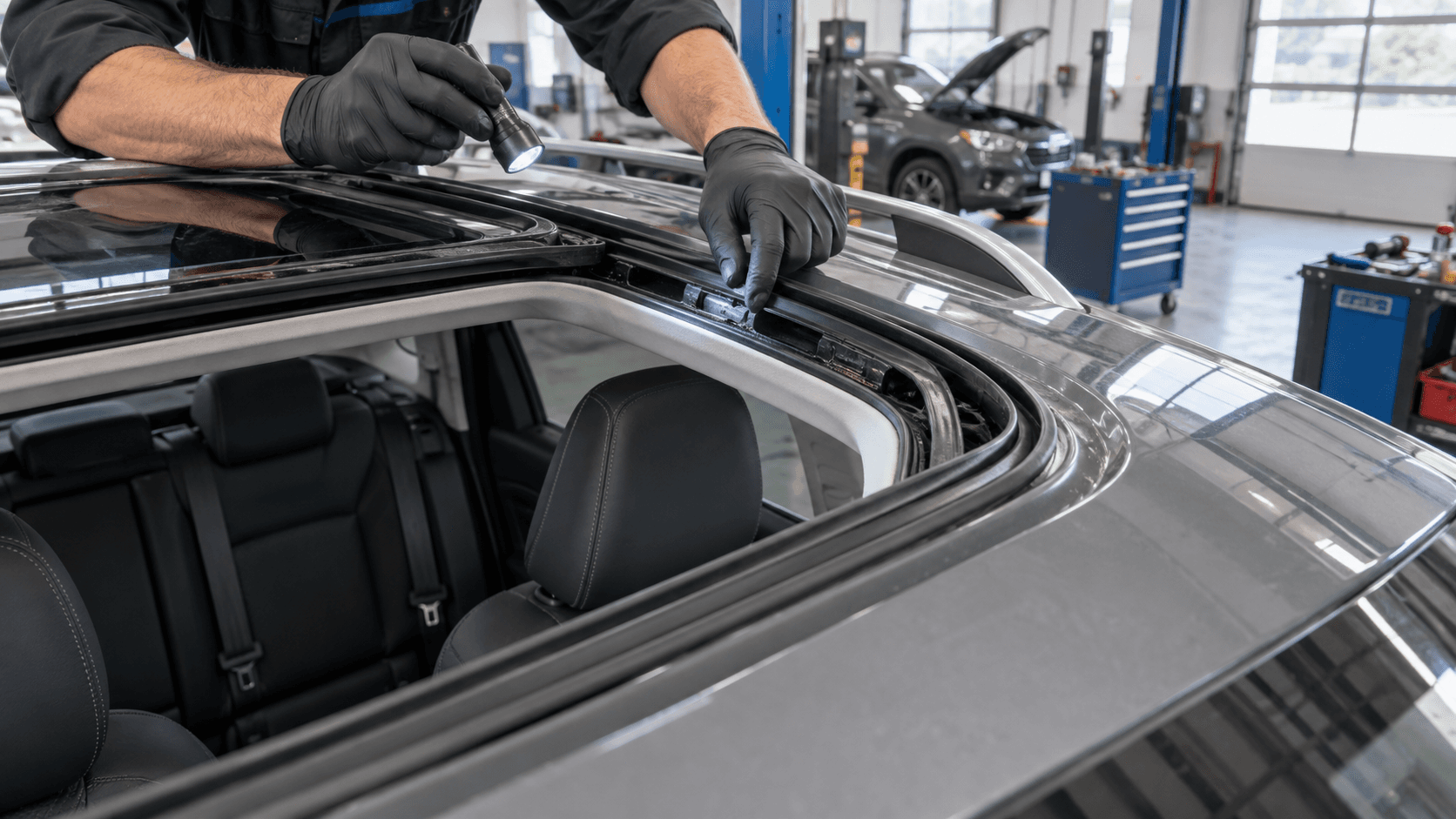
Lift the floor and look for water, condensation, rust, repaired wiring and impact marks. Check seals, rear lights, the tailgate or boot lid and the panoramic roof, if fitted. Perfume smell or a freshly washed carpet does not prove a leak, but it justifies a check after complete drying.
8. Body, suspension, tyres and geometry can change the budget
Measure paint thickness on all panels and inspect bolts, joints, sills, the floor and jacking points. A resprayed wing does not automatically mean structural damage. Large thickness differences, welds, replaced airbags and geometry out of tolerance require documents and extra measurements.
On a lift check dampers, springs, bushes, joints, bearings, undertrays and the exhaust. On the road test, go over small bumps, brake in a straight line and watch whether the steering wheel returns normally. A noise does not identify the part by itself; the workshop must locate the cause and issue a quote.
Compare all tyres by brand, model, size, load/speed index, wear and DOT date. Uneven wear can indicate wrong pressure, geometry, joints or a body repair. 17- or 18-inch wheels can cost visibly more than the base sizes, and two new tyres do not fix a misaligned axle.
9. Toyota Safety Sense, the windscreen and electronics must be tested
The 2019 Corolla range came to Europe with a new generation of Toyota Safety Sense, but functions and sensors differ by year and equipment. The 2023 update changed the electronics and assistance systems again. List the functions present on the VIN and test separately the camera, radar, automatic emergency braking, lane keeping, traffic-sign recognition, adaptive cruise, blind-spot monitoring and parking sensors, where fitted.
Euro NCAP assessed the Corolla Hatchback 1.8 in 2019. The result describes a new configuration and that year’s protocol, not the condition of a repaired car. Check the windscreen in front of the camera, radar mounts, bumpers and headlights. After a windscreen change or frontal damage, ask for the invoice and the ADAS calibration report.
Test both keys, keyless access, climate control, heating, the screen, the camera, all ports, windows and mirrors. Check whether the previous owner can remove the car from their MyToyota account and whether the new owner can pair it. A slow multimedia system can be a software, power-supply or hardware problem; ask for diagnosis before you assume the cost.
The guide on checking ADAS on a used car explains the correct order of checks.
10. History, warranty and recalls are confirmed by VIN
RAR Auto-Pass can contain odometer readings, ITP data, reported work and certain repairs or campaigns recorded in Romania. For an import, the document does not automatically reconstruct the car’s life before it entered the country. Ask for invoices, inspections and documents from the state of origin.
The Toyota Romania page consulted on 14 September 2026 presents standard hybrid-system cover and extra programmes such as Hybrid Health Check, Battery Care and Toyota Relax, each with its own terms, limits and conditions. Do not assume that any Corolla under ten years old automatically has the whole car or the battery covered. Ask for written confirmation for the VIN, first-delivery date, mileage, the covered component, programme cost and service obligations.
Check recalls in the Toyota Romania tool by VIN. A list found on the internet cannot confirm whether the actual car was included and whether the work was closed. Ask for the repair order or dealer confirmation.
How to calculate the real cost for the first year
Compare examples with the same formula:
purchase price + work required immediately + services due within 12 months + tyres and brakes + insurance and taxes.
Add separately findings on the hybrid battery, e-CVT or Multidrive S, climate control, ADAS, headlights and multimedia. Ask for written quotes by VIN. Do not turn a verbal estimate into a certain cost and do not spend the entire reserve on the deposit.
You can compare Toyota Corolla listings in Romania, then filter manually by body, engine, power and history. For alternatives, see the guides on used Toyota Auris, used Hyundai i30, used full hybrids under €15,000 and used automatics under €15,000.
Checklist before you buy a used Toyota Corolla
- The VIN is identical on the body, in the CIV, registration document, invoices and diagnosis.
- Build date and model year are confirmed separately from first registration.
- The body is identified correctly: Saloon, Hatchback or Touring Sports.
- Engine, power in kW and emissions standard match the papers.
- The transmission is identified exactly: manual, MultiMode, Multidrive S or e-CVT.
- Country of first delivery and history before import are documented.
- The engine and hybrid system are cold at the start of viewing.
- Starting does not produce unexplained smoke, noises, vibration or warning lights.
- There are no oil, coolant or fuel leaks.
- Diagnosis includes all modules and stored faults, not just the engine.
- On a Hybrid there is a recent HHC report, with VIN and mileage.
- The traction battery, inverter and cooling have no unexplained faults.
- The battery cooling intake is clean and without traces of fluids.
- The e-CVT has been tested cold and hot, in D and R.
- On Multidrive S there is history and the test does not show slip or vibration.
- On MultiMode the clutch and actuators have been checked.
- On 1.2 Turbo the turbocharger, intake, cooling and oil history have been checked.
- On diesel, DPF, EGR, injection, turbocharger and clutch have been checked.
- The 12 V battery has been measured, not judged by appearance.
- Discs, pads, calipers and the parking brake have been inspected.
- Suspension, steering and bearings have been checked on a lift and on the road.
- All four tyres have the correct sizes and coherent wear.
- Geometry is not hiding a suspension or body problem.
- Paint thickness has been measured, and repairs are documented.
- Floor, sills and jacking points have no serious damage or corrosion.
- There is no water under the carpets or under the boot floor.
- Tailgate, load cover and dual floor work on Touring Sports.
- Camera, radar, sensors and headlights work without faults.
- There is proof of calibration after a windscreen change or frontal repairs.
- Both keys are present and all their functions have been tested.
- Climate control, screen, camera and ports work cold and hot.
- The car can be removed from the old account and paired to a new one.
- RAR Auto-Pass, ITP certificates, foreign papers and invoices do not contradict each other.
- Recalls have been checked and closed by VIN.
- Remaining warranty and Battery Care are confirmed in writing, with limits and costs.
- An independent workshop has issued quotes for immediate and due work.
- After purchase a reserve remains for unforeseen findings.
Frequently asked questions
Is a used Toyota Corolla Hybrid reliable?
There is no verdict that holds for every car. History, mileage, accidents, the battery, cooling, the petrol engine, the e-CVT and maintenance of the actual example matter more than general reputation. Choose the car that passes inspection and has coherent documents.
Which should I choose: Corolla Hybrid 1.8 or 2.0?
1.8 Hybrid is oriented towards consumption and daily use, and 2.0 Hybrid offers more power. Compare, however, the same generation and the same body: the 122 and 180 hp systems from 2019 are not identical to the 140 and 196 hp systems introduced in 2023.
Does the Toyota e-CVT have a belt like a conventional CVT?
No. The Hybrid system uses a transaxle with motor-generators and gears, different from Multidrive S. Both must be inspected and tested, but they do not have the same construction and are not diagnosed on the same assumptions.
Does the Corolla Saloon have the same battery as the Hatchback?
Do not assume that. In the 2019 European documentation, Toyota indicated a lithium-ion battery for 1.8 Hybrid Hatchback and Touring Sports, but nickel-metal hydride for the Saloon. Year, market and the car’s code must be checked before ordering parts.
Is Touring Sports worth it for a family?
Yes, if you actually need the large opening and the floor of an estate. At the 2019 launch, Toyota quoted 598 litres VDA for 1.8 Hybrid and 581 litres for 2.0 Hybrid. Test your own luggage, though, and check leaks, the tailgate, the load cover and the rear suspension.
Is the 1.4 D-4D diesel suitable for the city?
Very short trips can prevent emissions systems from working correctly. Before purchase, read the available regeneration values and history, check DPF, EGR and injection and compare the cost with a petrol or Hybrid version that matches your route.
How long does a Corolla Hybrid battery last?
Age alone does not set the condition. Ask for a Hybrid Health Check, diagnosis, a cooling check and warranty confirmation by VIN. A promise of the type “the battery lasts the life of the car” does not replace the report and written conditions.
Which documents are decisive before a deposit?
The VIN, CIV, registration document, contract, invoices, service history, import documents and RAR Auto-Pass must describe the same car. On a Hybrid add the HHC report, battery-warranty status and confirmation of recalls.
Verified sources
- Toyota Europe — Corolla engines and transmissions presented in 2013
- Toyota Europe — Corolla Hatchback, Touring Sports and Saloon range launched in 2019
- Toyota Europe — Corolla update and Hybrid systems of 140 and 196 hp
- Toyota Romania — Hybrid Health Check and extended battery cover
- Toyota Romania — manufacturer warranty, Toyota Relax and Battery Care
- Toyota Romania — checking recall campaigns by VIN
- Euro NCAP — Toyota Corolla, assessment published in 2019
- Registrul Auto Român — information included in the RAR Auto-Pass certificate