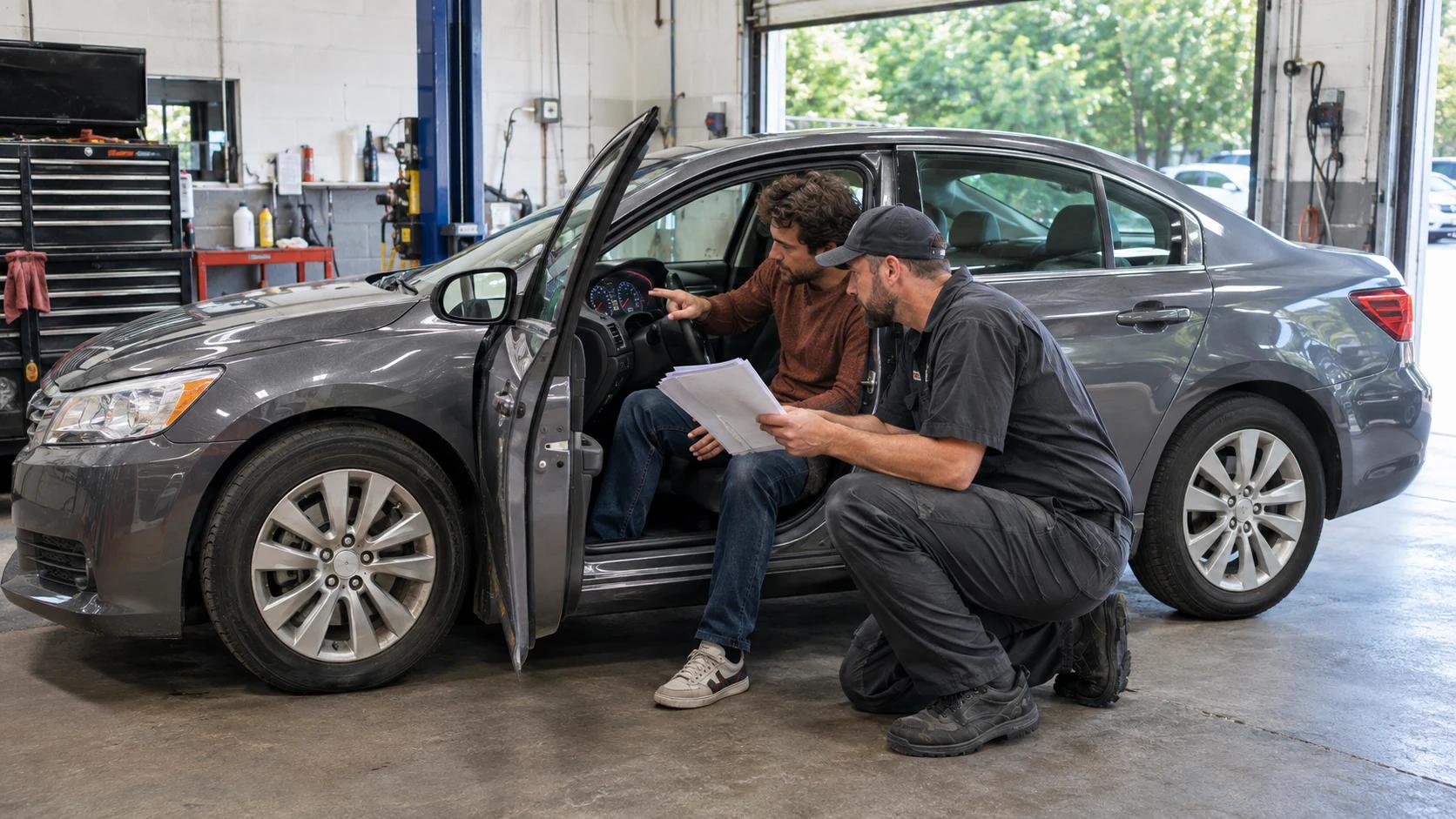
At a U.S. dealership, the FTC Buyers Guide is the first document to read before discussing an extended service contract. It tells you whether the dealer is offering the used car as is, with implied warranties only, or with a written warranty. The dealer must also give you the final version at the sale, including any warranty changes negotiated before signing.
The form is a disclosure, not a condition report. A checked warranty box does not prove that the car is mechanically sound, and an as-is box does not explain the vehicle's history. The purchase still needs an independent inspection, a title check and a coherent maintenance record.
Where the Buyers Guide must appear
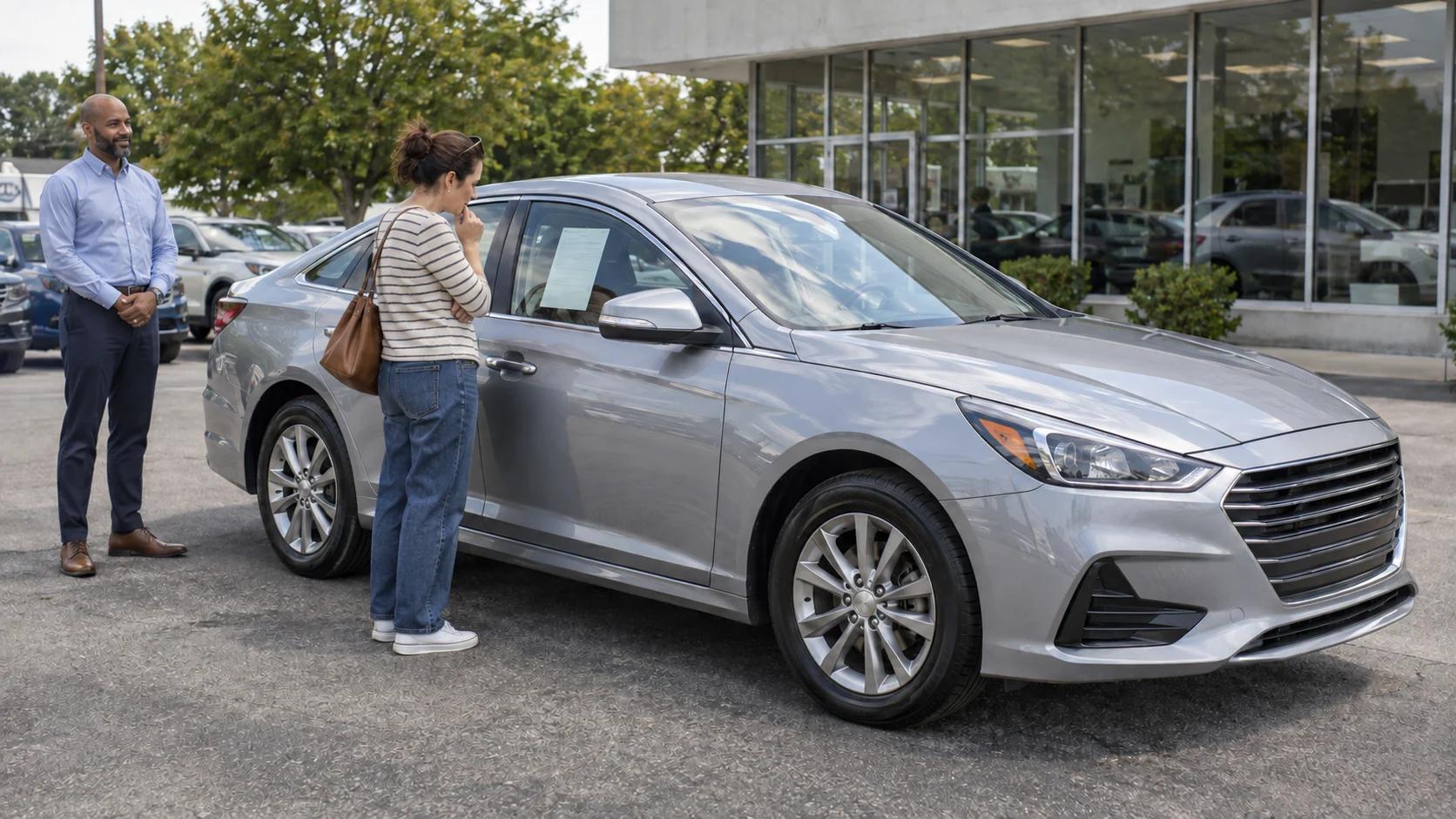
The federal Used Car Rule requires covered dealers to display the Guide prominently on used vehicles offered for sale. The FTC says buyers who purchase from a dealer online are entitled to a Buyers Guide too. The rule is aimed at dealer transactions; it is not the document to expect from an ordinary private seller.
Read the vehicle details at the top and make sure the form belongs to the exact car. Compare its year, make, model and VIN with the dashboard, title and contract. A Guide photographed from another vehicle or shown only after payment does not let you evaluate the actual terms before committing.
The Guide also identifies the dealer and gives the contact to use for complaints. Keep the final copy with the sales contract, financing papers and any separate warranty document.
What “as is” actually transfers to the buyer
When As Is — No Dealer Warranty is checked, the dealer is saying it will not pay for repairs after the sale. The buyer assumes the risk of failures unless another enforceable protection applies.
State law matters. The FTC uses a separate Implied Warranties Only version in states that restrict or prohibit dealers from disclaiming implied warranties. Other states require particular language or additional documents before an as-is disclaimer is effective. The Buyers Guide is therefore the federal starting point, not a substitute for the law of the state where the car is sold.
Do not rely on a spoken promise that the dealer will repair a warning light, replace tires or let you return the car. The FTC advises putting every promise in writing on the Guide and in the contract. If the dealer will not write it down, price the transaction as though the promise does not exist.
How to read a dealer warranty
If the dealer offers a warranty, the Guide should say whether it is full or limited, what systems are covered, how long coverage lasts and what percentage of labor and parts the dealer will pay. “50/50” coverage, for example, leaves half of a covered repair cost with the buyer.
Ask for the separate written warranty before buying. The FTC's dealer guidance says the Buyers Guide alone is not the complete written warranty document. Read exclusions, deductible, claim authorization, repair location, maintenance duties and the name of the party responsible for payment.
A remaining manufacturer warranty is different from a dealer warranty. Verify it with the manufacturer or an authorized dealer using the VIN, in-service date and mileage. A line on an advertisement is not proof that the coverage transferred or that every component remains eligible.
Warranty, implied warranty and service contract are different
A service contract is an extra agreement to perform or pay for specified repairs. It is often marketed as an extended warranty, but the FTC treats it separately from a warranty included with the vehicle.
The distinction can change the buyer's legal position. FTC consumer guidance says that if a dealer sells a service contract within 90 days of the used-car purchase, the dealer cannot disclaim implied warranties on the systems covered by that contract. Coverage and remedies still depend on state law and the written terms, so this is not a promise that every later defect will be paid.
Compare the service contract price with its deductible, exclusions, maximum payout and cancellation terms. Confirm who backs it and whether repair shops must obtain approval before work begins. Do not add its price to financing until you have the complete contract.
The final Guide must match the deal
Negotiations can change the coverage originally displayed. If the dealer agrees to add a warranty, extend its duration or pay a larger share of repairs, the final Guide must reflect that change. The FTC says that when the Guide promises a warranty but the sales contract says as is, the dealer must provide the warranty described in the Guide.
The practical response is not to sign conflicting documents. Ask the dealer to correct the Buyers Guide and contract so the coverage, duration and cost share match. Photographing the old window form does not replace receiving the accurate final copy.
What the form does not verify
The Buyers Guide does not establish clean title, actual mileage, crash history, recall completion or mechanical condition. Check those separately before a deposit:
- obtain a vehicle-history report and verify the state title;
- search for open safety recalls by VIN;
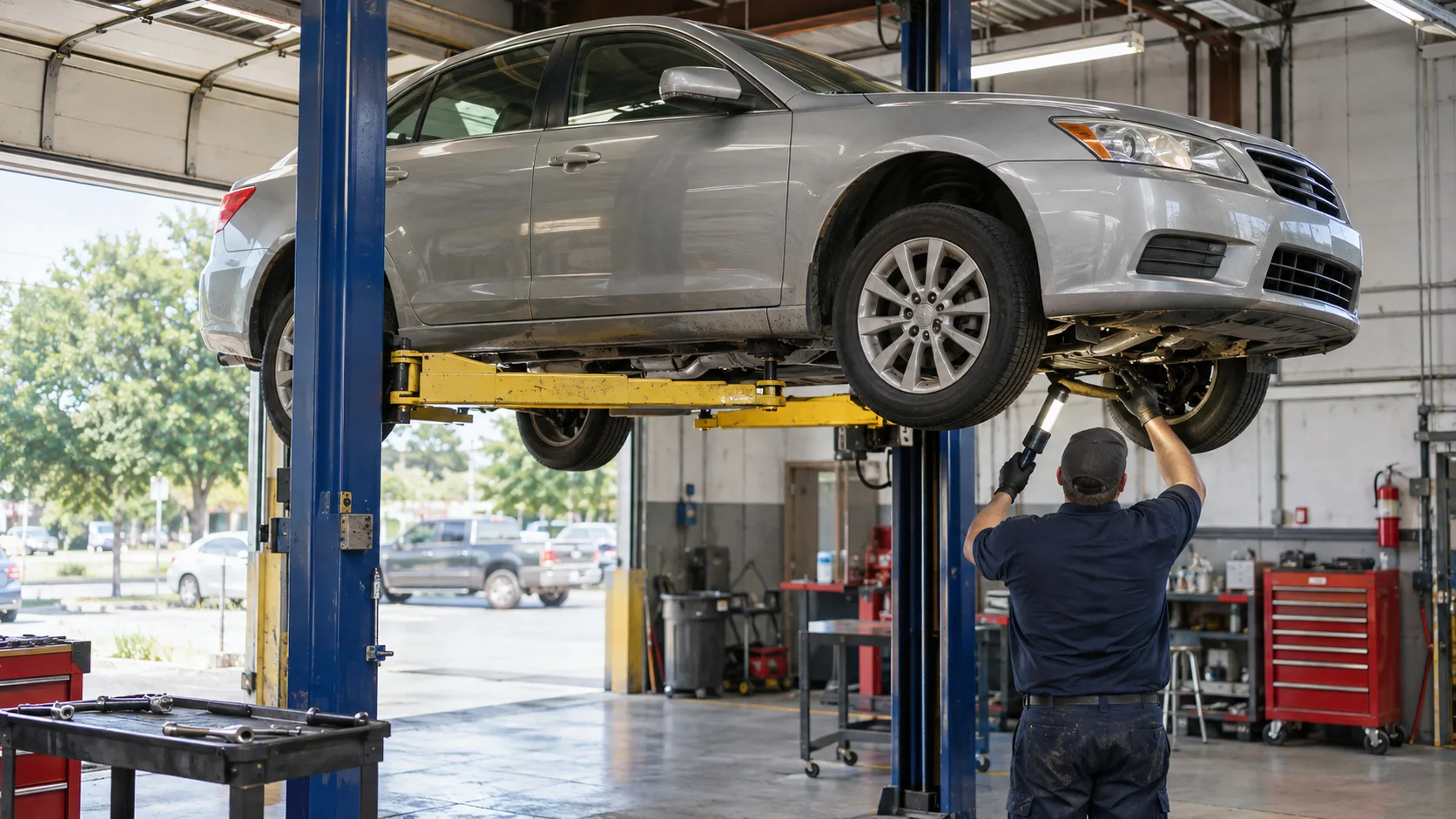
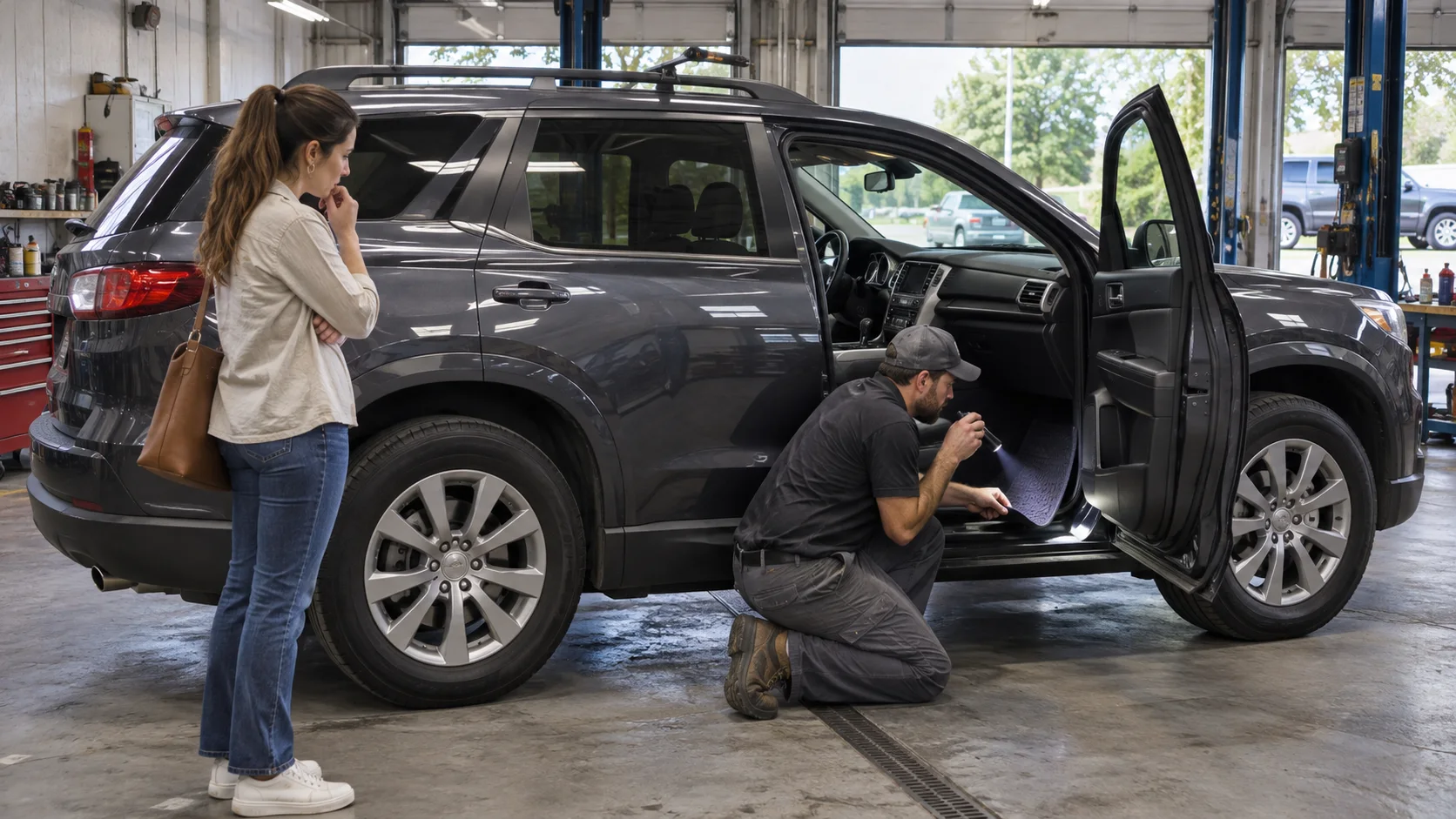
- arrange an independent pre-purchase inspection;
- compare the odometer with dated records;
- get financing and out-the-door pricing in writing.
Our odometer-fraud checklist explains how to build a mileage timeline. If the history shows a rebuilt or branded title, use the separate salvage-title decision guide.
The decision rule is simple: do not pay until the checked warranty box, the written warranty or service contract, and the sales agreement say the same thing. If a promised repair or return right is missing from the final documents, treat it as unavailable.