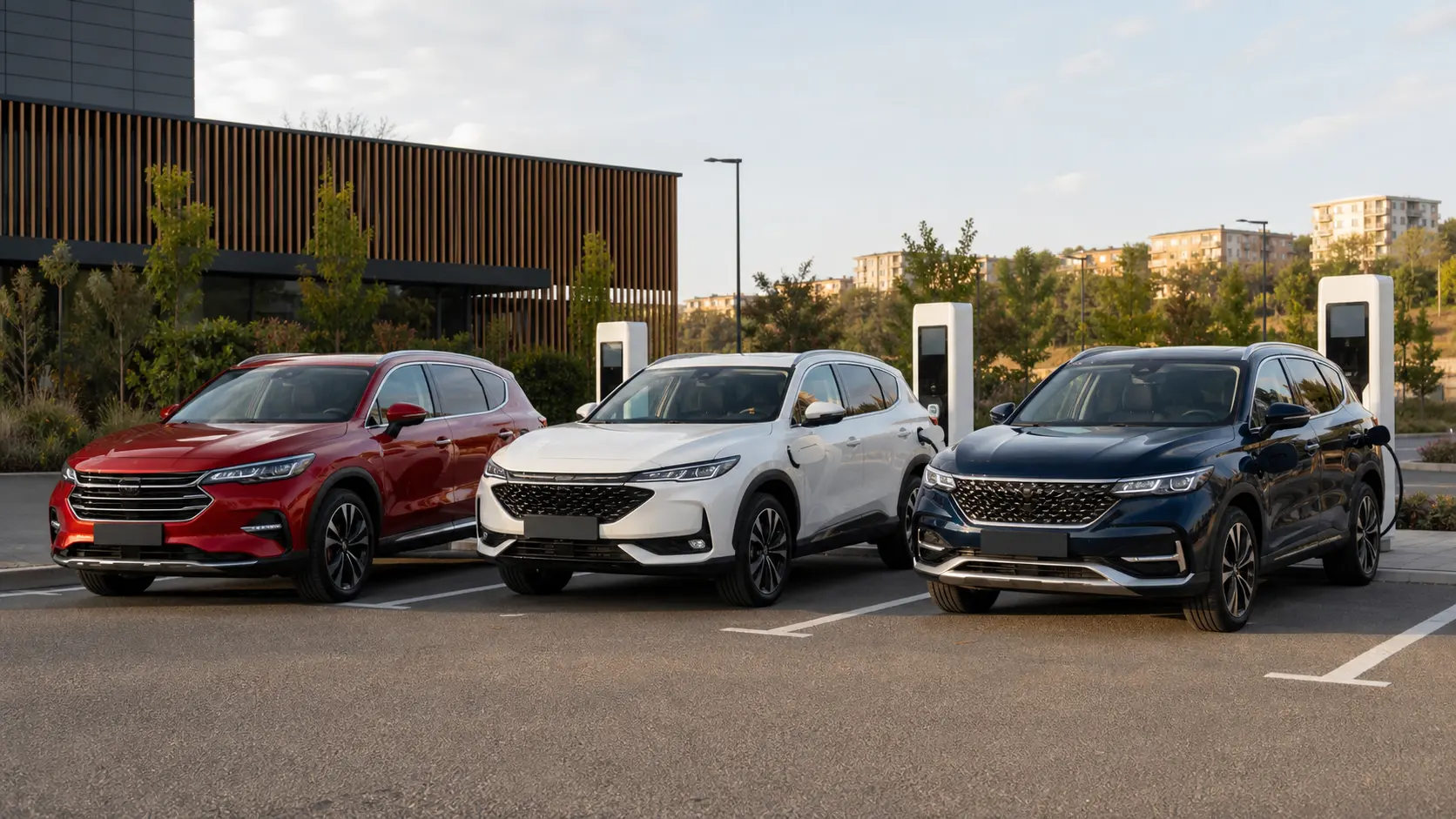
The MG HS Hybrid+ is the sensible default for a UK driver who cannot charge at home. The BYD Seal U DM-i is the more convincing electric-first option if a driveway, workplace charger or dependable public routine is available. The Geely Starray EM-i is the newer entrant with a clear price and warranty story, but its ownership case depends more heavily on how comfortable you are with a developing dealer network.
That is the useful conclusion before the numbers. These are not three versions of one powertrain. The MG is a full hybrid: its small battery is charged by the petrol engine and regenerative braking. The BYD and Geely are plug-in hybrids: they can draw energy from the mains and carry much larger batteries. A PHEV can be the cleanest and quietest choice for the school run, but only when its owner plugs it in. If not, its extra battery mass becomes a cost with little daily benefit.
UK prices and what the adverts actually mean
MG Motor UK announced the HS Hybrid+ SE at £28,995 on the road and the Trophy at £31,495 in its launch communication. The current MG product pages show the HS Hybrid+ from £29,495, so a buyer should treat the website price as the live reference and ask the retailer to confirm the exact trim, registration fees and delivery terms. MG quotes a seven-year, 80,000-mile warranty for the UK model.
BYD’s UK conditional-sale page lists the Seal U DM-i at £34,995 for Boost, £36,995 for Comfort and £39,995 for Design before the retailer discount in the finance example. The same page shows revised on-the-road prices of £33,278.55, £35,238.42 and £38,129.76 under a 0% APR offer with a 50% deposit, for orders between 1 July and 30 September 2026. Those are finance terms, not a universal cash price. The headline looks attractive only if the buyer can tie up half the vehicle price.
Geely UK lists the Starray EM-i Pro at £29,990, the Max at £32,690 and the Ultra at £34,990 on the road. Its published PCP example uses 0% APR over 49 months with a deposit and optional final payment. The monthly figures are not the cost of owning the car unless the customer also accounts for that final payment or the risks of returning the vehicle with excess mileage or damage.
The three price bands overlap, but the trims do not. MG’s UK entry point is a conventional HEV. BYD starts higher and buys access to a PHEV system, while Geely’s Pro sits close to the MG but is not mechanically equivalent. Compare the list price, the total amount payable, the warranty and the included equipment on the same sheet. Do not rank them by monthly payment alone.
The powertrains in everyday terms
MG describes the HS Hybrid+ as a 1.5-litre petrol engine paired with a 146 kW electric motor, a 1.8 kWh battery and a two-speed automatic transmission. Combined output is 165 kW, or 225 PS in MG’s UK material, with a claimed 0–62 mph time of 7.9 seconds. That figure is the manufacturer’s test result, not a Carboratory measurement. There is no charging socket. The system can move the car electrically for short periods and recover energy under braking, but the owner never plans a battery stop.
BYD’s Seal U DM-i uses the Super DM plug-in hybrid system and Blade batteries. BYD UK quotes more than 70 km of pure-electric range for the family of versions, up to 1,080 km of combined range in the UK material and 18 kW DC charging from 30 to 80% in 35 minutes. The UK model page also advertises a 5.9-second 0–62 mph time for the AWD version. The exact battery, electric range, charging equipment and power vary by Boost, Comfort and Design. The registration document and the current specification sheet matter more than a general model page.
Geely UK quotes up to 51 miles of WLTP electric range for the Starray EM-i Pro and up to 84 miles for the Ultra. It gives the Ultra a manufacturer-estimated combined range of up to 618 miles. The word “estimated” is important: the combined number is not presented in exactly the same way as every WLTP figure. The UK page lists three trims and states that the electric and combined results can change with driving style, weather, load and climate control.
The driving distinction is easy to feel. The MG behaves like a petrol automatic that frequently borrows electric assistance. The BYD and Geely can leave a residential street without starting the engine, assuming the battery has been charged and the chosen drive mode allows it. On a cold motorway journey, all three eventually rely on petrol. The PHEVs simply start from a larger electrical reserve.
Charging on British roads and driveways
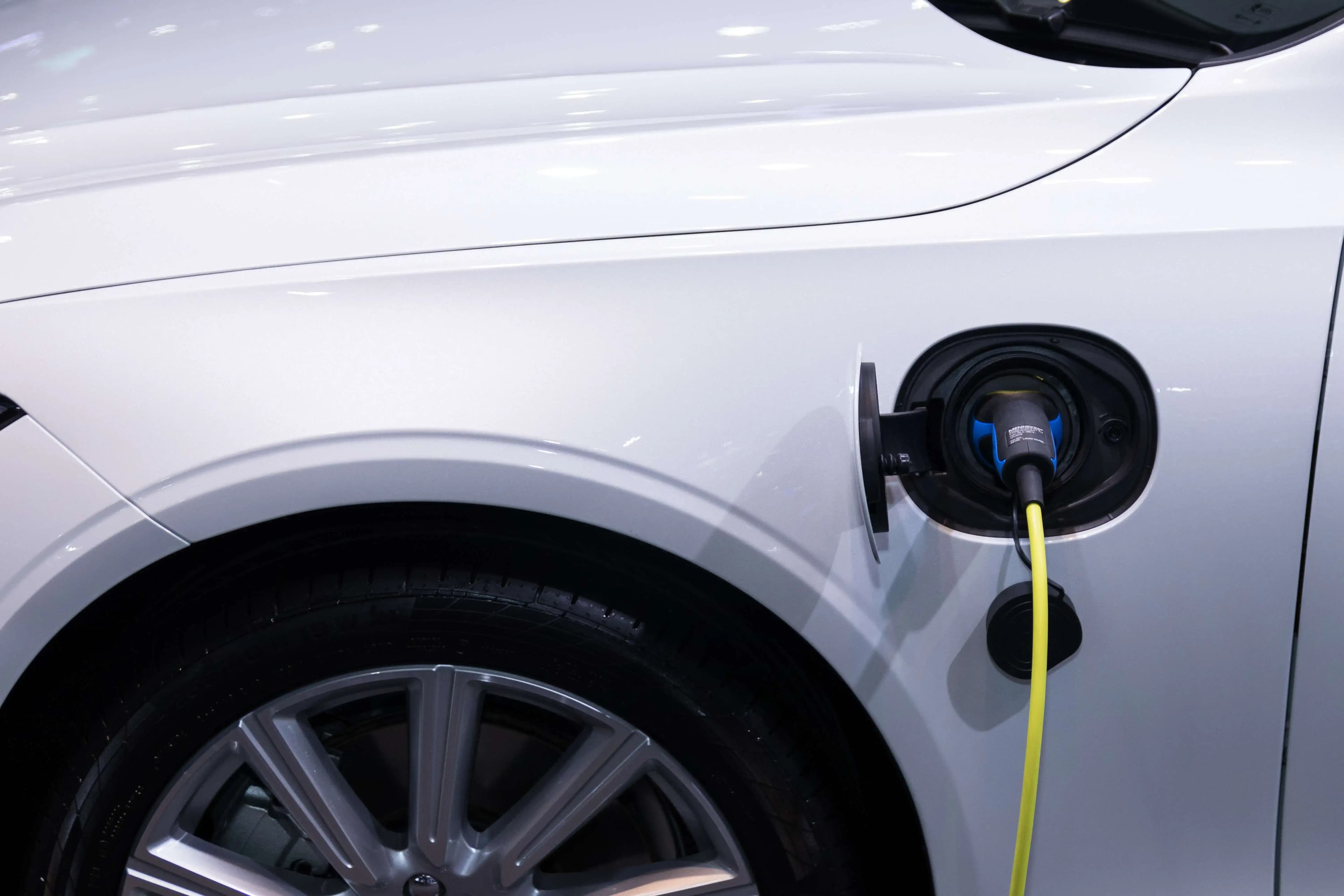
The home-charging question should be answered before the trim question. A driver with off-street parking can schedule a BYD or Geely overnight. A driver in a terraced street or a flat with no allocated bay cannot assume that a trailing cable is acceptable. Public charging works, but it introduces tariffs, app accounts, queues and the possibility that a station is occupied when the family needs to leave.
For the MG, none of this matters. It can be refuelled at any petrol station and never loses time to a charger. This is a genuine benefit for renters, company fleets with no depot charger and households that use one parking space for several cars. It is also the reason the MG may be cheaper to live with than its official fuel figures suggest for a buyer who cannot access low-cost electricity.
For the PHEVs, a slow overnight charge is usually more useful than a fast public stop. The BYD’s 18 kW DC capability is modest beside a battery-electric car, and Geely’s UK page focuses on the car’s hybrid range rather than turning it into a rapid-charging alternative. A 150 kW charger does not make either vehicle charge at 150 kW. The vehicle, battery temperature and state of charge set the limit.
Public charging can still make sense before a long departure or during a lunch break. The calculation is simple: compare the charger’s per-kWh price with the petrol cost of the same journey, include any parking fee and do not count the WLTP figure as a guarantee. If a PHEV is charged twice a week at expensive rapid chargers but rarely at home, the financial case is much weaker.
City work, motorway work and family work
The MG is strongest in mixed urban ownership. Stop-start traffic lets the hybrid system recover energy, and the driver does not have to remember a cable. Its 224 PS headline is useful for joining a motorway, but a short test drive cannot establish real fuel economy. The official German page gives 5.5 l/100 km and 126 g/km for a comparable market specification; UK paperwork and equipment can differ, so a UK buyer should use the certificate for the exact car.
The BYD suits a household whose weekday mileage is predictable. A parent could drive the school run, shopping and local commuting electrically, then keep the petrol engine for a holiday to Cornwall, Scotland or the Continent. Comfort and Design cost more than Boost, but their larger battery or additional drivetrain capability can be more valuable than an extra screen. The 425-litre boot is adequate for many families but not the biggest here.
The Geely is aimed at the buyer who wants the PHEV idea without moving into a much more expensive premium SUV. Geely presents it as a five-seat family car with a long combined range and up to 84 miles of electric range in Ultra trim. The car’s official numbers are useful for comparing models, not promising a winter commute. Check whether the dealer can provide a demonstrator with the same trim; equipment and ride quality can change the answer more than the badge.
At motorway speed, the electrical advantage narrows. Air resistance rises quickly, heating consumes energy in winter and a full load changes the car’s behaviour. A PHEV remains useful because it can use the engine without a charging stop, but it is not an electric motorway car. The MG avoids the question entirely, at the cost of never giving the driver a meaningful electric commute.
Boot space, rear seats and towing questions
BYD quotes a 425-litre boot, expandable to 1,440 litres with the rear seats folded. MG material for the HS Hybrid+ gives 507 litres, while Geely’s UK product page should be checked for the exact local boot specification rather than importing figures from another country. On paper, MG is the easier family packer of the two documented capacities. In practice, the cable, underfloor storage and shape of the opening matter just as much.
Take a child seat to the dealer. The rear bench needs to accept two seats without forcing the front passengers forward, and the doors need enough opening angle for a rainy school-run changeover. Ask whether a spare wheel is included. A puncture kit saves weight but is not the same thing when a tyre is damaged on a remote Scottish road.
The BYD Design’s all-wheel drive may help on wet grass, snow or a steep driveway, but it is not proof of serious off-road ability. The MG is front-wheel drive in the quoted UK material. For the Geely, check the tow rating and nose-weight limit on the exact certificate if a caravan, trailer or bike rack is part of the plan. Hybrid system power is not the same as legal towing capacity.
Tax, benefit-in-kind and incentives
The UK tax position makes the comparison different for private and company buyers. GOV.UK says that hybrid and alternatively fuelled vehicles registered on or after 1 April 2017 pay the standard £200 annual VED rate from April 2026; the previous £10 hybrid discount has gone. The first-year charge can still depend on the car’s CO₂ figure, and the expensive-car supplement has separate rules. Check the registration date and list price rather than relying on a sales advert.
For a company car, the PHEV’s electric range and CO₂ figure can affect benefit-in-kind calculations. HMRC’s guidance explains that eligible PHEVs registered from 2025 can use a temporary nominal 1 g/km figure for some company-car calculations when they meet specified conditions, including an electric range and emissions-standard requirements. That is a tax rule, not a promise that the vehicle emits 1 g/km in daily driving. A payroll or fleet specialist should verify the exact registration data.
The MG, because it is a non-plug-in hybrid, does not receive the same PHEV treatment simply because it has a battery. For a private buyer, the distinction mainly appears in purchase cost, fuel use and charging convenience. For an employer, the tax calculation can be the deciding factor, but only when the car’s exact CO₂, electric range and list price are entered correctly.
Warranty, servicing and network maturity
MG UK’s published HS Hybrid+ communication gives a seven-year, 80,000-mile warranty. BYD UK says its warranty policy includes six years or 150,000 km of basic cover, eight years or 150,000 km for the drive unit and eight years or 200,000 km for the Blade battery, subject to model terms. Geely UK publishes an eight-year/125,000-mile vehicle warranty and the same period and mileage for the high-voltage battery on the Starray EM-i.
Those headline periods are useful, but exclusions matter. Ask about paint, wear items, battery-capacity thresholds, roadside assistance, software and ownership transfer. A warranty does not make tyres, brake wear, oil changes or accidental damage free. A PHEV still has an engine, cooling circuits and exhaust hardware as well as high-voltage components.
Geely UK publishes fixed hybrid service prices for the Starray EM-i at participating authorised dealers: £184 at 10,000 miles/12 months, £340 at 20,000/24 months, £310 at 30,000/36 months and £595 at 40,000/48 months in the schedule consulted. Prices can change and may cover only selected service items. BYD and MG buyers should request an equivalent written schedule. Dealer distance matters: a low service price is less useful if the nearest trained workshop is a long round trip.
The practical risk is not that a Chinese-branded car cannot be serviced. It is that a newer network may have fewer workshops and less local stock for unusual parts. Before ordering, call the service department, not just the sales desk. Ask how a high-voltage fault is diagnosed, whether loan cars are available and how parts are supplied to your postcode.
Which one for which UK buyer?
Choose the MG HS Hybrid+ if you park on the street, rent your home, share a charger with neighbours or simply do not want another app and cable in your life. It has the least impressive electric story because it does not make one. That is also its strength. Its official warranty is clear, its UK operation is established and its fuel use is not dependent on charging discipline.
Choose the BYD Seal U DM-i if you have reliable home charging and want the most obvious electric-first family experience. Boost lowers the entry cost; Comfort is the more useful long-range PHEV specification; Design is for a buyer who values AWD and performance enough to pay for them. The finance offer can alter the price, but the 50% deposit means it is not suitable for every household.
Choose the Geely Starray EM-i if you want a PHEV near the MG’s price, a published UK trim ladder and an unusually long standard warranty. The Pro is the rational starting point; Ultra’s electric-range claim is more relevant to a commuter who can charge every night. Check the dealer map and service access near home before you treat the price as a bargain.
For a company fleet, calculate the tax and charging policy first. For a family, measure the boot with the actual pushchair. For motorway-heavy private use, the cheaper HEV may be less troublesome than an uncharged PHEV. For a short daily commute from a driveway, the PHEV can be the better match. The right answer is therefore not a ranking: it is the model whose energy system fits your parking space, tax status and weekly route.
Sources
- MG Motor UK – HS Hybrid+ announcement
- MG Motor UK – current brochure/model pricing
- BYD UK – Seal U DM-i conditional-sale terms
- BYD UK – Seal U DM-i technical overview
- Geely Auto UK – Starray EM-i
- Geely Auto UK – warranties
- Geely Auto UK – fixed hybrid service pricing
- GOV.UK – vehicle tax for hybrids and low-emission cars
- GOV.UK – company-car tax