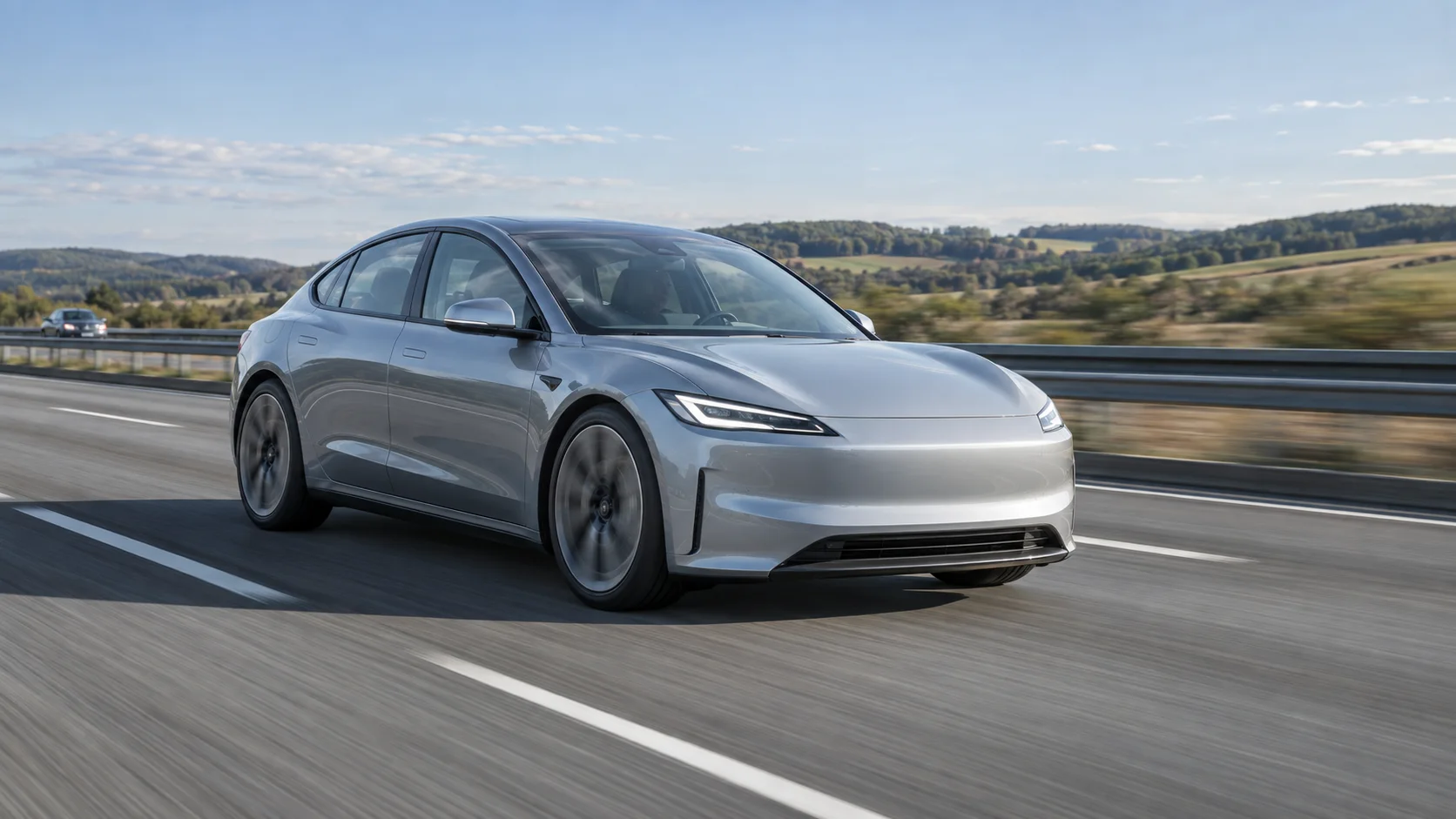
Motorway speed significantly increases electric vehicle (EV) energy consumption due to aerodynamic drag, which rises disproportionately with velocity. This increased consumption directly reduces real-world driving range and necessitates more frequent charging stops.
Aerodynamic Drag Dominates at Higher Speeds
The primary factor influencing EV energy consumption at motorway speeds is aerodynamic drag. Air resistance increases with the square of the vehicle's speed. This means that doubling the speed from, for example, 60 km/h to 120 km/h, quadruples the aerodynamic drag force. Consequently, the power required to overcome this drag increases with the cube of the speed. While rolling resistance and drivetrain losses remain relatively constant or increase linearly with speed, aerodynamic drag quickly becomes the dominant force to overcome as velocity climbs.
For an EV travelling at 90 km/h, aerodynamic drag might account for approximately half of the total energy required to maintain speed. At 130 km/h, this proportion can rise to 70% or more. This fundamental physics principle explains why an EV's energy consumption per 100 kilometres increases substantially on motorways compared to urban or suburban driving, where speeds are lower and regenerative braking can recover more energy.
The WLTP Cycle and Real-World Consumption
The official energy consumption figures for EVs in Europe are determined using the Worldwide Harmonized Light Vehicles Test Procedure (WLTP), as outlined in EU Regulation 2025/1706. The WLTP cycle is designed to provide a standardised, repeatable measurement of energy consumption and range. It comprises various driving phases, including urban, suburban, and motorway segments, with a maximum speed of 131 km/h and an average speed of 46.5 km/h.
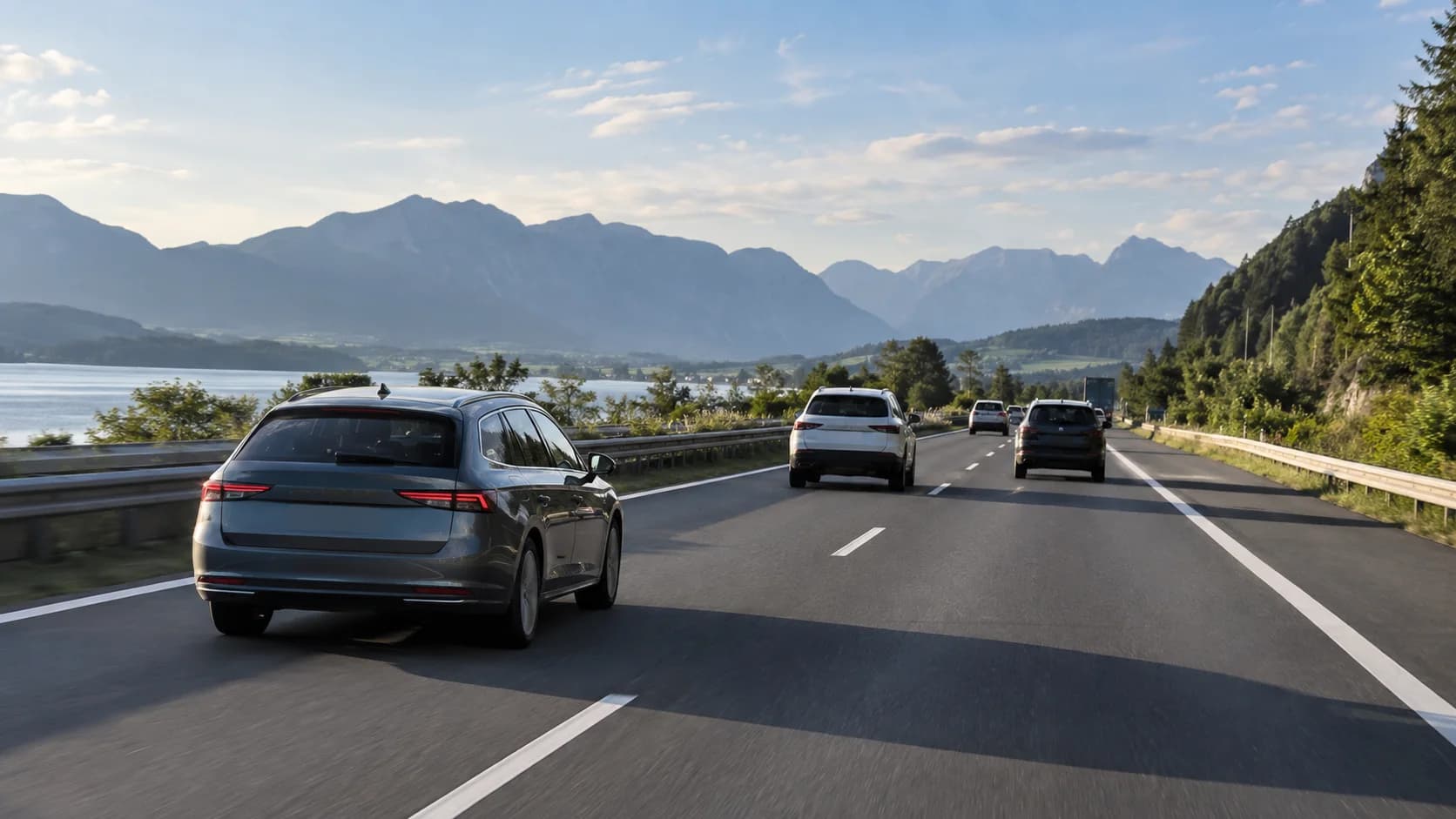
While the WLTP cycle is more representative than older test procedures, it is still a laboratory test conducted under controlled conditions. Real-world motorway driving often involves sustained higher speeds, less traffic variability, and different ambient temperatures than those specified in the WLTP. For instance, a continuous journey at 120 km/h or 130 km/h, common on European motorways, will result in higher energy consumption than the average speed and transient accelerations of the WLTP's motorway segment. Drivers should therefore expect real-world motorway consumption to be higher, and consequently, real-world range to be lower, than the official WLTP figures.
Impact on Range and Charging Strategy
The increased energy consumption at motorway speeds directly translates into a reduced driving range. A hypothetical journey from Munich to Vienna, approximately 420 km, illustrates this. An EV with a WLTP range of 500 km might theoretically complete this journey on a single charge if driven efficiently at lower speeds. However, maintaining 130 km/h for much of the route could reduce the real-world range to 300-350 km, necessitating at least one charging stop.
This reduction in range requires drivers to adjust their charging strategy. Instead of relying on the full WLTP range, drivers must factor in the higher consumption rates at motorway speeds when planning routes and identifying charging points. The availability of reliable charging infrastructure, as addressed by the EU Alternative Fuels Infrastructure Regulation (AFIR) 2023/1804, becomes critical for longer journeys. Drivers may choose to reduce their cruising speed slightly, for example, from 130 km/h to 110 km/h, to extend their range and potentially avoid an extra charging stop, or to reach a preferred charging location.
External Factors and Their Influence
Beyond speed, several other factors influence EV energy consumption on motorways:
- Temperature: Cold ambient temperatures reduce battery efficiency and increase the energy required for cabin heating, both of which increase consumption. Conversely, very hot temperatures can also impact battery performance and increase the load from air conditioning.
- Tyre Pressure and Type: Correctly inflated tyres reduce rolling resistance. Low-rolling-resistance tyres, often specified by manufacturers for EVs, can offer marginal improvements in efficiency.
- Topography: Uphill sections demand significantly more energy, while downhill sections offer opportunities for regenerative braking to recover some energy.
- Vehicle Load: A heavier vehicle requires more energy to accelerate and maintain speed, particularly on inclines.
- Driving Style: Aggressive acceleration and deceleration patterns, even at motorway speeds, consume more energy than smooth driving. While regenerative braking recovers some energy during deceleration, it is not 100% efficient.
- Ancillary Systems: Use of air conditioning, heating, and other electrical accessories draws power from the high-voltage battery, increasing overall consumption.
Drivers can mitigate some of these effects by ensuring tyres are correctly inflated, pre-conditioning the cabin while still connected to a charger, and adopting a smooth driving style.
Battery Durability and Charging Considerations
Frequent rapid charging, often necessary on long motorway journeys, can influence battery longevity. The EU Batteries Regulation 2023/1542 and UNECE Global Technical Regulation No. 22 address battery durability and performance. While modern EV batteries are designed to withstand numerous charging cycles, sustained use of high-power DC fast chargers can generate heat, which over time, may contribute to a gradual degradation of battery capacity.
However, the impact of motorway speed on battery durability is indirect. It is the consequence of higher consumption leading to more frequent charging, rather than the speed itself. Manufacturers typically provide battery warranties that cover a certain period or mileage, reflecting their confidence in the battery's design life. Drivers can verify specific battery warranty terms and expected degradation rates in the vehicle's official documentation or owner's manual. Some vehicles offer a "battery health" display, allowing drivers to monitor the estimated remaining capacity over time.
Driver Verification and Manufacturer Claims
Drivers can verify official consumption figures and range claims in the vehicle's Certificate of Conformity (CoC) or the owner's manual, which will list the WLTP combined consumption and range. Manufacturer websites also typically provide these figures. For real-world driving, many EVs offer an on-board trip computer that displays instantaneous and average energy consumption (e.g., in kWh/100 km). By monitoring this display during motorway driving, drivers can observe the direct impact of speed changes on consumption.
Some vehicle manuals or infotainment systems may also provide guidance on optimising range, including recommendations for efficient cruising speeds. While manufacturers often quote an "estimated range" based on current driving conditions, this is an estimate and should be treated as such. The most reliable method for a driver to understand their vehicle's consumption at motorway speeds is through personal observation and careful route planning, taking into account the factors discussed.