Regenerative braking in city driving recovers kinetic energy typically lost as heat during deceleration, converting it back into electrical energy to recharge the high-voltage battery. This process can significantly improve energy efficiency in urban environments characterised by frequent stop-and-go traffic.
How Regenerative Braking Functions
When an electric vehicle (EV) driver lifts their foot from the accelerator pedal or applies the brake pedal, the electric motor reverses its function, acting as a generator. Instead of consuming electricity to propel the vehicle, it generates electricity, which is then directed back to the battery. This action simultaneously slows the vehicle, reducing the reliance on friction brakes. The intensity of regeneration can vary, from a gentle deceleration akin to engine braking in an internal combustion engine (ICE) vehicle, to a more pronounced braking effect. Many EVs offer adjustable regenerative braking levels, allowing drivers to select a setting that suits their preference and driving conditions. Higher regeneration levels can enable "one-pedal driving," where the driver primarily uses the accelerator pedal for both acceleration and deceleration, only resorting to the friction brakes for emergency stops or complete halts.
Energy Recovery in Urban Cycles
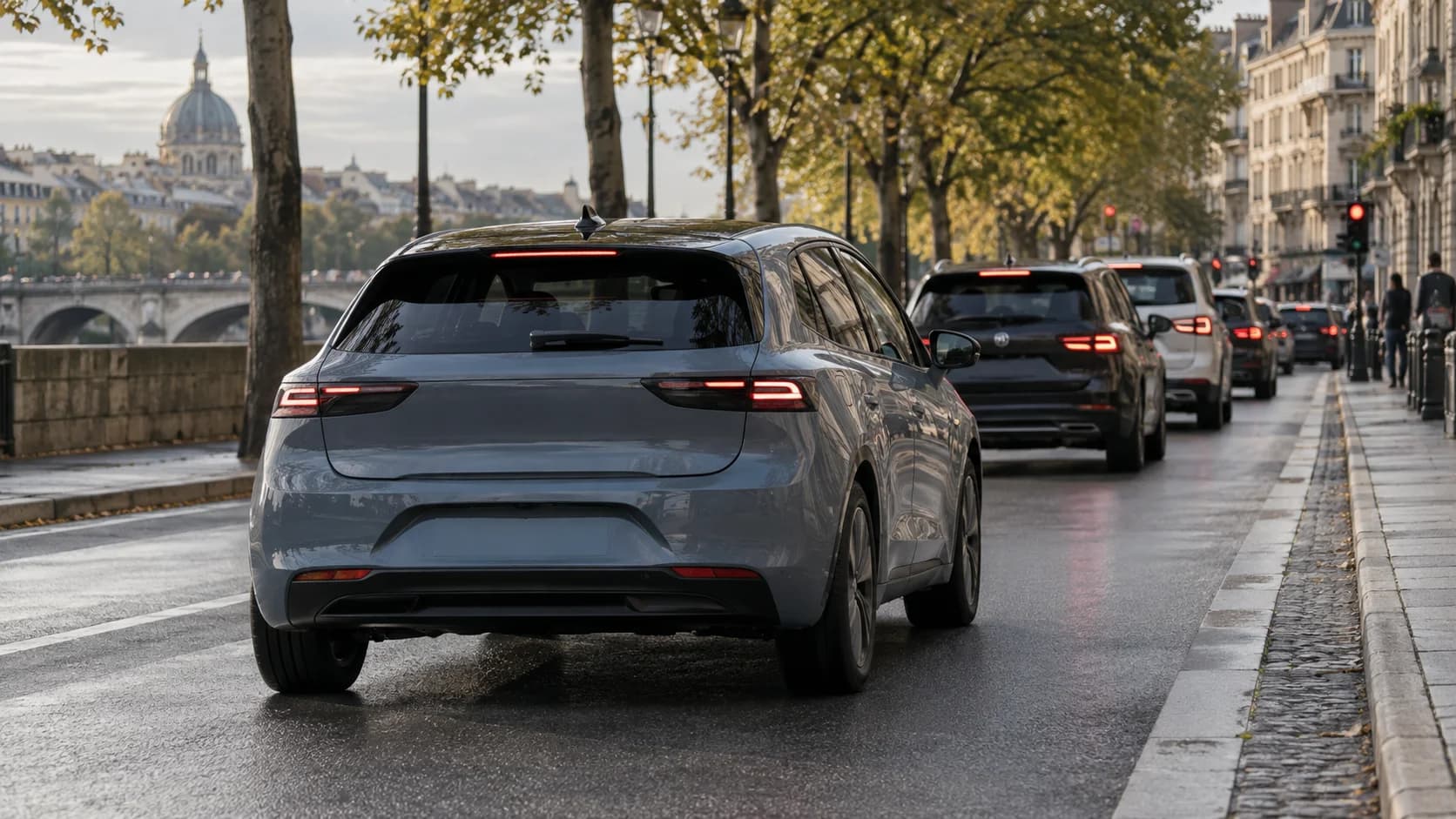
City driving, with its frequent accelerations and decelerations, presents an ideal scenario for maximising the benefits of regenerative braking. Unlike sustained high-speed cruising, where aerodynamic drag and rolling resistance are the primary energy consumers, urban driving involves repeated cycles of kinetic energy build-up and dissipation. Regenerative braking systems are designed to capture a substantial portion of this otherwise wasted energy. In a hypothetical urban journey, such as navigating from a residential area to a city centre across a European metropolis, the vehicle might undergo dozens of braking events. Each time the driver decelerates, a portion of the kinetic energy is returned to the battery, extending the effective range and reducing overall energy consumption. The efficiency of this recovery is influenced by factors such as vehicle mass, speed, deceleration rate, and battery state of charge.
Limitations and Practical Considerations
While highly effective, regenerative braking has inherent limitations. It cannot recover 100% of the kinetic energy due to thermodynamic losses in the motor/generator and battery charging processes. Furthermore, the amount of energy that can be regenerated is limited by the battery's ability to accept charge, particularly when it is already at a high state of charge or if its temperature is outside optimal operating parameters. In such cases, the vehicle's friction brakes will supplement or entirely take over the braking function.
Another factor is the maximum power output of the electric motor when operating as a generator. If the required deceleration exceeds this capacity, the friction brakes will engage. Drivers should also be aware that regenerative braking characteristics can change with battery temperature. For instance, in very cold conditions, the battery may have a reduced capacity to accept high regenerative power, leading to a noticeable reduction in the regenerative braking effect until the battery warms up. This can impact the feel of one-pedal driving and necessitate greater use of the friction brakes.
Impact on Brake Wear
A significant benefit of regenerative braking is the reduced wear on conventional friction brake components. By handling a substantial portion of the deceleration, the brake pads and discs are subjected to less mechanical stress and heat. This can lead to a longer service life for these components, potentially reducing maintenance costs over the vehicle's lifespan. In urban driving, where frequent braking is common, this effect is particularly pronounced. However, it is important to note that friction brakes still require periodic inspection and maintenance to ensure they remain fully functional for emergency situations. The UNECE Global Technical Regulation No. 22 addresses the durability of vehicle batteries, which are central to the effectiveness of regenerative systems and overall vehicle longevity.
Driver Control and Customisation
Many modern EVs allow drivers to adjust the intensity of regenerative braking. This can typically be done through infotainment system menus, steering wheel paddles, or dedicated buttons. Options might include settings like "low," "medium," "high," or "auto." A "low" setting provides minimal regeneration, mimicking the coasting behaviour of an ICE vehicle, while a "high" setting maximises energy recovery and enables more aggressive one-pedal driving. Some systems also offer an "adaptive" mode that automatically adjusts regeneration based on traffic conditions, road gradient, or navigation data. Drivers can experiment with these settings to find what feels most natural and efficient for their driving style and typical routes. For example, a driver frequently navigating hilly terrain might prefer a higher regeneration setting to maximise energy recovery on descents.
Verifying System Capabilities
Prospective buyers and current drivers can verify the specific regenerative braking capabilities of a vehicle by consulting the owner's manual or the manufacturer's official technical documentation. These resources typically detail the available regeneration settings, any conditions under which regeneration might be limited (e.g., battery state of charge, temperature), and how to adjust the system. The EU WLTP type-approval procedure provides a standardised method for measuring vehicle energy consumption and range, which implicitly accounts for the efficiency benefits of regenerative braking in its test cycles, including urban segments. While WLTP figures offer a comparative baseline, real-world regeneration effectiveness will vary based on individual driving patterns and environmental factors. Information regarding battery characteristics, which directly influence regenerative braking performance, can also be found in documentation related to the EU Batteries Regulation, which sets requirements for sustainability, safety, and labelling of batteries.