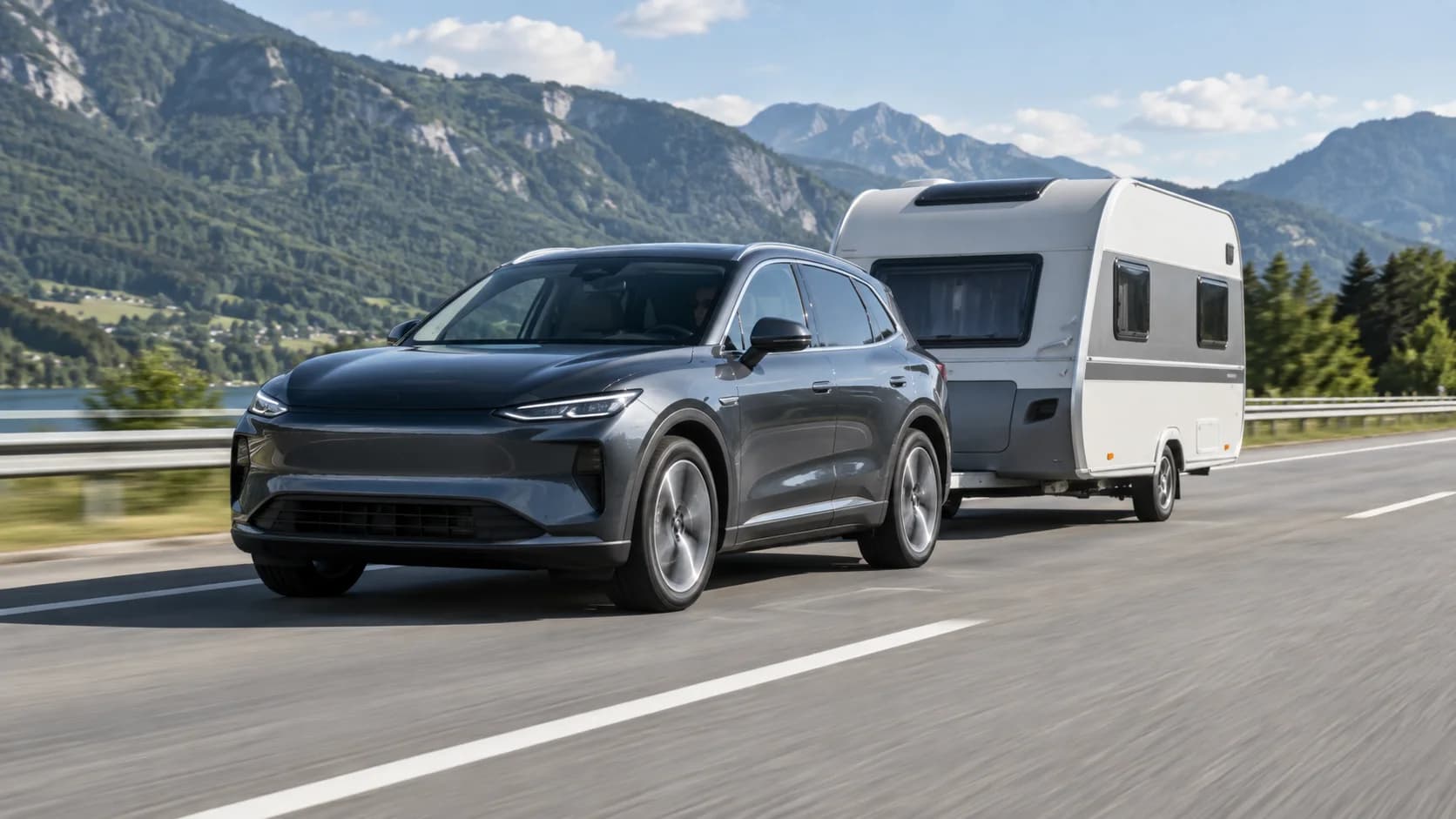
Towing with an electric car reduces range and increases charging frequency due to the additional mass and aerodynamic drag. Effective planning requires accounting for these factors, along with charger availability and suitable charging speeds along the route.
Towing capacity and vehicle compatibility
Before towing with an electric vehicle (EV), it is essential to verify the vehicle's specific towing capacity. This information is detailed in the vehicle's type-approval documents and owner's manual. Unlike internal combustion engine (ICE) vehicles, not all EVs are homologated for towing. Manufacturers must specify both an unbraked and a braked towing capacity, typically expressed in kilograms. The unbraked capacity is generally low, often 750 kg or less, while braked capacities can extend to 2,500 kg or more for larger EV models.
Exceeding the stated towing capacity is unsafe and illegal. The additional load places stress on the powertrain, chassis, and braking system, potentially compromising stability and control. Furthermore, the vehicle's gross train weight (GTW), which is the combined maximum permissible mass of the vehicle, trailer, and their respective loads, must not be exceeded. This figure is also found in the vehicle's official documentation.
Impact on range and energy consumption
Towing significantly increases an EV's energy consumption. The primary factors are the additional mass of the trailer and its contents, and the increased aerodynamic drag. Aerodynamic drag rises disproportionately with speed and is heavily influenced by the frontal area and shape of the trailer. A caravan, for example, presents a large frontal area, leading to a substantial increase in drag compared to a low-profile utility trailer.
While official WLTP range figures provide a standardized comparison for solo driving, they do not account for towing. The WLTP procedure (EU Regulation 2025/1706) measures energy consumption and range under specific laboratory conditions, without a trailer. In real-world towing scenarios, drivers should anticipate a substantial reduction in range, potentially by a third or more, depending on the trailer type, speed, terrain, and ambient temperature. Lower temperatures can further reduce battery efficiency and available range.
Charging infrastructure and planning
Planning charging stops is critical when towing an EV. The Alternative Fuels Infrastructure Regulation (AFIR, EU Regulation 2023/1804) mandates the deployment of publicly accessible charging points across the EU, including high-power charging stations suitable for long-distance travel. However, not all charging stations are designed with towing in mind. Some charging bays may be too short, or their layout may not allow for easy manoeuvring with a trailer attached. Drivers may need to unhitch the trailer to access certain charging points, which adds time and inconvenience.
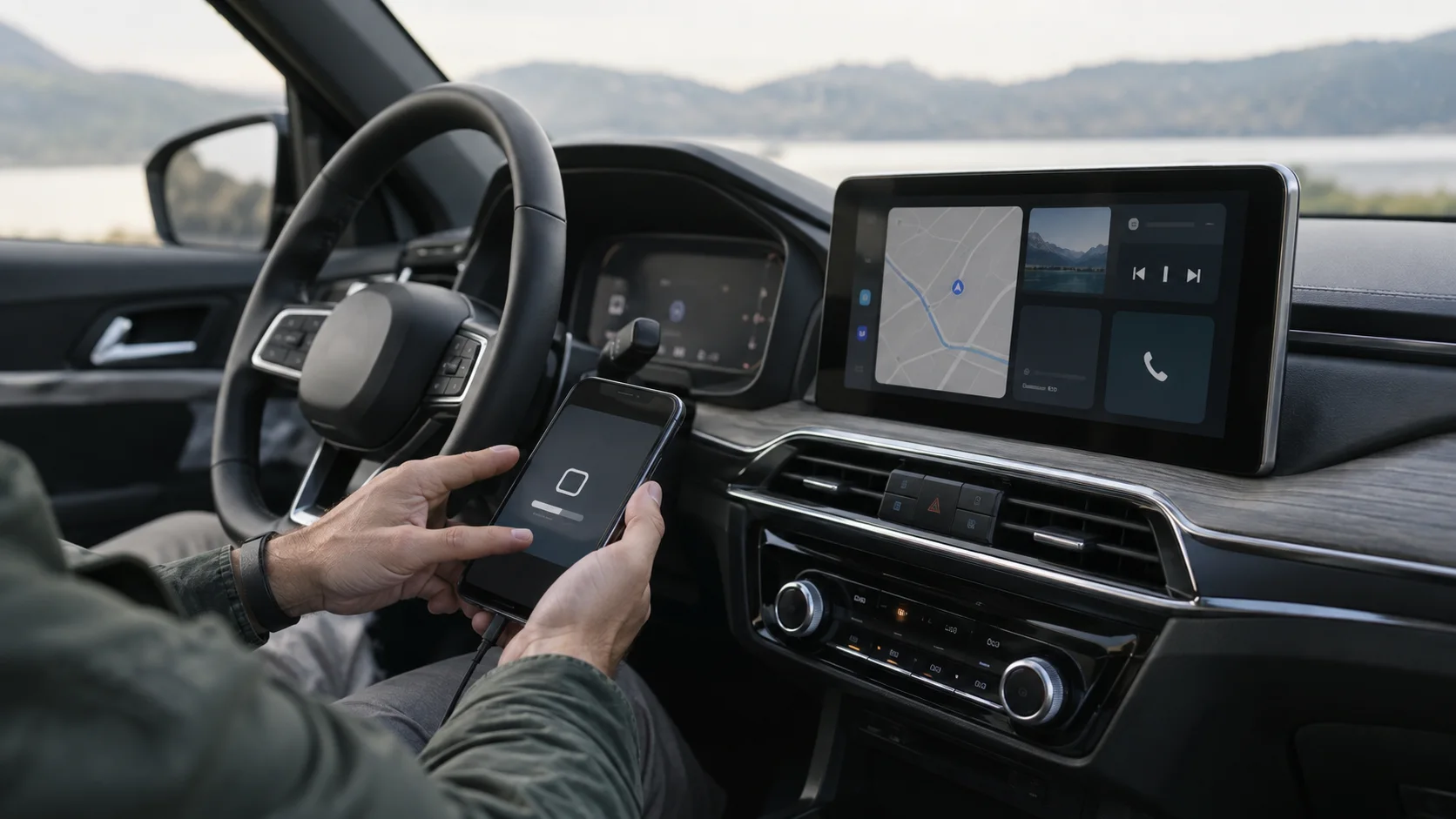
When planning a route, consider chargers located at service areas, larger parking lots, or those specifically designated as "trailer-friendly." Apps and in-car navigation systems can help identify suitable charging locations and their available power levels. Prioritise direct current (DC) fast chargers to minimise charging time, but be aware that sustained high-power charging can generate heat in the battery, and the vehicle's battery management system may reduce charging speed to protect the battery.
Battery considerations and durability
The battery is a central component in an EV, and its performance and durability are relevant to towing. The EU Batteries Regulation (EU Regulation 2023/1542) sets requirements for battery sustainability, safety, and labelling, while UNECE Global Technical Regulation No. 22 addresses battery durability for electrified vehicles. These regulations aim to ensure that batteries maintain a reasonable capacity over their lifespan.
Towing places an increased demand on the battery, as it requires higher power output for acceleration and sustained cruising. This can lead to more frequent deep discharge and recharge cycles. While modern battery management systems are designed to protect the battery from excessive stress, consistently operating an EV at its maximum towing capacity, especially in challenging conditions, may contribute to a faster rate of capacity degradation over the long term compared to solo driving. Drivers should monitor battery state of health and adhere to manufacturer recommendations for optimal battery care.
Route and speed management
Careful route and speed management can mitigate some of the challenges of towing with an EV. Selecting flatter routes with fewer steep ascents will reduce energy consumption. Regenerative braking, a key EV feature, can recover energy during descents, partially offsetting consumption. However, the effectiveness of regenerative braking can be limited by the battery's state of charge and temperature, and the additional mass of the trailer.
Maintaining a moderate and consistent speed is crucial. As aerodynamic drag increases with the square of speed, even small reductions in cruising speed can yield significant energy savings when towing. For example, reducing speed from 100 km/h to 90 km/h can noticeably extend range. Drivers should also be mindful of local speed limits for vehicles towing trailers, which are often lower than for solo vehicles. Using the vehicle's "eco" driving mode, if available, can also help manage power delivery and reduce consumption.
Comparing EV and ICE for towing
Both electric and internal combustion engine vehicles have distinct characteristics for towing. EVs offer instant torque, which can make accelerating with a heavy trailer feel effortless. The smooth power delivery and quiet operation can enhance the driving experience. However, the primary limitation is the reduced range and the need for careful charging planning, especially with larger trailers.
ICE vehicles, particularly those with diesel engines, often have a longer range when towing and refuelling is generally quicker and more widely available. However, they typically produce more emissions and can be noisier. The choice between an EV and an ICE vehicle for towing depends on the specific use case. For frequent, long-distance towing, especially with large trailers, an ICE vehicle might currently offer greater convenience in terms of range and refuelling infrastructure. For shorter, occasional towing or for drivers willing to meticulously plan their journeys and accept longer charging stops, an EV can be a viable and enjoyable option. As charging infrastructure evolves and battery technology improves, the practical differences will continue to narrow.