Tyre pressure directly influences an electric car's energy consumption and, consequently, its driving range. Maintaining correct inflation is a simple, no-cost measure that can yield measurable efficiency benefits.
Tyre pressure and rolling resistance
Rolling resistance is a primary factor in an electric vehicle's energy consumption, second only to aerodynamic drag at higher speeds. Tyres deform as they roll, and this deformation generates heat, representing energy lost from the vehicle's forward motion. Under-inflated tyres exhibit greater deformation, leading to increased rolling resistance. Conversely, correctly inflated tyres maintain their shape more effectively, reducing this energy loss.
The relationship between tyre pressure and rolling resistance is not linear, but a consistent trend shows that lower pressures correlate with higher resistance. For an electric car, where battery capacity dictates range, minimising all forms of energy loss is critical. Reduced rolling resistance translates directly into more kilometres per kilowatt-hour.
Manufacturer recommendations and WLTP
Vehicle manufacturers specify recommended tyre pressures for their models, typically found on a sticker inside the driver's door jamb, fuel filler flap, or in the owner's manual. These recommendations often include different pressures for varying load conditions (e.g., light load vs. full load) and speeds. The pressures are determined during the vehicle's development to optimise a balance of safety, handling, comfort, tyre wear, and efficiency.
The official energy consumption and range figures for electric vehicles in the European Union are determined using the Worldwide Harmonised Light Vehicle Test Procedure (WLTP), as outlined in EU Regulation 2025/1706. During WLTP testing, vehicles are prepared according to manufacturer specifications, which include specific tyre pressures. These pressures are typically those recommended for normal load conditions. Therefore, the official WLTP range figures are achieved with tyres inflated to the manufacturer's specified pressures. Deviating from these pressures in real-world driving will alter the vehicle's energy consumption relative to the official figures.
The impact of over-inflation
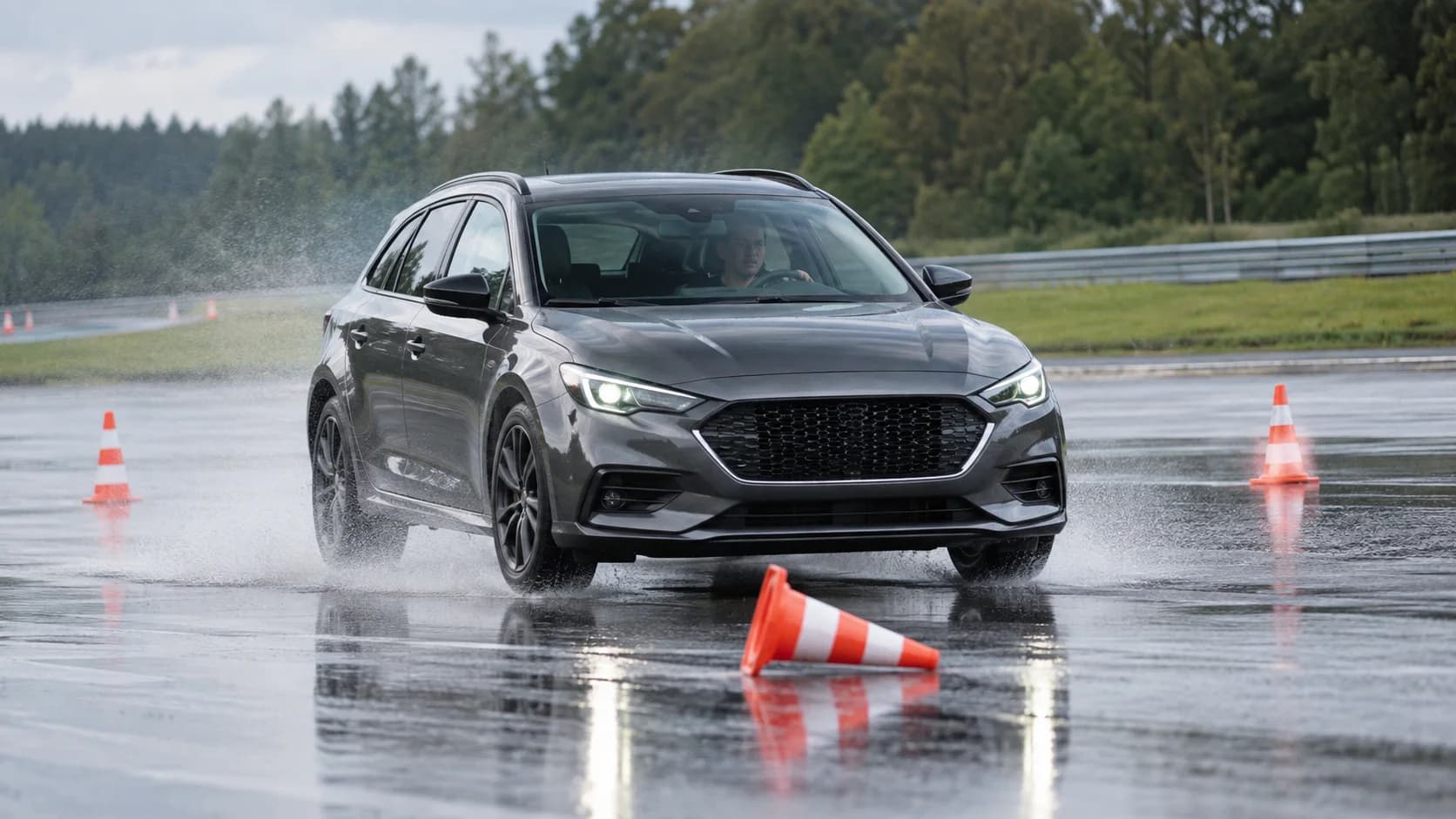
While under-inflation demonstrably increases rolling resistance, over-inflation is not a simple solution for maximum efficiency. Although slightly higher pressures might marginally reduce rolling resistance further by stiffening the tyre carcass, this comes with trade-offs. Over-inflated tyres have a smaller contact patch with the road, which can compromise grip, particularly in wet conditions, and negatively affect braking performance and handling. The ride quality also deteriorates, becoming harsher. Furthermore, over-inflation can lead to uneven tyre wear, with the centre of the tread wearing out faster than the edges, shortening tyre lifespan.
Therefore, while a minor increase above the manufacturer's 'normal load' recommendation might offer a fractional efficiency gain, it is generally not advisable due to the potential safety and comfort compromises. The manufacturer's recommended pressures represent an engineered compromise for overall performance.
Checking and adjusting tyre pressure
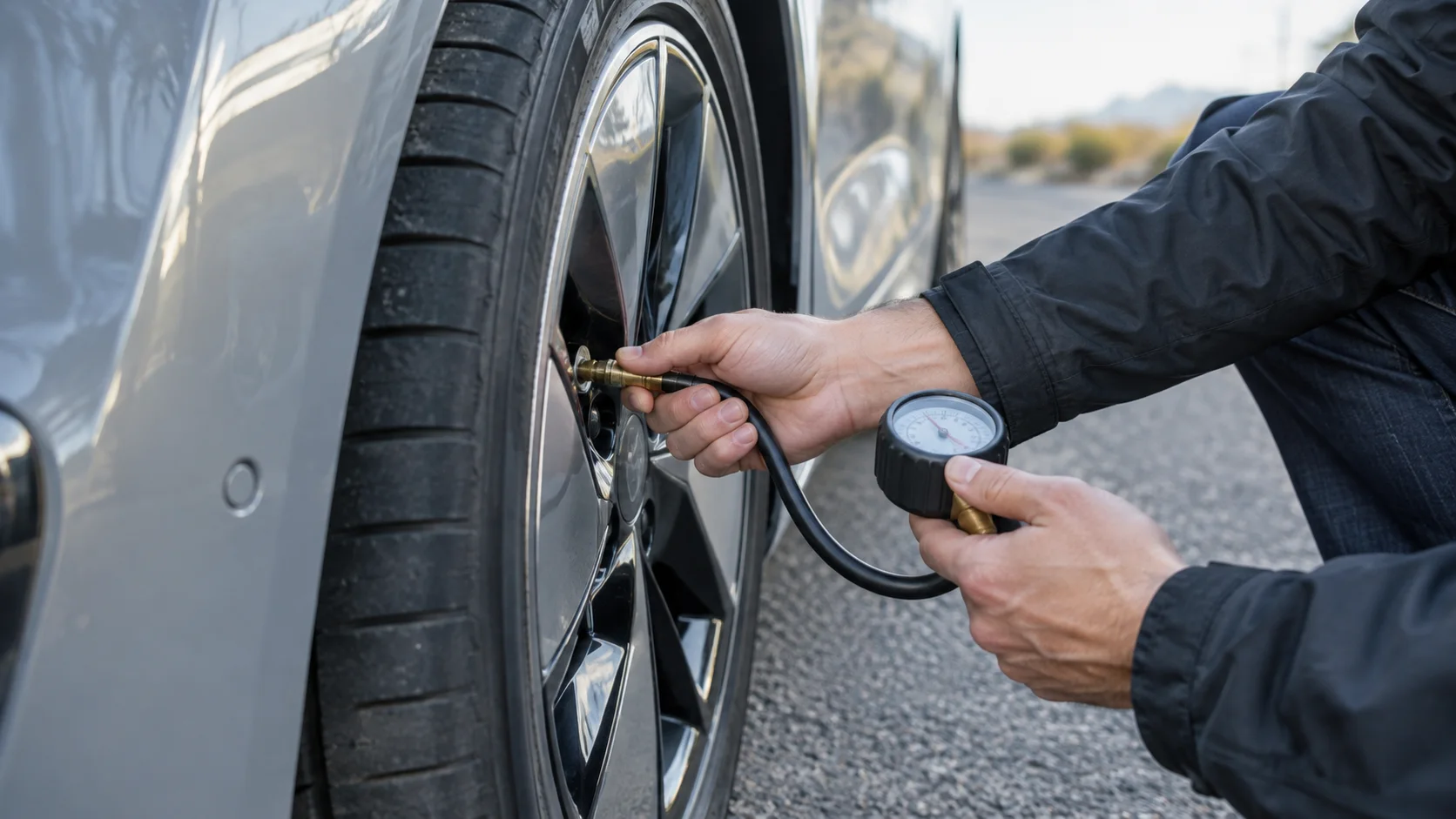
Regular tyre pressure checks are essential. Tyres naturally lose pressure over time, and ambient temperature fluctuations also affect pressure (pressure decreases in colder conditions and increases in warmer conditions). A good practice is to check pressures at least once a month and before long journeys, always when the tyres are cold. 'Cold' means the vehicle has been stationary for at least three hours or has driven less than a few kilometres at low speed.
Most modern electric vehicles are equipped with a Tyre Pressure Monitoring System (TPMS), which alerts the driver to a significant drop in pressure in one or more tyres. However, a TPMS typically warns only when pressure falls below a certain threshold, not necessarily when it deviates from the optimal level for efficiency. Therefore, manual checks with an accurate gauge remain important.
When adjusting pressure, drivers should refer to the vehicle's specific recommendations. For a hypothetical cross-border European journey, such as from Brussels to Munich, covering approximately 670 km, maintaining correct tyre pressure is particularly important. This distance often necessitates at least one charging stop, and optimising efficiency through correct tyre pressure can extend the usable range between charges, potentially reducing the number or duration of stops.
Tyre selection and efficiency
Beyond pressure, the choice of tyre itself plays a significant role in an electric car's efficiency. Tyres are rated for rolling resistance, wet grip, and external rolling noise, as mandated by EU tyre labelling regulations. Tyres with a better (e.g., 'A' or 'B') rolling resistance rating are designed to minimise energy loss and will contribute more to an electric vehicle's range than tyres with a poorer rating.
When replacing tyres, drivers should consult the vehicle's owner manual for approved tyre sizes and specifications. The manual will also detail the original equipment (OE) tyre specifications, which are often chosen by the manufacturer to complement the vehicle's characteristics, including its efficiency targets. Selecting replacement tyres with a good rolling resistance rating, while ensuring they meet all other safety and performance requirements for the specific vehicle, can further enhance efficiency. Compatibility with the vehicle's original specifications is paramount, and this information is always detailed in the vehicle's official documentation.
Conclusion
For electric vehicle drivers, precise tyre pressure management is a fundamental aspect of optimising efficiency and maximising range. Adhering to manufacturer recommendations, which are calibrated for safety, performance, and the official WLTP range figures, provides the best balance. Regular checks and adjustments, alongside informed tyre selection, are practical steps that directly contribute to a more efficient and predictable electric driving experience.