Artificial-intelligence infrastructure is beginning to tighten parts of the semiconductor supply chain used by carmakers. Nexperia says orders exceed available capacity for some mature components, STMicroelectronics says total demand remains above supply, and Aumovio has built selected semiconductor inventory while warning about rising memory costs. These are credible pressure signals, but none of the companies has reported broad vehicle-factory shutdowns caused by AI demand.
Executives from Nexperia and ST described the problem at the Electronica trade fair in Munich on 9–10 November. According to Reuters' reporting from the event, foundries and packaging providers are directing resources towards more profitable AI and data-centre business. The competition is not as simple as a graphics processor replacing an automotive microcontroller on the same production line. It reaches shared factories, wafer supply, assembly and test capacity, equipment, engineering talent and investment budgets.
AI accelerators and car chips are different products
AI servers rely on leading-edge accelerators, high-bandwidth memory, networking silicon and dense power-delivery systems. A vehicle contains those kinds of advanced processors only in limited roles. Much of its semiconductor content consists of mature-node microcontrollers, diodes, transistors, MOSFETs, analogue and logic devices, sensors and conventional memory.
Those inexpensive parts operate windows, lights, pumps, braking controllers, battery systems and safety modules. Their unit value can be tiny compared with an AI accelerator, yet one missing device can stop a complete control unit from being assembled. A finished vehicle cannot be delivered if a required module remains unavailable.
The markets still compete indirectly. A supplier choosing where to put capital will consider price, contract duration and expected return. Data-centre customers can reserve large blocks of capacity and tolerate prices that would be difficult for a mass-market automotive component. Investment then follows the stronger margin signal, including at packaging and test companies that serve multiple chip categories.
Automotive qualification makes substitution slow. A carmaker cannot assume that a catalogue part with similar electrical values is interchangeable. Temperature range, vibration, electromagnetic compatibility, expected service life, software and the safety analysis of the surrounding system can all require validation. Changing the component or its factory may trigger new testing and customer approval.
Nexperia sees AI growth and is adding capacity
Nexperia specialises in high-volume components including diodes, transistors, MOSFETs and logic devices. The company says it ships more than 100 billion products per year and employs over 12,500 people. Its products serve automotive, industrial, computing and consumer applications, so its order book offers a useful view of demand across markets.
In its second-quarter 2026 results, Nexperia linked stronger computing and data-storage demand to continued investment in AI infrastructure and data centres. It also said automotive and industrial markets were developing positively. The company is stabilising its supply chain and ramping capacity, which matters: the story is not that automotive production has been abandoned, but that several end markets want more output at the same time.
Interim chief executive Stefan Tilger told Reuters at Electronica that Nexperia was heavily oversubscribed and that some competitors were shifting capacity away from commodity semiconductors. He also identified robotics as another growing user of manufacturing resources. That warning describes a bottleneck at supplier level. It does not quantify missing car production or establish how long the imbalance will last.
ST's figures show the different growth rates
STMicroelectronics is more diversified and operates a substantial internal manufacturing network. That gives it more control over allocation than a supplier relying entirely on external foundries, although it still depends on outside materials, tools and specialist services.
ST's third-quarter presentation says automotive represented 35% of revenue. Automotive revenue rose 5% from a year earlier and was flat from the previous quarter. Communications equipment and computer peripherals, the category that includes much of the data-centre exposure, grew 64% year on year and 14% sequentially. The contrast helps explain why capital is being drawn towards computing infrastructure.
Chief executive Jean-Marc Chery listed AI data centres among ST's company-specific growth drivers and said overall demand was well above supply. ST is expanding capacity according to its roadmap. At Electronica, he also warned that some foundries and assembly or packaging companies were disengaging from mainstream automotive and industrial technologies. Internal production offers ST partial protection, not immunity.
Importantly, the same official figures do not show an automotive collapse. Automotive sales were higher than a year before. The concern is that future availability and pricing could become harder if investment continues to concentrate on faster-growing segments while demand for ordinary automotive devices also recovers.
Aumovio is carrying more inventory
Aumovio supplies cameras, sensors, computers, braking electronics and other systems to vehicle manufacturers. Its official nine-month 2026 analyst presentation records a selective semiconductor inventory build-up. Its results release also identifies increased memory-component costs as one factor in a challenging full-year environment.
During the earnings call, finance management linked the pressure to AI data centres, according to Reuters. The company did not announce a production stop or give a retail-price increase for any vehicle. Inventory is a defensive response: it can protect assembly schedules, but it ties up cash and may become expensive if component prices remain high.
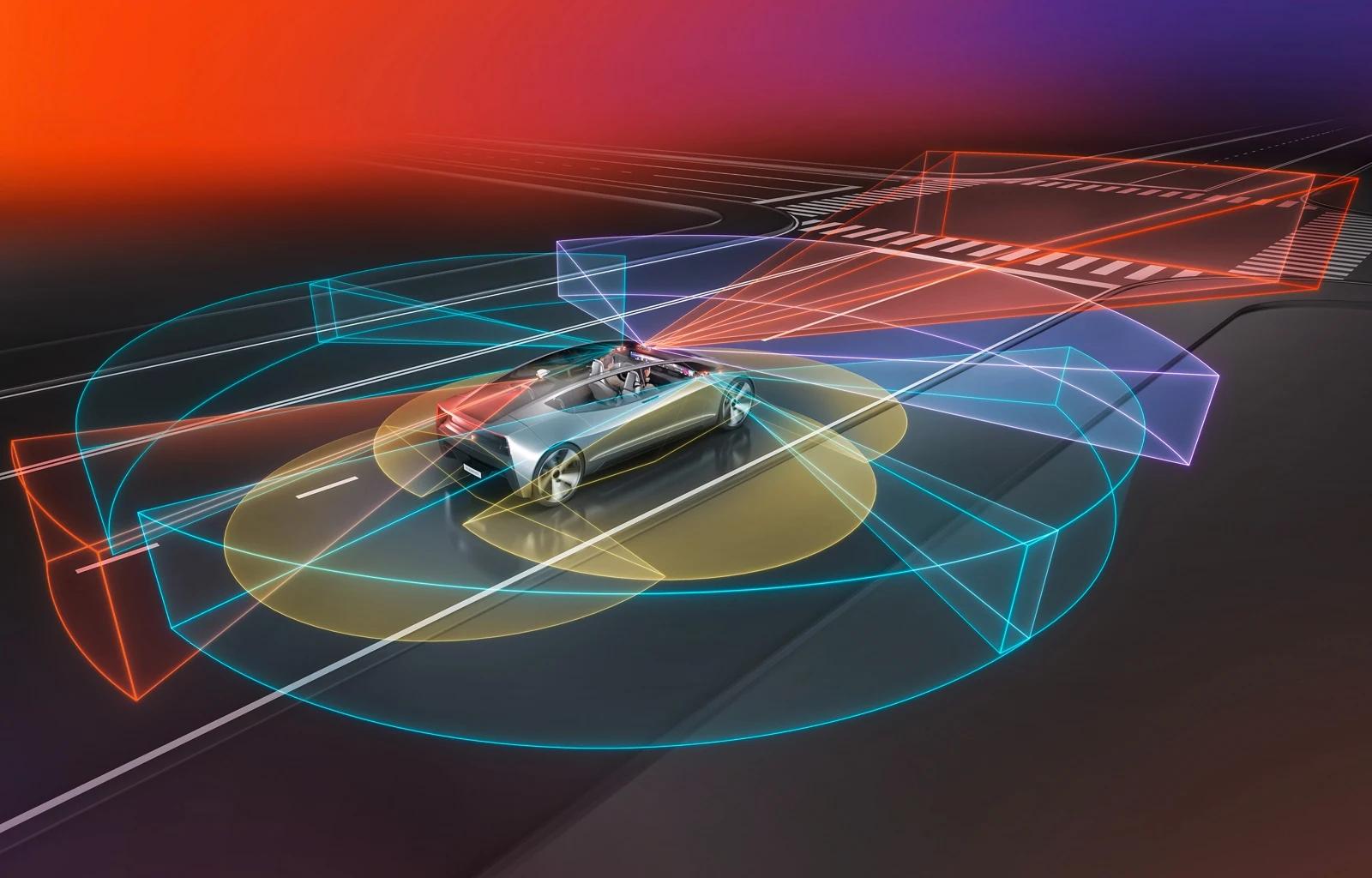
The company's new satellite-camera platform makes the dependency tangible. It offers image sensors from 1.3 to 8 megapixels, processing and interfaces for assisted-driving systems. A modern car may combine several cameras with radars, control units and memory. Securing the central processor is not enough if a smaller power or logic component inside one module is late.
What car buyers should and should not infer
There is no evidence yet that every new car will become more expensive or that a named European model will lose equipment because of this capacity shift. The immediate effects sit upstream: longer quotations, firmer supplier pricing and higher safety stocks. A buyer sees a consequence only if the pressure persists and the carmaker cannot qualify another source or absorb the extra cost.
If a genuine shortage develops, manufacturers could prioritise higher-margin variants, delay some options or adjust factory schedules. Those outcomes occurred during the earlier chip crisis, but Nexperia, ST and Aumovio have not announced them as current measures caused by AI. Dealers should still provide a written delivery estimate and confirm the ordered specification, as they should for any factory order.
The comparison with 2021 also has limits. Pandemic shutdowns, cancelled automotive orders, a sudden rebound in vehicle demand and logistics disruption overlapped then. The present warning centres on capital and capacity moving towards AI while semiconductor companies continue to expand output. Whether it becomes a car-production crisis will depend on investment in mature technologies, long-term supply contracts and the time required to qualify alternative components.
Sources
- Nexperia — Q2 2026 results and capacity expansion
- STMicroelectronics — Q3 2026 financial results
- STMicroelectronics — company presentation and end-market revenue data
- Aumovio — nine-month 2026 results
- Aumovio — Q3 2026 analyst presentation
- Aumovio — third-generation automotive camera platform and press image
- European Commission — European Chips Act