
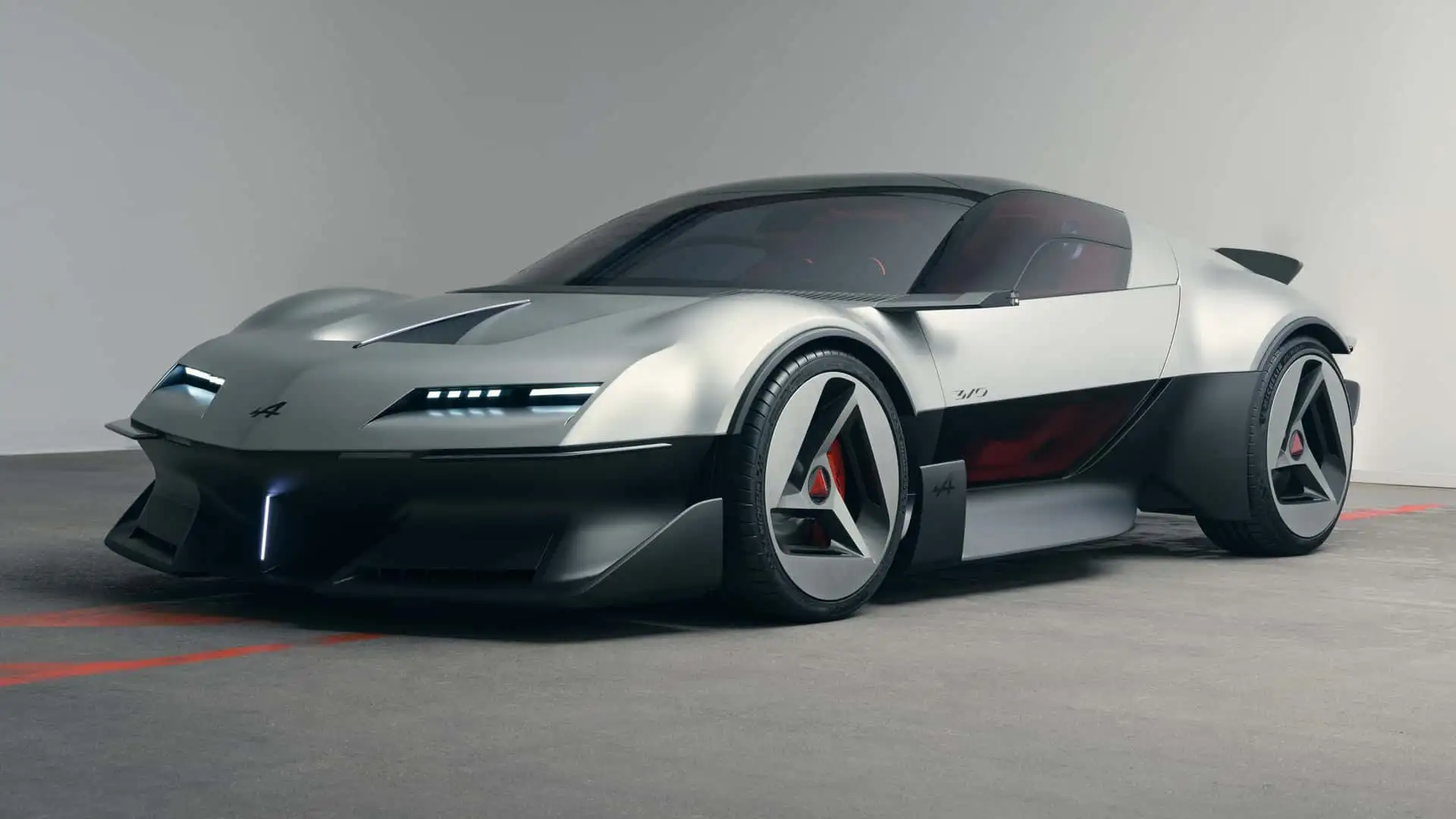
Alpine has presented the A310 Vision at the 2026 Paris Motor Show as a one-off concept inspired by one of the most distinctive cars in its history. The project does not announce a production vehicle. Alpine describes it as an independent design study, created to explore the brand’s heritage through a contemporary, retro-futuristic sports-car language.
The timing is deliberate. The original four-cylinder Alpine A310 celebrates its 55th anniversary in 2026, while the V6 version reaches its 50th anniversary. The new concept therefore looks back at both chapters rather than treating one historical version as the only reference. Its cleaner surfaces echo the early car, while its broad rear haunches and more muscular stance recall the later V6.
A modern interpretation of the A310
The A310 Vision is not a restoration with modern lights attached. Alpine’s design teams worked from an A310 placed in the studio and studied its silhouette, proportions and graphic identity. The goal was to imagine what the original concept might have become if it had been created with today’s materials, aerodynamic tools and design vocabulary.
The result is deliberately dramatic. It is 4.55 metres long, 1.18 metres tall and 2.03 metres wide at its broadest point at the rear. The wheelbase measures 2.45 metres. Those dimensions create a low, wide profile, but they do not constitute a production specification. Alpine has not announced the concept’s weight, luggage capacity, battery, motor or price.
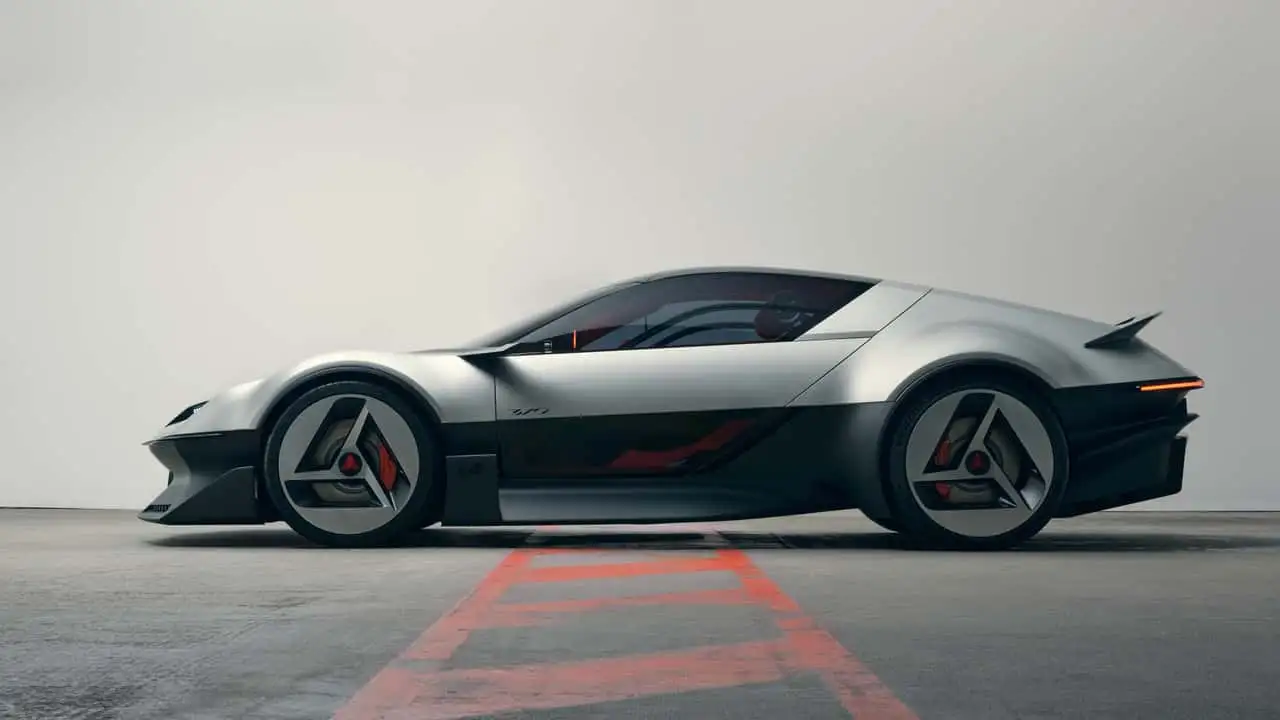
The side view shows the low roof, compact wheelbase and wide rear treatment. Alpine image published by Motor1.com and used at the user’s request.
The aluminium bodywork is contrasted with a black lower section. Alpine says the lower area uses an organic treatment inspired by Formula 1. The wheels use an A-shaped, triangular graphic that refers to the full-metal wheels fitted to early A310s. A semi-transparent bubble-like cabin gives the concept an almost architectural appearance, making the roof and cockpit part of the exterior sculpture.
Aerodynamics as visible design
The front end combines a clean upper surface with a dark lower section and narrow lighting elements. Alpine describes a pop-down effect in which the headlights are integrated into a flexion of the front end and reveal the car’s character when it starts. The bonnet includes an S-duct, while a central Y-zero blade creates a visual line toward the tail.
At the rear, a split wing uses transparent sections. Blade-shaped rear lamps extend the visual width of the car and are also described as contributing to aerodynamic downforce. These are concept-car solutions, not promises that every detail will appear on a road car. They show how Alpine is using aerodynamic surfaces as part of the identity instead of hiding them behind conventional body panels.
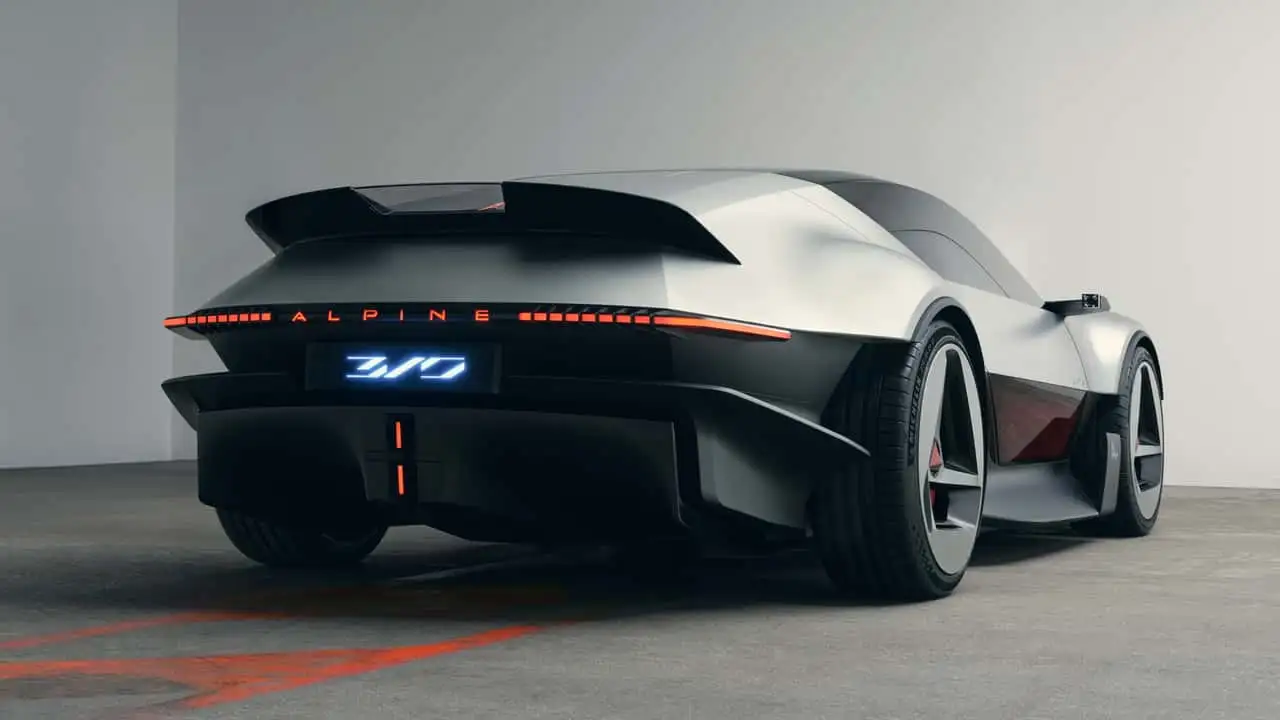
The rear view highlights the split wing, full-width lamp graphic and Alpine lettering. Alpine image published by Motor1.com and used at the user’s request.
What APP makes possible
The A310 Vision illustrates the creative freedom Alpine associates with its new Alpine Performance Platform, or APP. The company says the architecture is intended for sports cars and allows designers to explore new proportions, volumes and interpretations of Alpine’s visual language.
That statement is not a powertrain announcement. Alpine has not published horsepower, torque, range, charging time, battery capacity or acceleration data for the A310 Vision. The platform gives the design team a basis for imagining future sports cars, but it does not prove that this exact concept will be produced or that it has a confirmed electric configuration.
The distinction matters because show cars often combine real engineering directions with surfaces and packaging that would need to change for crash rules, pedestrian protection, cooling, visibility and manufacturing. For now, APP is the confirmed technical context; the A310 Vision remains a styling exercise.
A glimpse of the cockpit, not a finished interior
Alpine says the project is primarily dedicated to exterior design, but the semi-transparent cabin reveals part of the intended cockpit atmosphere. The official description mentions organically shaped seats, bold colour-blocked elements and physical controls inspired by high-end Hi-Fi equipment.
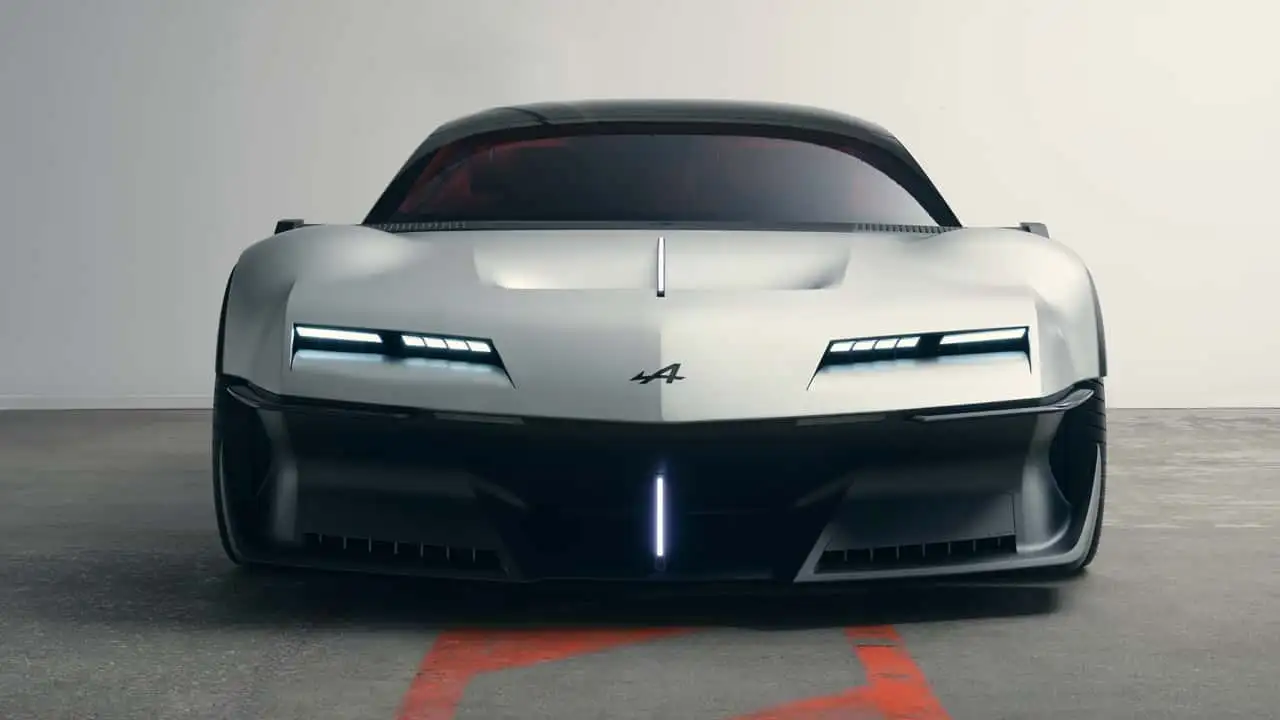
The Motor1.com gallery provides a view through the semi-transparent cabin rather than a separate interior photograph. Alpine’s press release confirms the organic seats, contrasting colours and physical controls described for the cockpit.
This is a useful design signal. The concept does not rely on the usual promise that every function must become a touchscreen. Physical controls are presented as part of the emotional experience, although Alpine has not shown a complete dashboard layout or confirmed any production hardware.
A one-off, not a production announcement
Alpine is explicit that the A310 Vision is an independent design concept. It celebrates the brand’s past and demonstrates what APP may allow, but it is not a preview of a future production model. There is no official launch date, price, range figure or performance target for a showroom version.
That caveat does not make the concept irrelevant. Alpine is expanding beyond the A110 with the A290 and A390, and APP is intended to support the brand’s next generation of performance cars. The A310 Vision shows how Alpine might use its history without reproducing it literally: a 1970s silhouette becomes a low, wide sculpture with transparent surfaces, active-looking aerodynamics and an intentionally expressive cockpit.
The reliable conclusion is therefore narrower than the visual impact suggests. Alpine has unveiled a one-off study at Paris, confirmed its historical references and published dimensions, materials and design themes. It has not confirmed a production A310 Vision, a motor, a battery or a price. The concept’s job is to open a conversation about what an Alpine sports car could look like when heritage and APP are interpreted together.
Images are Alpine photographs published by Motor1.com and used at the user’s request. The source page does not state a commercial reuse licence; original attribution is retained.


