Audi is creating a wholly owned subsidiary to sell used genuine parts and recover components and raw materials from vehicles. Audi Circular Solutions GmbH is due to start operating in early 2027. Its first product will be a central sales channel for used Audi parts; vehicle purchasing and dismantling are planned for a later phase.
One company covering four stages
Audi divides the new operation into four areas. It will acquire vehicles and components with an economic reuse potential, manage a network of dismantling specialists, create a central route to market for used parts and secure selected secondary materials for Audi's supply chain.
The sequence prevents the announcement from being mistaken for an immediate public vehicle-buying service. The first cars to be dismantled will already belong to AUDI AG, including internal departmental vehicles. Cars bought specifically for dismantling will follow. Audi has not published purchase criteria, valuations or a date when private owners will be able to offer their cars.
The used-parts offer is intended for private and business customers in Germany and other European markets. Audi has not yet named those markets or revealed the website, catalogue, shipping terms or exact launch day. It says customers and business partners will receive separate information. Parts from other brands are also planned for a later stage.
Michael Gick and Philipp Eder are the two managing directors named by Audi. Rather than building every dismantling site itself, the subsidiary will work with experienced local partners across Europe and use existing infrastructure. Investment, employee numbers, annual capacity and the location of the operational sites remain undisclosed.
Used and remanufactured parts are different products
Audi's existing service terminology separates three categories. Audi Genuine Parts are new. Audi Genuine Used Parts have already been used but remain functional and can be resold without remanufacturing. Audi Genuine Exchange Parts are failed components that undergo an industrial remanufacturing process, including replacement of worn elements and a defined test before approval.
Audi Circular Solutions is initially described as a sales channel for used genuine parts. That does not mean every dismantled component will be remanufactured, nor does it establish a warranty or price. Audi has not specified which parts will be listed first, how their remaining life will be assessed or what protection customers will receive.
The existing exchange-parts programme provides useful context but its terms cannot be applied to the new used-parts channel. Audi says remanufactured Genuine Exchange Parts cost 20% less than new equivalents on average, generally have no waiting time and carry a 24-month warranty. They are offered in 89 markets, with product availability varying by model, component and country.
Audi has more than 70 years of powertrain-remanufacturing experience at Ingolstadt and reports over 7.7 million used powertrains processed for the Volkswagen Group's parts business. Electric motors joined the programme in 2024. The stated target is about 5,000 remanufactured electric motors per year at the main plant.
The material comparison is specific. Audi says an electric motor remanufacture needs an average of 2.47 kg of new material for items such as seals, screws and bearings, while a new motor needs about 81 kg. The housing, rotor, stator and temperature sensor can remain in use when they meet the required checks.
Why recovered material is part of the business case
Some removed components can return to service; others are more valuable as a source of steel, aluminium, plastics or other materials. Audi specifically identifies recycled plastics as a priority. Recovering selected materials could also reduce exposure to raw-material availability and price movements, although the company has not quantified savings.
European regulation gives this work a fixed timetable. Regulation (EU) 2026/1738 requires plastics in each new vehicle type approved from 1 September 2032 to contain at least 15% post-consumer recycled plastic by weight. For types approved from 1 September 2036, the minimum rises to 25%. At least 20% of those targets must come from end-of-life vehicles or parts removed during use.
The same regulation prevents an unqualified flow of safety-critical parts back onto the road. Removed components must be assessed for reuse, remanufacturing, refurbishment or recycling. Certain parts may only be reused when a technical assessment demonstrates compliance with the applicable vehicle requirements. From September 2029, sellers of used, remanufactured or refurbished parts will face labelling and functional-performance duties.
MaterialLoop moves from trial to permanent operation
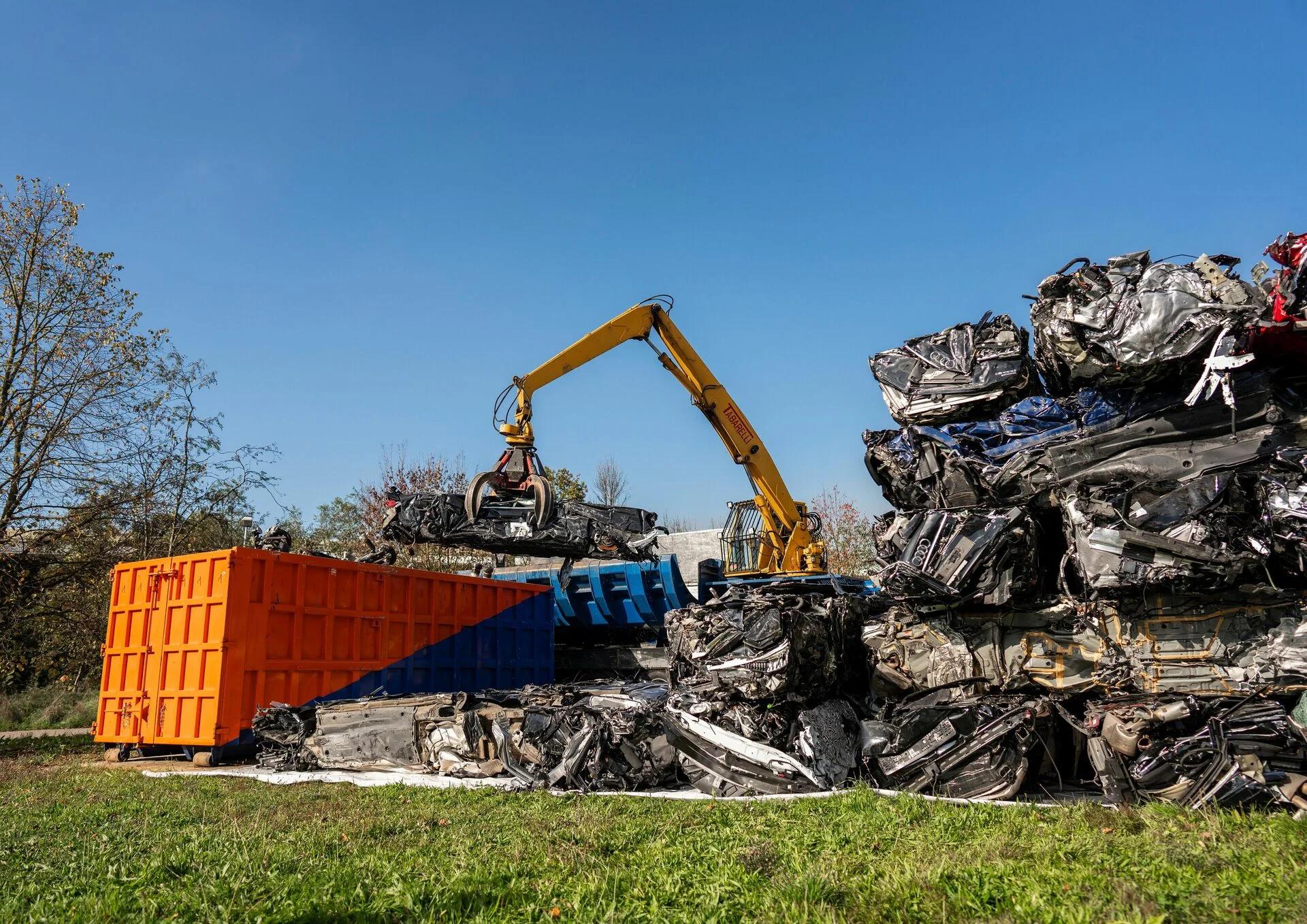
Audi is building the subsidiary on work already completed with suppliers, researchers and recycling companies. MaterialLoop involved 15 partners and initially examined 100 end-of-life vehicles. The programme separated materials including steel, aluminium, glass and plastic, then explored whether they could return to new-vehicle production.
Audi's 2025 reporting states that more than 60% of the aluminium and more than 85% of the steel from the trial vehicles could be reused in new-vehicle production. The company has also described closed-loop applications for a share of the windscreen material in the Q4 e-tron and the exterior roof steel in the Q6 e-tron. Volkswagen Group's industrial dismantling line at Zwickau adds practical experience.
Audi Circular Solutions is intended to turn those bounded projects into a repeatable operation with revenue from parts and access to secondary raw materials. For customers, the measurable impact will depend on catalogue breadth, prices, warranty terms and local availability. Early 2027 is confirmed; a launch in every European country, including Romania, is not.