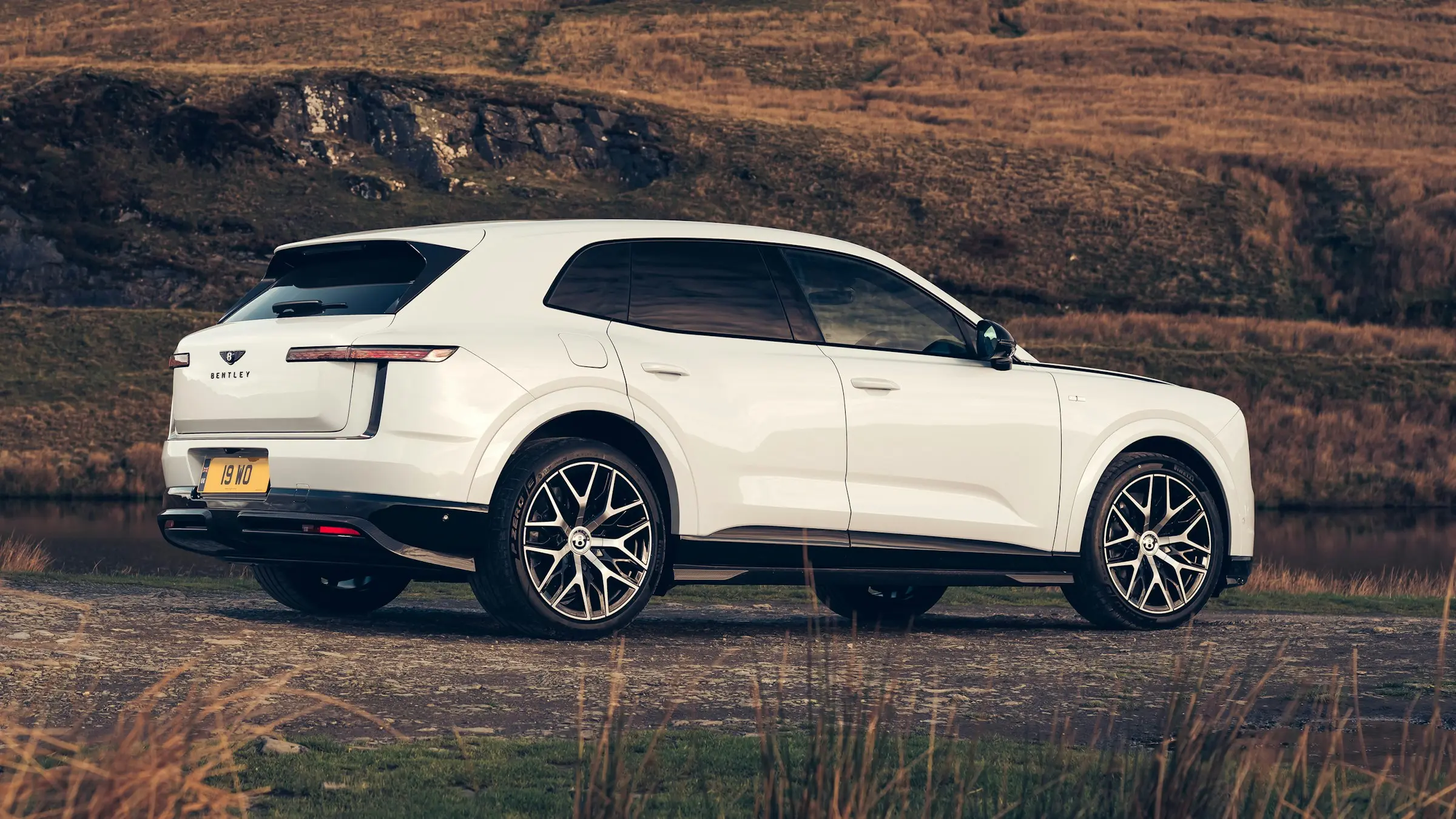
Bentley says every Torcal production slot planned for 2027 has been allocated before customer assembly of its first series-production EV begins. Chief executive Frank-Steffen Walliser told Automotive News that production is due to start in the first half of next year; customers joining the queue now are being assigned 2028 delivery positions.
The announcement lacks the number needed to judge its scale. Bentley has not disclosed 2027 output, the total order bank, regional allocations or the split between customer and dealer slots. “Sold out” therefore means the capacity Bentley chose to schedule is spoken for. It cannot be converted into a sales figure or compared fairly with a mass-market launch.
The Torcal S leads early demand
Walliser says the S is currently the most popular Torcal version. The performance model uses two motors and all-wheel drive, producing 653 kW (888 PS) and 1,350 Nm with Launch Control. Bentley quotes 0–100 km/h in 2.9 seconds and a 260 km/h maximum speed.
The regular Torcal produces 604 kW (821 PS) and 1,155 Nm. Its official 0–100 km/h time is 3.4 seconds and top speed is 250 km/h. These figures come from Bentley and are not Carboratory test results.
Both versions use a 113.2 kWh battery. Bentley claims up to 600 km of range and a 10–80 per cent DC charging time of 16 minutes under suitable conditions. Its model page states that EU27 consumption, emissions and range figures remain pending type approval. The 600 km value is not a promise for winter, motorway use or every wheel and equipment combination.
New customers are spending heavily on options
The CEO describes Torcal buyers as younger and says the model is attracting people who have not previously owned a Bentley. No age distribution or conquest-customer percentage has been released, so this should be treated as management’s early observation rather than a published demographic study.
Some commissioned cars exceed £300,000, according to the interview. That is roughly €342,000 at an indicative exchange rate, not a euro-zone list price. VAT, market specification, exchange rates and bespoke Mulliner work mean a direct currency conversion cannot tell a buyer what the car will cost locally.
The options story matters because personalisation is central to Bentley’s economics. Torcal can be specified with Merino wool developed with Fox Brothers, Ombre Walnut veneer, a Naim audio system, switchable panoramic glass and extensive colour and trim choices. The First Edition adds a defined launch specification, while Mulliner can take commissions further.
A five-metre EV with a 2.8-tonne kerb weight
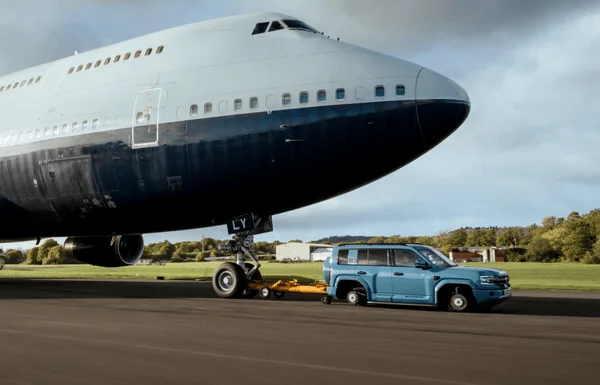
Torcal is 5,008 mm long, 2,198 mm wide including mirrors and 1,677 mm tall, with a 3,023 mm wheelbase. Bentley lists an unladen weight of 2,795 kg, maximum payload of 535 kg and braked towing capacity of 2,700 kg. A 90-litre front luggage compartment adds storage ahead of the cabin.
All-wheel steering gives the SUV an 11-metre turning circle. At low speed, the rear wheels turn against the fronts to reduce the space needed for manoeuvres. At higher speed they steer in the same direction to support stability during lane changes.
Bentley treats Torcal as its fourth model line beside Continental GT, Flying Spur and Bentayga. It is not described as a battery-powered Bentayga replacement. Walliser says the company sees room for both SUVs, reflecting Bentley’s decision to continue combustion and plug-in hybrid products alongside its first EV.
The waiting list arrives as Bentley's numbers fall
Audi Group’s nine-month report gives the launch important context. Bentley delivered 5,970 cars from January through September 2026, down from 7,236 in the same period of 2025. That is a 17.5 per cent decline. Revenue fell from €1.887 billion to €1.424 billion, operating profit from €115 million to €49 million, and operating margin from 6.1 to 3.5 per cent.
An allocated first production year is encouraging for mix and factory utilisation, particularly when buyers are choosing the higher-output S and expensive personalisation. Bentley has not published a Torcal-specific margin or financial forecast, however. The order bank does not establish how quickly development and Crewe investment will be recovered.
What a buyer can infer — and what remains unknown
A customer enquiring now should expect a 2028 position rather than a 2027 car, subject to the retailer’s regional allocation and contract. The statement does not provide a universal delivery month, European country launch schedule or Romanian price. Configuration and market allocation could affect timing.
The missing production count remains the central limitation. A small initial run can sell out rapidly, while a large allocation would imply a different level of demand. Until Bentley releases that figure, the defensible conclusion is narrow: planned 2027 capacity is allocated, the S leads the early mix, and the next available orders are moving into 2028.