The electric cars most often recommended by international testers now cover everything from a four-seat Dacia to premium estates and 800-volt SUVs. A Romanian buyer cannot transfer those rankings directly: price, equipment, delivery time and service support differ by country. This selection was updated on 15 November 2026 using the Romanian pages of manufacturers and importers wherever available.
This shortlist keeps the strongest ideas from the ranking but checks the technical claims against manufacturer information. Official WLTP figures are quoted as official figures, not as distances guaranteed in daily use. A long-range battery can be valuable on the A1 or A2, but it also adds weight and cost. A compact car may be easier to park in Bucharest, while an SUV or passenger van can be more useful for a family. The right choice depends on the route more than on a position in a table.
Škoda Elroq: the family-sized compromise
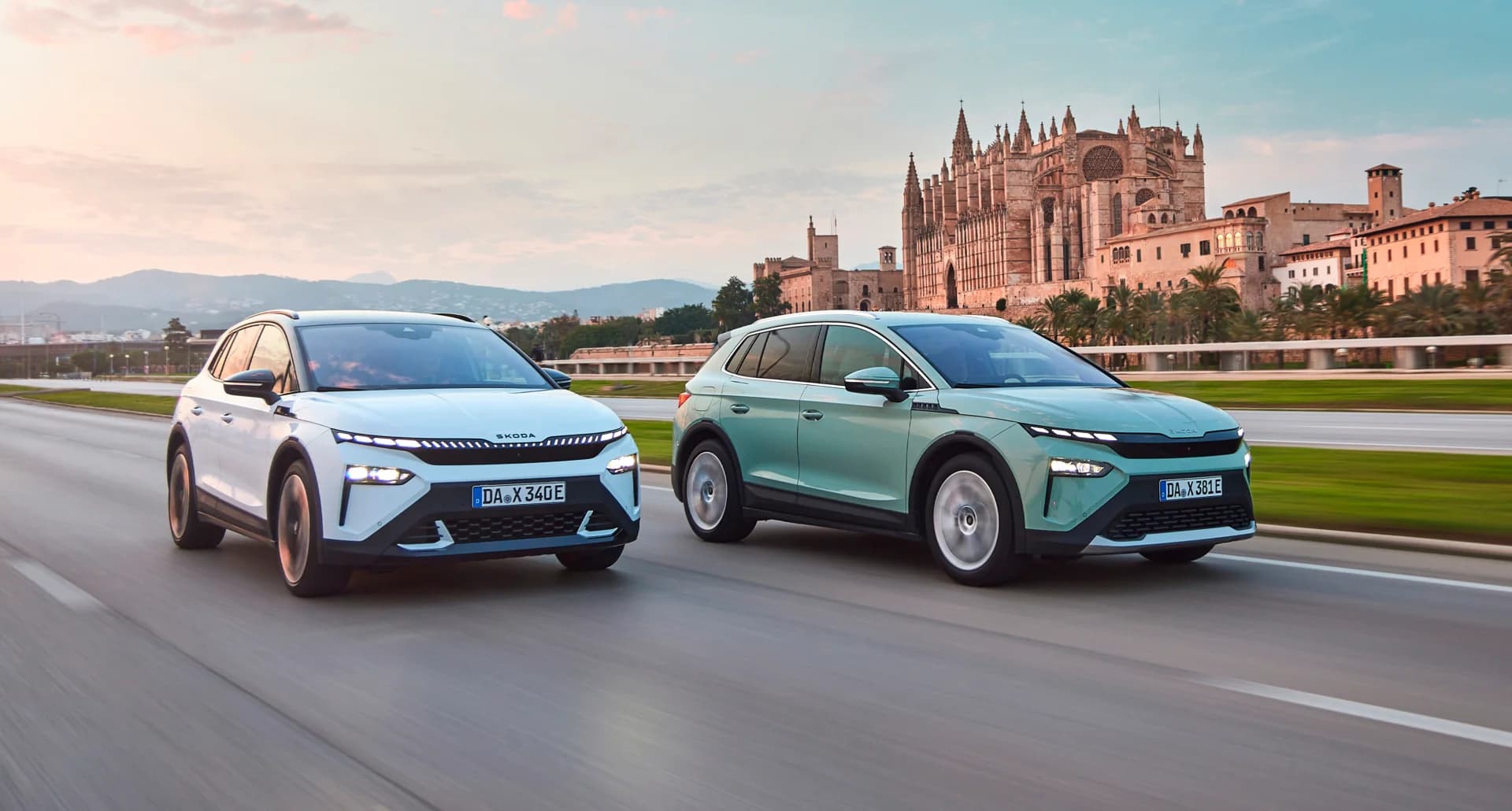
The Škoda Elroq is one of the easiest recommendations to carry over into Romania. It is a compact electric SUV with a 470-litre boot, and Škoda lists several battery and powertrain options. Depending on the version, the published WLTP range runs from roughly 375 km to 574 km. The key versions use net battery capacities of about 52, 59 and 77 kWh, with differences in output and drivetrain.
The Elroq 50 is listed with a 52 kWh net battery and around 375 km of official range. The Elroq 60 reaches about 403 km, while the Elroq 85 is listed at roughly 574 km in the relevant specification. DC charging from 10 to 80 per cent takes about 24 to 28 minutes depending on the version and charger. AC charging is available at up to 11 kW.
For a Romanian family, the useful part is the combination of a manageable footprint and a real boot. The rear seat is easier to use than in many coupé-shaped EVs, and the driving position suits city traffic as well as longer roads. Buyers still need to check the exact equipment list. Heat-pump availability, wheel size, battery version and software options can change both the price and the energy use.
BMW iX3: a long-distance premium option
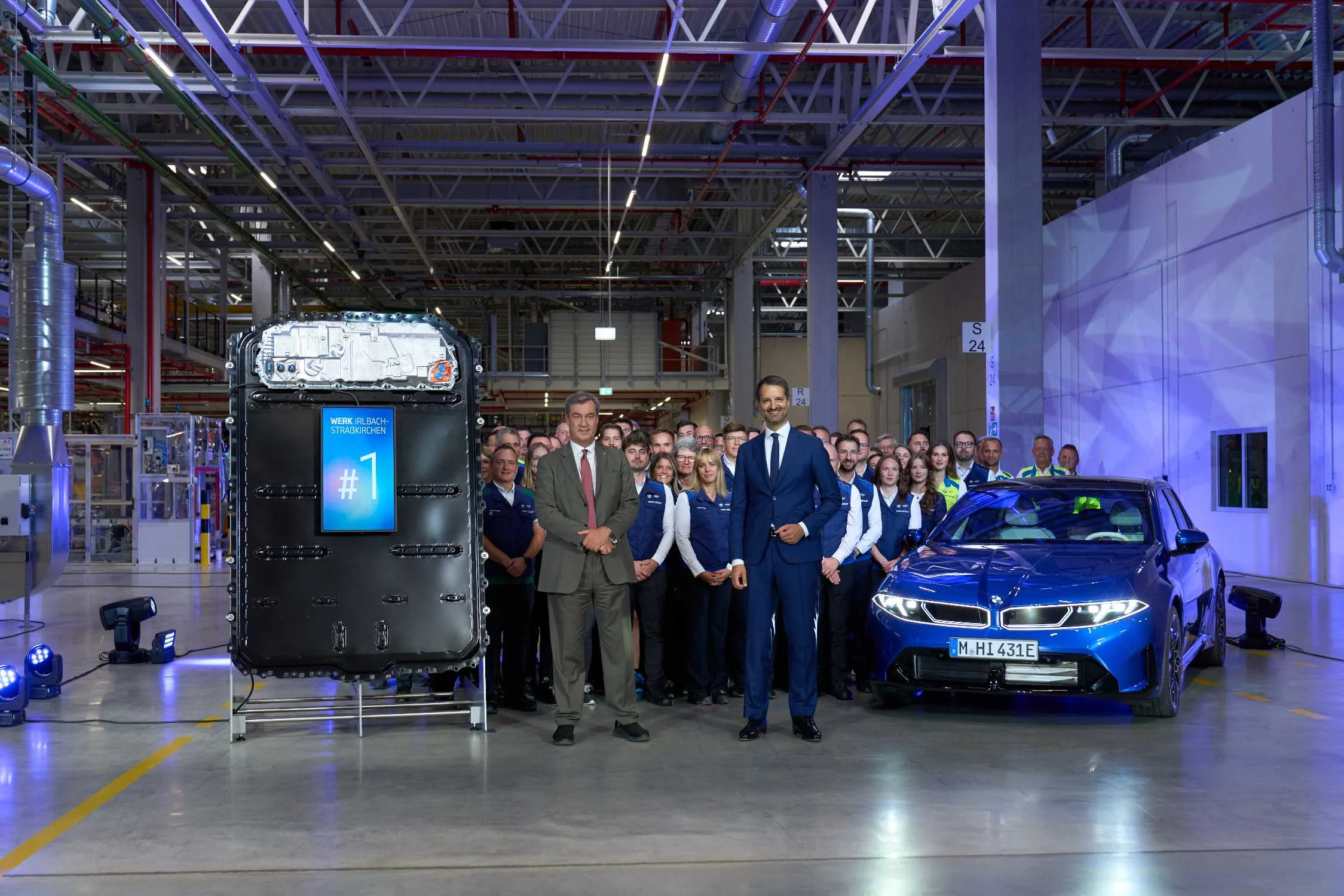
The new BMW iX3 is the first series model built around BMW’s Neue Klasse electric architecture. BMW lists up to 805 km of WLTP range for the iX3 50 xDrive and a peak charging capability of 400 kW. The entry iX3 40 uses a 235 kW electric motor and rear-wheel drive, with a published range of up to 637 km in some European market data.
BMW marks some of these values as provisional. Actual range depends on temperature, driving style, load, tyres, battery condition and auxiliary consumption. A car capable of accepting 400 kW also needs a compatible charger; the rating does not mean that every public station will deliver it. That distinction matters in Romania, where the quality and power of long-distance charging sites can vary by route.
The iX3 is nevertheless relevant for drivers who regularly cover inter-city distances and want a premium SUV. BMW lists a 520-litre boot for the Neue Klasse model and an 800-volt electrical architecture. A Romanian buyer should use the local price and equipment sheet rather than converting the UK price in the original ranking. Taxes, option packs and delivery timing can change the result.
Nissan Leaf: the everyday EV candidate
Auto Express places the new Nissan Leaf first, following its own road-testing methodology. Nissan says the third-generation Leaf was developed using data from roughly 700,000 previous Leafs and an estimated 28 billion kilometres driven by owners. That is evidence of accumulated customer experience, not an independent test of the new model.
Published information for the new Leaf includes 52 and 75 kWh battery options. The UK material cites approximate maximum ranges of 280 and 375 miles, which correspond to about 451 and 604 km when converted, but buyers should rely on the European WLTP value for the exact car sold in their market. The larger battery is listed with charging at up to 150 kW in the UK review material, with a 20–80 per cent stop taking less than 30 minutes in suitable conditions.
The Leaf is aimed at drivers who value a calm ride, straightforward operation and low local noise. Its crossover shape should be easier to enter than an older low hatchback, although the sloping rear profile is not as useful for bulky luggage as a boxier SUV. Families should compare the boot and rear-seat dimensions with the Elroq and Kia EV3 before ordering.
Kia EV3: compact dimensions, useful battery choices
The Kia EV3 is a strong alternative for buyers who want a compact SUV with a genuinely useful battery. Kia lists 58.3 and 81.4 kWh batteries, with a 204 hp front-wheel-drive configuration for the standard versions. Depending on battery and wheel size, the official combined WLTP range reaches about 436 km with the smaller battery and up to 605 km with the long-range version.
Kia lists a 460-litre boot and up to 1,251 litres with the rear seats folded. DC charging from 10 to 80 per cent takes about 29 minutes for the 58.3 kWh battery and about 31 minutes for the 81.4 kWh battery at the relevant charging power. Temperature, state of charge and charger output affect the actual stop.
The EV3 makes sense for a family that wants a compact exterior without giving up every practical feature. The long-range version can reduce the number of charging stops, but it also costs more and weighs more. For urban use with home charging, the smaller battery may be a more rational purchase.
Renault 4 E-Tech: a regional and urban choice
The Renault 4 E-Tech electric adds a smaller, more distinctive option to the shortlist. Renault gives it a length of 4.14 metres and uses the AmpR Small platform, developed for compact electric cars. In 2026, Renault announced upgraded official ranges of up to 310 km for the 40 kWh urban battery and up to 415 km for the 52 kWh comfort battery, depending on version.
That makes the Renault 4 easier to place in city and regional use than on repeated long motorway trips. Range, charging hardware and equipment depend on trim. Renault has also announced versions with a retractable fabric roof, but such equipment can affect the purchase price and may not suit every climate or owner. A customer should compare the exact Romanian offer rather than assume that every European version is available locally.
Dacia Spring and Renault 5: two very different small EVs
Dacia's current Romanian page quotes up to 250 km of combined WLTP range, four seats and a 337-litre boot for the latest Spring. Its limited range and charging performance keep it focused on urban use, but the low mass, small footprint and local dealer network make it relevant for a second car or a predictable commute. The final price must be checked with a dealer because campaign conditions and charging options can change.
Renault 5 is the more capable all-rounder. Renault Romania lists the 120 hp version from €27,500 with 315 km WLTP, while the 150 hp, 52 kWh version reaches up to 430 km and starts higher in the range. It is still a compact 3.92-metre car, but 100 kW DC charging on the larger battery makes occasional intercity trips more realistic than in the Spring.
Tesla Model 3 and Model Y: efficiency versus family space
Tesla's Romanian pages currently list 534 km WLTP for the basic Model 3 and 660 km for the Premium all-wheel-drive version shown in the specification section. The Model Y starts at €40,990 in rear-wheel-drive form and lists 525 km WLTP with the standard 18-inch wheels. Tesla prices and delivery estimates can move quickly, so the configurator needs to be checked on the day of order.
The Model 3 is the better aerodynamic and long-distance choice for buyers who do not need an SUV-shaped boot. Model Y offers a taller cabin, easier rear access and up to seven seats on one Premium configuration. Neither should be bought on the name of an assistance package alone: Tesla explicitly states that Full Self-Driving (Supervised) is not currently available in Romania.
Mercedes-Benz CLA: long range at a premium price
The electric CLA brings unusually high official figures to the compact premium class. Mercedes-Benz Romania lists the CLA 200 from €47,870 with 541 km WLTP. The CLA 250+ reaches up to 791 km, uses an 85 kWh usable battery and accepts up to 320 kW DC; Mercedes quotes 22 minutes from 10 to 80 per cent under suitable conditions. Those figures belong to a particular version and do not make every CLA a 791 km car.
Choosing by use rather than by ranking
For a family seeking a balanced package, the Elroq and EV3 offer the clearest combination of space, range and daily usability. The BMW iX3 is the more ambitious long-distance premium option, provided the route includes sufficiently powerful chargers. The Leaf prioritises comfort and approachable operation, while the Renault 4 makes more sense for urban and regional driving.
Before signing an order, check the final Romanian price including VAT, battery warranty, delivery date, home-charging requirements, AC charging power, connector type, towing rating and the WLTP range of the exact wheel and battery configuration. A foreign ranking can identify cars worth testing. It cannot replace a local offer or a calculation based on the routes you actually drive.
Sources
- Škoda Elroq technical information
- Škoda Elroq batteries and charging
- BMW – the new BMW iX3
- Nissan – the all-new Leaf
- Kia EV3 specifications
- Renault 4 E-Tech electric updates
- Dacia Spring – Romanian model page
- Renault 5 E-Tech electric – Romanian prices and specifications
- Tesla Model 3 – Romanian specifications
- Tesla Model Y – Romanian configurator
- Mercedes-Benz CLA electric – Romanian specifications