BMW says more than 40 new or updated models will reach global markets by the end of 2027, but it has not issued an official list of ten new cars for next year. A Motor1 roundup published on 13 November combines confirmed products—including the i3 M60 xDrive, the new X5 family and BMW M’s first Neue Klasse EV—with forecasts for an i1, iX7 and a major 5 Series facelift.
BMW's official number includes facelifts and derivatives
The “more than 40” commitment covers new generations, additional powertrain variants and substantial model updates through the end of 2027. It is not a promise of 40 entirely new nameplates or 40 electric vehicles. BMW intends to distribute Neue Klasse design, software and electronics across cars with different powertrains.
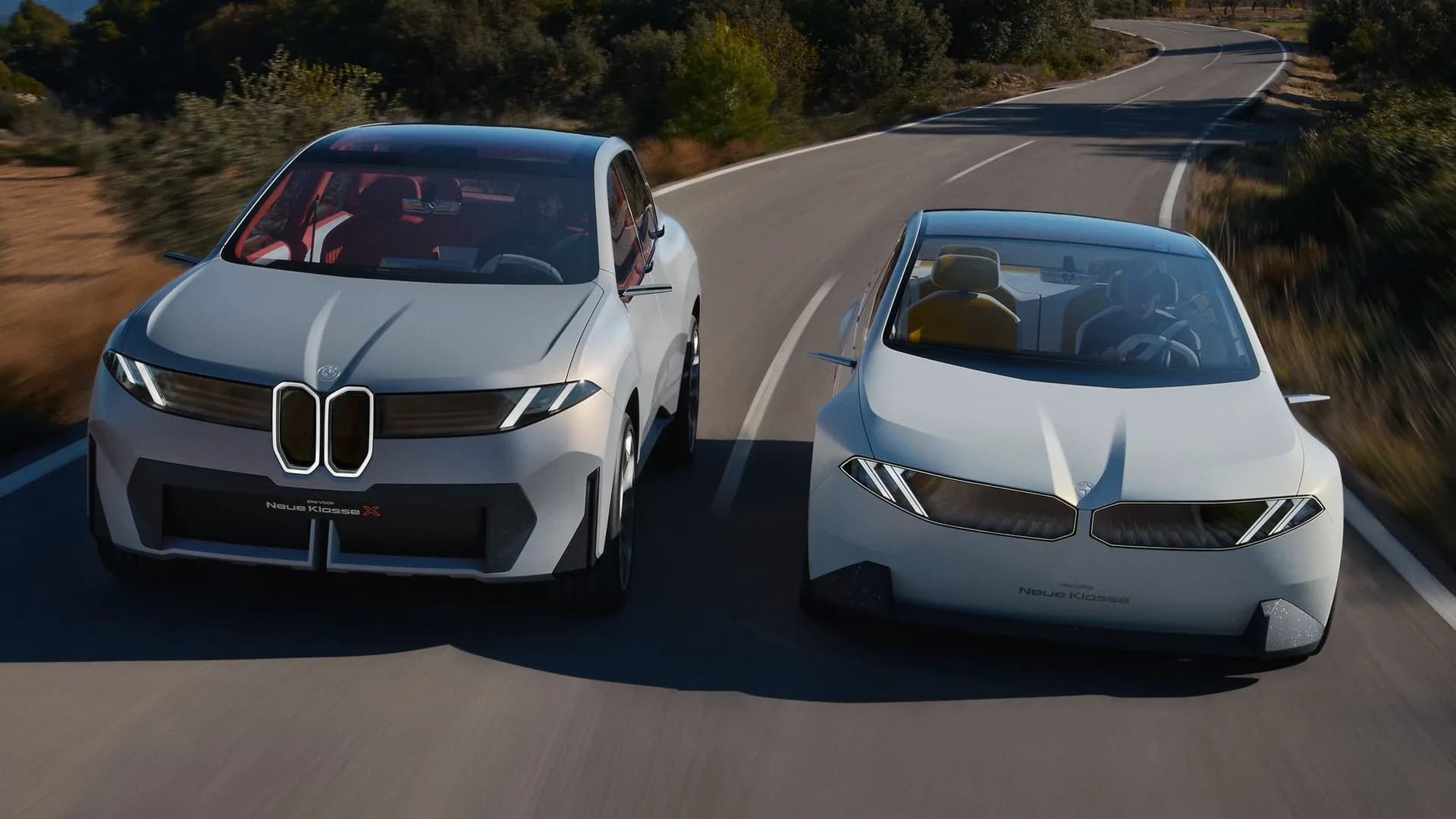
Vehicles built on the dedicated electric architecture can use sixth-generation eDrive hardware, an 800-volt electrical system, cylindrical cells and the Heart of Joy dynamics computer. Cars on other platforms may receive Panoramic iDrive, Operating System X, revised control units or the new design language without adopting a Neue Klasse battery and chassis.
That distinction matters when reading a forward-looking model list. A photographed prototype is evidence of development activity, but it does not establish its production name, battery capacity, market allocation or showroom date.
The i3 M60 is a named 2027 launch
BMW revealed the eighth-generation 3 Series in September 2026, pairing petrol mild-hybrid derivatives with the first electric 3 Series, called i3. The manufacturer explicitly says the i3 M60 xDrive M Performance version will join the electric range in 2027.
BMW has shown M-specific lighting, optional yellow light elements and 21-inch aerodynamic wheels. It has not published the i3 M60’s final output, battery capacity, range or acceleration. Those unknown figures should not be filled with estimates derived from the i3 50 xDrive, which officially produces 345 kW/469 hp and has a 108.7 kWh battery with up to 912 km WLTP range.
An i3 Touring is also more than a media invention. BMW chairman Oliver Zipse has identified it as one of the additional Neue Klasse models planned for Munich. BMW has not, however, released its full specifications, confirmed individual markets or supplied a precise retail schedule. Calling it a 2027 European launch remains a reasonable expectation rather than a complete product announcement.
BMW M has confirmed the hardware, not every model name
BMW M will introduce its first fully electric high-performance Neue Klasse vehicles from 2027. The official technical outline specifies four electric motors—one for each wheel—BMW M Dynamic Performance Control, an M-specific high-voltage battery and the Heart of Joy computer. The later M Neue Klasse concept used an 800-volt system and a battery with more than 100 kWh.
Motor1 identifies the expected products as an electric M3, X3 M and X4 M. BMW’s core announcement does not provide that complete production sequence or the widely reported output figures. The four-motor architecture and the 2027 start are confirmed; exact badges, launch order, prices and homologated performance remain pending.
This is also distinct from the i3 M60. That car is an M Performance derivative with two motors, while the future full BMW M family uses the dedicated four-motor M eDrive system.
X5 and iX5 already have an official rollout
BMW presented the fifth-generation X5 in June 2026. The first combustion variants launch in late November 2026, with the plug-in hybrid and first battery-electric iX5 following in early 2027. Production continues at BMW Group Plant Spartanburg in South Carolina.
The iX5 60 xDrive brings Gen6 eDrive technology, an 800-volt system and cylindrical battery cells. BMW’s US material gives a preliminary estimate equivalent to roughly 700 km under an EPA-based procedure. That is not a European WLTP result and cannot be compared directly with the WLTP ranges quoted for the i3.
The X5 family will eventually cover combustion, mild-hybrid, plug-in hybrid, battery-electric and hydrogen fuel-cell drive. The iX5 Hydrogen comes later, from 2028, so it should not be counted as a 2027 retail launch simply because it belongs to the new generation.
BMW ALPINA has a genuine 2027 commitment
BMW Group took full control of the ALPINA brand at the start of 2026. The Vision BMW ALPINA concept shown in May uses a V8 and sets out a position between BMW’s flagship models and Rolls-Royce. BMW says customers will experience the first production BMW ALPINA in 2027 and that it will be inspired by the 7 Series.
That confirms a model and a year at a strategic level. It does not yet confirm the production name, final engine output, an electric companion, pricing or country-by-country availability. A “BMW ALPINA 7 Series” description is useful shorthand, not final homologated nomenclature.
i1, iX7 and the 5 Series update remain unannounced
The reported i1 is expected to preview BMW’s future European compact EV, which the company has discussed for 2028. BMW has not confirmed the i1 badge, a 2027 world premiere or the reported 20, 30, 40 and M50 xDrive derivatives. Until it does, these details remain product forecasting.
The same boundary applies to a second-generation X7 and an electric iX7. Test vehicles or supplier activity can suggest that work is under way, but BMW has not issued a global launch release with powertrains, range figures or a 2027 sales timetable.
A major 5 Series and i5 update with Neue Klasse design and Panoramic iDrive would fit the wider 40-model programme. No official 2027 specification currently confirms the proposed dashboard, battery changes or technical partnerships. Similar caution is needed for projected X1/iX1 and X2/iX2 revisions.
What buyers should take from the list
The useful 2027 anchors are narrower than the headline count. The i3 M60, new X5 derivatives, first full-electric BMW M and first BMW ALPINA have direct manufacturer support. The i3 Touring exists in BMW’s production roadmap, but important commercial details are still missing.
Everything else needs a model-specific announcement. Launch timing can differ between Europe, the United States and China, and a world premiere does not guarantee customer deliveries in every market that year. Prices quoted by BMW USA are also not a basis for Romanian or wider European pricing.
BMW’s product offensive is real and unusually broad. The exact “ten models” list is an editorial forecast assembled from several levels of evidence, not a single BMW calendar. Buyers should wait for national configurators, WLTP homologation and local delivery dates before treating any unannounced car as an available 2027 choice.