BMW says strong customer demand could lead it to reconsider selected physical controls in Neue Klasse interiors. Climate functions and steering-wheel buttons were discussed as possible candidates, but the company has not approved a return, identified a model or set a launch date. The distinction matters: this is an openness to feedback, not a product announcement.
Claudia Maier, BMW's manager of digital technology for Neue Klasse models, addressed the subject during the international launch of the new 3 Series and i3. In an interview published by Carsales on 14 November 2026, she said BMW remains confident in its approach of presenting the right information at the right time, while also monitoring what customers request. If demand for a specific item is high, she said, BMW takes it seriously.
A conditional answer, not a confirmed redesign
The comments stop well short of promising a new row of switches. Carsales asked about the possible reintegration of controls in the screen-led cabins of the iX3 and i3. Maier's response made customer feedback the condition. There was no confirmation that climate temperature, seat heating or ventilation would gain permanent keys, nor that BMW would replace its illuminated haptic steering-wheel surfaces with conventional mechanical buttons.
Some direct controls remain. Indicator and wiper stalks, volume operation and demister shortcuts were among the physical elements identified in the discussion. That makes the new cabin minimalist rather than literally button-free. It also explains why two apparently conflicting statements can both be true: BMW has removed many traditional switches, yet it has retained direct inputs where its interface team considers them appropriate.
For buyers, the unresolved question concerns frequent comfort adjustments. A driver can operate essential road functions directly, but may still prefer a dedicated temperature control to a touch target or voice command. BMW has now acknowledged that such preferences can influence later decisions. It has not said how much feedback would qualify as “high demand” or how it measures that demand.
What Panoramic iDrive actually contains
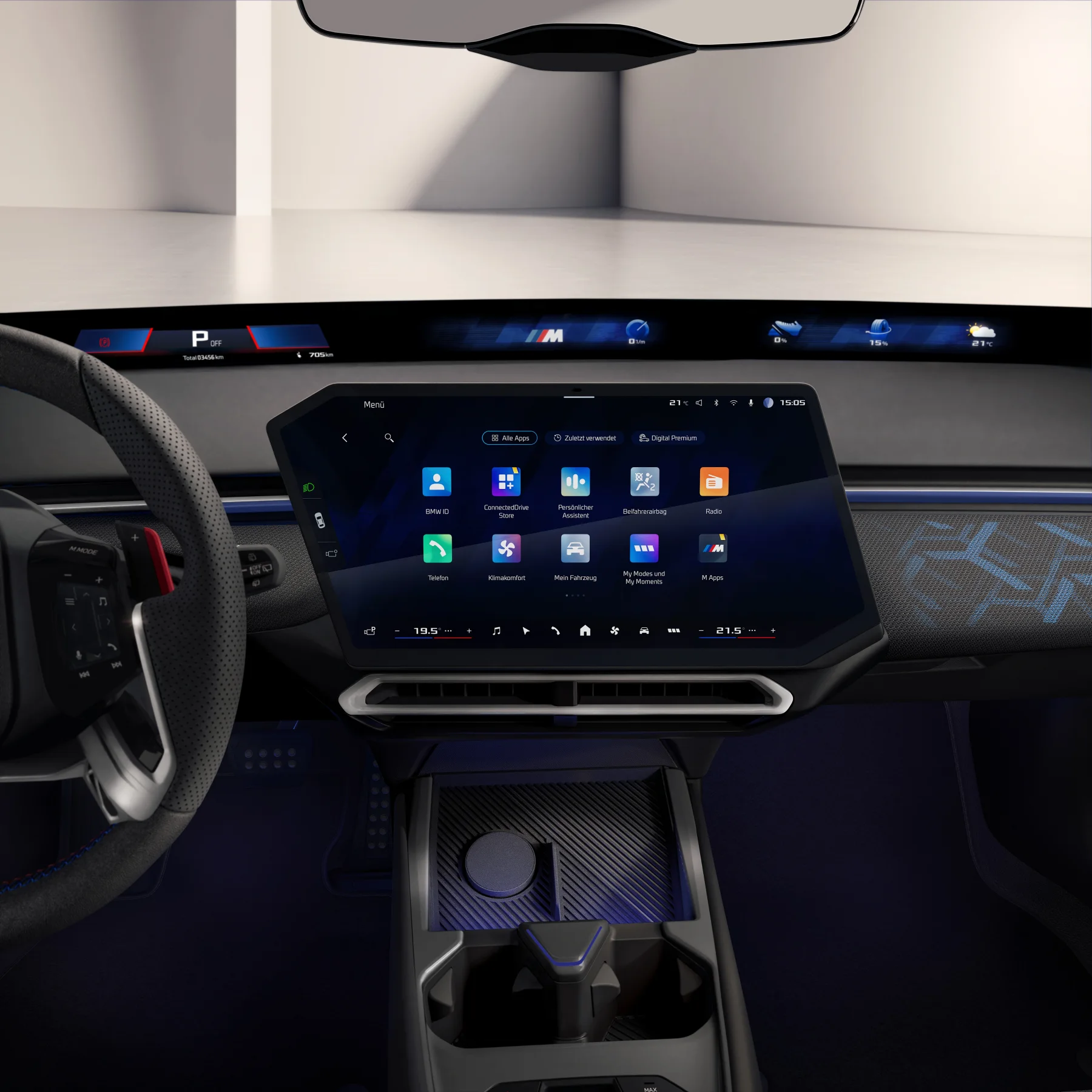
BMW Panoramic iDrive is built around four display and control elements. Panoramic Vision projects information onto a black surface along the lower edge of the windscreen, from pillar to pillar. The most important driving data sit in the driver's sightline. An optional 3D head-up display adds navigation and automated-driving information, while a centrally mounted touchscreen handles menus and movable widgets.
The fourth element is the multifunction steering wheel. BMW describes it as the principal physical control point. Its “shy tech” buttons illuminate when their functions are available, have a relief-like surface and provide active haptic feedback. The manufacturer says drivers should be able to find them without looking away from the road. That is BMW's design claim; it is not an independent Carboratory usability finding.
Operating System X connects those elements and is based on the Android Open Source Project. It supports personal profiles, software updates and the distribution of content between displays. The architecture first reached production in the iX3 and is being extended across Neue Klasse vehicles, including the i3. Restoring a handful of shortcuts would not require BMW to abandon this display strategy. Physical keys and the panoramic interface can coexist.
Euro NCAP does not require a button for everything
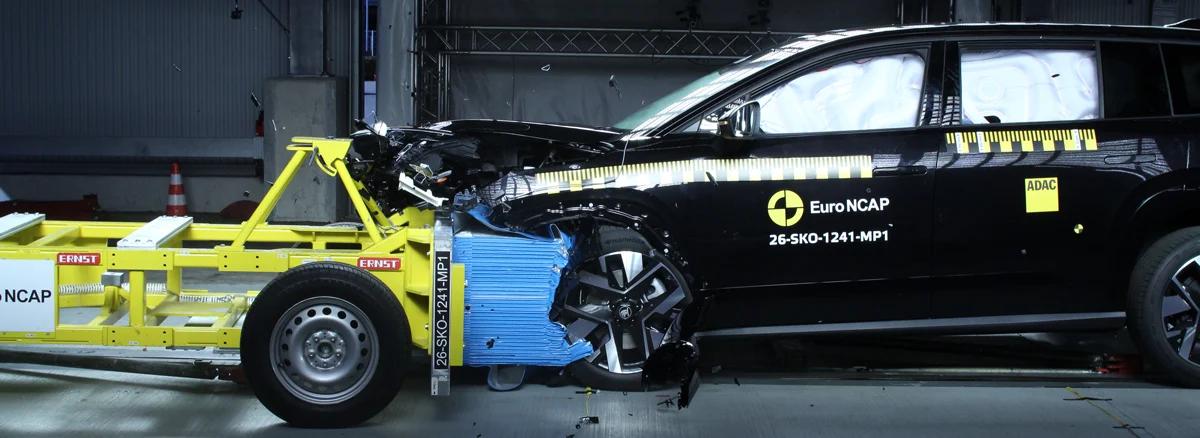
The debate often becomes entangled with Euro NCAP's 2026 assessment rules. The safety organisation now evaluates the placement, clarity and ease of use of essential controls more closely. Its Safe Driving methodology rewards direct physical inputs for indicators, windscreen wipers and washers, hazard lights, the horn and the eCall emergency function.
That list does not amount to a ban on touchscreen climate controls. Euro NCAP awards safety-rating points; it does not approve cars for legal sale. A manufacturer can also lose points in one area and still achieve a five-star overall rating through strong performance elsewhere. The rules encourage well-positioned tactile controls for basic driving tasks, rather than prescribing a mechanical switch for every cabin function.
BMW's current approach has already produced a strong result. Euro NCAP reported a 100% driving-controls score for the iX3 under its 2026 protocol. The result indicates that the car's direct inputs satisfy the organisation's essential-control criteria, even though comfort and infotainment functions remain heavily digital. BMW therefore faces a customer-experience question here, not evidence that the iX3 has failed this safety category.
What buyers should test for themselves
The useful test is not the number of switches visible in a press photograph. Prospective owners should adjust temperature, demisting, audio, driver assistance and navigation while stationary first, then repeat appropriate tasks during a supervised test drive. The relevant measures are how many steps are required, whether the touch target stays in a fixed position and how long the driver's eyes leave the road.
Voice control also needs a real check. Recognition can depend on language, accent, mobile connectivity and software version. A command that works during an English-language demonstration may not deliver the same experience for every driver or market. Likewise, illuminated steering-wheel functions can differ by equipment and operating context.
The next meaningful evidence will be an official specification or a production interior showing changed controls. Until then, BMW's position is narrow but noteworthy: its minimalist interface is not immutable, and sustained customer requests can trigger a review. Claims that physical climate buttons are definitely coming back go beyond what Maier said.
Photo: BMW Group PressClub, official BMW i3 M60 xDrive interior image, ID P90657928, supplied for editorial use. Displayed content may vary by specification, market and software version.