BYD registered 796 new passenger cars in Romania during October 2026, taking fourth place in the monthly brand table compiled by the Association of Automobile Manufacturers and Importers, or APIA, from government registration data. It finished only 14 cars behind Skoda and 262 ahead of Renault.
The Chinese brand reached 4,969 registrations over the first ten months of the year. Romania’s carmakers’ association ACAROM places it sixth in the cumulative ranking, below Renault and above Mercedes-Benz. These figures represent cars entered into the national registration system, not orders, production or manufacturer-reported global deliveries.
Fourth for the month, sixth for the year to date
Dacia led October with 2,814 cars, followed by Toyota on 1,447 and Skoda on 810. BYD’s 796 put it in fourth, while Renault recorded 534. Against APIA’s adjusted passenger-car market of 11,927 units, BYD’s monthly share was approximately 6.7 per cent; the official pie chart rounds it to seven per cent.
BYD also placed fourth in September, when APIA counted 708 cars. October added 88 units, a month-on-month rise of about 12.4 per cent. The published annual comparison is much larger: October volume was 423.7 per cent above the same month of 2025. That percentage comes from a low prior-year base and should not obscure the absolute gap to Dacia, whose monthly volume was more than three times as high.
The cumulative order is different. ACAROM lists Dacia at 22,633 cars, Toyota at 12,158, Skoda at 8,726, Volkswagen at 7,704, Renault at 5,201 and BYD at 4,969. BYD was 232 cars behind Renault. A strong monthly position therefore does not make it Romania’s fourth-largest brand across the whole year.
Plug-in hybrids provide 64.6 per cent of BYD’s volume
APIA’s powertrain tables explain what sits behind the brand total. BYD recorded 3,211 plug-in hybrids and 1,758 battery-electric cars between January and October. The two figures add exactly to 4,969. PHEVs therefore represented 64.6 per cent of BYD registrations, with BEVs accounting for the remaining 35.4 per cent.
That split matters because BYD is often described simply as an electric-car manufacturer. Its Romanian growth in 2026 relied more heavily on cars that can be charged externally but retain a combustion engine. Public registration figures do not show how frequently those PHEVs are plugged in, how many went to private buyers rather than fleets, or which discounts were applied.
BYD leads APIA’s plug-in hybrid brand table by a wide margin. Chery is second with 1,587 cars, followed by Toyota with 1,274. In the battery-electric category, Tesla remains first on 1,972, BYD is second on 1,758 and Ford third on 1,148. BYD can accurately claim leadership in PHEVs, but the official figures do not put it first in BEVs.
Seal U DM-i and Sealion 5 account for most BYD PHEVs
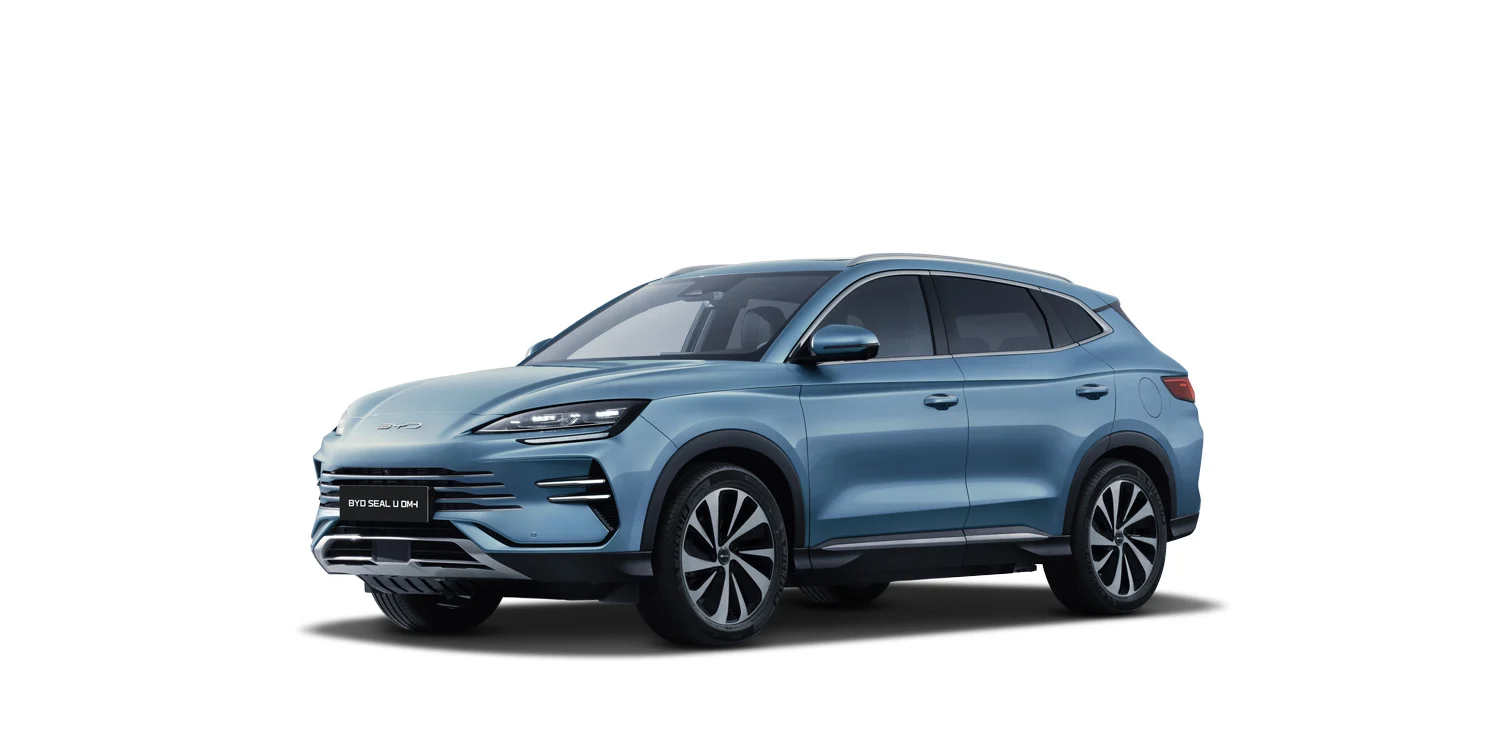
The BYD Seal U DM-i tops Romania’s cumulative plug-in hybrid model ranking with 1,500 registrations. Toyota’s RAV4 follows on 1,210, while the BYD Sealion 5 DM-i is third with 788. Together, the two BYD SUVs account for 2,288 cars, more than 71 per cent of the brand’s PHEV result.
In the electric table, the BYD Dolphin Surf has 747 registrations. It follows the Tesla Model Y on 1,012 and Model 3 on 939. All three numbers cover January through October. APIA’s public report does not break the 796 October BYDs down by individual model, so the monthly result cannot be assigned to the Seal U or any other single car.
The model mix also explains why BYD’s position in Romania differs from its global electric-vehicle profile. Locally, two plug-in hybrid SUVs have generated more registrations than its entire battery-electric range during the period covered by the report.
Plug-in segments rise while the overall market contracts
APIA’s adjusted series counted 11,927 new passenger cars in October, 6.2 per cent fewer than a year earlier. January-to-October volume was 108,188, down 10.1 per cent. Within that shrinking total, BEVs rose 45.8 per cent to 9,363 cars and PHEVs increased 82 per cent to 13,286.
Those growth rates apply to the complete powertrain categories, not specifically to BYD. APIA gives the brand volumes but does not provide a directly comparable percentage change for BYD’s whole ten-month total. Several brand rows use a dash where the 2025 base is too small for the displayed comparison.
For October alone, BEVs held a 12.5 per cent share and PHEVs 17 per cent. APIA also reports that “electrified” cars reached 68 per cent, but its broad definition includes mild hybrids and full hybrids that cannot be charged from an external source. The 68 per cent figure should not be presented as the plug-in share.
Why APIA and ACAROM publish different market totals
The two Romanian industry organisations use the same underlying registration authority, DGPCI, but their market totals differ. ACAROM reports 12,116 new cars in October and 109,326 over ten months. APIA reports 11,927 and 108,188 respectively. BYD’s figures remain 796 and 4,969 in both series.
APIA explains that it processes the government data and reallocates some vehicles classified administratively as passenger cars into commercial-vehicle categories when their actual purpose is commercial. That creates a difference of 189 cars for October and 1,138 for the cumulative period. BYD’s ten-month share works out at roughly 4.5 to 4.6 per cent depending on the denominator.
The methodological distinction is not evidence that one organisation counted BYD differently. It means market shares and annual rates should be calculated within one consistent series. Mixing ACAROM’s total with APIA’s segment percentages can produce a superficially plausible but inconsistent comparison.
Registration data show that BYD has moved quickly into Romania’s upper brand ranking and that plug-in hybrids are responsible for most of its volume. They do not measure reliability, profitability, owner satisfaction or real-world electric use. Buyers still need to compare current prices, service coverage, warranty terms and whether they can charge a PHEV regularly.