Chinese authorities have launched a one-year national campaign to check vehicle quality and safety. The measure comes at a time when some manufacturers want to cut development of a new car to about 18 months, versus three to five years for traditional cycles at international constructors.
Development speed does not automatically mean a car is unsafe. Simulations, artificial intelligence and platform reuse can remove months or years from a project. Risk appears when shorter deadlines reduce physical testing of components, validation in different climates or durability checks. Those stages are exactly what Chinese authorities are targeting now.
A one-year campaign, with inspections and mandatory self-checks
China’s Ministry of Industry and Information Technology, together with three other institutions, has announced a special action on production compliance and vehicle quality. Manufacturers must check their procedures and send results to the authorities by the end of 2026.
The control is not limited to classic crash tests. The official list includes:
- reliability of the vehicle, main systems and components;
- manufacturing processes and consistency of series-produced cars;
- designed service life and time allocated to development;
- corrosion, structural strength and possible suspension fractures;
- validation of new materials and construction solutions;
- testing of assistance systems and automated driving functions;
- data security, cybersecurity and retention of logs needed to investigate incidents;
- the risk that unusual design elements are used wrongly in emergencies.
Authorities can organise inspections, publish the names of companies where they find problems and impose corrections. The campaign also looks at how assistance functions are presented in advertising, to reduce the gap between real capabilities and commercial promises.
Why development in 18-24 months raises questions
According to industry information presented by Bloomberg, some Chinese companies have already cut the development cycle towards two years, and the use of artificial intelligence could reduce the term to about 18 months. By comparison, an entirely new model from a traditional constructor can require three to five years.
Part of the difference is explained by faster organisation and digital simulation. Virtual design can check geometry, assembly and structural behaviour before prototypes are built. Shared platforms, standardised components and software updates shorten the process further.
There are tests, however, that cannot be accelerated by calculation alone. A component must accumulate kilometres, thermal cycles and exposure to moisture, salt, dust or vibration. Problems such as corrosion, material fatigue, a joint fracture or battery degradation can appear after prolonged use, not in a simulation of a few hours.
Chinese regulators are also analysing a proposal to double the minimum road-test distance for electrified vehicles to 30,000 km. Such a requirement would limit compression of the stages in which safety depends on real exposure, not only digital validation.
Hidden handles and assistance systems come under stricter rules
China has already tightened standards in areas associated with serious accidents. From 1 January 2027, new cars must meet stricter requirements for door handles and offer a mechanical opening solution. Previously homologated models will have an extra period to adapt.
The change followed incidents in which electrical supply or door mechanisms hindered occupant evacuation. The problem does not concern Chinese brands exclusively: a recent recall campaign included almost three million Tesla cars manufactured or sold in China, together with vehicles from other manufacturers.
From January 2027 a mandatory standard for combined assistance systems will also enter force. It sets requirements for operation, interaction with the driver, data recording, user training and manufacturer responsibility. The Chinese ministry estimates that in 2026 about 70% of new passenger cars sold locally have a combined assistance system, and more than 30% offer NOA-type assisted navigation.
Rear-impact protection also becomes more severe
A new Chinese standard for rear collision applies to models seeking homologation after 1 July 2026. The mass of the device used in the test has risen from 1,100 to 1,400 kg, to better reflect the weight of modern cars.
The State Administration for Market Regulation states that the standard checks cabin integrity, protection of the high-voltage system, doors remaining closed during impact and the possibility of evacuation after an accident. Hazard lights must start automatically, reducing the risk of a second collision.
Already homologated models will come under the new requirements from 1 July 2028. The transition period allows modification of cars already in production.
The checks do not prove that all Chinese cars are unsafe
The fact that Beijing is intensifying checks shows a systemic risk caused by the price war and the pace of launches. It does not prove that every car produced in China has safety problems.
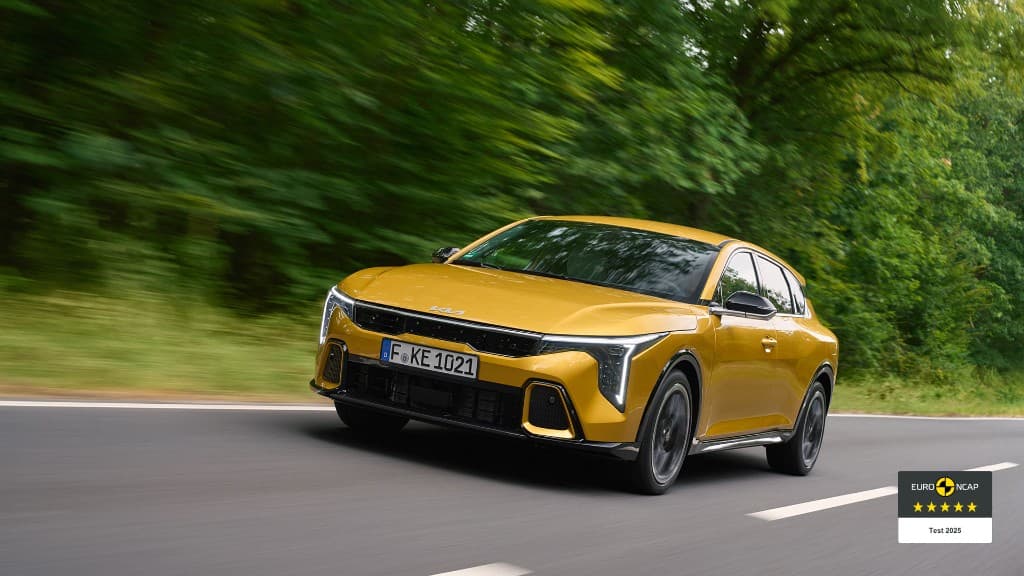
Several models from Chinese brands have obtained five stars at Euro NCAP. In 2026, for example, the Zeekr 7GT received five stars, under the revised European protocol. The result confirms that a car’s origin cannot replace evaluation of the specific model.
Likewise, a recall does not automatically mean the manufacturer is weaker than all competitors. Recalls are the mechanism by which an identified defect is remedied. More relevant are the speed of reaction, the number of vehicles affected, the severity of the defect and the availability of parts.
What it means for buyers in Romania
Chinese cars sold officially in the European Union must meet European homologation rules, regardless of the requirements that exist in China. Homologation does not, however, answer every question about durability, service and software operation after a few years.
Before buying a new or little-known model, it is worth checking:
- the Euro NCAP result for the exact model and year;
- the existence of recalls in the European Safety Gate database and at the importer;
- the distance to an authorised workshop and the estimated time for parts;
- the battery warranty and the conditions that allow a repair to be refused;
- the presence of mechanical door opening and how it is used;
- the real limits of assistance systems, without confusing Level 2 with Autopilot;
- the history of software updates and the period for which the manufacturer promises support.
The campaign in China can become an advantage for exports of solid brands: clearer rules and longer tests can reduce the gap between spectacularly presented prototypes and cars delivered to customers. For small companies, with thin margins and fragile service networks, the new validation costs can accelerate market consolidation.
The useful conclusion for Romania is not that a Chinese car must be avoided, but that price, range and equipment are not enough. Independently verified safety, the manufacturer’s ability to organise a recall and the availability of service should weigh equally in the purchase decision.