
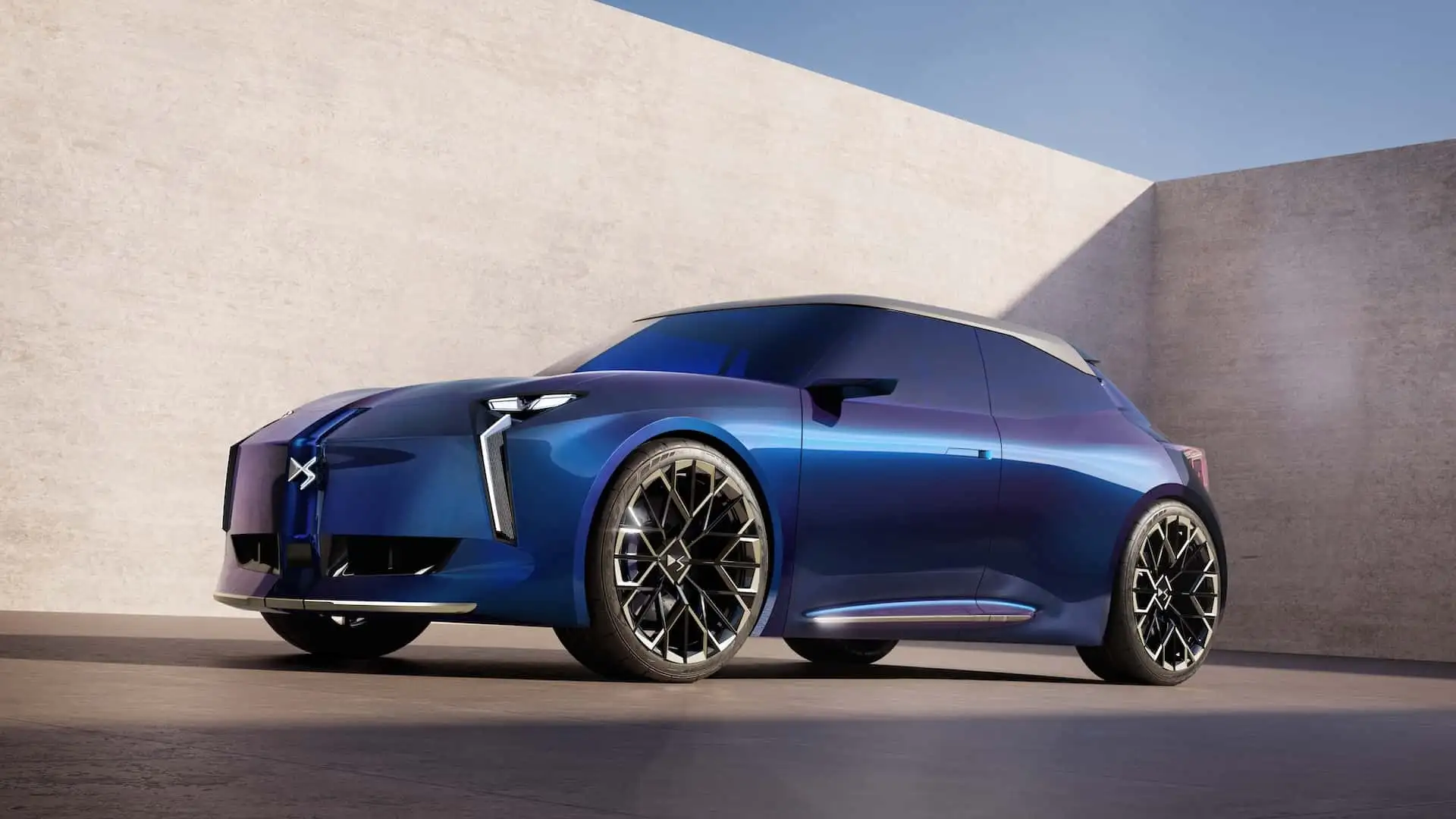
DS Automobiles has presented the F3VER concept at the 2026 Paris Motor Show as a design laboratory for the brand’s next chapter. The compact show car combines a sculpted body, digital lighting, extensive personalization and a focus on everyday versatility. DS is not describing it as a specific production preview. Instead, F3VER is intended to influence future creations and demonstrate how the brand wants to combine desirability, customization and freedom of use.
Compact dimensions, strong presence
The concept measures 4.19 metres long, 1.84 metres wide and 1.46 metres high. Those dimensions keep it within the compact-car conversation, while the broad stance, taut surfacing and dramatic lighting make it look more substantial. DS says the idea is to offer compactness and comfort together, with enough versatility for daily commuting, travel, leisure activities and weekend trips.
The front is organised around a vertical illuminated element carrying the DS emblem. A new Y-shaped vertical lighting signature gives the concept an identity intended to work both during the day and at night. The rear echoes the arrangement with a vertical digital feature, an illuminated DS emblem in the centre of the bumper and multidimensional lamps that create the appearance of an endless light tunnel.
Sixteen LED panels sit on an ultra-light magnesium structure inspired by the vaulted roof of Paris’s Grand Palais. The arrangement is meant to be more than a styling detail. DS presents the lighting as a potential way to personalize the car, interact with its surroundings and communicate information clearly. A production vehicle would still need to define the legal and technical limits of such animated signals.
Design Intelligence: uniqueness with fewer parts
DS calls its development approach “Design Intelligence”. The principle is to create a distinctive object with fewer components, lighter architectures, cleaner surfaces and more efficient aerodynamics. On F3VER, the headlamp and daytime-running light are combined in one front assembly, the bumpers are designed as single pieces and additional plastic elements around the wheel arches and lower body are reduced.
The approach could have practical consequences if it reaches production. Fewer visible assemblies may simplify manufacturing, reduce visual clutter and improve perceived quality. It does not automatically mean that a future DS model will use exactly the same construction. F3VER remains a full-scale design study, and DS has not published a production schedule or a bill of materials.
The brand also says that digital tools and artificial-intelligence systems developed within Stellantis help designers explore more proposals more quickly. DS describes AI as an aid that broadens the field of creative exploration rather than a replacement for designers. The concept therefore demonstrates a process as much as a final shape.
Personalization through paint and light
Cosmic Blue is a dichroic finish developed specifically for the concept. Its appearance moves between vivid blue and deep violet depending on the light. The paint is combined with an extended two-tone body treatment: the dividing line continues toward the rear, wraps around the tailgate, follows the sides and reaches the bumper.
The roof surround is also customizable. DS positions it as a new personalization surface, alongside colour, materials and graphics. Champagne-coloured details and a subtle Clous de Paris guilloché pattern add a reference to the brand’s traditional refinement. The aim is not simply to offer many colours, but to let the owner influence the visual identity of the car.
The rear light animation extends that idea into the digital world. Different patterns could express a vehicle’s personality or help communicate its status to people nearby. DS has not said how much of this technology could reach production, whether customers would pay for individual animations or how the system would be controlled. Those unanswered questions matter because lighting must remain clear and safe for other road users.
Everyday versatility without a published powertrain
DS describes F3VER as an electric concept with class-leading range, but it has not published battery capacity, motor output, charging speed, a numeric range figure or an approved consumption result. The claim should therefore be treated as positioning rather than a technical specification. There is no production version to compare with existing electric cars.
The compact footprint is intended to support urban agility, while the interior is designed for comfort on longer trips. DS presents the concept as suitable for commuting, travel, hobbies and weekends away. That versatility is important to the brief: F3VER is meant to show that a compact premium car can be expressive without becoming impractical.
The concept’s name is a deliberate play on “fever”. DS wants the car to create an immediate emotional reaction and to make the brand’s future feel more distinctive. It is a statement of intent rather than a promise that a showroom model will use the same body, lighting system or powertrain.
For now, F3VER gives DS a platform to test new proportions, personalization ideas and manufacturing principles. It also shows how the brand hopes to stand apart in a premium market increasingly dominated by large electric SUVs. Whether the concept’s Y-shaped lights, Cosmic Blue finish and compact proportions become recognizable production features remains open.
Image: Stellantis/DS Automobiles, published by Motor1.com. The source page does not state a commercial reuse licence; the image is used at the user’s request with the original attribution retained.
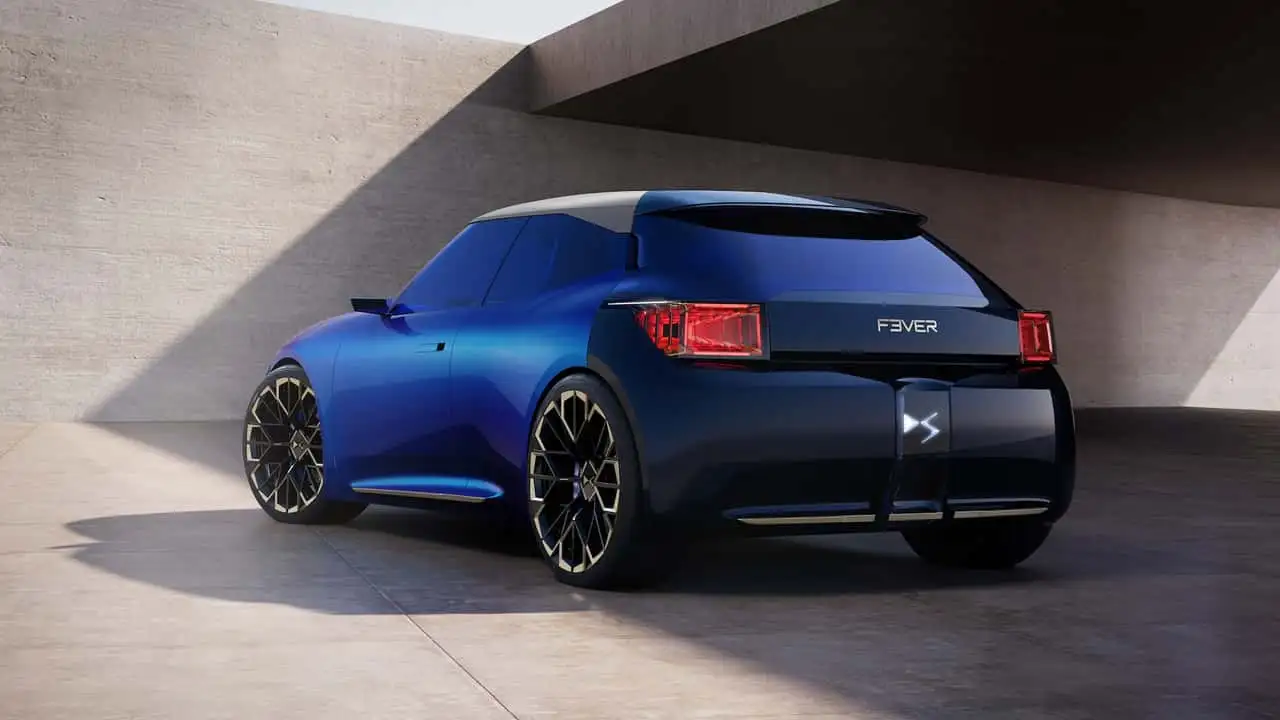
A second frame of the concept, published by Motor1.com and credited to the manufacturer.


