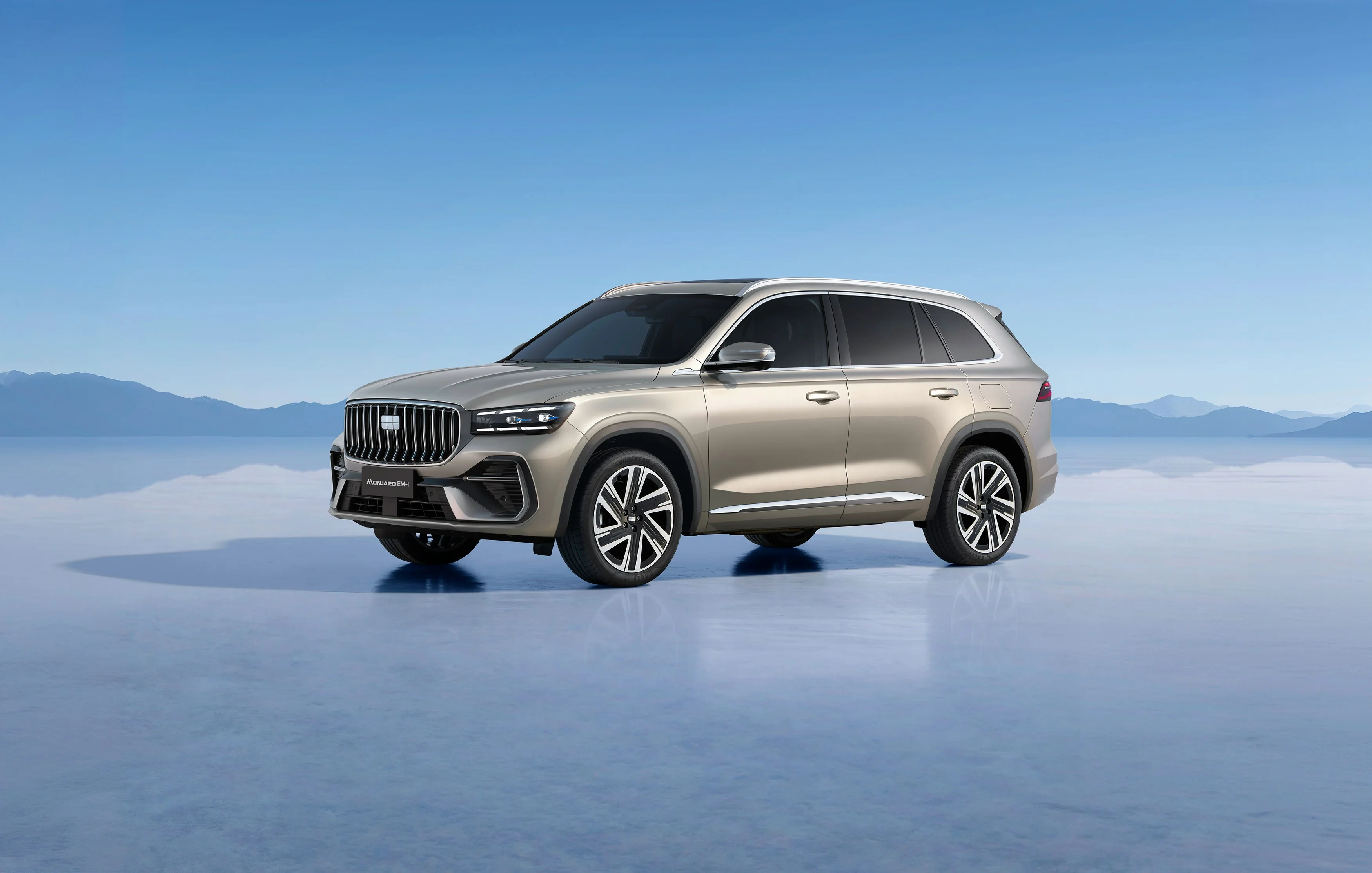
Geely has priced the Monjaro EM-i from €39,990 in Germany, where deliveries are due to start in mid-November 2026. The new D-segment plug-in hybrid SUV comes in four trims, with front- or electric all-wheel drive and a choice of 18.4 kWh or 29.8 kWh LFP batteries. Its opening list price is €5,000 below the €44,990 advertised by BYD Germany for the facelifted Seal U DM-i Boost.
That price comparison is specific to Germany and excludes temporary discounts. It cannot be applied automatically to other European markets: taxes, equipment and importer policy differ, and Geely has not announced a Romanian price for the Monjaro. The German launch nevertheless supplies the information that was missing at the model’s Paris debut—actual trims, battery-to-drivetrain pairings and retail prices.
Four trims cover a €6,000 range
The entry Monjaro EM-i Pro costs €39,990. Max is €41,990, Pro+ is €43,990 and Ultra tops the range at €45,990. Standard equipment listed by Geely includes a 15.4-inch centre screen, a 12.3-inch instrument display, an opening panoramic glass roof, an electric tailgate, LED headlights, a 540-degree camera view and wireless Apple CarPlay and Android Auto.
Pro and Max use front-wheel drive. Their hybrid system produces 201 kW and 544 Nm, supplied by a 1.5-litre turbocharged petrol engine and electric drive. Both have an 18.4 kWh gross-capacity LFP battery. Pro+ and Ultra add e-AWD, raise system output to 246 kW and 667 Nm, and use the larger 29.8 kWh pack.
This division matters more than the trim names. A buyer who wants the longest electric range or all-wheel drive must spend at least €43,990 on Pro+. Ultra combines that drivetrain with the comfort equipment introduced on Max and electronically controlled continuous damping. The headline €39,990 car does not have the larger battery or e-AWD.
Two different electric-range propositions
Geely quotes 82 km of WLTP electric range for Pro and Max. Their maximum DC charging rate is 38 kW, with a claimed 30-to-80-percent time of about 20 minutes. Pro+ and Ultra are rated at 116 km WLTP, can accept up to 78 kW DC and are said to cover the same charging window in around 15 minutes. AC charging is limited to 6.6 kW across the range.
DC capability is still not universal among plug-in hybrids and can make a short motorway top-up practical. The 6.6 kW AC limit is likely to matter more for routine home or workplace charging. Neither figure describes how far the car will travel on a winter motorway. The 82 km and 116 km numbers are official WLTP values, not Carboratory test results.
The front-wheel-drive cars accelerate from 0 to 100 km/h in 7.7 seconds. The e-AWD versions take 5.8 seconds. Geely also quotes up to 922 km of combined range. As with any PHEV, real fuel use will depend heavily on charging frequency and journey length; a weighted homologation figure is not a prediction for sustained driving with a depleted battery.
Where the BYD Seal U DM-i differs
BYD Germany lists its updated Seal U DM-i at €44,990 in Boost form, €47,990 for Comfort and €51,990 for Design. The accompanying technical brochure gives Boost an 18.3 kWh battery and 80 km of combined WLTP electric range. Comfort and Design use a 26.6 kWh pack, returning 130 km and 114 km respectively. Design is the all-wheel-drive version.
At list price, Monjaro Pro undercuts Seal U Boost by €5,000 and claims two additional kilometres of electric range. Higher up, the comparison becomes less linear. The front-drive Seal U Comfort offers the longest published electric figure at 130 km, but costs €4,000 more than the all-wheel-drive Monjaro Pro+. BYD’s AWD Design produces 275 kW and accelerates to 100 km/h in 5.1 seconds; Monjaro Ultra has 246 kW, takes 5.8 seconds and is €6,000 cheaper on the German list.
BYD can charge at 11 kW AC across the facelift range, versus Geely’s 6.6 kW. BYD quotes 55 kW DC for all three versions, while Geely ranges from 38 kW to 78 kW depending on battery. Those details can outweigh a small WLTP-range difference for a driver who regularly uses public chargers or has an 11 kW wallbox.
Promotional pricing also changes the showroom calculation. BYD Germany was advertising substantial November campaign reductions when the list was checked. A fair purchase comparison therefore needs written dealer quotations produced at the same time, including delivery fees, finance costs and any conditional incentives. This article uses manufacturer list prices to keep the underlying products comparable.
Size and practicality are central to Geely’s pitch
The Monjaro EM-i is 4,800 mm long, 1,895 mm wide and 1,700 mm high, with a 2,845 mm wheelbase. Geely Germany lists 633 litres of luggage capacity and 1,532 litres with the rear seats folded. The broader European release cites 2,183 litres as a maximum, an inconsistency that may reflect a different measuring method. The two figures should not be treated as interchangeable until a market-specific technical sheet explains the method.
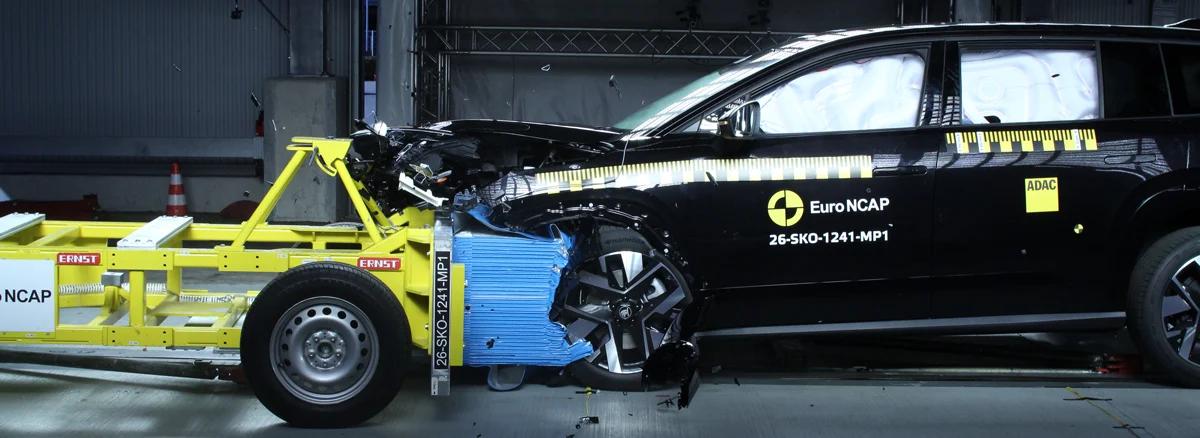
The cabin has five seats. Depending on trim, it adds a 25.6-inch head-up display, a 16-speaker Flyme Sound system and front-seat massage. Geely lists seven airbags and a suite of driver-assistance systems. The company says the vehicle is prepared for a five-star Euro NCAP result, but Euro NCAP has not published that result. Preparation for a rating is a manufacturer statement, not an independent crash-test score.
Geely’s German warranty is eight years or 200,000 km for the vehicle and the high-voltage battery, subject to its terms and servicing requirements. The battery warranty states a minimum 70 percent state of health. Warranty length is useful, but buyers also need to consider dealer coverage, parts supply and resale evidence—areas where a newly introduced model cannot yet provide a long European record.
A competitive price, with market limits
The German range gives the Monjaro EM-i a clear showroom argument: it is a large PHEV with standard equipment and a starting price below its named BYD rival. Pro+ also combines a sub-€44,000 list price with e-AWD and a triple-digit WLTP electric range. Those are specific, verifiable advantages on paper.
They do not establish a universal winner. Seal U Comfort has a longer official electric range, BYD offers faster AC charging, and active discounts may reverse the list-price order. The Monjaro has yet to build a European reliability, depreciation or after-sales record. For buyers outside Germany, the decisive information will be the local specification and price rather than a converted German figure.