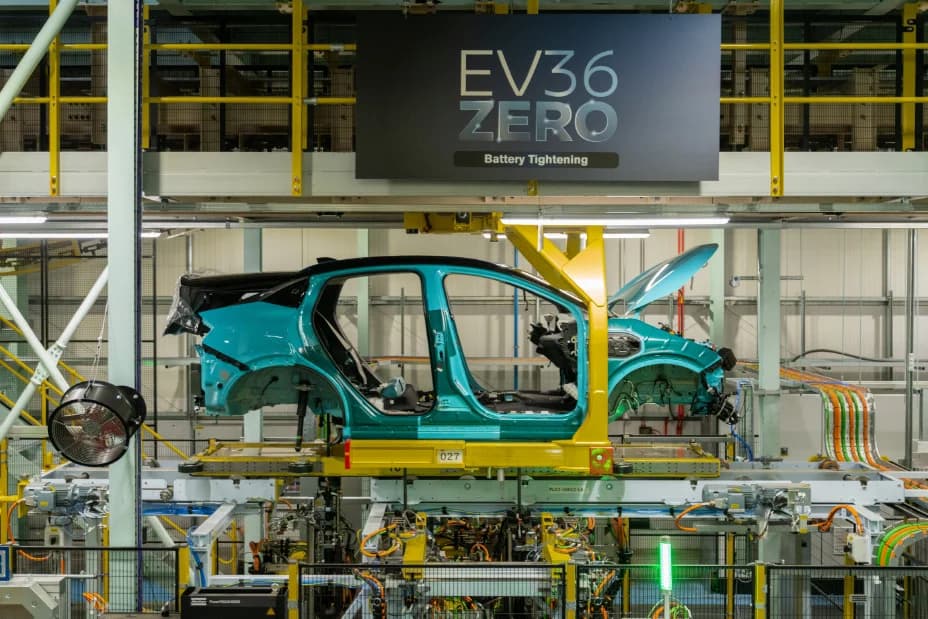
Official BMW 330e press image used to illustrate plug-in-hybrid technology. Credit and source: BMW Group PressClub / BMW AG.
A plug-in hybrid does not deliver low running costs merely because it has a charging port. Its financial case depends on a routine: charge it frequently, use that energy for a large share of everyday travel, and buy the electricity at a sensible price. Driven for long periods with a depleted battery, a PHEV carries its electric hardware while relying mainly on petrol, so its brochure's weighted fuel figure becomes a poor guide to the next fuel bill.
The European Commission's first report using on-board fuel-consumption monitoring data illustrates the problem. Among PHEVs first registered in 2021, real-world CO₂ emissions averaged 3.5 times their type-approval values. The Commission said the main reason was that the cars were not charged and driven electrically as often as the official calculation assumed. The initial dataset covered about 600,000 cars of all powertrain types and had acknowledged coverage limits, but it provides a useful ownership lesson: plugging in is central, not optional.
Compare cost per 100 km
For electric running, multiply the car's energy use in kWh/100 km by the complete price of one kWh. For petrol running, multiply litres/100 km by the pump price. Include session fees and any time-based element at a public charger. Electricity drawn from the socket can also exceed the energy recorded as used for driving, because charging and thermal management consume energy.
Consider a deliberately simple illustration rather than a market-price claim. At 20 kWh/100 km and €0.15/kWh, electricity costs €3/100 km. The same car charged at €0.60/kWh costs €12/100 km. Petrol consumption of 6.5 l/100 km at €1.75/litre costs about €11.38/100 km. A cheap home tariff wins clearly in this example; an expensive public session does not. Owners should replace every assumption with their tariff, invoice and observed consumption.
Make routine parking productive
Home or workplace charging is usually the foundation of economical PHEV use because the car can charge while it would be parked anyway. A wallbox does not lower the vehicle's inherent consumption, but it may deliver safer, faster and programmable charging than a household socket. Time-of-use contracts can make the charging window as important as the amount of energy.
The electrical installation must be suitable for a sustained load and checked by a qualified professional. Extension leads and ageing sockets are not a sensible permanent charging strategy. Apartment residents should include installation, metering and shared-property requirements in the calculation. A favourable energy rate cannot compensate for an unsafe or impractical setup.
Check public charging before connecting
Public charging can be convenient without being cheap. Read the displayed price, including per-kWh, per-minute, session and overstay components. The EU Alternative Fuels Infrastructure Regulation introduces requirements around ad-hoc payment and price information at covered public points, but it does not make tariffs uniform.
Many PHEVs accept only AC charging and at lower power than a modern battery-electric car. Paying for a premium location therefore does not guarantee a rapid refill. On a long trip, compare the price and time of adding a limited amount of electricity with the petrol required to cover the same distance. Destination charging may be worthwhile; a costly motorway stop may erase the saving.
Spend electricity where it is most useful
Urban traffic suits electric operation: it avoids inefficient cold running and idling, while regenerative braking can recover some energy during repeated deceleration. If a journey exceeds the electric range, hybrid mode can allocate both power sources. Some vehicles also offer a hold function. BMW, for example, describes Battery Control as a way to preserve or increase charge during faster driving so that electricity remains available for a later urban section.
That does not create a universal rule to burn petrol on every motorway. Control strategies differ, and some cars use route data to manage energy automatically. Enter the destination in the built-in navigation where route-aware management is available, and read the model's manual. Forcing the engine to generate electricity solely to claim electric kilometres later normally adds conversion losses; reserve that function for a defined route or access need.
Leave with a charged and conditioned car
Consistency beats constant mode-switching. Connect the car after its final journey and schedule departure if the software supports it. Pre-heating or cooling while plugged in can draw part of the cabin-conditioning energy from the grid and lets the journey begin at the intended battery level.
Electric range changes with temperature, speed, tyres, traffic and climate-control demand. Do not plan every commute against the last kilometre of the WLTP figure. Learn the car's repeatable range on the actual route. Correct tyre pressures, gradual acceleration and removing unnecessary cargo reduce demand regardless of which motor is operating.
Read both WLTP fuel figures
A PHEV's weighted combined value blends charge-depleting and battery-depleted operation through an assumed electric-distance share. It is not a promise of fuel use after the usable charge has gone. BMW's 2024 technical data for the 330e Sedan provides a transparent example. Depending on configuration, it listed 0.8–1.1 l/100 km weighted combined and an 85–101 km electric range, but 7.1–7.9 l/100 km in the WLTP test with a discharged battery.
This one model is an illustration, not a proxy for every PHEV or driver. It shows why both figures matter. The Commission changed the utility factor used in EU type approval from 2025 to bring the assumed electric share closer to observed use. Buyers comparing cars should therefore record the test cycle, configuration and battery state attached to any consumption number.
Keep one ledger for electricity and fuel
Track distance, charged kWh, session cost and litres filled for at least a month. Divide the combined energy bill by total distance, then separate routine commuting from long journeys. A holiday month dominated by motorways should not be used alone to judge a car bought for electric weekday travel; equally, one unusually efficient week should not stand in for annual use.
Maintenance remains a two-system responsibility. Follow the maker's schedule for the combustion engine, brake fluid, cooling circuits and high-voltage checks even if the engine runs infrequently. Consult the manual about fuel quality and any automatic engine cycles when petrol remains in the tank for long periods.
When another powertrain may cost less
If reliable charging is unavailable, a full hybrid or an efficient combustion model may have a lower purchase price and less unused hardware. Conversely, a driver who charges overnight and keeps most daily travel inside the real electric range may use petrol mainly for occasional long trips. The appropriate comparison includes purchase cost, insurance, maintenance, home installation, electricity tariffs and depleted-battery fuel use.
The shortest conclusion is also the most practical: a well-used PHEV behaves like an electric car on many short journeys and a petrol car when distance demands it. An uncharged PHEV behaves mostly like a heavier petrol car. The difference is made on the driveway, at the workplace charger and in the owner's records, not by the smallest number printed in the brochure.
Sources
- European Commission — first report on real-world CO₂ emissions using OBFCM data
- EUR-Lex — Commission report COM(2024) 122 on real-world and WLTP consumption
- BMW Group — official BMW 330e Sedan and Touring technical data, May 2024
- BMW Group — Battery Control in plug-in-hybrid models
- EUR-Lex — Regulation (EU) 2023/1804 on alternative-fuels infrastructure
- BMW Group PressClub — BMW 330e photograph used in this article