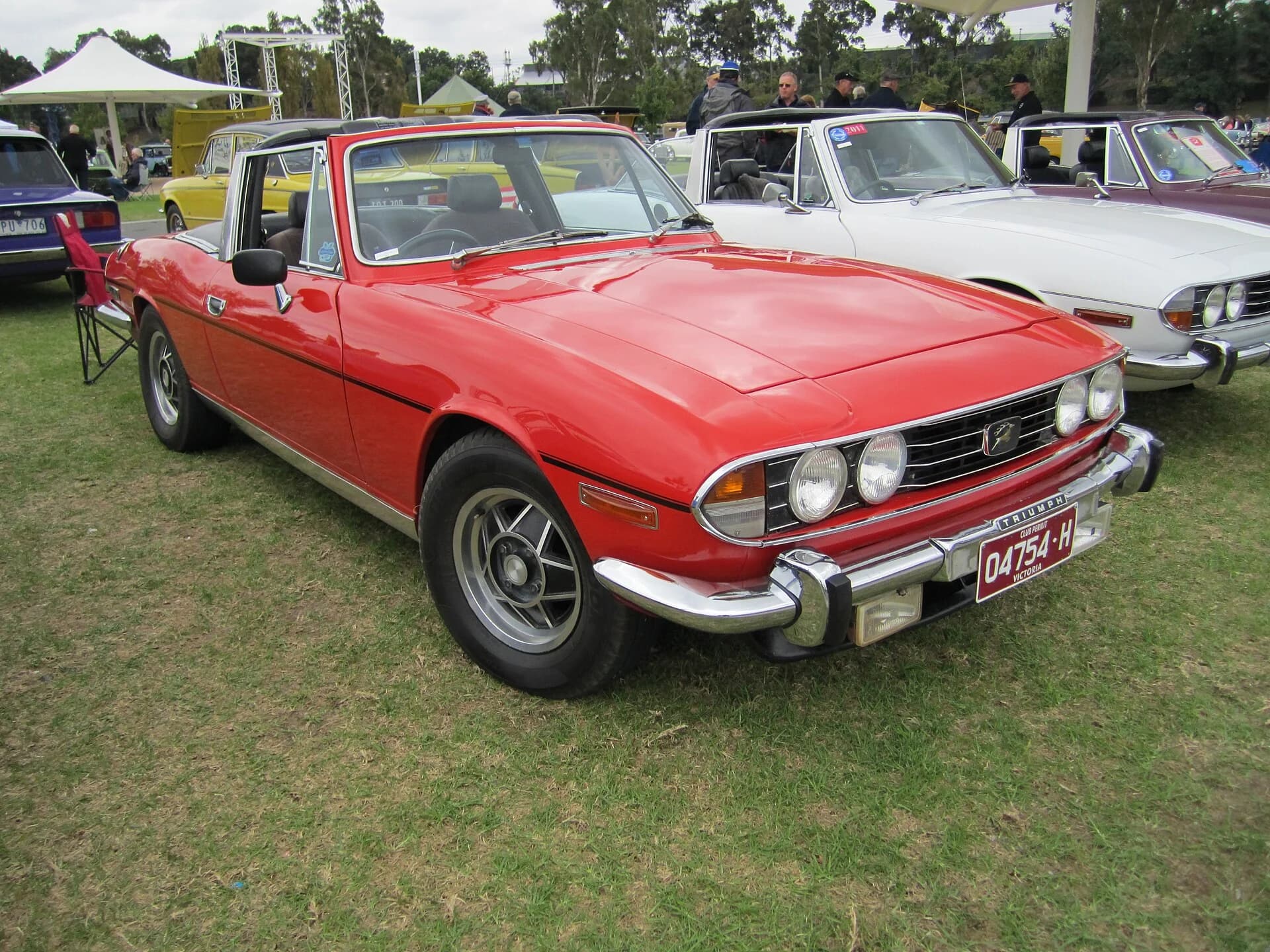
The photograph is illustrative and shows a different Triumph Stag. Source: Chris Keating/Wikimedia Commons, CC BY 2.0.
James May is selling the Triumph Stag from The Grand Tour finale
James May is offering for auction the Triumph Stag MkII he drove in “One for the Road”, the final special made with Jeremy Clarkson and Richard Hammond under The Grand Tour name. The car is listed on Collecting Cars in an online auction with no reserve. The highest bid at the close will therefore determine the sale, rather than a pre-set minimum price.
The car behind the final journey
The Stag was first registered in October 1974. Collecting Cars describes it as a right-hand-drive MkII with a naturally aspirated 3.0-litre V8, a four-speed manual gearbox and rear-wheel drive. The car is painted Magenta and has a black vinyl-trimmed interior with wood veneer details. Its indicated mileage is 83,368 miles, or about 134,000 km, but the listing says that figure is not warranted.
May chose the Triumph for the Zimbabwe and Botswana journey in “One for the Road”. The auction material presents it as a car he had not driven before buying it. Clarkson and Hammond took a Lancia Montecarlo Spider and a Ford Capri 3.0 GXL on the same trip. The Stag completed the expedition without the engine failure or overheating that could have stopped it, although that outcome should be understood as the history of this particular car rather than a modern reliability test.
The television connection continued after filming. May had owned the car for almost three years by the time of the listing. On its return to Britain, The Smallest Cog, the restoration workshop associated with Richard Hammond’s Workshop, reportedly repainted it. The listing also says that records from earlier restoration work were lost during television production. That distinction matters: the auction includes a clear description of the car’s known history, but it does not provide a complete paper trail for every repair.
Equipment and condition
The Stag sits on 14-inch five-spoke alloy wheels with Hankook Optimo tyres. Its equipment includes a three-spoke steering wheel, a roll-over bar, elasticated door-card pockets, a Kienzle analogue clock, Smiths gauges and a heater. A Classic Car Stereo retro-style unit adds Bluetooth connectivity. The buyer also receives touch-up paint from the same batch used for The Smallest Cog’s repaint and one ignition key.
The description is candid about cosmetic imperfections. The seller notes that some panels could align better, that the interior has age-related patina and that some trim could be replaced. Small areas of exterior chrome show pitting, while some dashboard illumination bulbs need replacement. The car is therefore not being presented as an untouched concours restoration. Its appeal comes from the combination of a usable classic roadster, a documented television appearance and ownership by May.
The last recorded service in the listing took place in July 2025, at an indicated 83,100 miles. The seller also states that a previous restoration covered the engine, gearbox and suspension. Collecting Cars reports an HPI check with no insurance database markers for damage or theft and no outstanding finance. Those checks are useful background, but they do not replace an independent inspection of a nearly fifty-year-old car.
What the original Stag was designed to be
The Triumph Stag was produced from 1970 to 1977. The British Motor Museum identifies it as a Giovanni Michelotti design with a 2,997cc V8, a convertible body and an available hardtop. It was conceived as a 2+2 grand tourer, so the car’s purpose was long-distance open-top travel rather than a stripped-down sports-car experience.
The model used independent suspension and a structural bar arrangement around the passenger compartment. Its bespoke Triumph V8 gave it a character that separated it from the four-cylinder sports cars in the company’s range. The Stag Owners Club records that the project began as a show-car idea based on the Triumph 2000, before Triumph developed it into a production model launched in 1970.
The Stag also carried a reputation for cooling problems. The British Motor Museum mentions overheating among the reasons the model became associated with reliability concerns, and the owners’ club’s historical material explains how the V8 was developed as part of Triumph’s modular engine programme. A restored and maintained example can be enjoyable, but a buyer needs to understand the cooling system, engine history and available documentation before treating one as a casual classic purchase.
What the auction does and does not prove
The no-reserve format makes the final sale price impossible to know in advance. The television history may attract bidders, but it does not turn this car into a benchmark for every Triumph Stag. The odometer is not warranted, parts of the restoration record are missing, and the listing itself asks bidders to satisfy themselves about the description and condition.
An overseas buyer would also need to budget for transport from the United Kingdom, import and registration procedures, insurance and specialist maintenance. The right-hand-drive layout is another practical consideration. None of those costs is included in the auction result.
May’s Triumph is notable because its story is unusually specific: a 1974 MkII, a 3.0-litre manual V8, a journey through Zimbabwe and Botswana, work by Hammond’s workshop and a final appearance in a major motoring series. The bidding will show what that combination means to the market. It should not be confused with a factory special edition or with proof that every Stag has the same history.