
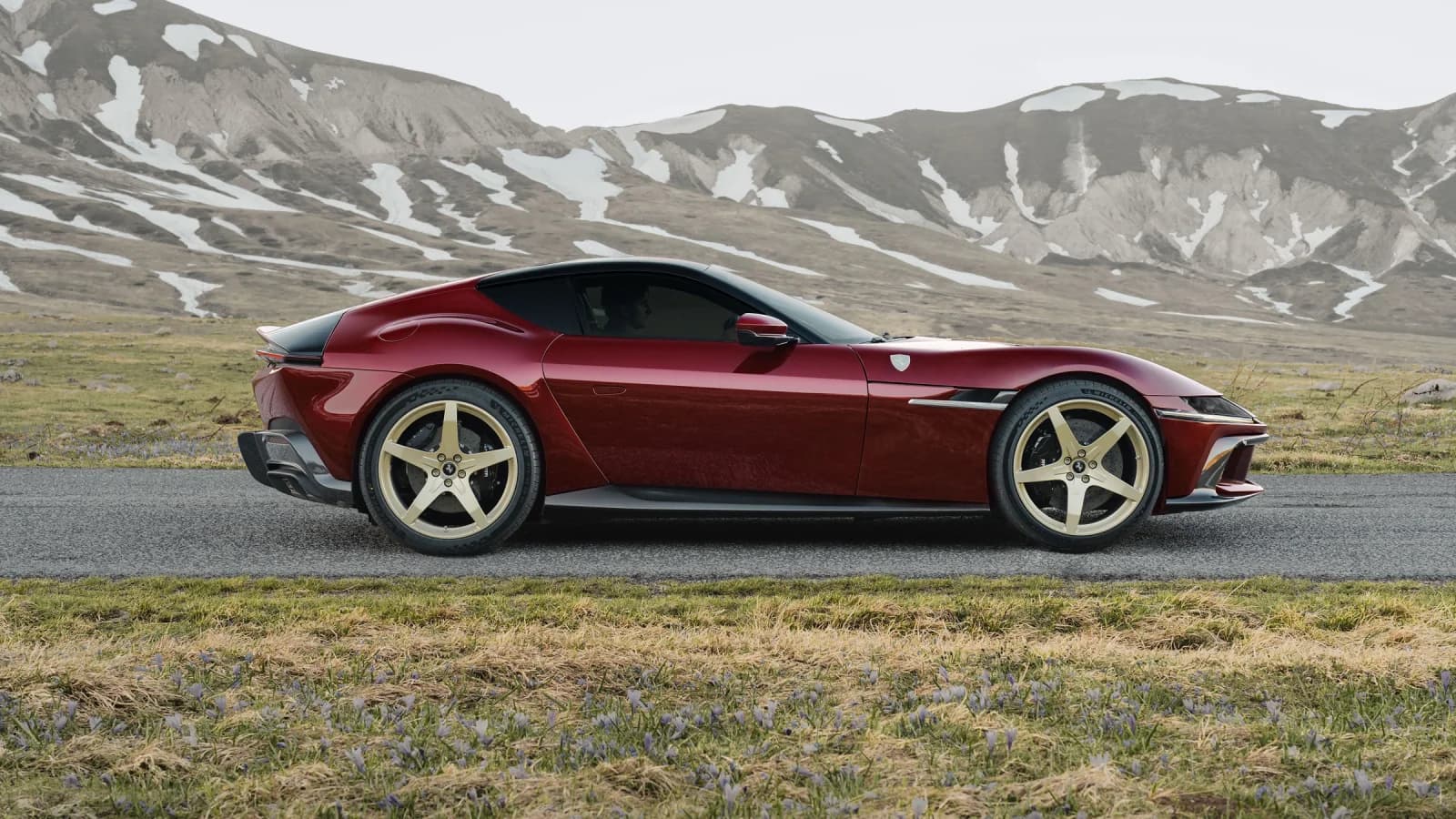
Ferrari chairman John Elkann says the idea of an electric Ferrari became a serious subject after a conversation with Amazon founder Jeff Bezos. He made the revelation at a technology conference in Turin, in comments reported by Reuters. Elkann presented the exchange as a moment of inspiration and reflection, not as an instruction from Bezos. Between that conversation in 2016 and Ferrari’s first fully electric model came years of research, design, engineering and industrial investment.
According to Elkann, the conversation took place during a walk in July 2016. Bezos reportedly said that he did not know the car industry in technical detail, but that he understood innovation and believed Ferrari should seriously consider building an electric vehicle. Roughly a decade later, Ferrari presented the Luce, the model that opens this chapter. There is no public evidence that Bezos designed the car, financed its development or held a formal role in the project.
Ferrari built the infrastructure first
Ferrari inaugurated its e-building in Maranello in 2024. The facility is intended for cars with combustion engines, hybrids and components for the company’s first electric model. This matters because Ferrari did not replace a traditional plant with a battery-only factory. Instead, it created a flexible production space that supports the company’s technology-neutral strategy.
The building produces and develops high-voltage batteries, electric motors and electric axles. Ferrari says these strategic systems are designed, engineered and handcrafted in Maranello, while battery cells continue to come from specialist partners. Keeping control of important components gives Ferrari a way to differentiate the performance and driving experience of electrified models, rather than treating electrification as a simple supplier change.
The e-building also includes energy and water-efficiency measures. More than 3,000 solar panels on the roof can provide 1.3 MW of peak power. Ferrari has described systems that recover part of the energy used to test batteries and motors, alongside rainwater collection and reuse. These measures do not make vehicle production impact-free, but they show that the electric programme was connected to a broader industrial investment.
Luce is an addition, not a replacement
Ferrari’s 2030 strategic plan describes a controlled transition. The company expects its 2030 line-up to consist of 40% combustion-engined cars, 40% hybrids and 20% fully electric models. Ferrari has said that the electric car will be an addition to the range. That position differs from the plans of manufacturers seeking to move most or all of their line-ups to battery power within a short period.
Ferrari also says it will continue developing V6, V8 and V12 engines alongside hybrid and electric systems. For customers, powertrain choice remains part of the purchase experience. For the company, this preserves several technical paths while making development, production and servicing more complex.
Luce is therefore also an identity test. An electric car can deliver instant response and new ways of controlling torque, but it still has to feel exclusive and meticulously engineered. The project has been linked to LoveFrom, the studio founded by Jony Ive, and its design has prompted sharply divided reactions. Criticism of the styling does not change the strategic point: Luce was conceived as an extension of Ferrari’s range, not as a substitute for every other model.
How much influence did Bezos really have?
Elkann’s account explains the origin of a question, not the full decision-making process. A technology leader can raise a useful question, but a carmaker needs factories, suppliers, batteries, software, certification and customers to turn that question into a vehicle. Ferrari’s documented decisions are the e-building investment and its plan to develop strategic electric components in Maranello.
There is no public evidence that Bezos selected Luce’s technical architecture, design or commercial positioning. Ferrari has not presented him as an investor or project adviser. The accurate description is therefore that the conversation reported by Elkann contributed to Ferrari’s strategic reflection on an electric car. The decision and execution belonged to Ferrari and its teams.
What comes next for Ferrari
Ferrari’s challenge is not simply to build a car with no tailpipe emissions. It must integrate the battery, electric motors and software into an experience that still fits the brand. It also has to manage customers’ attachment to combustion engines and their sound.
The available facts point to a cautious strategy: limited electrification, key components developed in Maranello, and the coexistence of combustion, hybrid and electric models. The Bezos story explains where a question began, but it does not replace the industrial facts. Luce’s success will depend on customer reaction, first deliveries and Ferrari’s ability to turn electric technology into an experience that remains recognisably Ferrari.


