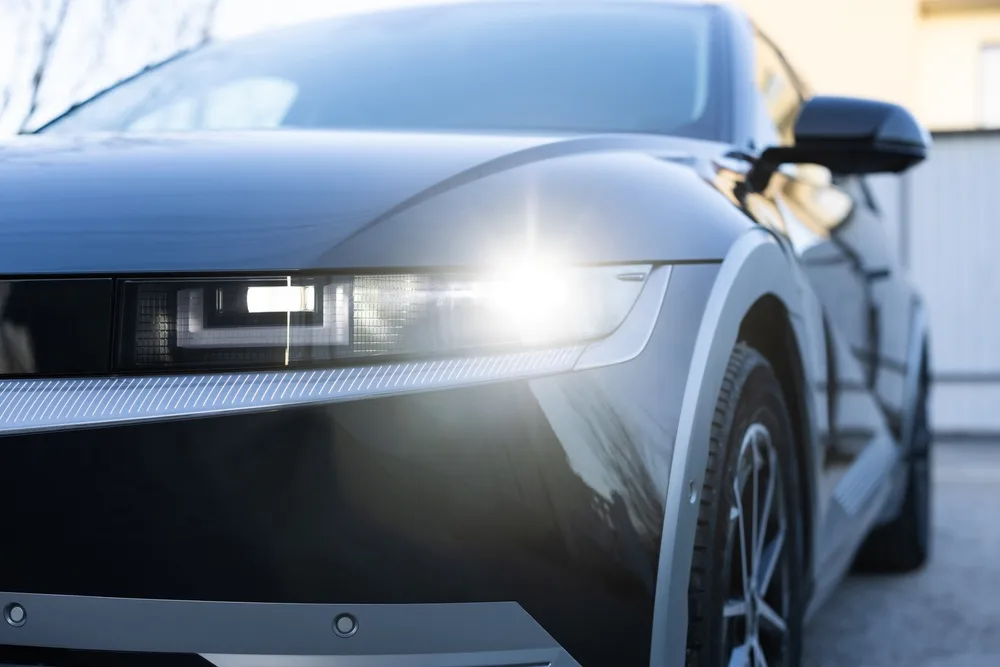
LED technology is used more and more often for a car’s exterior and interior lighting. White light, lower consumption and a long operating life are important advantages, but choosing a suitable product involves more than identifying the bulb holder.
An LED incompatible with the headlamp or the electrical system can generate dashboard errors, flickering, an incorrect beam and even glare for other drivers. Before buying, the bulb’s function, the lighting-unit configuration, the available space and the product’s legal status must be checked.
What types of car LEDs can you find?
The range of car LEDs from Xenon Bright covers several functions of the lighting system, from headlamps and driving lamps to indicators, position lights, the number plate or the cabin. Products differ by bulb holder, power, voltage, colour temperature and cooling system. Depending on use, LEDs can be divided into a few main categories:
- LEDs for dipped beam and main beam;
- LEDs for fog lamps;
- bulbs for position lights, tail lamps and indicators;
- LEDs for interior lamps, the boot and other interior lights.
Not every product can be moved from one function to another, even if the holder looks identical. Intensity, light distribution and colour must match the role for which the lighting unit was designed.
Check the bulb holder and the headlamp configuration
The first criterion is the holder type. Among the variants encountered frequently are H1, H4, H7, H8, H11, HB3 and HB4, together with smaller holders such as W5W, P21W or C5W. The information can be found in the car’s handbook, on the existing bulb or in the manufacturer’s catalogue. Do not rely only on make and model, because the same generation can be fitted with different headlamps depending on the year of manufacture or equipment level.
How the bulb is fixed in the headlamp must also be checked. Some vehicles need an adapter ring, and others do not offer enough space for the LED bulb’s radiator or fan. Philips shows that certain conversions require both mounting rings and extra CAN-Bus modules, depending on the car.
How do you recognise a suitable LED bulb?
When you want to buy the best car LED bulbs for your car, do not judge the product solely by the lumen figure printed on the pack. A high luminous flux does not guarantee an effective beam if the light source is not positioned correctly relative to the reflector or the headlamp lens. Pay attention to the following characteristics:
- the geometry and position of the LED chips;
- colour temperature;
- the cooling system;
- CAN-Bus compatibility;
- homologation documents.
For night driving, white light of about 5,000–6,000 K offers a modern appearance and can provide good contrast. A very cool shade with a blue tint does not automatically mean better visibility and can become tiring in rain or fog.
Take the cooling system into account
LEDs consume less than comparable halogen bulbs, but the electronic components generate heat that must be removed. For that reason, many products use a metal radiator, flexible strips or a fan. A cooling system that is too bulky can prevent the headlamp sealing cover from being fitted.
If that cover stays open, water, dust and condensation can enter. Check the available depth before ordering. In addition, make sure the fan does not touch the cables and that air can circulate around the radiator. Thermal management influences both light stability and the bulb’s life.
Take the CAN-Bus system into account
Modern cars monitor bulb consumption. Because an LED can draw less energy than a halogen, the vehicle computer can interpret the difference as a blown bulb. In such situations the following can appear:
- dashboard warnings;
- light flickering;
- the bulb switching off periodically;
- unstable operation at start-up.
A CAN-Bus-compatible product or a dedicated module can correct the problem, but the choice must be made for the specific car model. OSRAM and Philips offer compatibility lists precisely for checking vehicles and the accessories required.
Check whether the LED is homologated
The fact that a bulb fits and works does not automatically mean it can be used legally on public roads. In the case of retrofit products, homologation may be valid only for certain holders, functions, countries, headlamps or vehicle models. There are also LED products homologated to ECE for wider use.
For example, OSRAM presents certain H11 lamps homologated under ECE Regulation R37 for 12 V vehicles, but that approval should not be extended automatically to other products or holders. Consult the product markings, the compatibility list and the conditions of the approval. If the information is not clear, keep the original configuration or ask a specialised workshop to check.
Fit the bulbs and aim the headlamps correctly
After installation, check the position of the light source, that the cover is closed and that the lights work without errors. Test the beam cut-off line on a wall, with the car on a level surface. If the light is scattered, dark zones appear or the beam rises too high, the bulb may be fitted wrongly or be incompatible with the headlamp.
A more powerful LED that is poorly controlled reduces real visibility and bothers drivers coming the other way. Choose LEDs according to holder, headlamp, electrical system and homologation, not only according to the declared intensity. Careful checking before purchase helps you obtain efficient, stable and safe light, without improvised modifications.
Choosing a car LED bulb correctly means more than compatibility with the holder: the headlamp type, cooling system, CAN-Bus compatibility and product homologation must be taken into account in order to obtain efficient and safe lighting. Investing in a quality product helps visibility and avoids operating problems or inconvenience caused by fitting unsuitable bulbs. If you are looking for reliable solutions compatible with a wide range of cars, see the car LED range from Xenon Bright and choose the variant that fits your car.