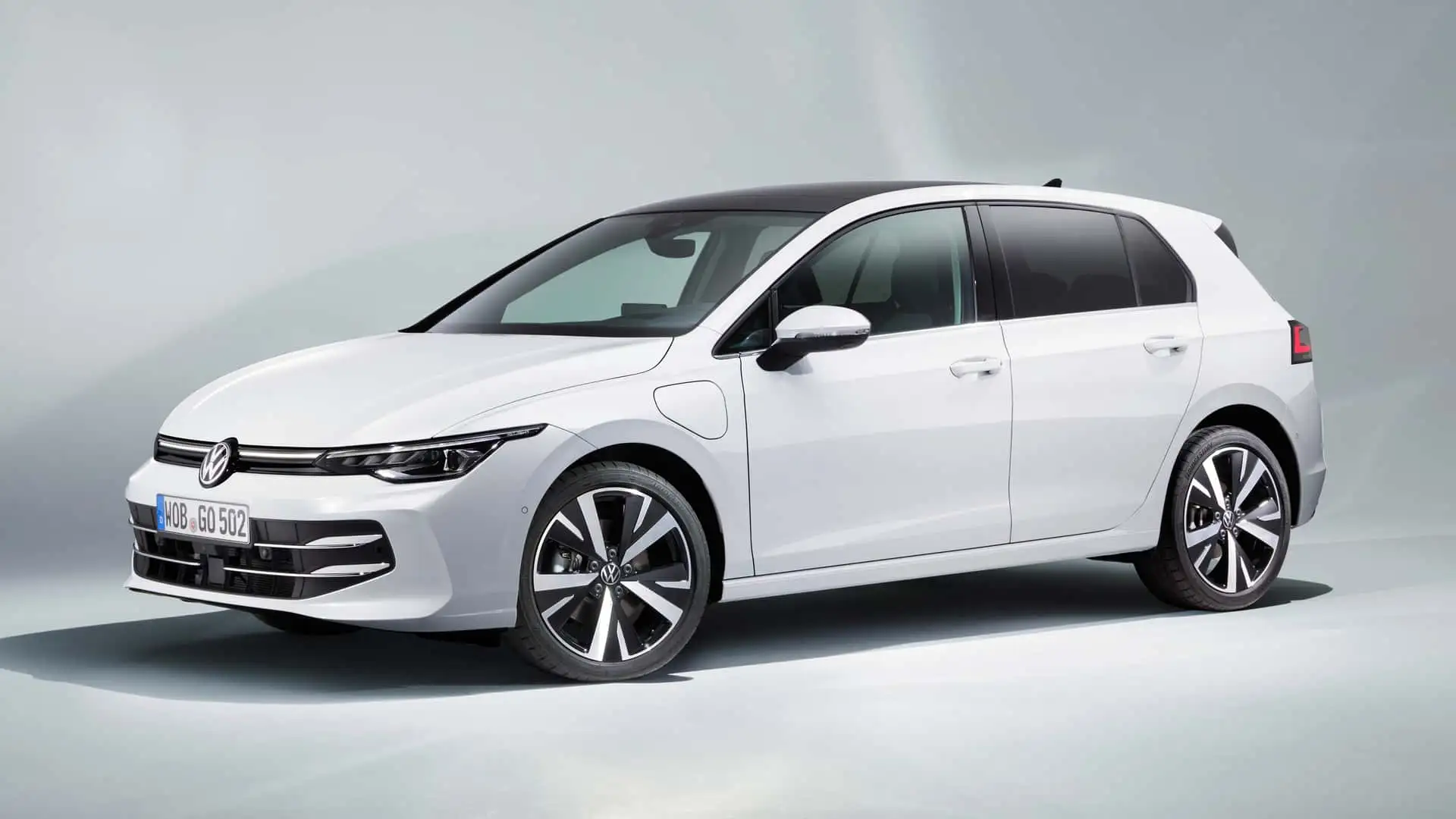
Golf. Where it exists, Sport mode changes how the car responds, not the power on the spec sheet. Photo source: Volkswagen
What changes when you put the car in Sport, and why the Duster does not have it
The Sport button or menu does not turn a family hatch into a circuit car. It changes, depending on brand and equipment, how the pedal responds, when the gearbox shifts, how heavy the steering is and, sometimes, the dampers, cabin sound or ESC intervention. Homologated peak power remains that on the spec sheet, with a documented exception on hybrids: there Sport can put the combustion engine and the electric motor to work together.
The recipe is not universal. The Golf manual and Škoda’s page on Driving Modes describe one package; the Toyota RAV4 another; the Dacia Duster has no mode called Sport at all.
What Volkswagen and Škoda write
In the Driving Mode Selection chapter of the Golf manual, Volkswagen defines Sport as a setting that gives “a sporty driving feel”, suited to a sporty style. The effect depends on equipment.
What is written explicitly:
- Steering: power-steering assistance decreases, effort at the wheel increases.
- Engine and gearbox: throttle response is more dynamic. On an automatic, shift points and coasting mode change. On the Golf, choosing Sport automatically moves the selector to S; Eco moves it to E.
- DCC: if Adaptive Chassis Control is fitted, comfort and sport shift the damper characteristic. Without DCC, Sport does not stiffen the springs.
- The engine moves to the new profile only after you lift off the accelerator, when traffic allows. The other settings apply immediately.
- Volkswagen warning: changing mode can alter road behaviour. Speed and style remain the driver’s job, according to visibility, weather and traffic.
Škoda says the same thing in group language: in Sport, the engine is more responsive, the DSG holds higher revs, steering assistance decreases, the adaptive chassis stiffens (if fitted), and the assistants adapt. Eco reduces torque, keeps revs low, lets the car freewheel on lift-off and puts the climate control on an economy regime. Comfort, only with Dynamic Chassis Control, puts the dampers on comfort.
On Golf and Octavia, Eco is blocked with a trailer electrically coupled; the system switches to Normal, not Sport. The towing mode in the manual, where it exists, takes priority over a “sporty” profile.
Toyota: Sport cancels at ignition off
On the RAV4 XA50, Toyota writes that Sport “controls the steering feeling and engine to create an acceleration response that is suitable for sporty driving”, for example on mountain roads. Eco smooths torque at the accelerator pedal and limits the climate control. Sport cancels itself when you switch off the ignition; Eco and Normal remain.
That is a different philosophy from the Golf, where the last profile stays tied to the key used.
Renault Multi-Sense: Sport is not Race
In the Multi-Sense manual (Romanian), Sport “authorises an increased engine response capacity”. On hybrids and electrics, the combustion engine and the electric motor work together “to obtain the best performance”; the pedal is more reactive, the steering firmer. The last mode is not stored at restart; the car returns to My Sense.
The same menu lists Race separately, on sporting models: quicker shifts, more sensitive pedal and steering, emphasised exhaust sound. Race deactivates ESC by default and some of the assistants (emergency braking, limiter, lane keeping, ACC). It is not the Sport on a Captur or a family Clio.
There you also find Engine sound design (an in-cabin effect, with a level or OFF) and, for ESC, the Normal / Sport steps: in Sport, corrections come later.
The Duster has no Sport. It has Eco, AUTO, SNOW
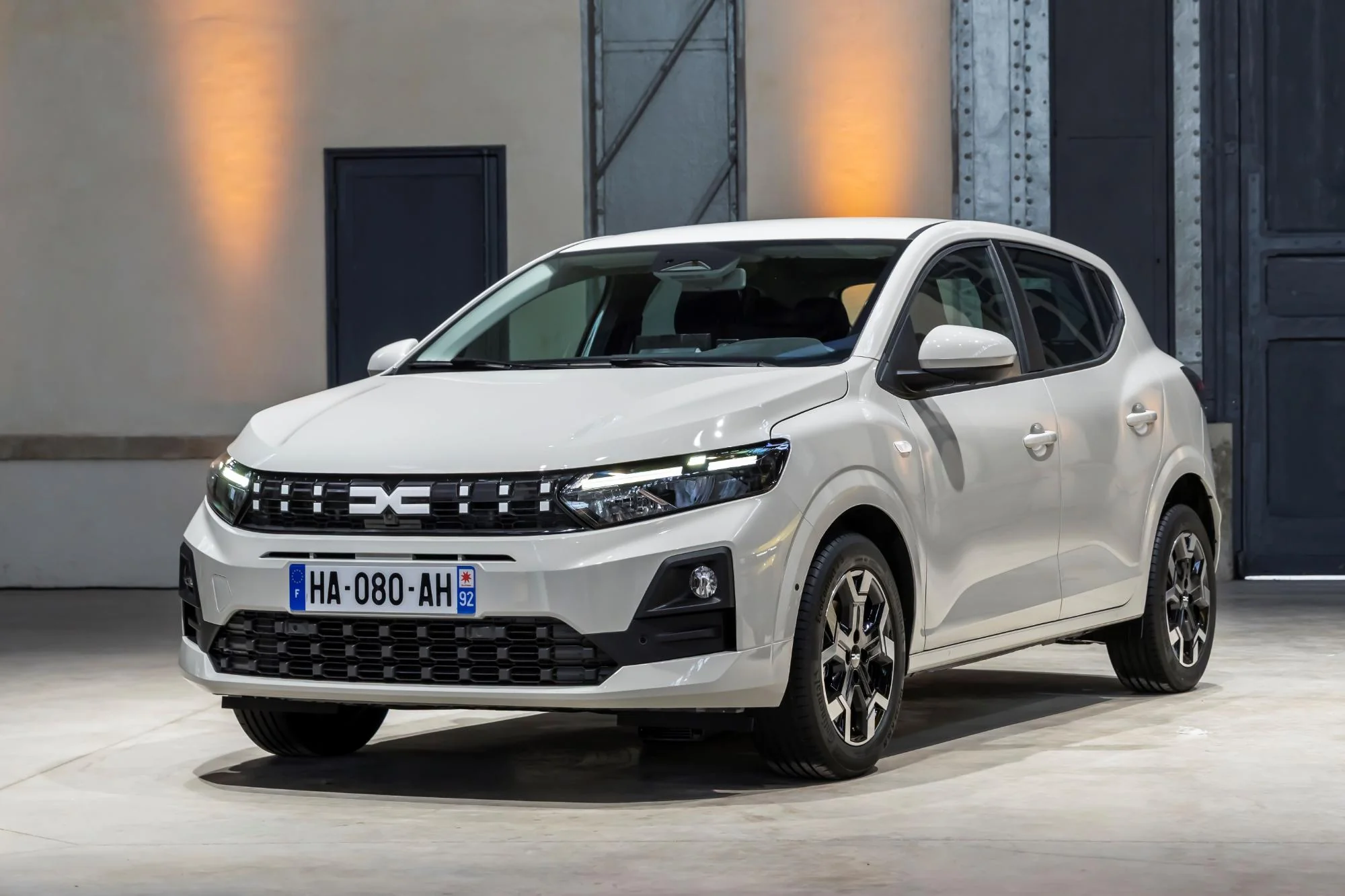
The Dacia Duster 4x4 selector offers Eco, AUTO, SNOW, MUD-SAND and OFF-ROAD. Each changes steering effort, ESC/traction control, pedal sensitivity and front/rear torque split. AUTO is the default mode on the road. SNOW is for slippery conditions. MUD-SAND and OFF-ROAD are reserved for terrain; Dacia warns that using them otherwise can spoil handling and parts.
A Duster pulled out of snow in “Sport” does not exist as a programme. A Golf pulled out of snow in Sport is another car, with a sharper pedal.
BMW: SPORT is not SPORT+
The BMW 1 Series (F40) specification guide lists Driving Experience Control with Sport, Comfort and ECO PRO. Adaptive suspension, where ordered, switches Comfort/Sport through the same control.
In BMW manuals with SPORT+, SPORT is “sporty tuning … with maximum driving stabilization”. SPORT+ limits stabilisation and starts DTC (Dynamic Traction Control); the DSC OFF warning light comes on. It is not the setting for a wet national road.
Why it feels quicker, without being another engine
The pedal is drive-by-wire. In Normal, a small travel gives a small extra torque, useful in parking. In Sport, the same travel asks for more. The engine has no extra horses on the label; it responds earlier.
The automatic gearbox holds the gear, downshifts more readily, avoids the long ratio. The engine stays where it is more awake. That is why an overtake on the A1 can feel more immediate. Consumption has no universal percentage: revs held high and sharper accelerations use more fuel; Eco, at Škoda, explicitly reduces torque.
The suspension changes only if adaptive dampers are fitted. A Logan or a Clio without DCC does not “stiffen” because you pressed Sport.
When it is worth it, and when it is not
On a dry, winding national road, a held gear and a sharp pedal reduce the pause between command and torque. At a motorway insertion, the same thing. In a queue, in rain or on ice, a nervous pedal and a more permissive ESC (Škoda ESC Sport, Renault Race) work against grip.
Škoda has Snow on 4x4: adapted ABS/ASR, firmer steering, a less reactive pedal — the opposite of Sport. Duster SNOW is the same idea.
Tyres, geometry and the pressure on the label remain more important than a profile in a menu. Sport does not replace a good brake and does not repair a tired automatic gearbox.
On a used Golf, check in the handbook whether the car has Driving Mode Selection and DCC; the button without DCC changes the pedal and, on DSG, the gears, not the chassis.
What you see in classifieds
Golf ads, Octavia and Duster mix cars with a Sport profile, cars with Eco only and cars with no selector at all. The equipment sheet and a test on the same road, in Normal and in Sport, say more than an inscription on the sill.
Frequently asked questions
Does Sport mode add horsepower?
On an ordinary combustion engine, no. It changes pedal mapping and the gears. On Renault hybrids, Sport puts the combustion engine and the electric motor to work together for the available performance.
Why is the steering heavier?
Volkswagen: power-steering assistance decreases. It is not a new rack.
Does the suspension change as well?
Only with adaptive dampers (DCC at VW/Škoda, a similar package at BMW). Otherwise, no.
Can I leave Sport on all the time?
Yes, technically. The Golf stores the profile on the key. Toyota cancels Sport at ignition off. In town, held revs and a sharp pedal become tiring; Eco or Normal are designed for that.
Is Sport good on snow?
Not as a first choice. Škoda Snow and Duster SNOW reduce pedal reactivity. ESC Sport / Race allow more slip.
Is Sport the same thing as S on the gearbox?
On the Golf, the Sport profile puts the gearbox in S by itself. You can also put S from the selector, without the rest of the package. They are not identical on all brands.
Sources
- Volkswagen Golf — Driving Mode Selection (manual)
- Škoda — Driving Modes (Sport, Eco, Comfort, Snow, ESC Sport)
- Toyota RAV4 XA50 — Driving mode select switch
- Renault — MULTI-SENSE, Sport and Race modes
- Dacia — Duster 4x4 mode selector
- BMW — 1 Series F40, Driving Experience Control Sport / Comfort / ECO PRO
- BMW — SPORT vs SPORT+ / DTC, owner’s manual