Image taken from the source publication, Motor1.
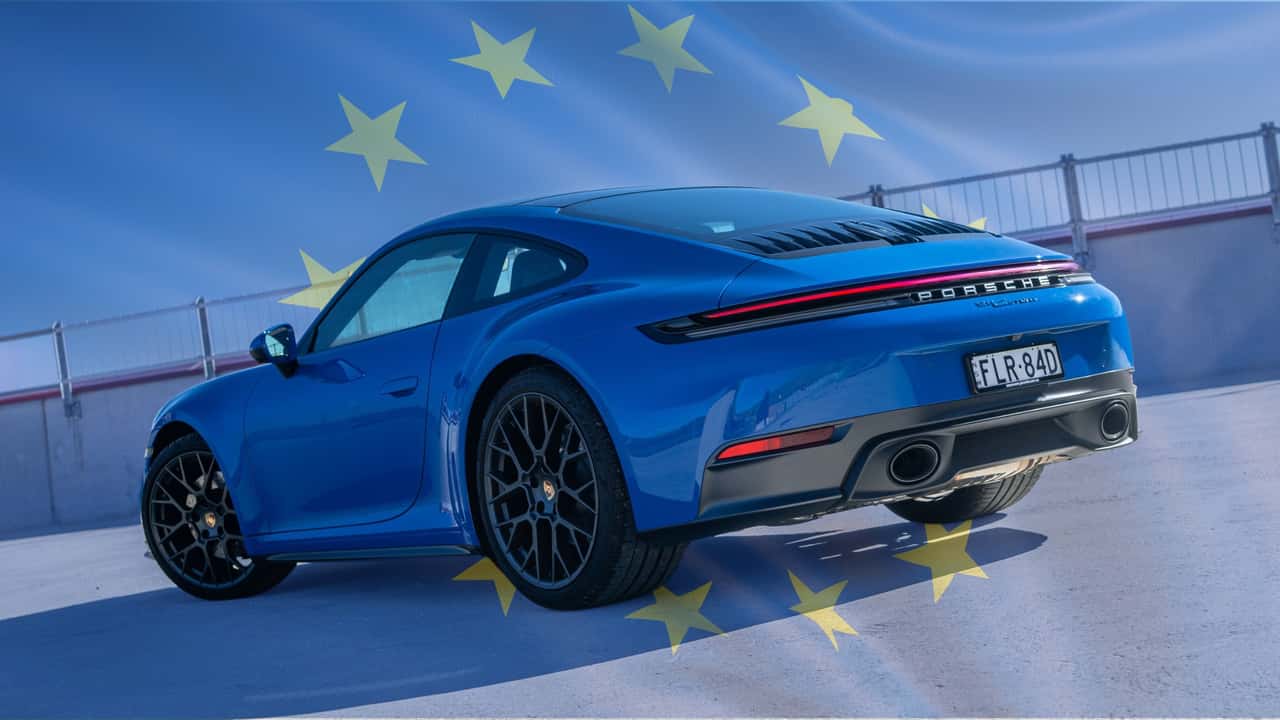
Porsche 911 reaches 58% of Europe’s sports-car market in a shrinking segment
The Porsche 911 accounted for almost six in ten sports cars registered in Europe in the first half of 2026. The model reached 13,182 units, 0.7% above the same period last year, in a segment that lost 10% of its volume.
Dataforce figures, cited by Motor1, cover 34 European markets. In total, the sports-car category fell from 25,134 registrations in the first six months of 2025 to 22,649 in January–June 2026. The Porsche 911’s share thus reached 58%.
The segment falls, but the 911 stays on the rise
Porsche’s result is unusual in a niche market where most models are hit by high prices and by buyers shifting towards SUVs. Even coupé-styled SUVs now compete for the same budget as traditional sports cars.
Germany remained the largest European market for this category, with 8,612 units, but volume fell 12%. The United Kingdom followed with 3,541 sports cars, down 9%, and Italy had 2,368 units, 2% fewer than in the first half of 2025.
Not every market moved in the same direction. Sports-car registrations rose 11% in Poland, 24% in Hungary and 56% in Bulgaria. Those percentages should be read against the smaller volumes of these markets compared with Germany or the United Kingdom.
Hybridisation supports the only powertrain category that grew
Dataforce data show a substantial gain for sports cars with a mild-hybrid system: 7,437 units, 37% more than in the first half of 2025. It was the only powertrain category that grew in the segment.
At the same time, sports cars with petrol-only engines fell 24%, although they still hold 55% of the market. The shift also reflects the transformation of the Porsche 911 range, where updated versions with hybrid technology have become an important part of the offer.
For buyers in Europe, the figures show that the sports-car market is not disappearing, but it is concentrating more and more around a smaller number of models. The Porsche 911 is not only holding its lead; it is increasing its influence in a contracting segment.